Addition Practice Math Worksheets for Ages 6-8 - Page 6
125 filtered results
-
From - To
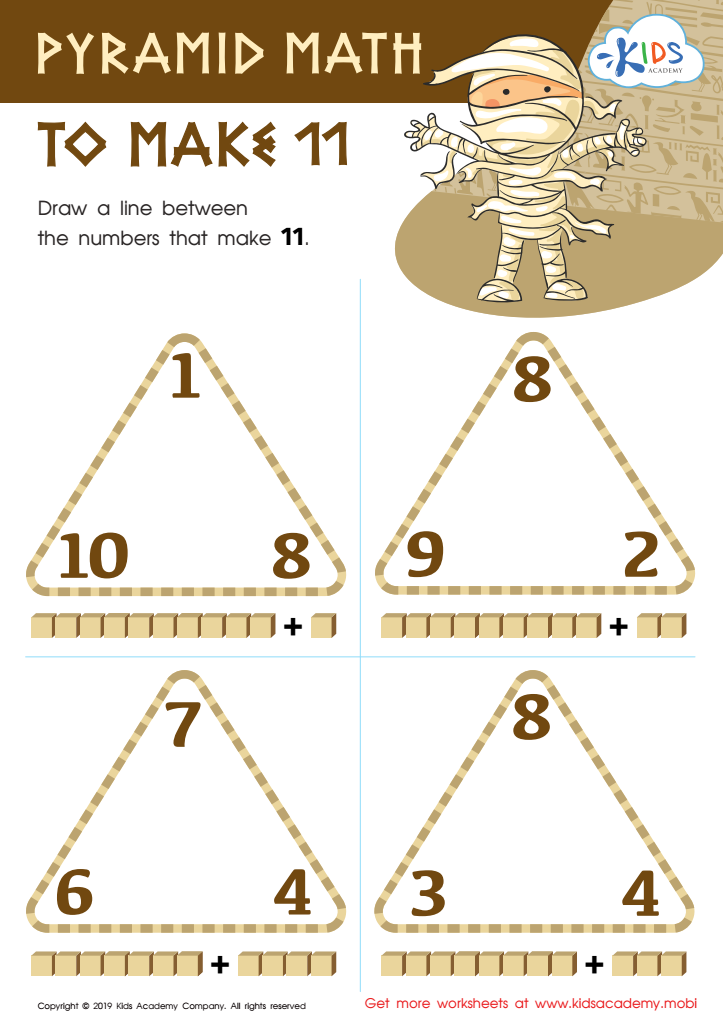
Pyramid Math to Make 11 Worksheet
 Assign to My Students
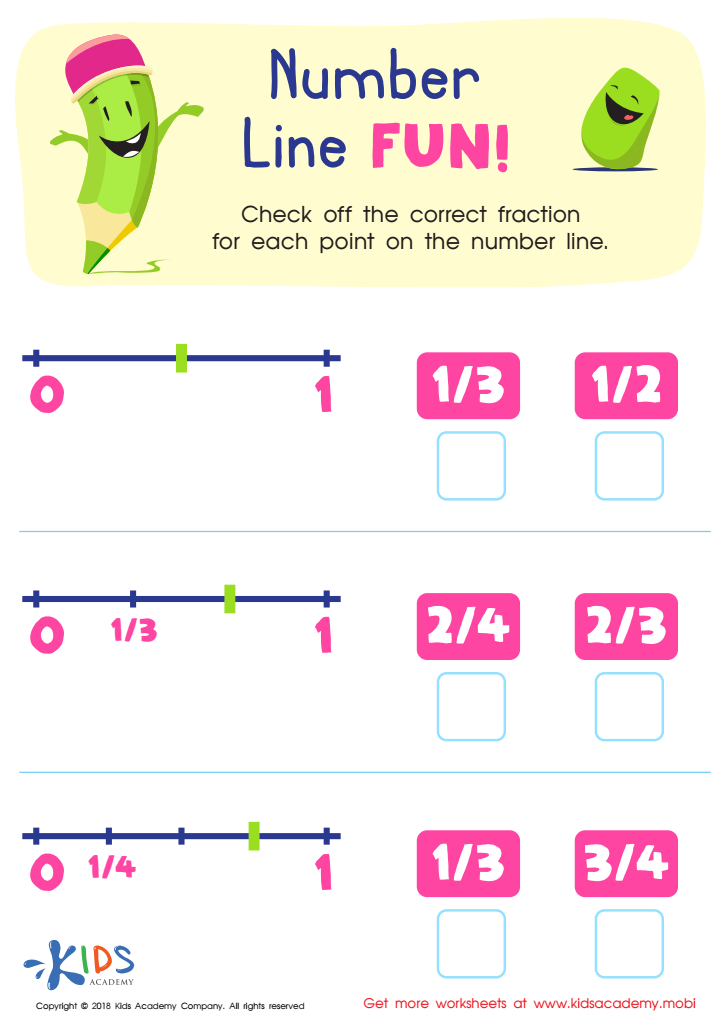
Number Line Fun Worksheet




.jpg)



Addition practice for children aged 6 to 8 is crucial as it lays the foundation for their mathematical understanding and cognitive development. At this pivotal stage, children transition from simple number recognition to more complex mathematical operations. Mastery of addition not only enhances their problem-solving skills but also boosts confidence in tackling more advanced concepts like subtraction, multiplication, and division.
Being proficient in addition aids in everyday situations, such as managing money or cooking, strengthening a child's practical life skills. Moreover, a solid grasp of addition fosters a positive attitude towards math, reducing anxiety and fear associated with the subject later on. This is particularly important as math is a key component of standardized testing and academic success.
In addition, regular addition practice develops critical thinking abilities and strengthens fine motor skills when using writing tools or manipulatives. It creates a basis for cooperative learning, as children often engage in group activities and games that require addition skills. Lastly, involving parents in their child's addition practice can create bonding opportunities and reinforce a supportive learning environment, showcasing the importance of collaboration in education and the role that families play in a child’s academic journey.








