Developing observation skills Math Worksheets for Ages 6-8
6 filtered results
-
From - To
Foster your child's mathematical and cognitive growth with our "Developing Observation Skills Math Worksheets" designed for kids aged 6-8. These engaging printable activities enhance children’s ability to notice patterns, identify differences, and improve concentration—all foundational skills for math proficiency. Through fun exercises and captivating visuals, kids practice counting, shape recognition, sequencing, and problem-solving. Ideal for both classroom and home use, these worksheets ensure interactive learning, keeping young minds sharp and ready for further math challenges. Help your child build a solid mathematical foundation while sharpening their observational skills with our expertly crafted worksheets.
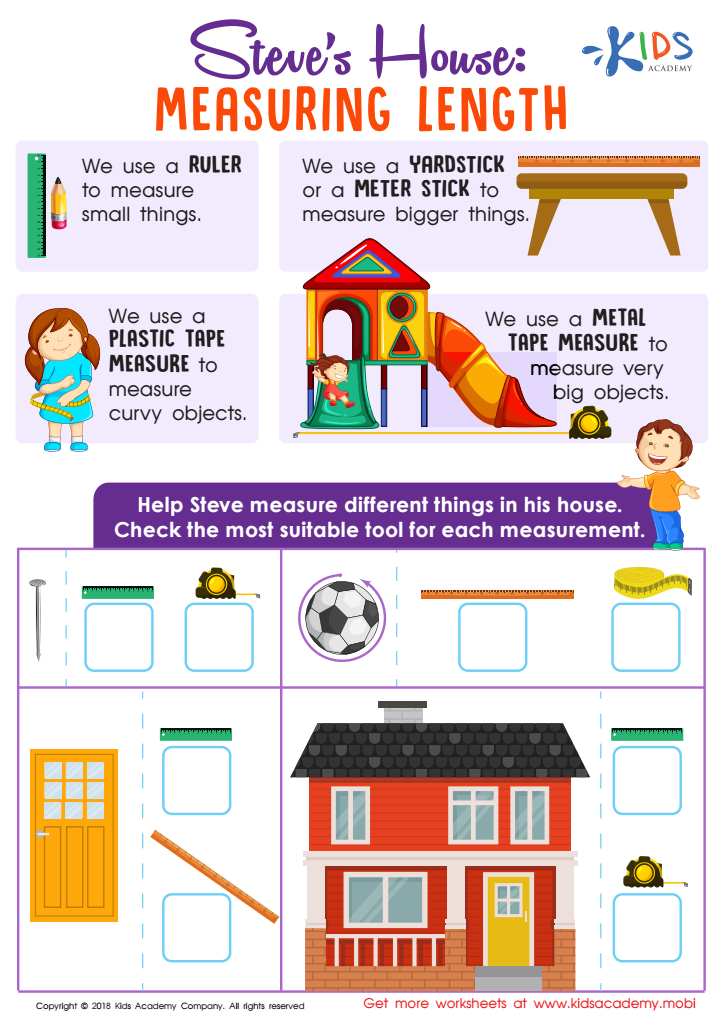
Steve's House: Measuring Length Worksheet
 Assign to My Students
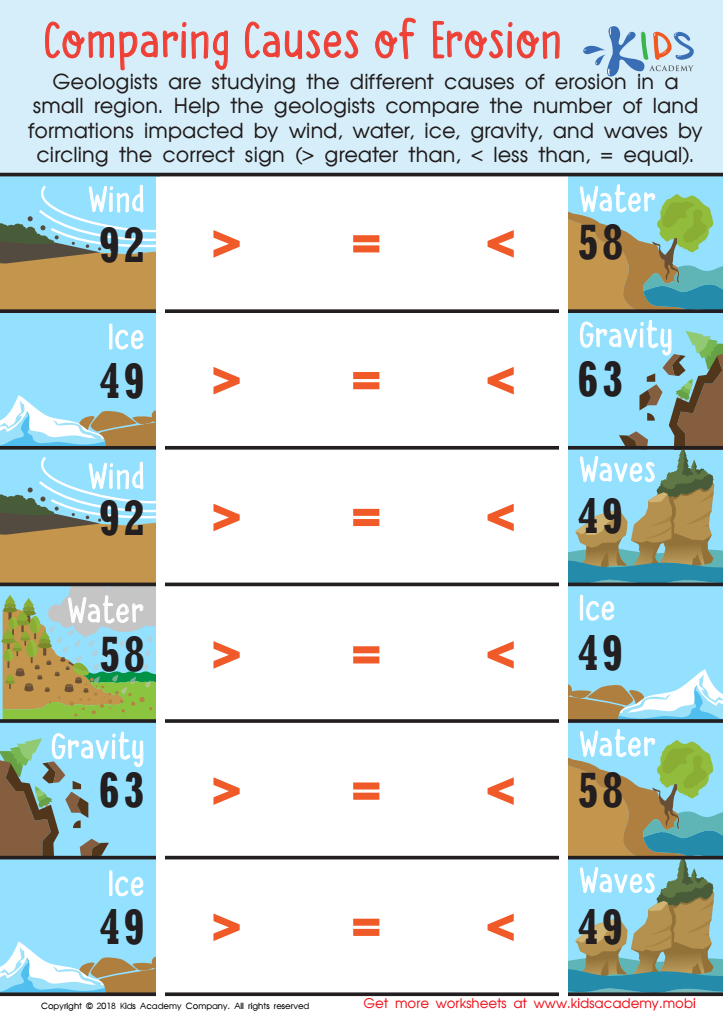
Comparing Causes of Erosion Worksheet
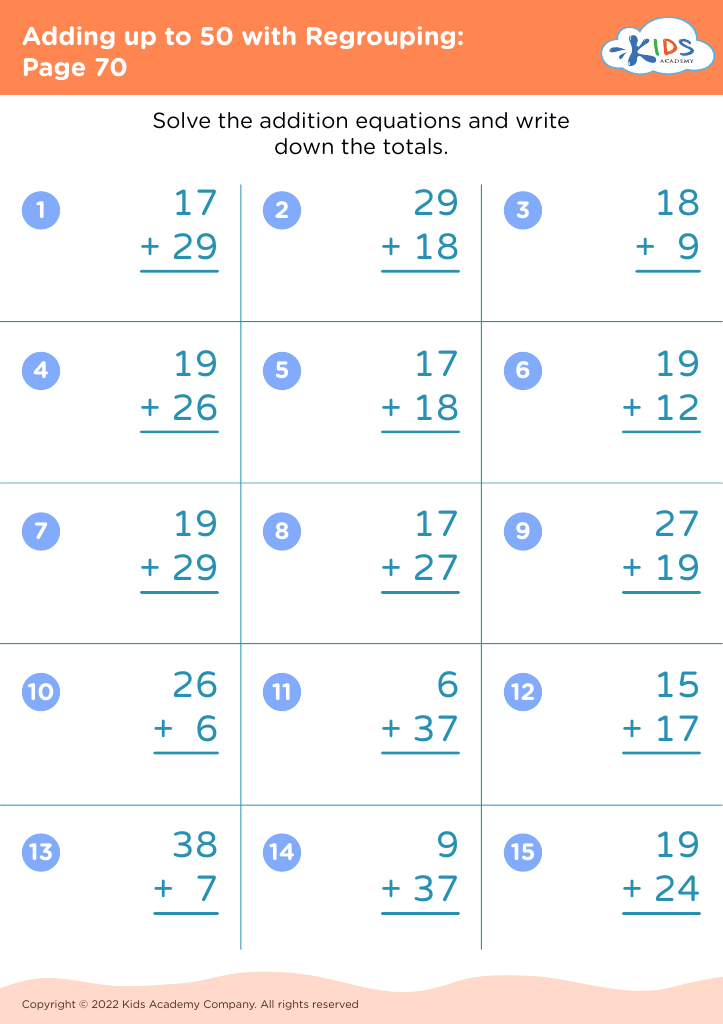
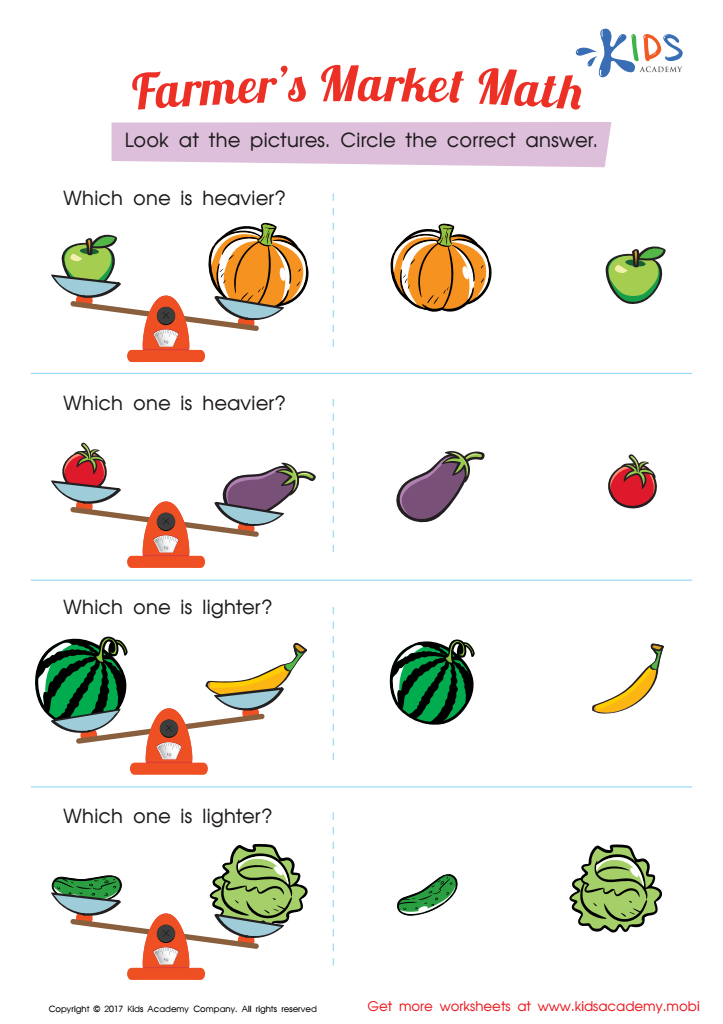
Which One Is Heavier Worksheet
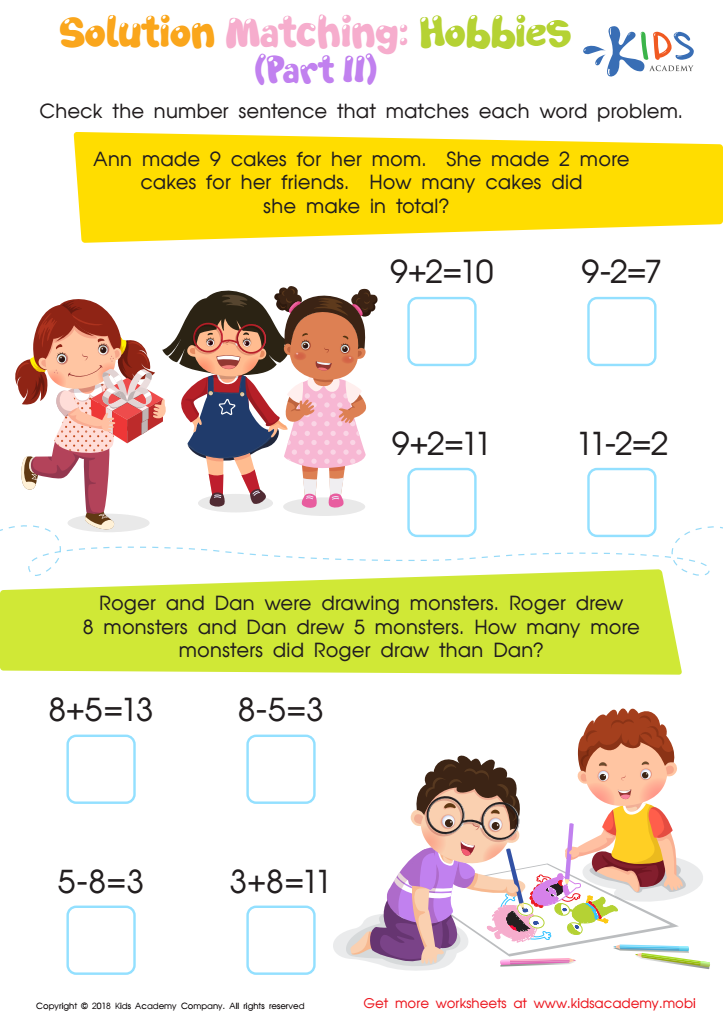
Solution Matching: Hobbies. Part 2 Worksheet
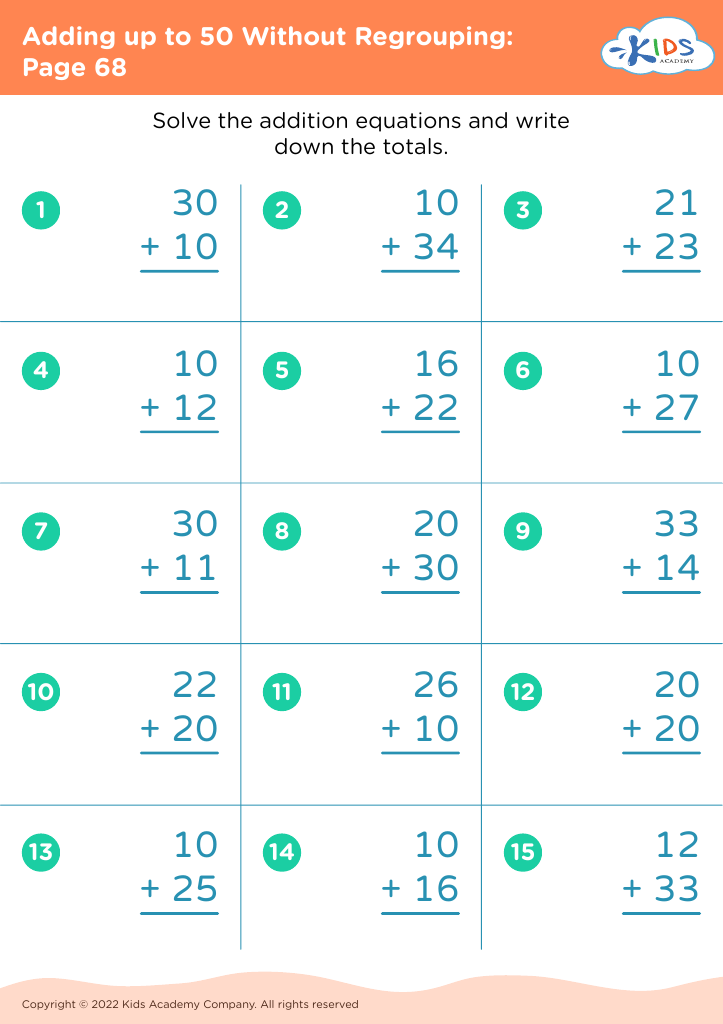







Developing observation skills in math for children aged 6-8 is crucial as these skills lay the foundation for a strong mathematical understanding and critical thinking abilities. At this stage, children are naturally curious and keen observers, and harnessing this trait can deeply benefit their mathematical growth.
Observation skills help young learners notice patterns, relationships, and discrepancies within math problems and in their everyday environment. For instance, recognizing that two groups of objects are equal in number sets the stage for understanding basic addition and subtraction. This makes the math concepts more intuitive and less daunting as the child progresses through more complex subjects.
Moreover, observation in math fosters analytical thinking. When children are trained to observe carefully, they develop the habit of analyzing and critically thinking through problems rather than simply memorizing procedures. This approach builds resilience and problem-solving skills, equipping children to tackle a range of challenges both in academics and in real-world scenarios.
Additionally, honing these skills early also promotes attention to detail and improves concentration, which are beneficial across all learning areas. It encourages an active learning process where children ask questions, make predictions, and verify their outcomes, making learning a more engaging and productive experience. Therefore, focusing on developing observation skills in math kindles a love for learning and establishes strong cognitive skills that are essential for a child's overall academic success.








