Map reading skills Math Worksheets for Ages 6-8
5 filtered results
-
From - To
Enhance your child's map reading skills with our engaging Math Worksheets designed specifically for ages 6-8! These worksheets provide young learners with a fun and interactive way to develop essential skills in spatial awareness and navigation. Featuring colorful maps and easy-to-understand exercises, children will practice locating places, understanding directions, and interpreting map symbols. Our resources promote critical thinking while reinforcing math concepts, ensuring that learning is both enjoyable and effective. Perfect for home use or classroom activities, these worksheets Lay the foundation for strong map reading abilities that will benefit your child in their academic journey. Start exploring today!
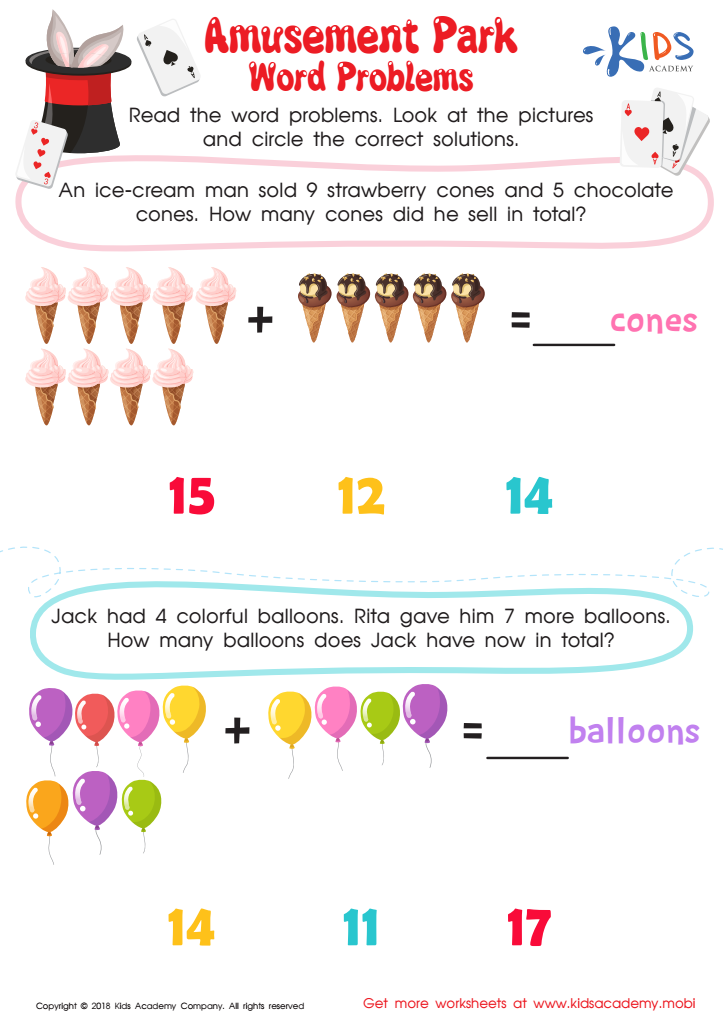
Amusement Park Word Problems Worksheet
 Assign to My Students
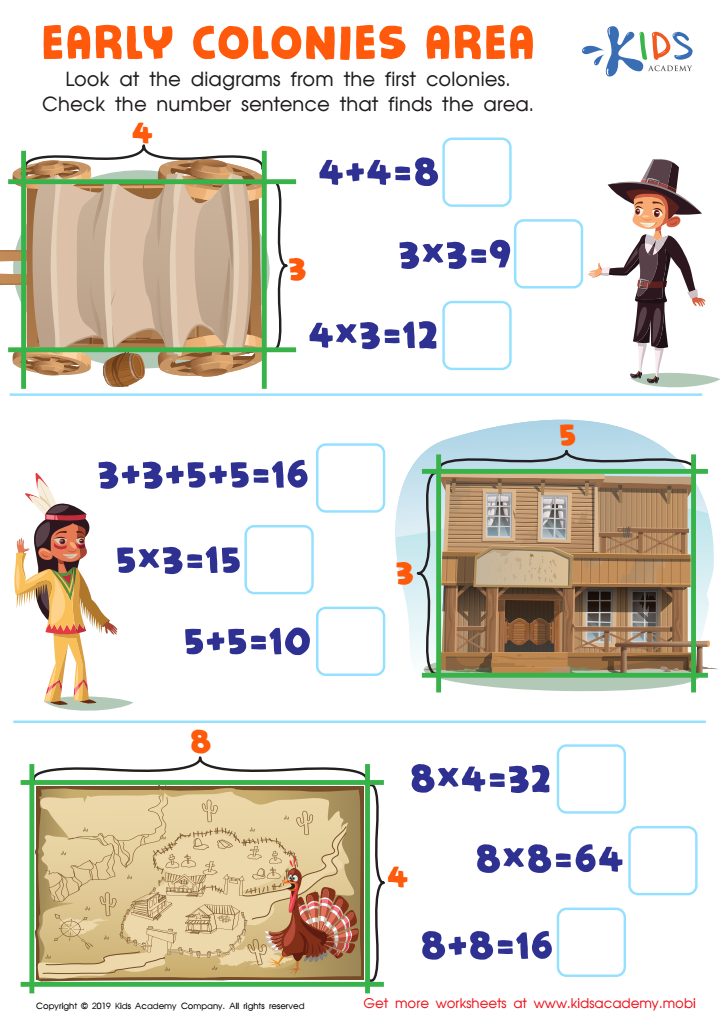
Early Colonies Area Worksheet
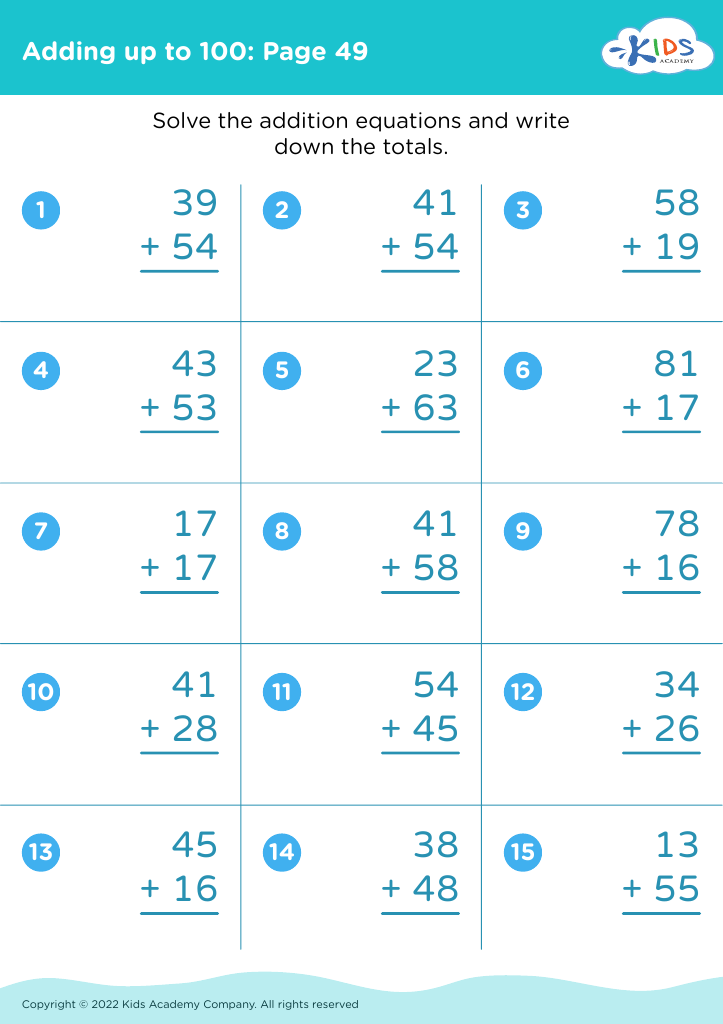
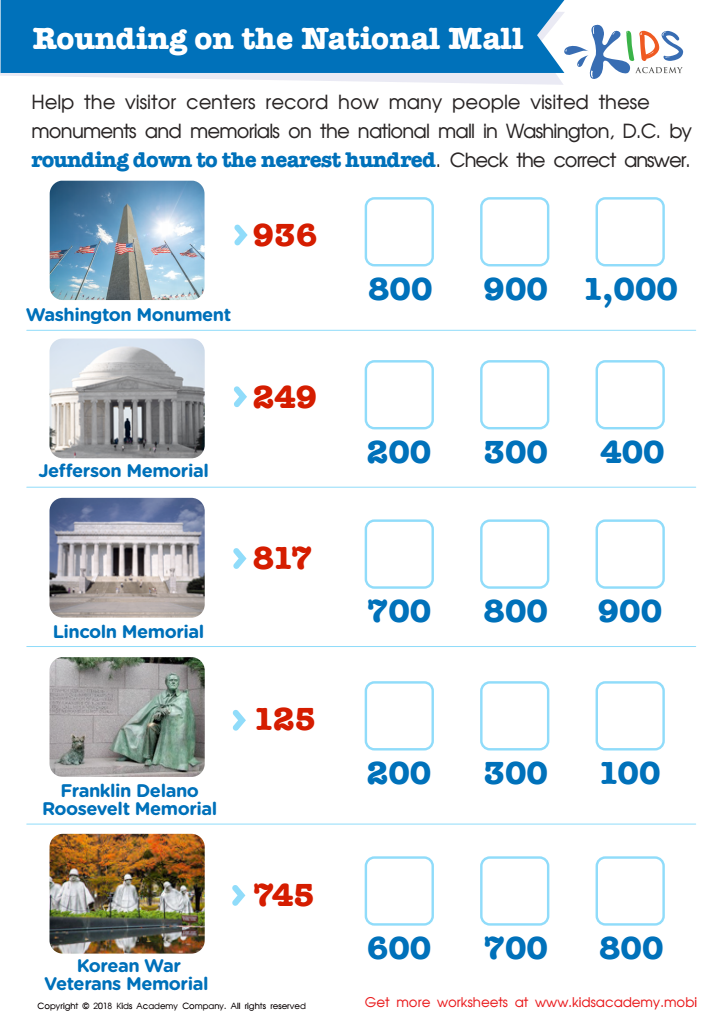
Rounding on the National Mall Worksheet
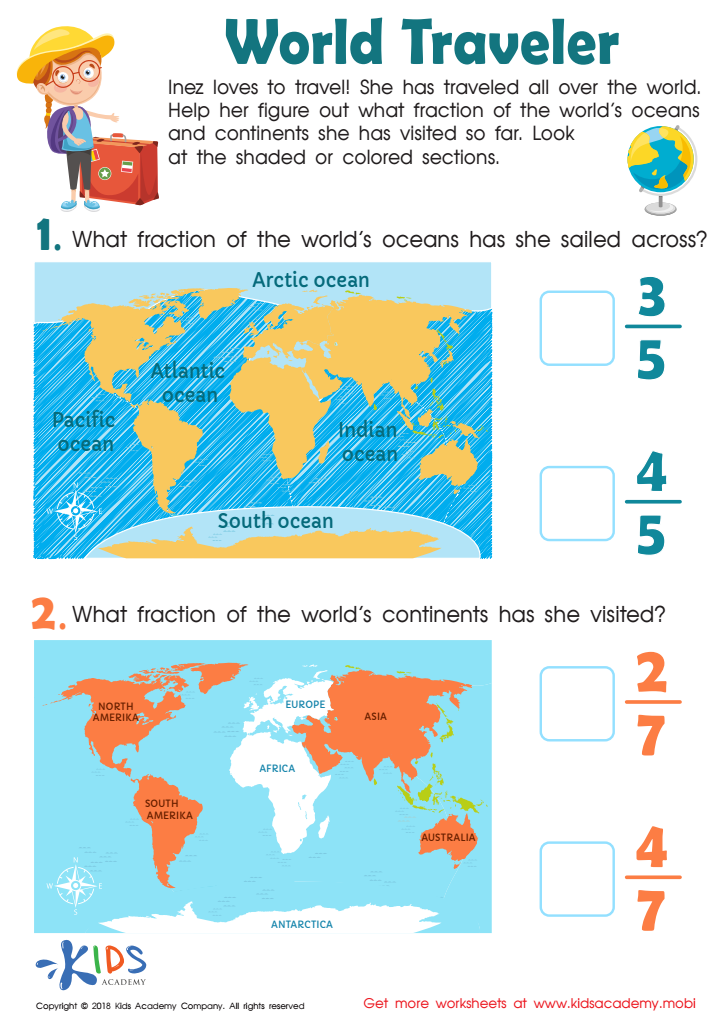
World Traveler Worksheet







Map reading skills are essential for children aged 6-8, as they foster spatial awareness, critical thinking, and problem-solving abilities. For parents and teachers, cultivating these skills in young learners supports their overall development and lays a foundation for future learning. Understanding maps helps children develop an intuitive sense of direction, which is crucial for navigating their physical world.
At this age, children are curious and eager to explore their environments; map reading can enhance this curiosity into tangible skills. By interpreting maps, they learn to analyze symbols, scales, and routes, linking mathematical concepts with real-world applications. This integration deepens their understanding of math as more than mere numbers; it becomes a practical tool for everyday life.
Furthermore, map reading engages students in cooperative activities, fostering social skills as they work together to solve navigational challenges. Parents and teachers can use fun, interactive map-related games to engage children, making learning enjoyable. As these skills develop, they instill confidence in overcoming spatial challenges, equipping kids for future academic success. In essence, map reading is a foundational skill that nurtures not just math proficiency, but also encourages exploration, creativity, and collaboration among young learners.








