Motor skills development Math Worksheets for Ages 6-8
6 filtered results
-
From - To
Enhance your child’s learning with our motor skills development math worksheets, meticulously designed for ages 6-8. These engaging activities blend crucial math concepts with hands-on tasks to strengthen fine motor skills. Young learners will joyfully trace numbers, connect dots, and solve puzzles, fostering their math abilities while improving hand-eye coordination. Perfect for classrooms and home, our worksheets provide a fun and effective way to practice counting, basic operations, and shape recognition. Boost your child’s confidence and motor proficiency with these expertly-crafted math exercises, making learning a delightful adventure. Discover a world where math and motor skills grow hand in hand!
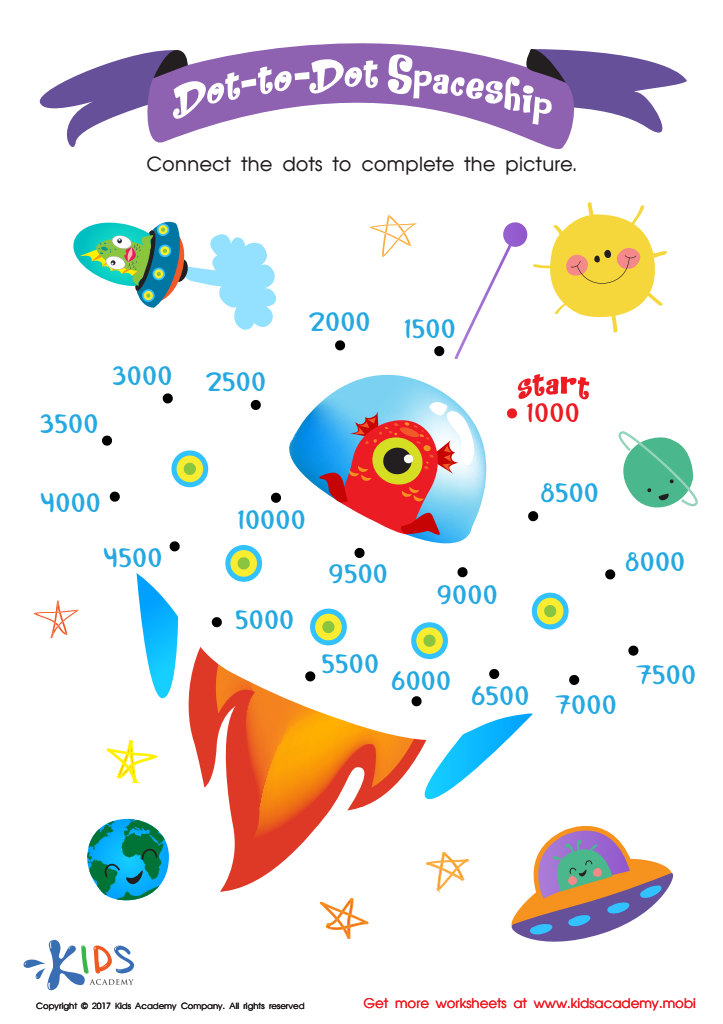
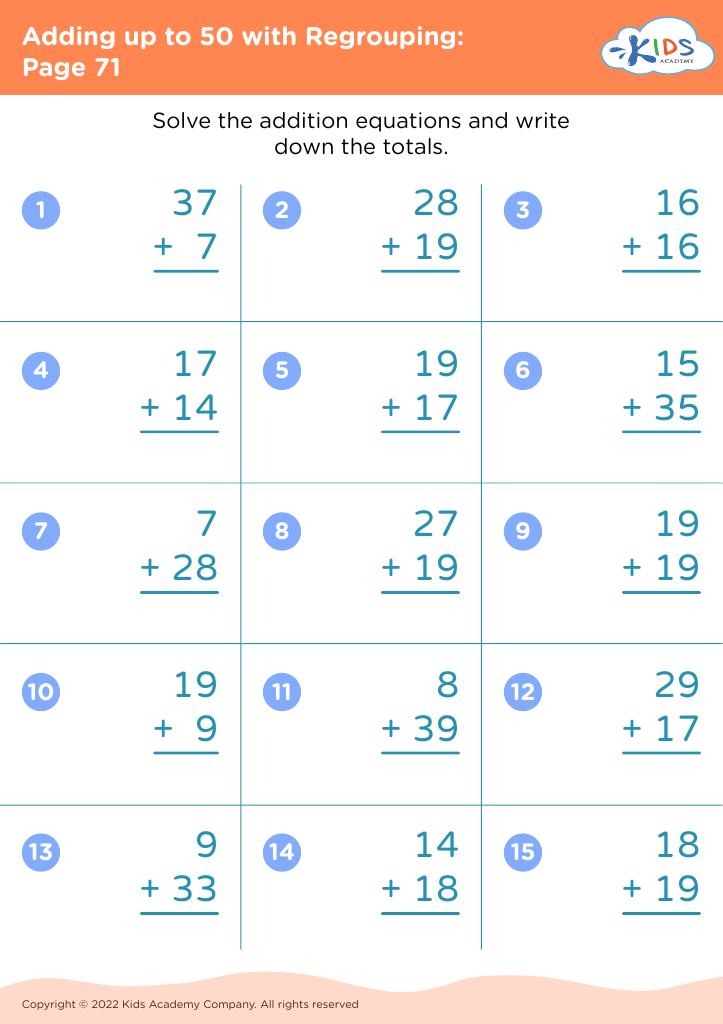
Dot to Dot Worksheet for 3rd Grade
 Assign to My Students
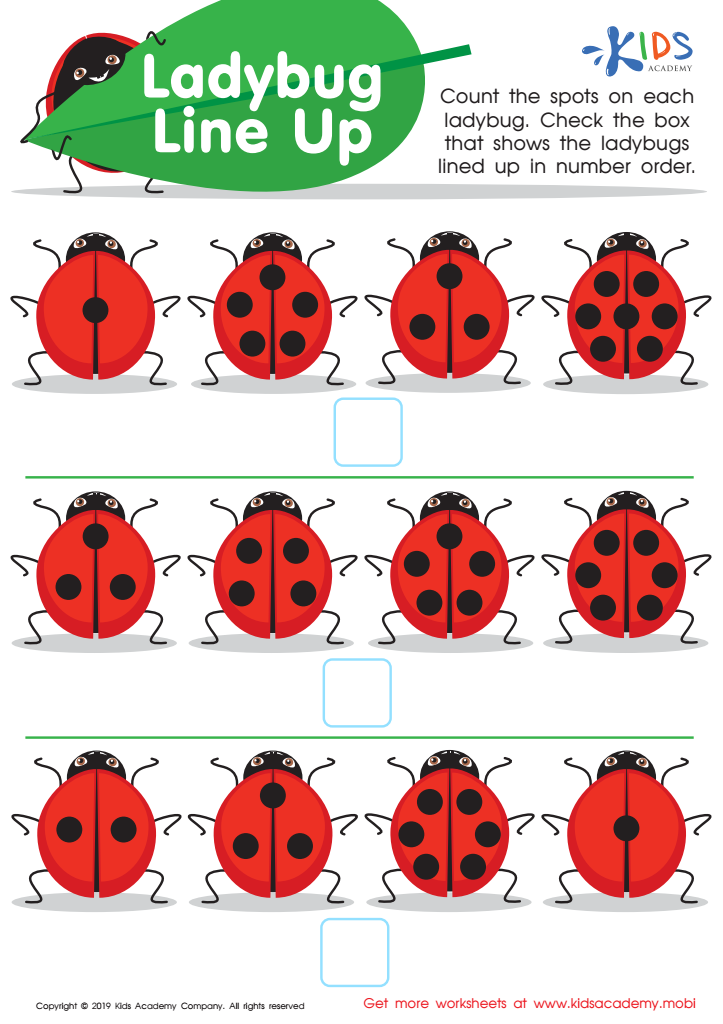
Ladybug Line Up Worksheet




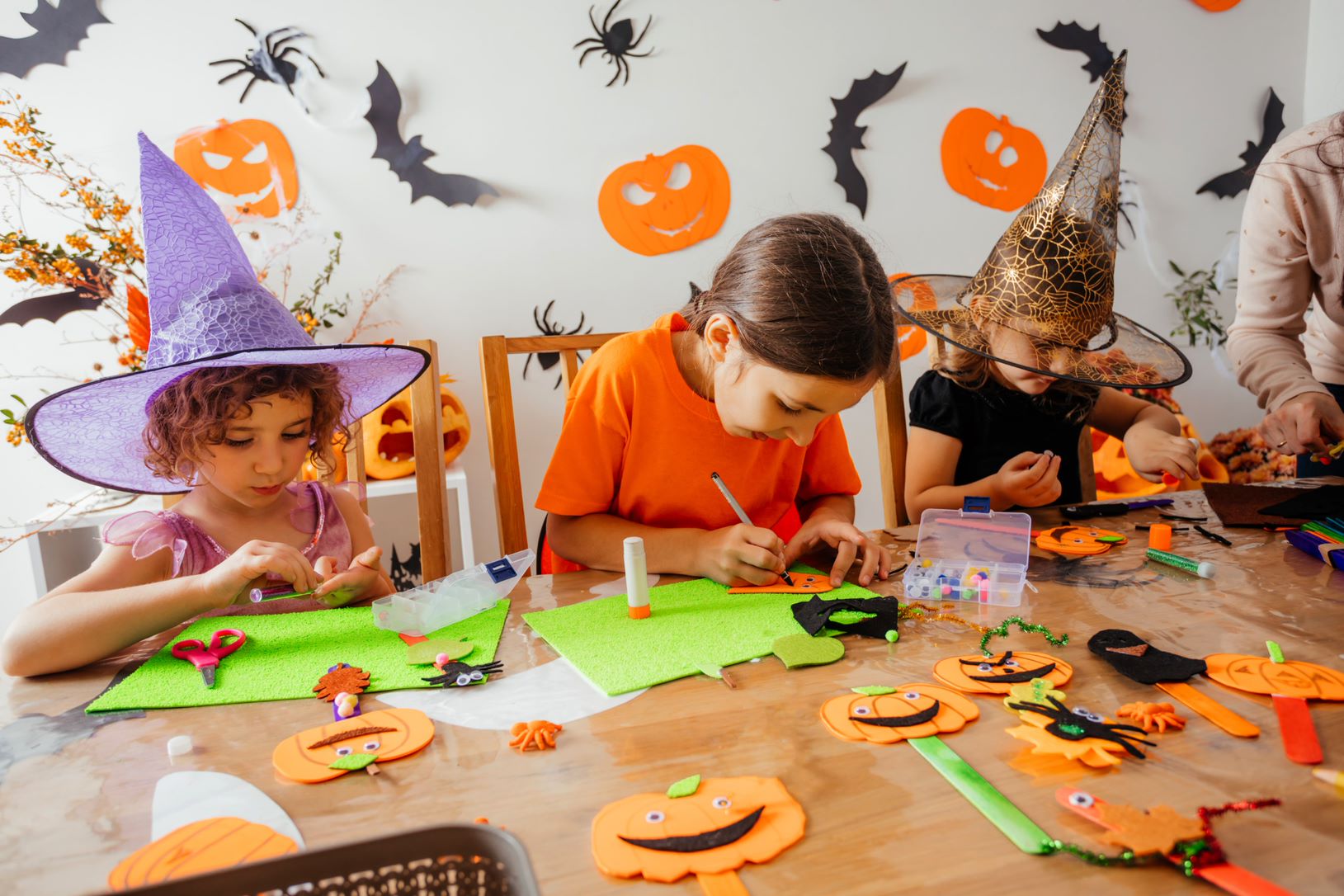



Motor skills development and mathematics create a vital foundation for children aged 6-8, nurturing both physical coordination and cognitive growth necessary for academic success and daily life activities. This phase, known for rapid development in fine and gross motor skills, is crucial for enhancing a child's ability to perform basic tasks such as writing, drawing, and managing supplies, all integral components of a successful learning environment. Improved motor skills directly influence a child's capability to complete mathematical tasks which often require dexterous hand movements for writing numbers, solving equations, or manipulating learning tools like rulers and geometric shapes.
Furthermore, engaging in activities that develop motor skills concurrently aids cognitive development. For example, when children assemble puzzles, practice counting blocks, or partake in games requiring physical coordination and numerical understanding, they are reinforcing neural pathways that support memory, problem-solving, and spatial awareness, all fundamental aspects of mathematics comprehension.
Parents and teachers who emphasize this development cultivate an educational setting where children experience boosts in confidence, motivation, and academic performance. By supporting motor skills development while introducing early math concepts, children build a robust, interconnected foundation for more complex skills and subjects, ultimately fostering a well-rounded, lifelong aptitude for learning.








