Multiplication practice Math Worksheets for Ages 6-8 - Page 4
78 filtered results
-
From - To
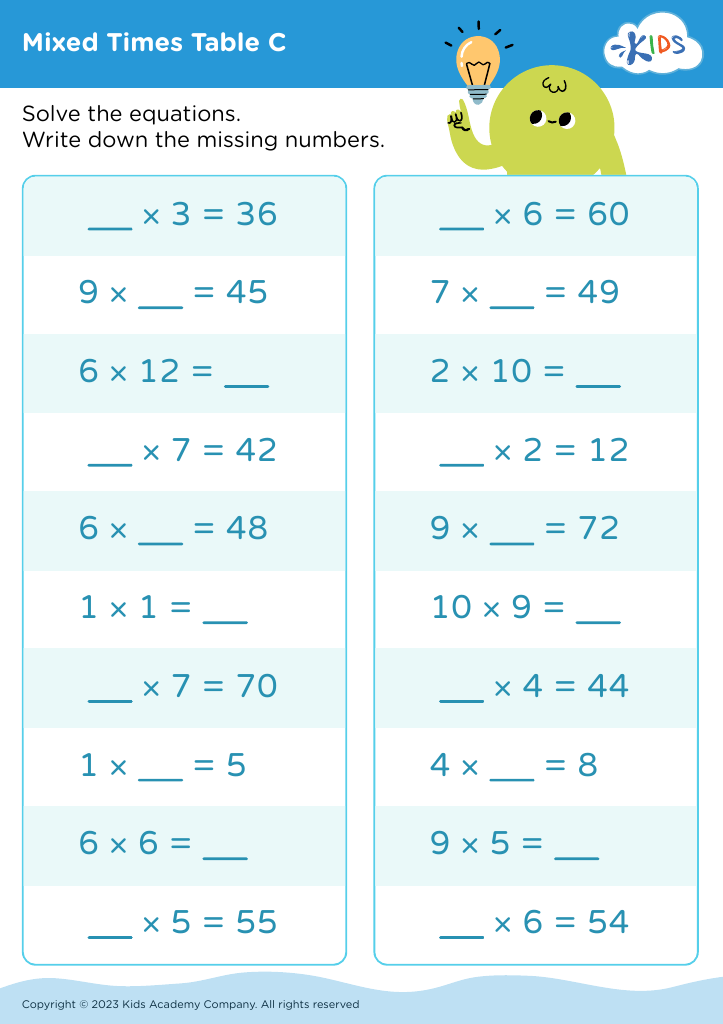
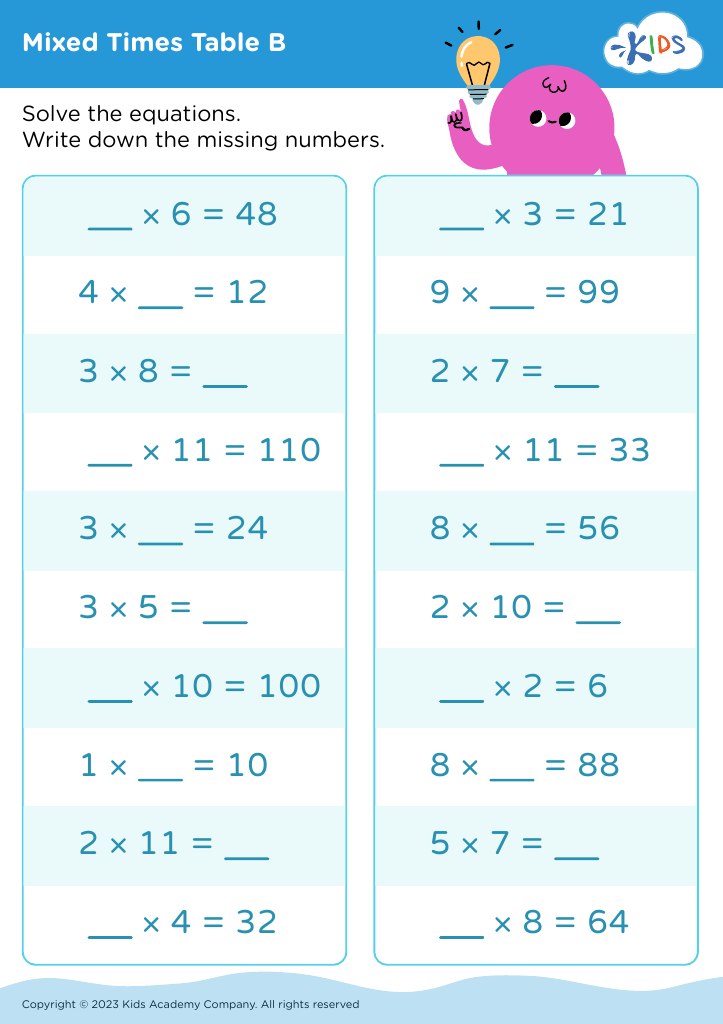




.jpg)



Multiplication practice for children ages 6-8 is crucial for several reasons. At this foundational stage, children are developing critical cognitive and mathematical skills. Learning multiplication helps them understand the concept of repeated addition, which enhances their ability to solve problems more efficiently. This age is optimal for engaging children with hands-on learning and interactive tools, making the learning process enjoyable and effective.
Additionally, strong multiplication skills lay the groundwork for more advanced math topics. Proficiency in multiplication is essential for tackling division, fractions, and algebra. It builds a sense of confidence and competence in math, which is pivotal for motivating children to explore other STEM subjects. Early mastery of these skills can reduce anxiety and math-related stress down the road, improving overall academic performance.
Parents and teachers should prioritize multiplication practice because it strengthens memory, sharpens focus, and improves logical thinking. Importantly, engaging in math activities together fosters a positive attitude toward learning and encourages a growth mindset. By making multiplication a fun, consistent part of a child's learning routine, parents and teachers are not only helping with immediate academic success but also setting the stage for lifelong critical thinking and problem-solving abilities.








