Number counting Math Worksheets for Ages 6-8
3 filtered results
-
From - To
Explore our engaging Number Counting Math Worksheets designed for children ages 6-8. These printable worksheets offer a variety of activities that make learning to count fun and interactive. From basic counting exercises to more advanced number patterns and sequences, kids will develop essential math skills in an enjoyable way. Perfect for both classroom use and at-home practice, our worksheets offer a solid foundation in number counting that will prepare children for future math success. Available in colorful and easy-to-use formats, these worksheets capture young learners’ attention and keep them motivated to learn. Start their mathematical journey today!
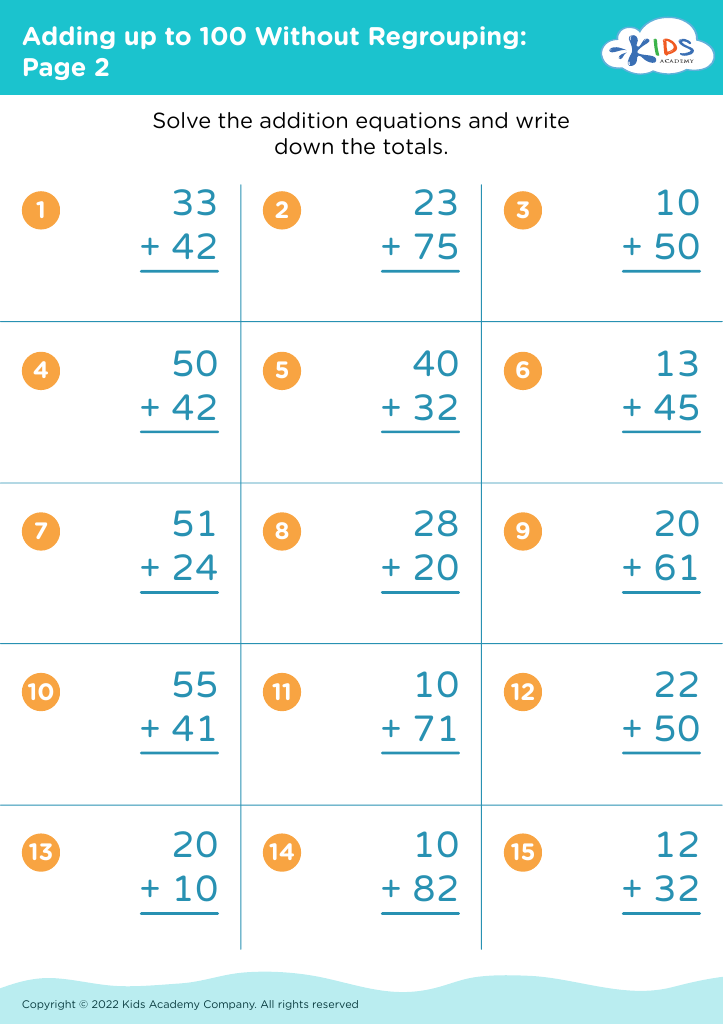
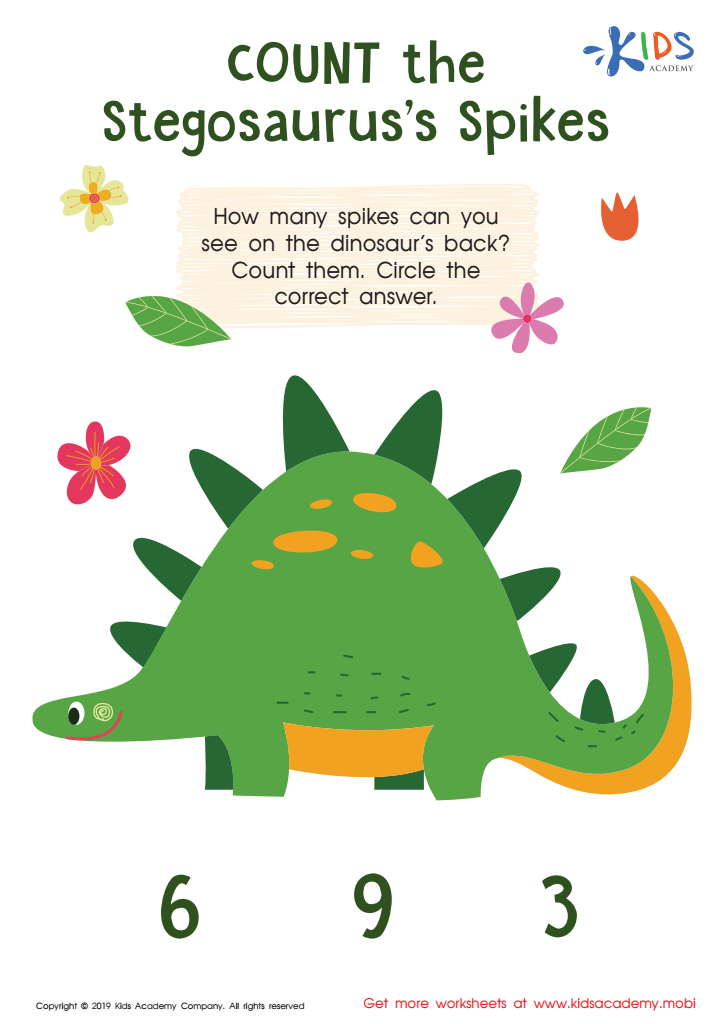
Count the Stegosaurus's Spikes Worksheet
 Assign to My Students
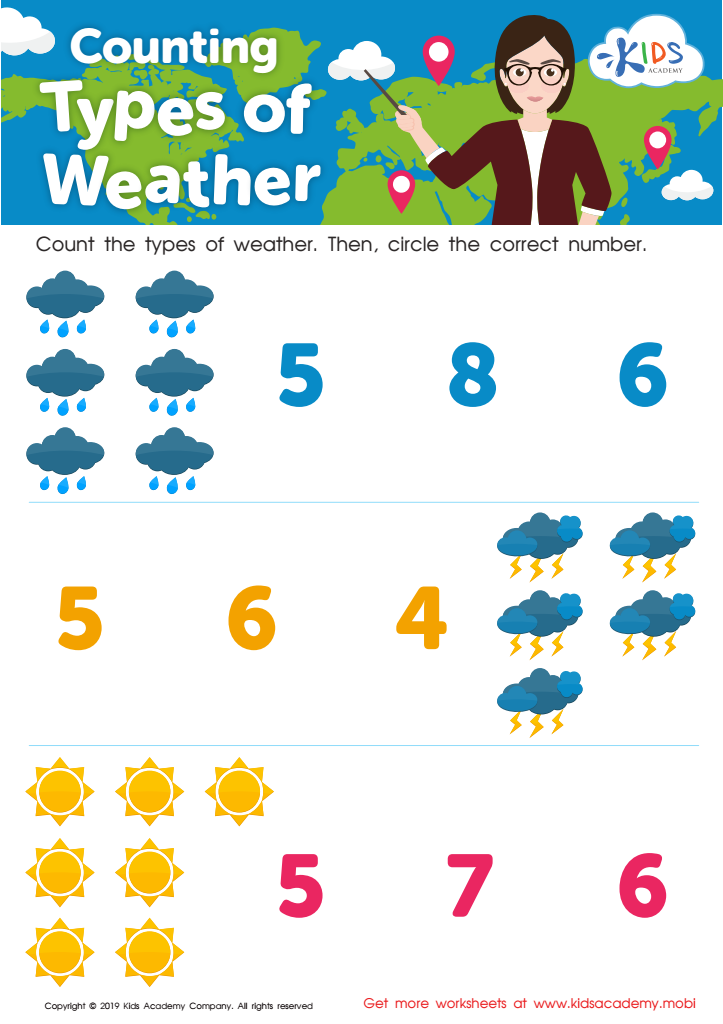
Counting Types of Weather Worksheet







Counting numbers may seem simple, but it serves as a building block for a child's math education, especially between the ages of 6-8. At this formative stage, children are naturally curious and adept at absorbing new information. Developing strong counting skills early on sets the foundation for more complex mathematical concepts.
First and foremost, number counting helps with developing numerical sense, which is essential for understanding larger mathematical operations like addition, subtraction, multiplication, and division. Knowing how to count allows children to recognize patterns, understand the relational value of numbers, and execute basic arithmetic confidently.
Moreover, early proficiency in counting fosters problem-solving and critical-thinking skills. These activities often engage children in identifying sequential patterns, categorizing objects, and estimating quantities, all of which are pivotal for cognitive development.
In addition to intellectual gains, mastering counting enhances a child's confidence and enthusiasm toward learning. Early achievements in math can yield positive attitudes toward education, leading to greater academic success in the long term.
Parents and teachers play a crucial role in nurturing these skills by incorporating fun, interactive counting games and practical experiences into the child’s daily routine. Such an approach ensures that children not only understand numbers but also appreciate their real-world applications, setting the stage for lifelong math competence and enthusiasm.








