Pattern identification Math Worksheets for Ages 6-8
6 filtered results
-
From - To
Discover engaging Pattern Identification Math Worksheets designed specifically for children aged 6 to 8. These worksheets help young learners develop essential pattern recognition skills through a variety of fun and interactive exercises. By solving puzzles and identifying sequences, students enhance their critical thinking and problem-solving abilities while enjoying their learning experience. Perfect for home or classroom use, our worksheets cater to diverse learning styles and make math enjoyable. Empower your child with the foundational skills necessary for future mathematical concepts. Browse our collection now and watch your learner thrive as they become confident in identifying patterns!
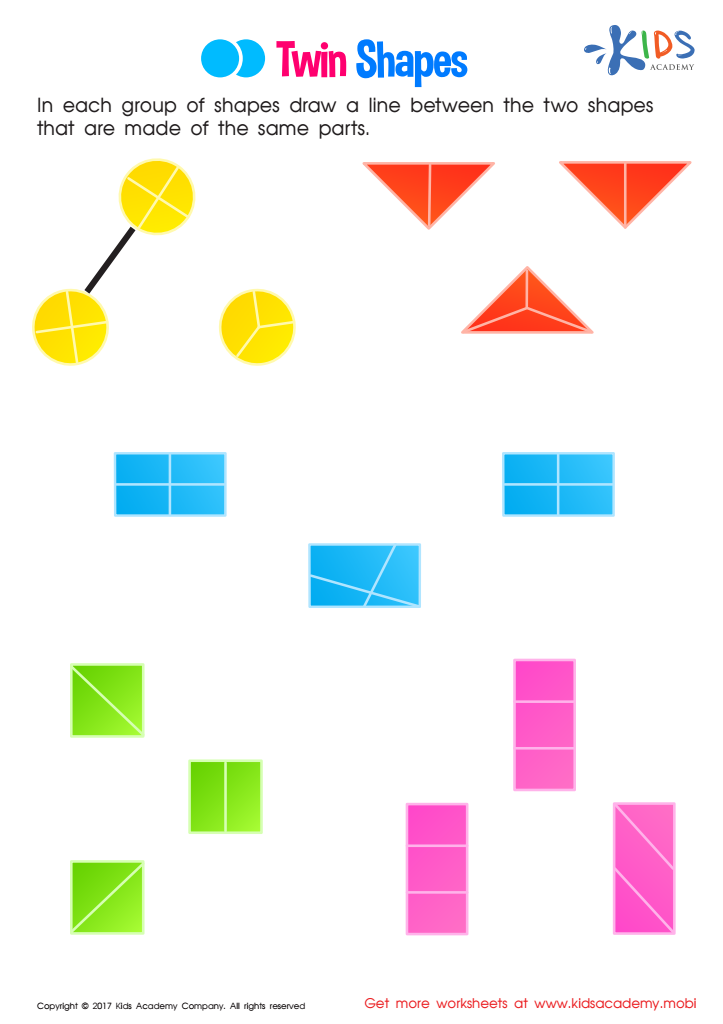
Twin Shapes Worksheet
 Assign to My Students
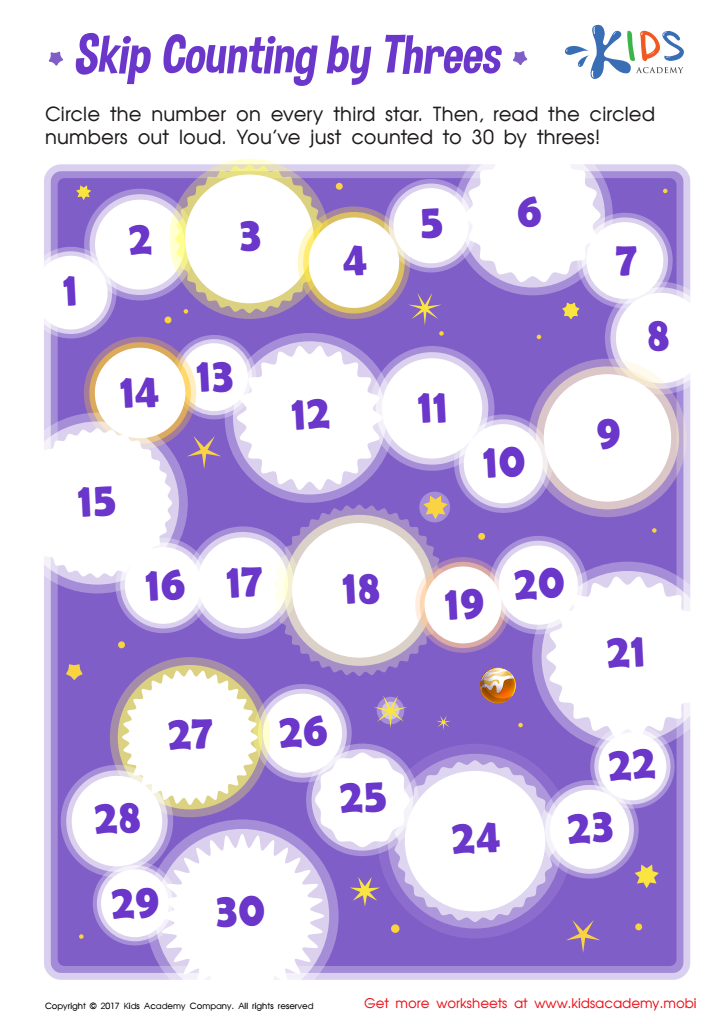
Skip Counting By Three Printable
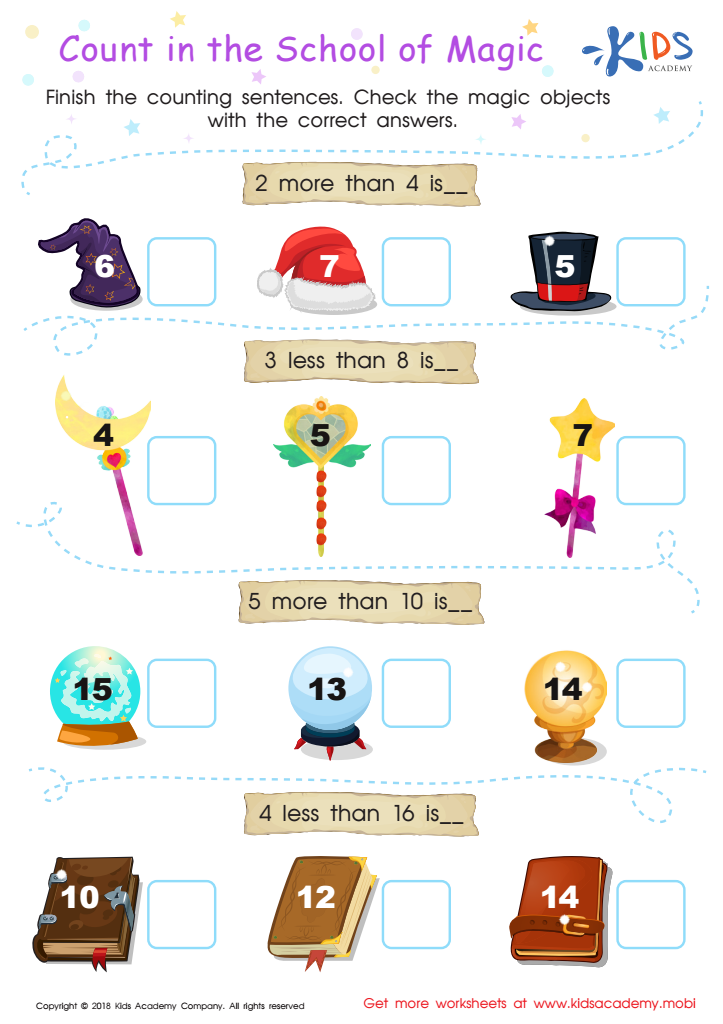
Count in the School of Magic Worksheet
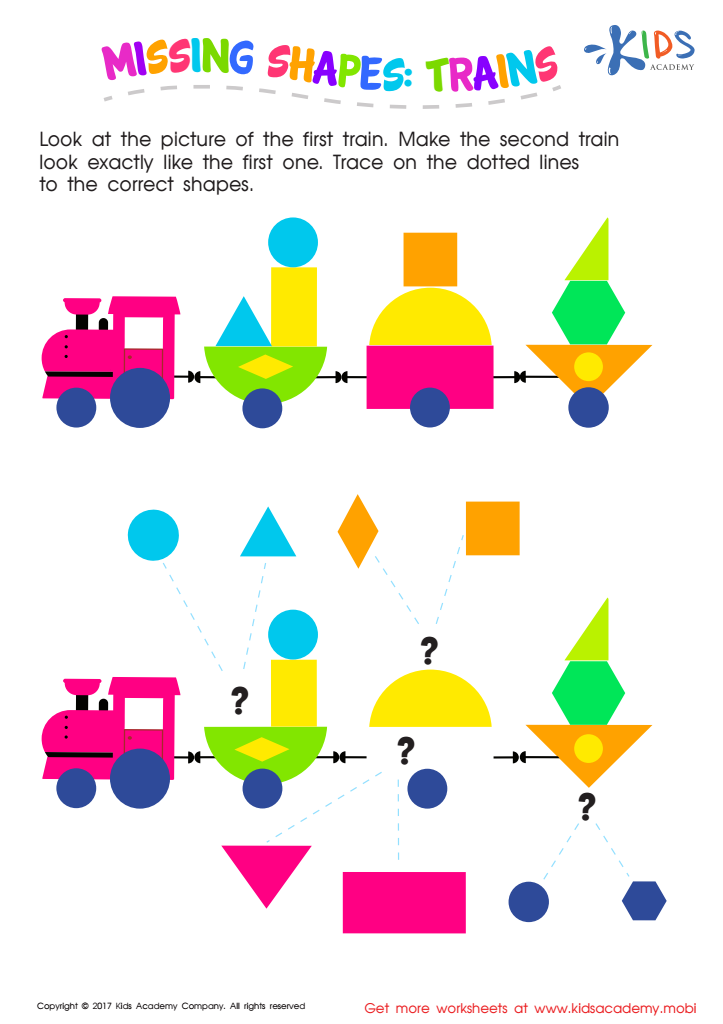
Missing Shapes: Trains Worksheet
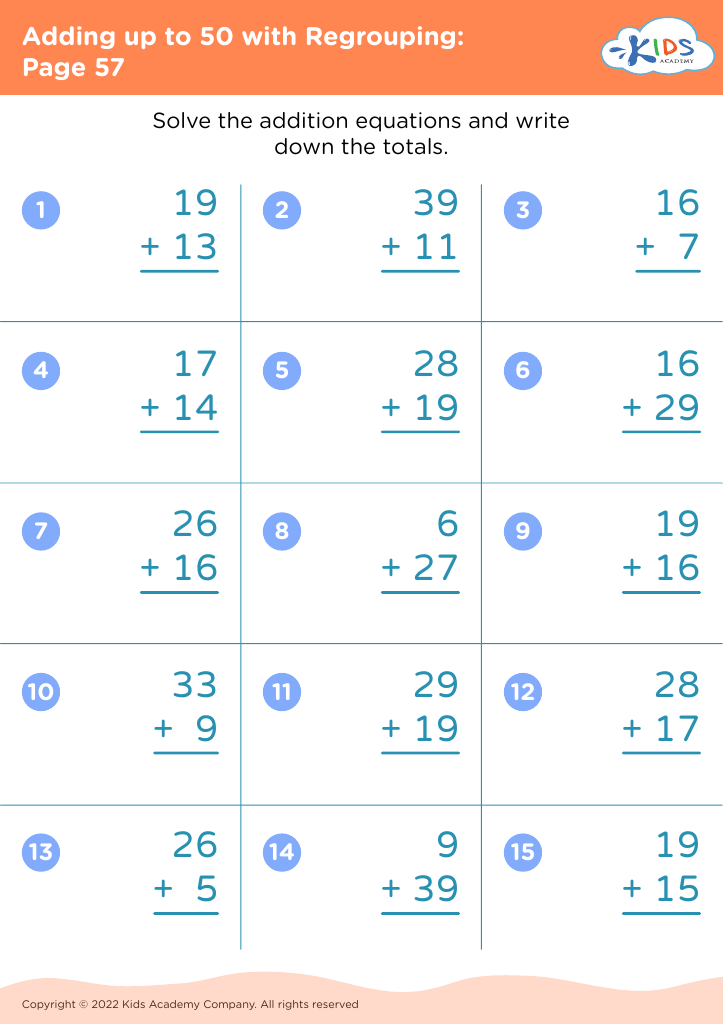








Pattern identification is a fundamental skill in math development for children aged 6-8, offering numerous benefits that parents and teachers should prioritize. Recognizing patterns helps young learners understand relationships between numbers and shapes, enhancing their analytical thinking and problem-solving abilities. At this stage, children are also developing critical cognitive skills, and introducing them to patterns fosters creativity in mathematical thought.
Additionally, pattern recognition lays the groundwork for more complex math concepts, such as sequencing and algebraic thinking, which become crucial in later grades. By identifying patterns, children can make predictions, spot anomalies, and gain a deeper comprehension of math operations.
Moreover, engaging with patterns aids in developing fine motor skills when children manipulate objects or drawings to see relationships visually. This hands-on approach is particularly effective in early education settings.
Lastly, recognizing patterns promotes confidence in math, allowing children to tackle challenges independently. Parents and teachers who prioritize this skill create a solid foundation for lifelong math proficiency. Emphasizing pattern identification in these formative years nurtures resilient, inquisitive learners and cultivates a positive attitude towards math—paving the way for future academic success.








