Understanding area Math Worksheets for Ages 6-8
3 filtered results
-
From - To
Welcome to our "Understanding Area Math Worksheets" for ages 6-8! These engaging printable resources are designed to help young learners explore the concept of area through fun and interactive activities. Our worksheets encourage students to measure, calculate, and compare areas of different shapes, enhancing their math skills and spatial awareness. Each worksheet features vibrant illustrations and age-appropriate challenges, making learning enjoyable and effective. Whether in the classroom or at home, these worksheets aim to build a strong foundational understanding of area, preparing children for more complex mathematical concepts in the future. Start your child’s math journey with us today!
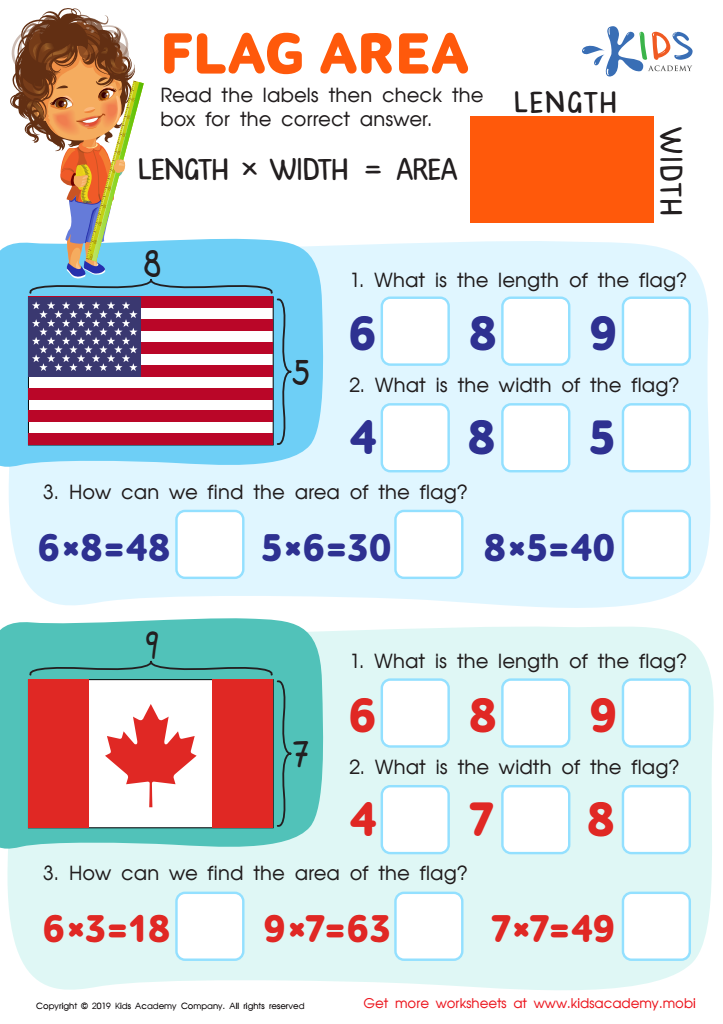
Flag Area Worksheet
 Assign to My Students
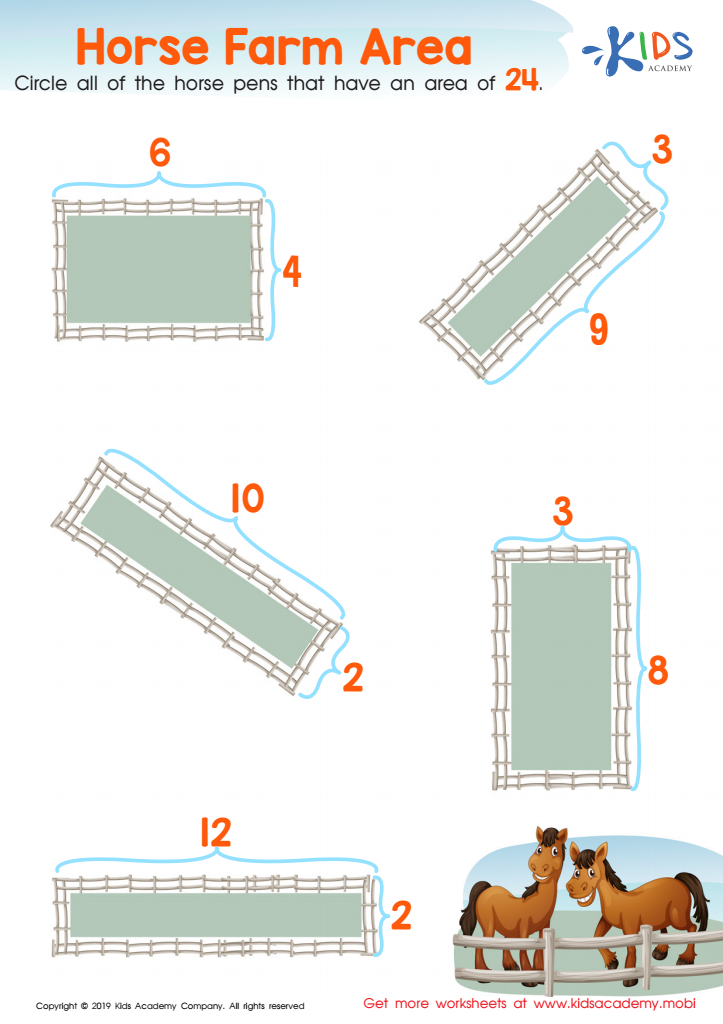
Horse Farm Area Worksheet
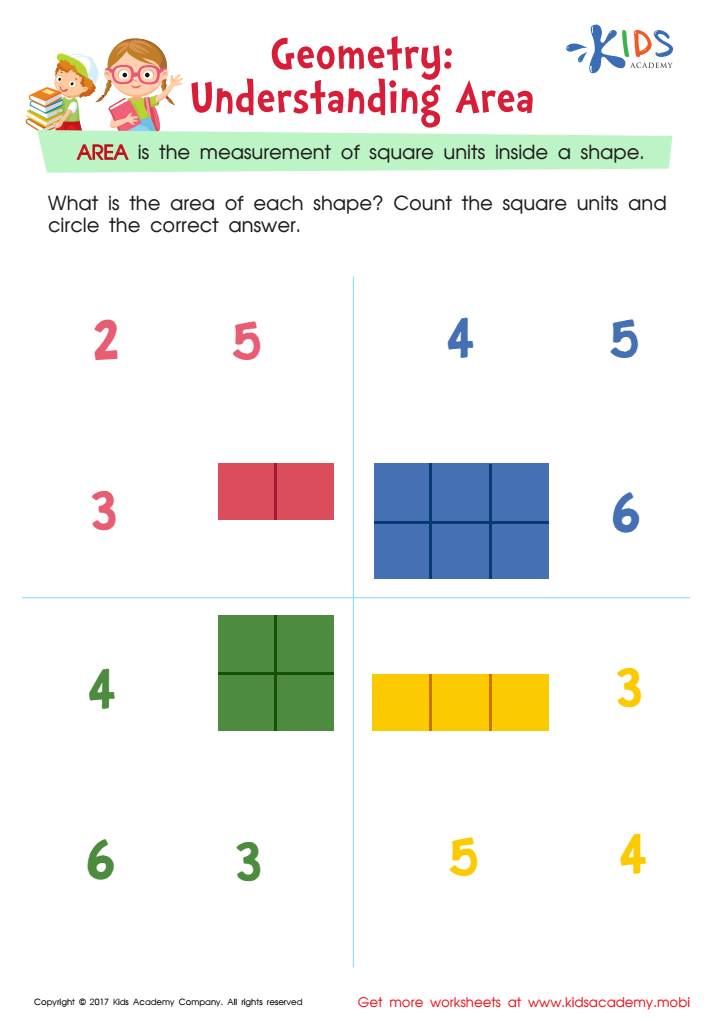
Understanding Area Worksheet








Understanding area is a foundational concept in mathematics that young children (ages 6-8) should grasp as it sets the groundwork for more advanced math in the future. For parents and teachers, fostering this understanding is critical for several reasons.
First, grasping area helps children develop spatial awareness and critical thinking skills, which are essential for problem-solving in both math and everyday life. By measuring and comparing areas, children learn to visualize and manipulate shapes, improving their geometric comprehension.
Furthermore, area measurement applies to various real-life contexts, such as determining how much paint is needed for a room or how to arrange furniture efficiently. These practical applications make math relevant and engaging, sparking curiosity and increased motivation.
Additionally, understanding area supports cross-disciplinary learning, as it intersects with science (e.g., understanding land use in environmental studies) and art (e.g., exploring patterns and designs).
Lastly, strong foundational skills in area measurement lay the groundwork for future mathematical concepts, such as volume and perimeter, ensuring children remain confident as they tackle more complex topics. By prioritizing area understanding, parents and teachers are not just teaching math; they are cultivating lifelong learners equipped to navigate our increasingly complex world.








