
Visual Perception Skills Math Worksheets for Ages 6-8
6 filtered results
Difficulty Level
Grade
Age
-
From - To
Subject
Activity
Standards
Enhance your child's learning journey with our Visual Perception Skills Math Worksheets, specifically designed for ages 6-8! These engaging worksheets help young learners develop essential visual perception skills necessary for problem-solving and math comprehension. Featuring fun activities and colorful illustrations, our resources reinforce high-level critical thinking and aid in recognizing patterns, shapes, and spatial relationships. Each worksheet is tailored to boost confidence and improve accuracy in mathematical tasks. Perfect for homeschooling or classroom use, these printables ensure an enjoyable learning experience while preparing your child for future academic success. Explore the world of visual learning and watch your child thrive today!
Favorites
With answer key
Interactive
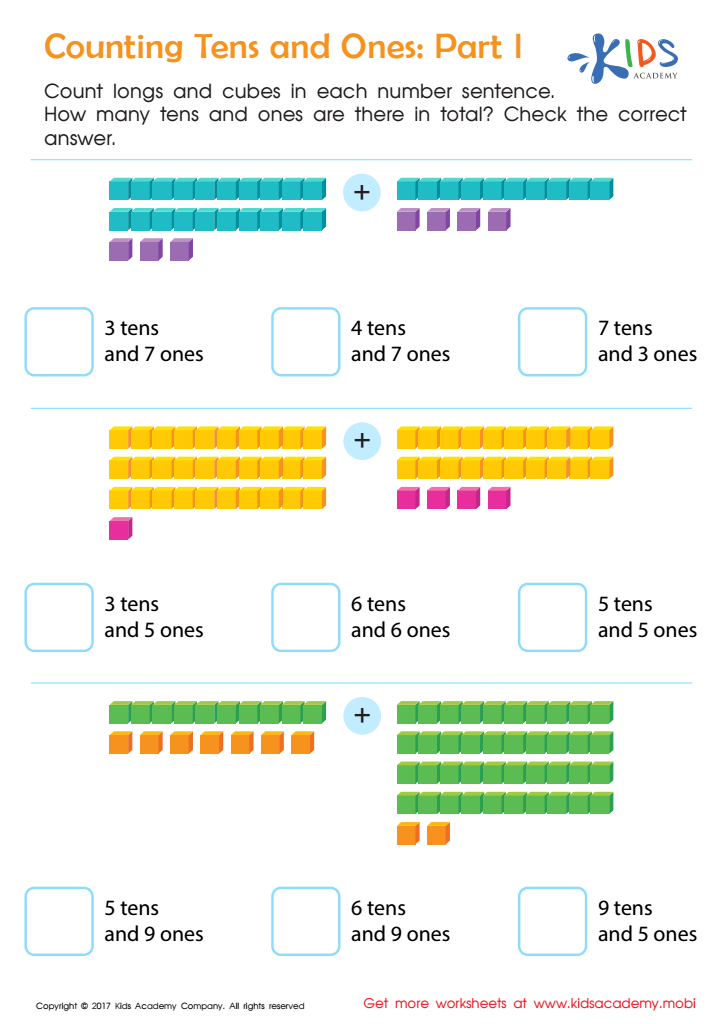
Counting Tens and Ones: Part 1 Worksheet
Kids Academy has a great place value worksheet to help kids learn when they don't have manipulatives at home! It includes longs and cubes that kids can count and add to find the sum. Colorful and downloadable, this page will help kids understand addition and place value better. Give it a try!
 Assign to My Students
Counting Tens and Ones: Part 1 Worksheet
Worksheet
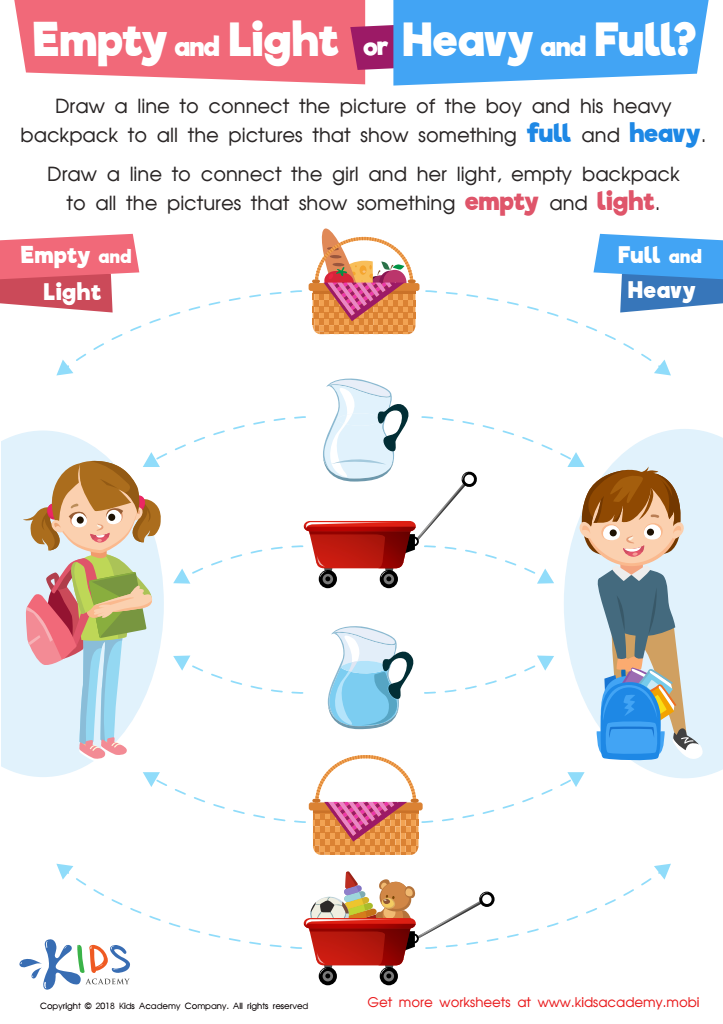
Empty and Light or Heavy and Full? Worksheet
Kids can have trouble understanding measurement, like the differences between heavy and light. This worksheet helps them associate full with heavy and empty with light, using familiar images. Plus, it's a fun way to practice fine motor skills, tracing the lines to connect the pictures.
Empty and Light or Heavy and Full? Worksheet
Worksheet
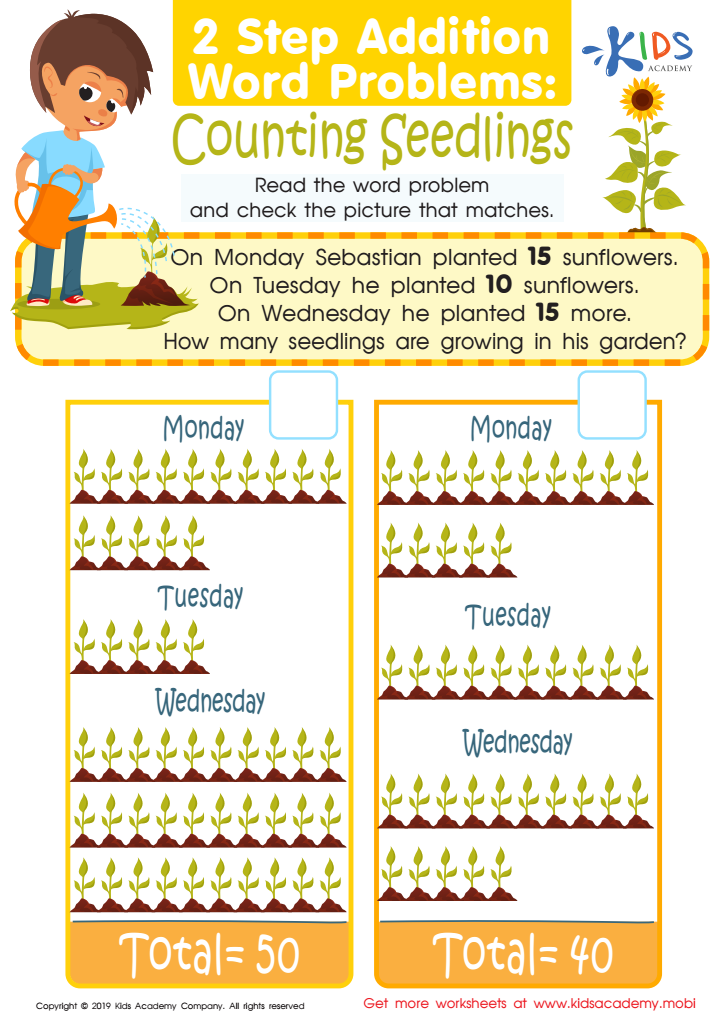
Counting Seedlings Worksheet
Understanding math word problems is key. Multiple steps can prove challenging - this free worksheet provides one-to-one picture representation to help kids solve multi-step addition word problems. Strengthen addition skills by choosing the matching picture to the answer.
Counting Seedlings Worksheet
Worksheet
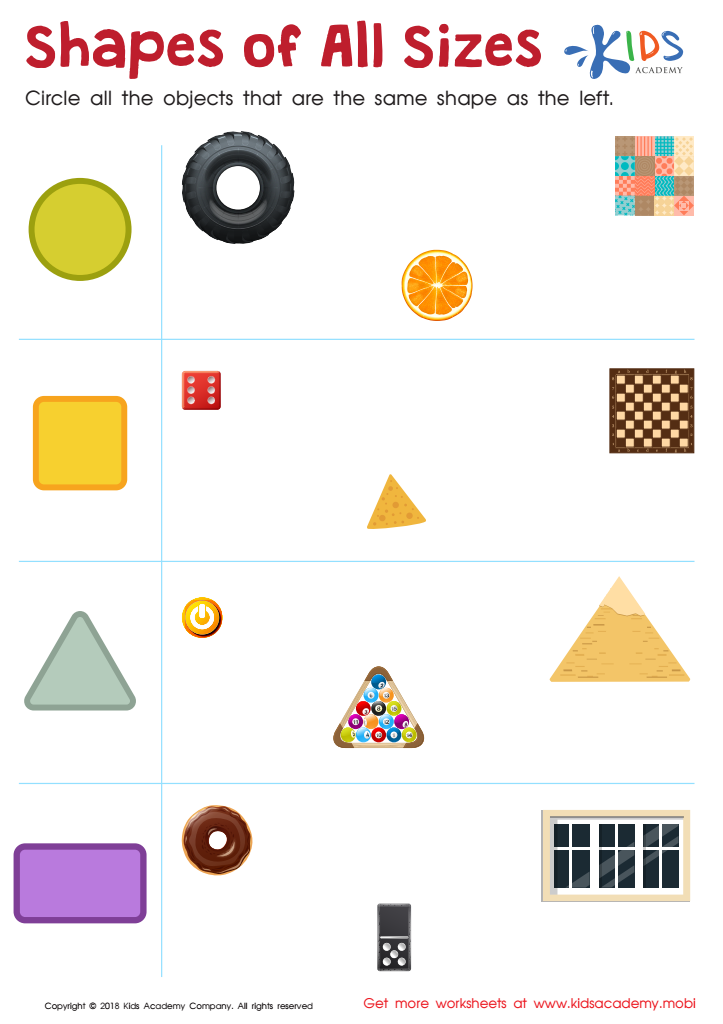
Shapes of All Sizes Worksheet
Students will have fun comparing basic shapes to familiar objects with this worksheet. It's an excellent way to help them recognize similarities in geometric shapes, building strong foundations for understanding congruence and similarity.
Shapes of All Sizes Worksheet
Worksheet
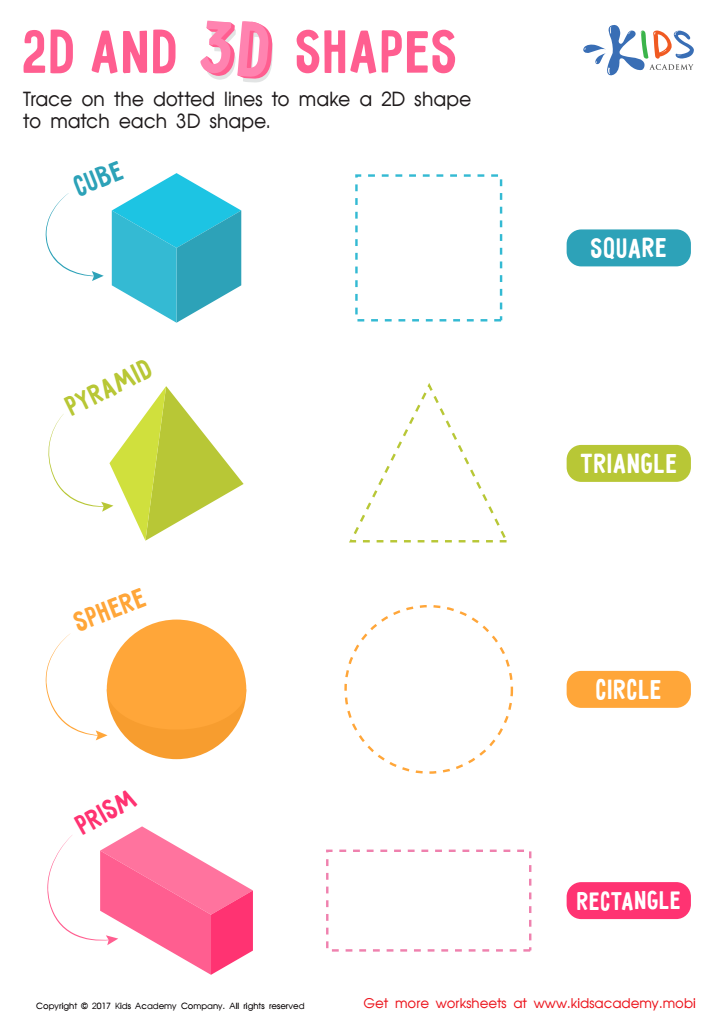
2D and 3D Shapes Worksheet
Introduce your child to 3D and 2D with this traceable worksheet. With dotted lines, help them trace and make a 2D shape for each 3D shape: square, triangle, rectangle, and circle. Show them there's more than one way to draw! You may have taken them to a 3D movie, or they've seen some fantastic 3D art. Now they can wonder no more.
2D and 3D Shapes Worksheet
Worksheet
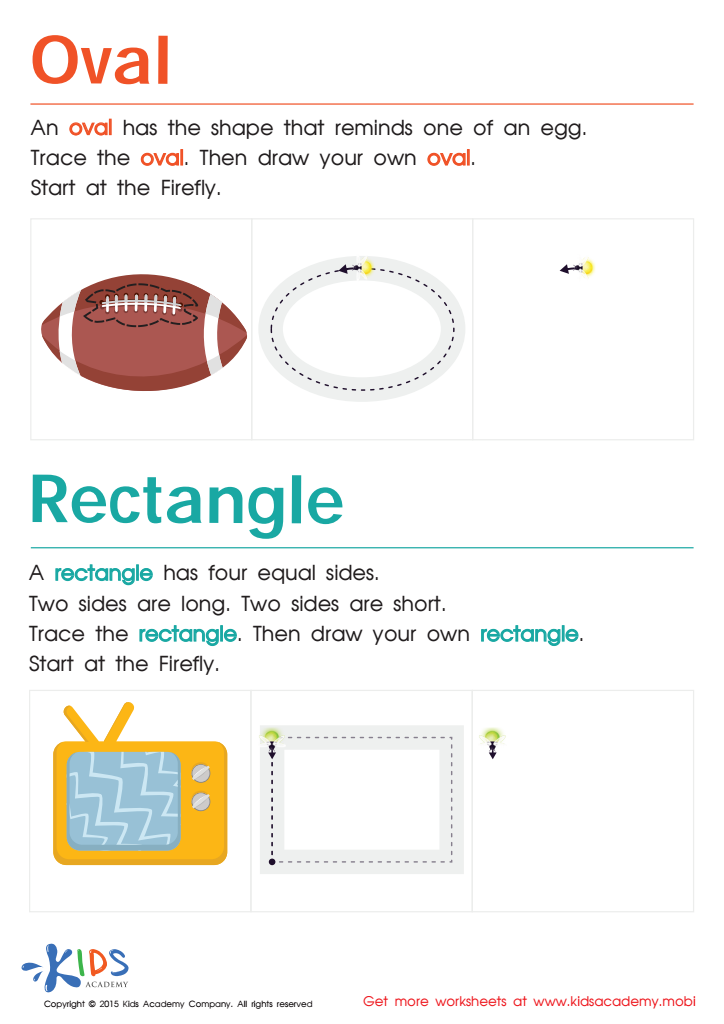
Easy Drawing of Ovals And Rectangles Worksheet
Kids Academy offers free geometry worksheets to make learning more fun and interesting. Trace an oval, rectangle, and many other shapes!
Easy Drawing of Ovals And Rectangles Worksheet
Worksheet
Join Kids Academy for Free
Who is primarily going to use this learning content?








Visual perception skills play a crucial role in a child's ability to succeed in mathematics, especially for children aged 6-8. During this developmental stage, children are actively learning how to recognize shapes, understand spatial relationships, and visualize mathematical concepts. Strong visual perception skills allow children to interpret visual information accurately, which is essential for solving problems, recognizing patterns, and engaging with geometric concepts.
Parents and teachers should care about fostering these skills because they form the foundation for more advanced mathematical thinking. When children can visualize and manipulate objects mentally, they gain confidence in their problem-solving abilities and are better equipped to tackle complex math tasks. In addition, visual perception skills enhance a child's reading and writing capabilities by helping them distinguish letters, words, and numbers more effectively.
By supporting visual perception development through games, puzzles, and hands-on activities, parents and teachers can create a rich learning environment that not only prepares children for future academic success in math but also promotes overall cognitive growth. Investing in these foundational skills ultimately helps set children on a path to becoming proficient and motivated learners, making math a more accessible and enjoyable subject as they progress in their education.








