Color recognition Matching Worksheets for Ages 6-8
3 filtered results
-
From - To
Unlock a world of vibrant learning with our Color Recognition Matching Worksheets, designed specifically for children aged 6-8. These engaging activities enhance color identification skills, sharpen memory, and boost cognitive development. Our expertly crafted worksheets provide a fun and educational experience, filled with bright and relatable images that captivate young learners. Whether practiced at home or in the classroom, they support essential early math skills and foster a love for learning. Explore now and watch your child gain confidence in color matching while enjoying every moment of the learning journey. Visit the site to start your colorful adventure today!
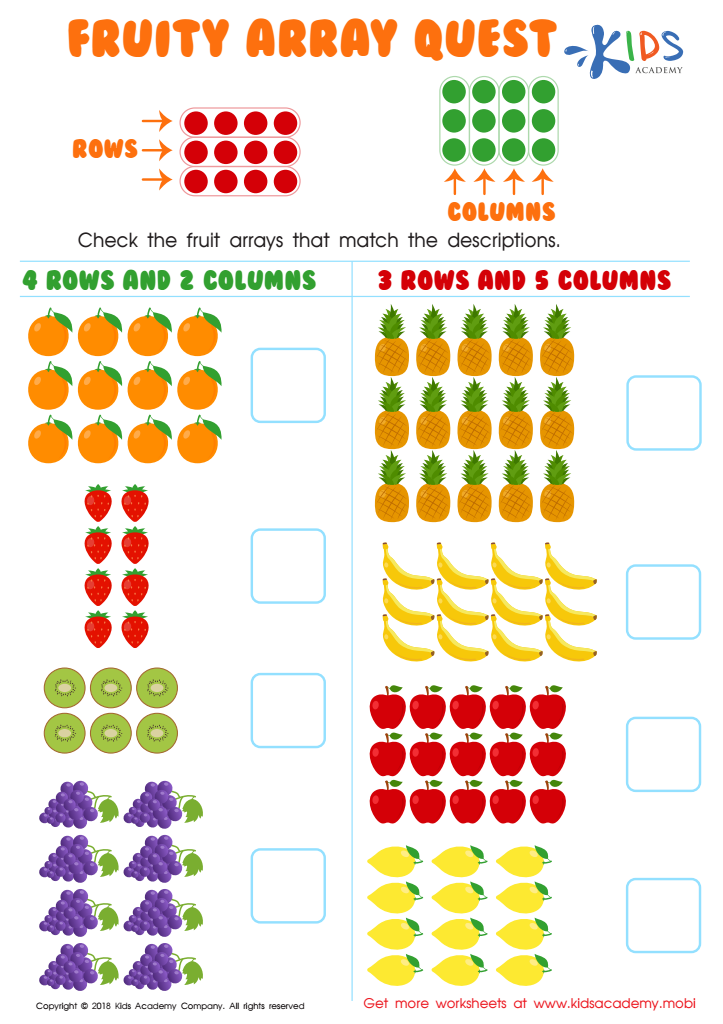
Fruity Array Quest Worksheet
 Assign to My Students
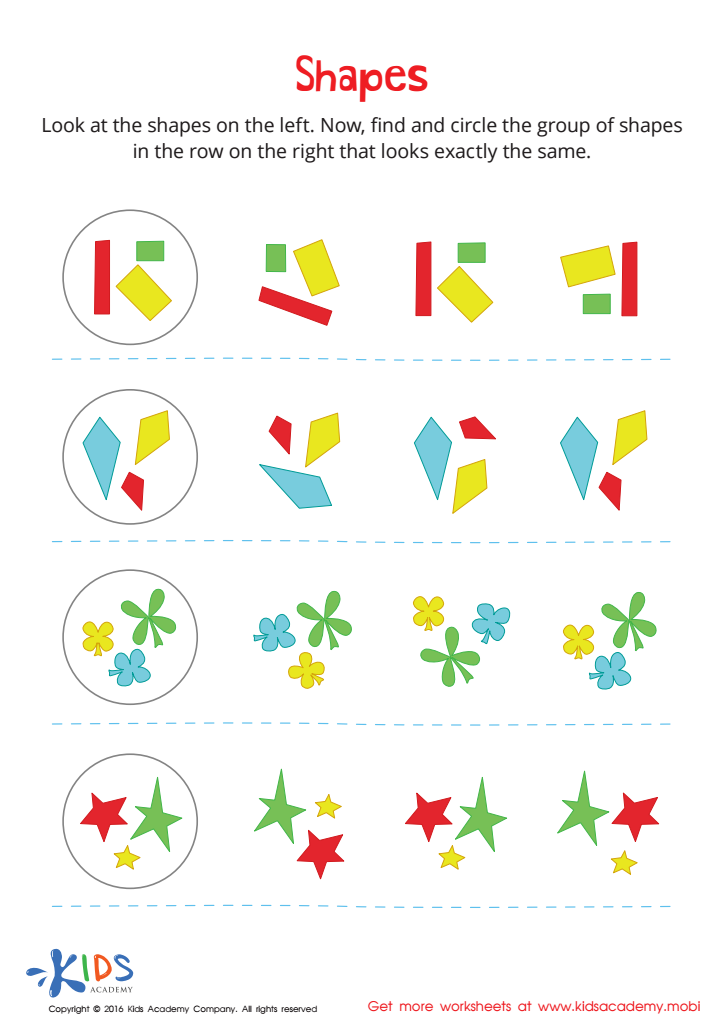
Shapes Worksheet








Color recognition matching is a fundamental aspect of early childhood education, serving as a foundational skill for various areas of cognitive development in children aged 6-8. Parents and teachers should care about this skill for several reasons.
Firstly, color recognition is pivotal in developing visual discrimination, a crucial cognitive skill that helps children differentiate between objects in their environment. This ability contributes to reading skills, as distinguishing letters and words requires visual discrimination capabilities.
Secondly, engaging in color recognition activities enhances children's vocabulary and language skills. Naming and discussing colors encourages verbal communication and language development, which are essential for effective learning across all subjects.
Additionally, color matching aids in improving memory and concentration. Remembering colors and successfully matching them with corresponding items requires cognitive focus and improves the child's attention span. These skills are crucial as they form the basis for tackling more complex academic challenges in later years.
Furthermore, color matching games and activities can foster creativity. Exploring different combinations of colors encourages children to express themselves and think innovatively. This can be especially beneficial for their artistic development and overall creative growth.
Overall, integrating color recognition matching into early education is an essential step in developing vital cognitive, linguistic, and creative skills, shaping well-rounded and capable learners.








