Comparing sizes Measurement Worksheets for Ages 6-8
9 filtered results
-
From - To
Welcome to our Comparing Sizes Measurement Worksheets for Ages 6-8! Perfectly crafted for young learners, these activities help children develop essential measurement skills in a fun, engaging way. By working through these worksheets, kids will learn to compare and contrast different objects based on size, fostering a deeper understanding of spatial awareness and fundamental math concepts. Designed with colorful illustrations and interactive exercises, our worksheets make learning enjoyable and effective. Ideal for both classroom and home use, they support curriculum standards and provide a strong foundation for future math success. Start exploring and boost your child's measurement skills today!
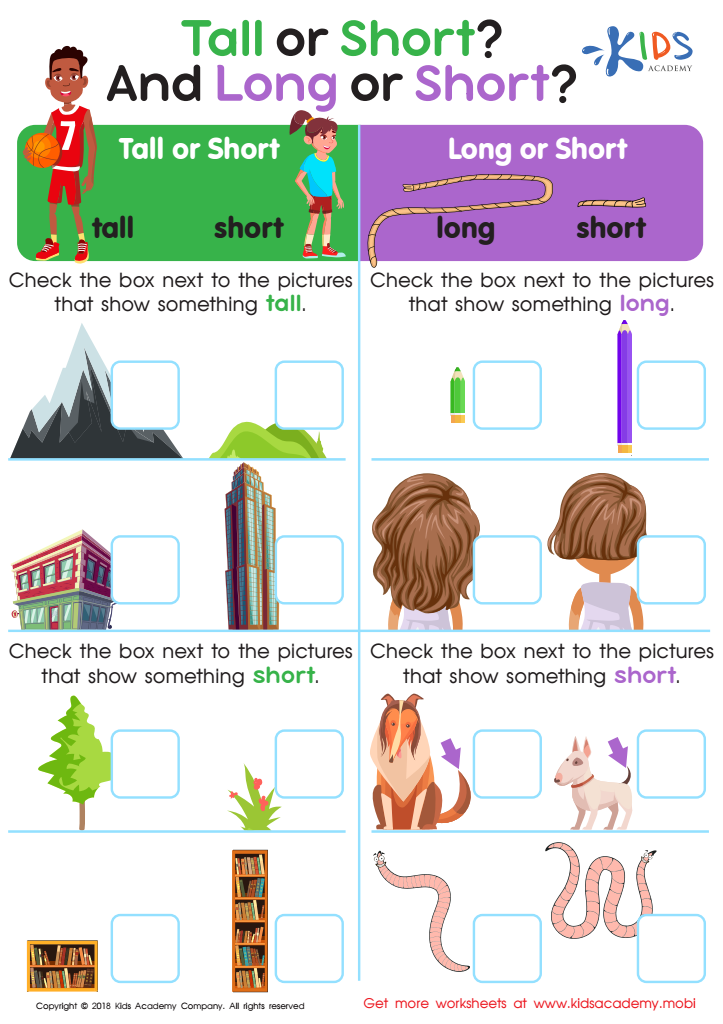
Tall or Short and Long or Short? Worksheet
 Assign to My Students
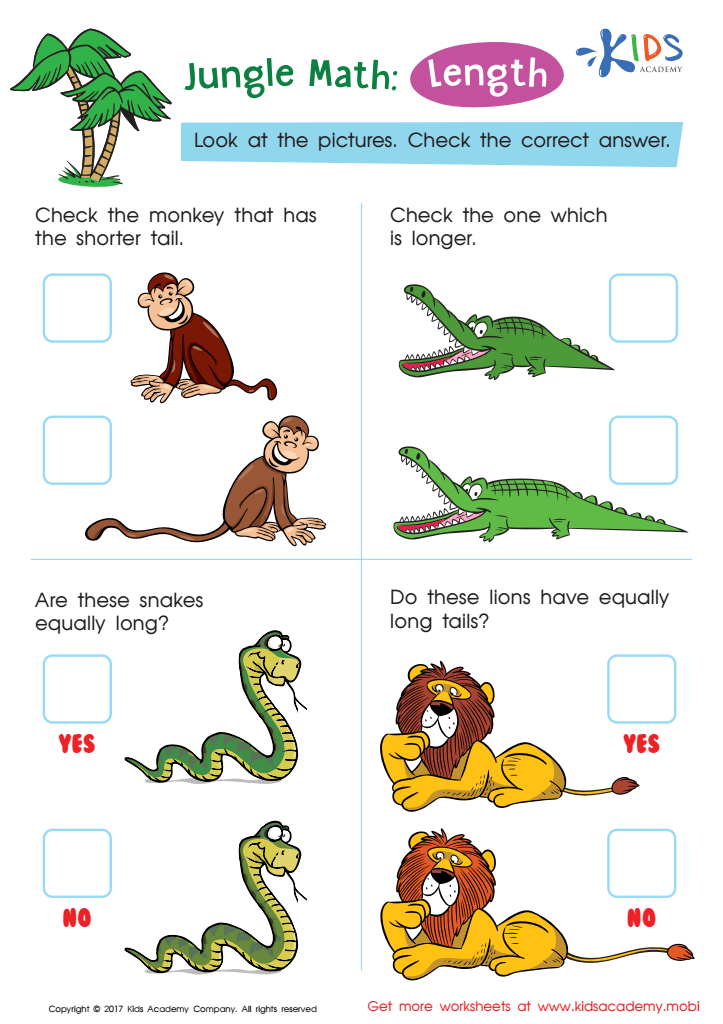
Which One Is Longer - Length Worksheet
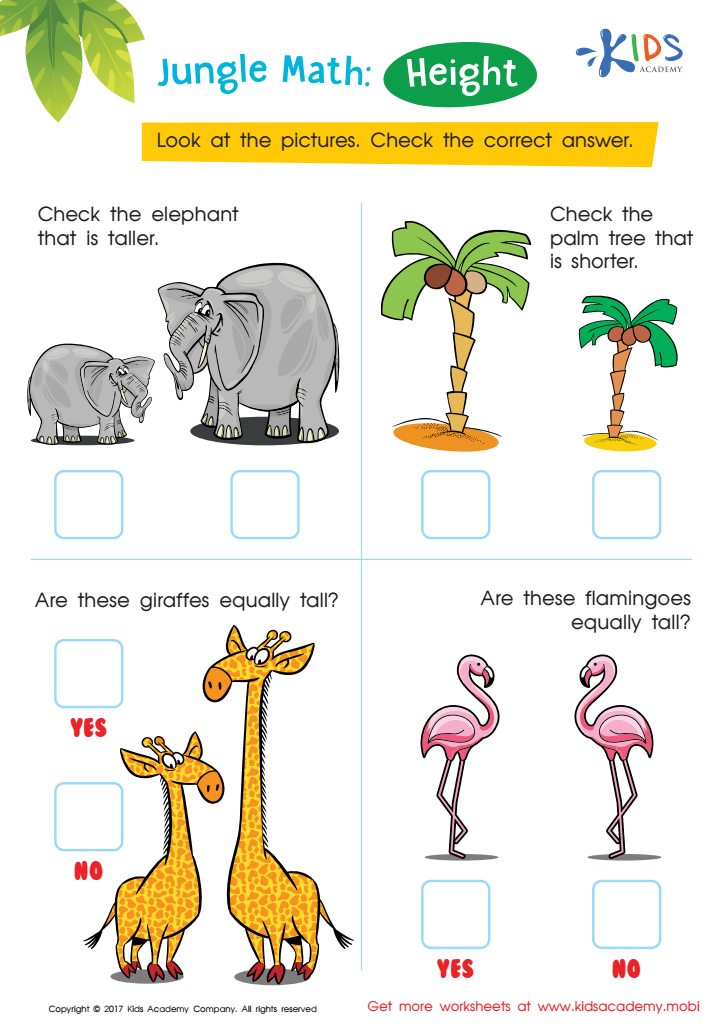
Which Is Taller Worksheet
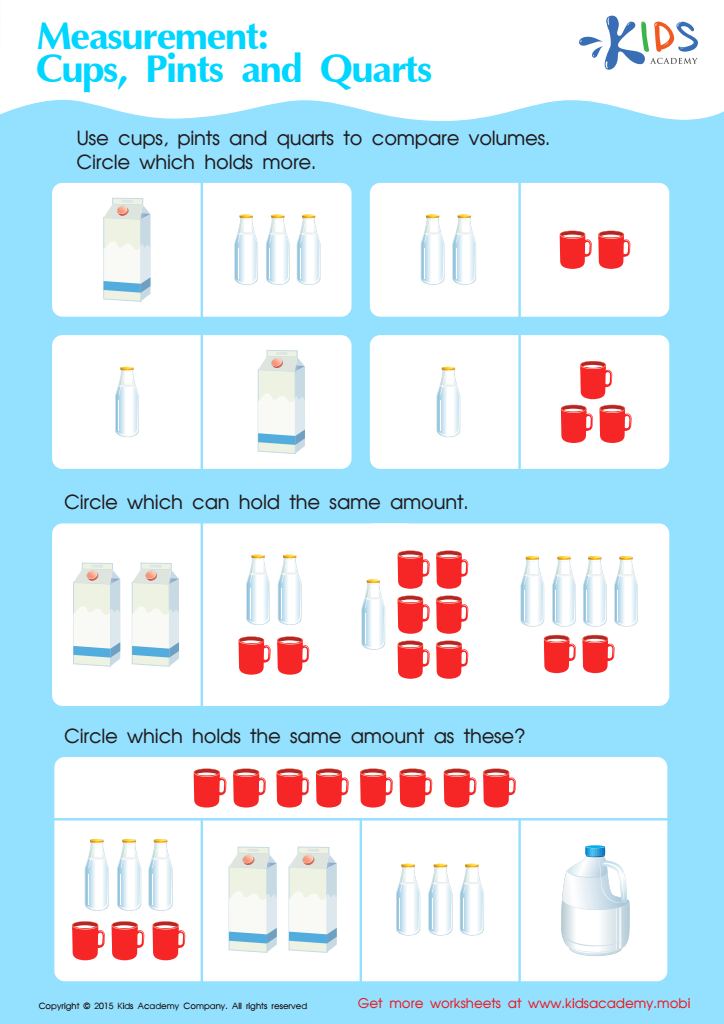
Measurement: Compare Volumes Worksheet
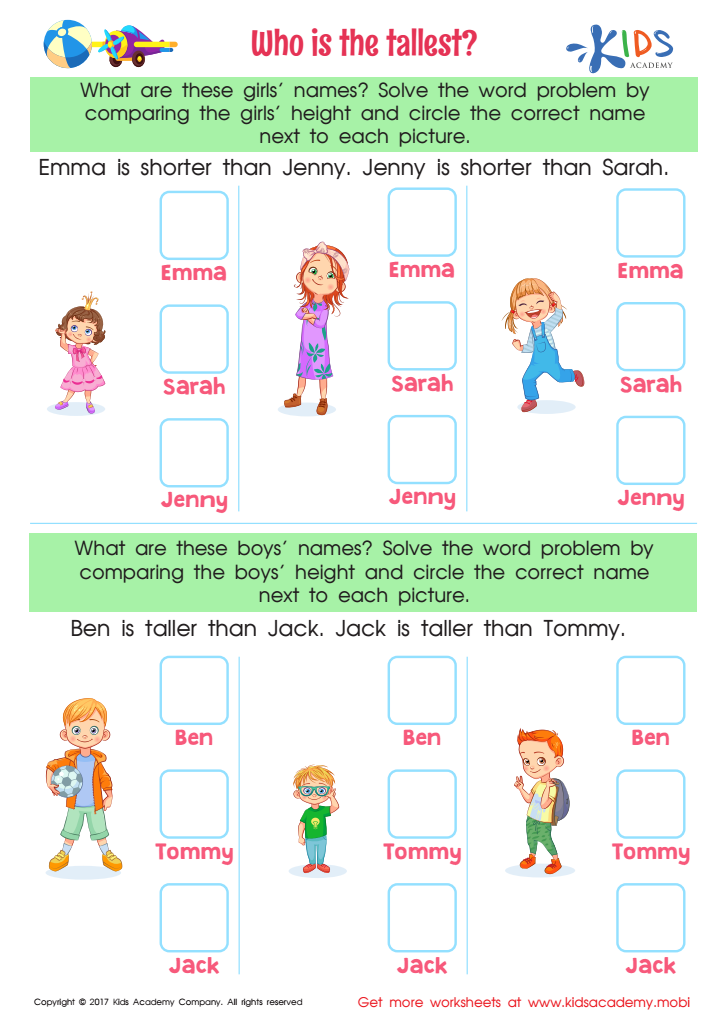
Who Tallest Printable
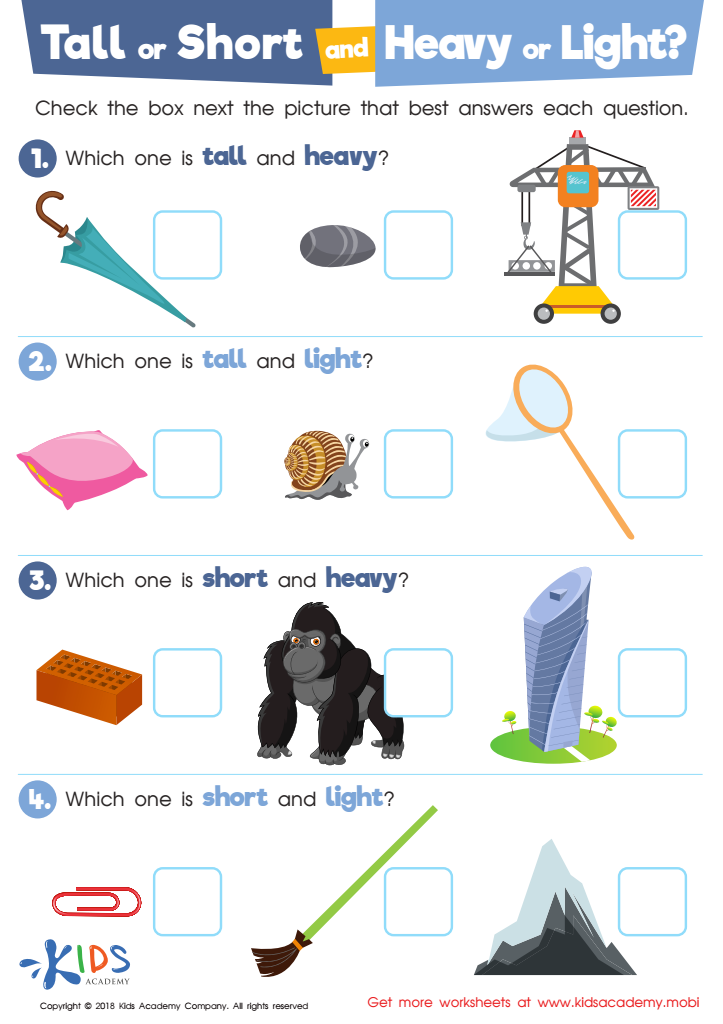
Tall or Short and Heavy or Light? Worksheet
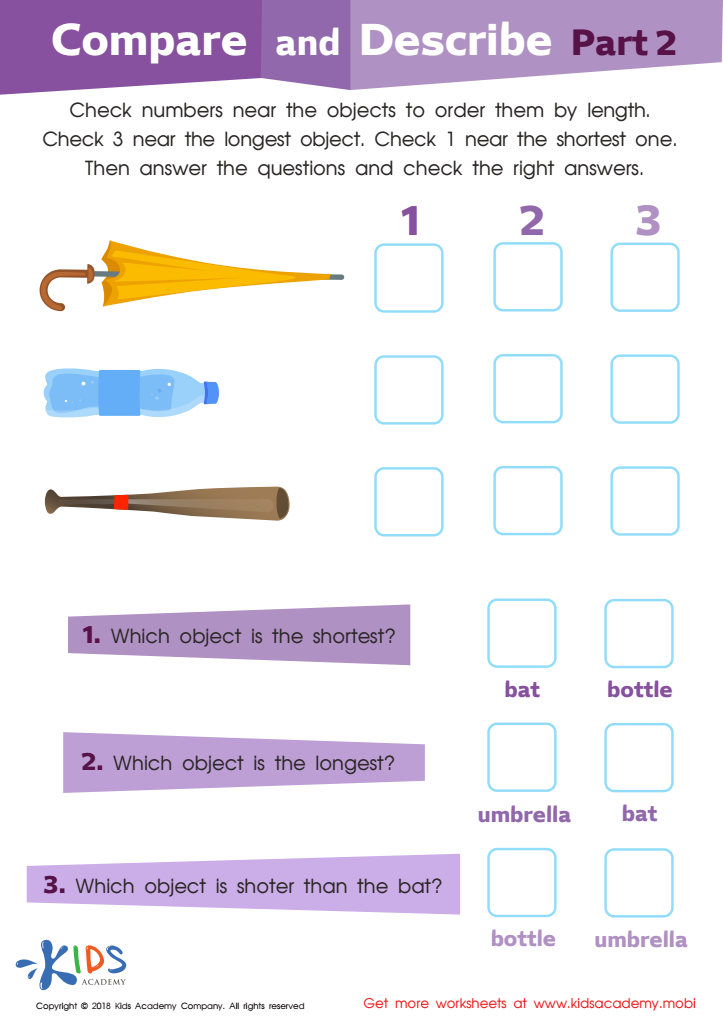
Compare and Describe: Part 2 Worksheet
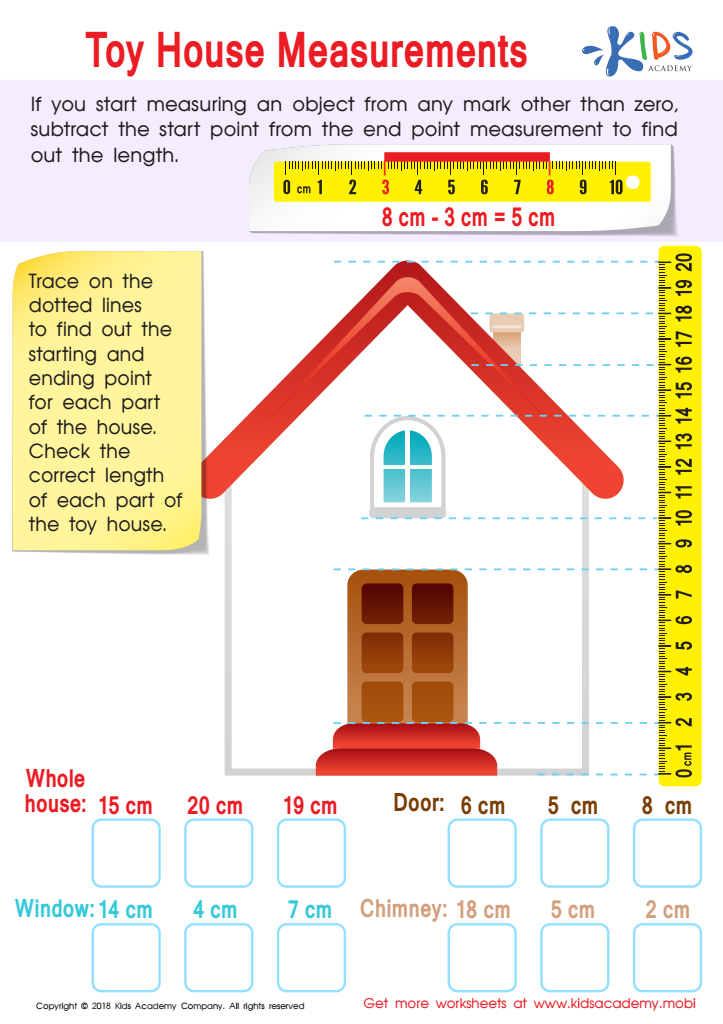
Toy House Measurements Worksheet
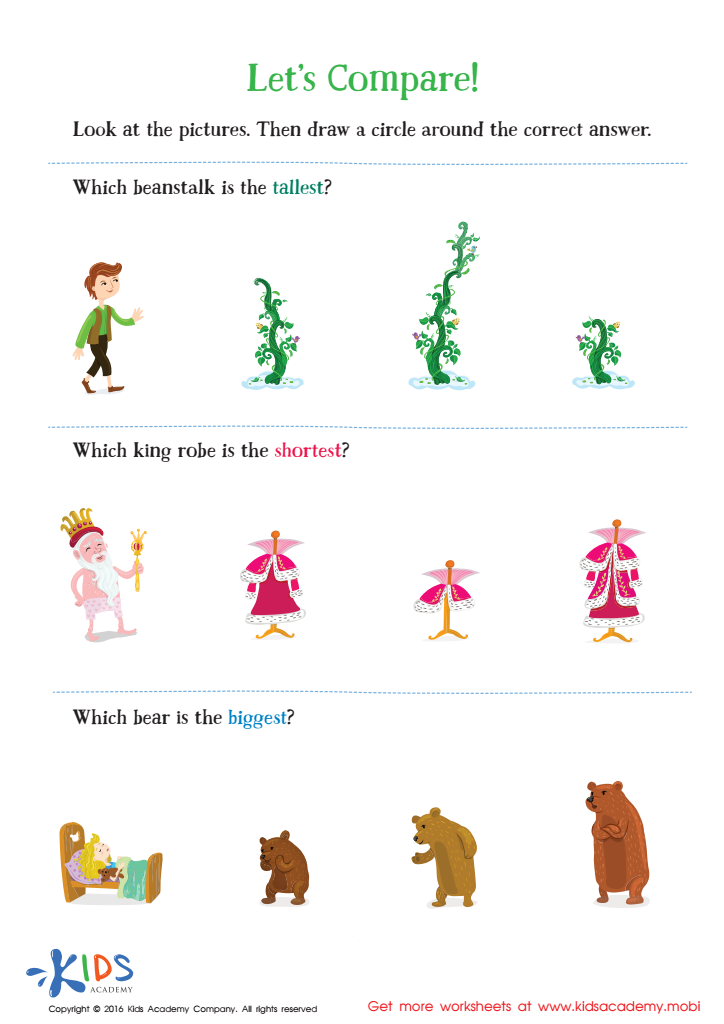
Fairy Tale Worksheet: Let's Compare








At ages 6-8, comparing sizes and measurement form the foundation for a child's understanding of mathematical concepts, spatial awareness, and scientific reasoning. For parents and teachers, nurturing these skills is crucial because they pave the way for more advanced math and critical thinking abilities.
First, comparing sizes helps children grasp the basic ideas of more or less, bigger or smaller, and longer or shorter. These early concepts are vital as they lead into learning about numbers, addition, and subtraction. When children consistently practice measuring and comparing objects, they develop a concrete understanding of quantities and scales, which is fundamental to math proficiency.
Secondly, these activities enhance observational skills and attention to detail. When kids measure items and compare their sizes, they practice careful observation and learn to note differences and similarities, which boosts their analytical thinking.
Moreover, the process of measuring fosters vocabulary development. Terms like “taller,” “shorter,” “higher,” and “lower” become part of their everyday language, improving communication skills.
Finally, engaging in measurement activities can be fun and interactive. For instance, measuring plant growth or ingredients in a recipe can make learning active and enjoyable, fostering a lifelong enthusiasm for discovery and learning.
In summary, understanding measurement and comparison not only strengthens math skills but also encourages critical thinking, observational skills, and subject-integrated learning, forming a comprehensive educational experience for young children.








