
Time recognition Measurement Worksheets for Ages 6-8
3 filtered results
Difficulty Level
Grade
Age
-
From - To
Subject
Activity
Standards
Enhance your child's understanding of time with our Time Recognition Measurement Worksheets designed for ages 6-8. These engaging and interactive worksheets focus on developing essential skills in telling time, recognizing clocks, and understanding time concepts. With fun activities and colorful illustrations, children will grasp both digital and analog time recognition while solving puzzles and completing exercises. Perfect for homeschooling or supplementary learning in the classroom, these worksheets cater to various learning styles and make abstract concepts tangible. Foster your child's mathematical confidence and time management skills in a playful way. Download now to start your journey to mastering time!
Favorites
With answer key
Interactive
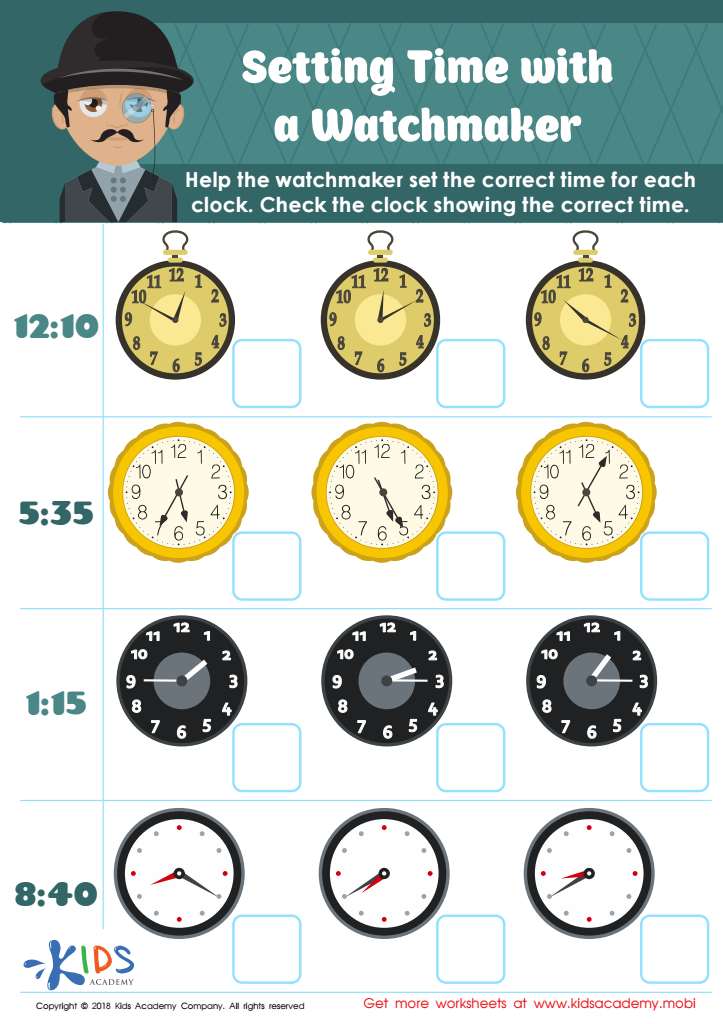
Setting Time with Watchmaker Worksheet
Can your kids tell the time? If so, this worksheet should be easy. Help them set the time for each clock: look at the time written on the left side and find the clock on the right side that matches.
 Assign to My Students
Setting Time with Watchmaker Worksheet
Worksheet
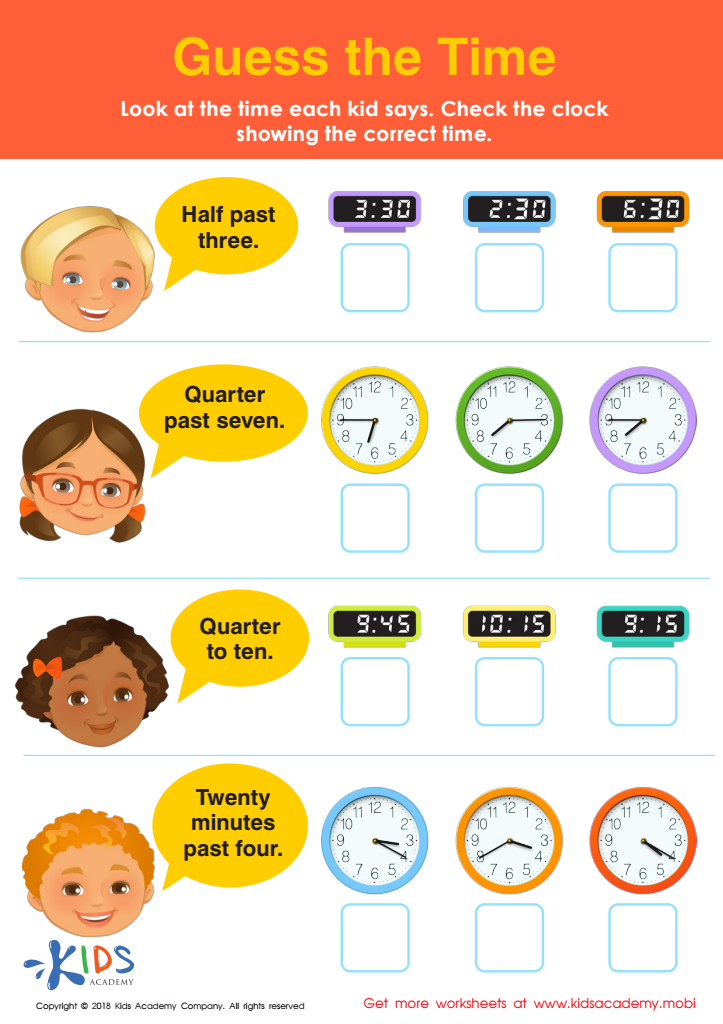
Guess the Time Worksheet
Help students tell the time accurately with this fun exercise. Read the time each person says and find the corresponding clock. Check the options on the left and have students guess the right time. This worksheet is sure to sharpen their time-telling skills.
Guess the Time Worksheet
Worksheet
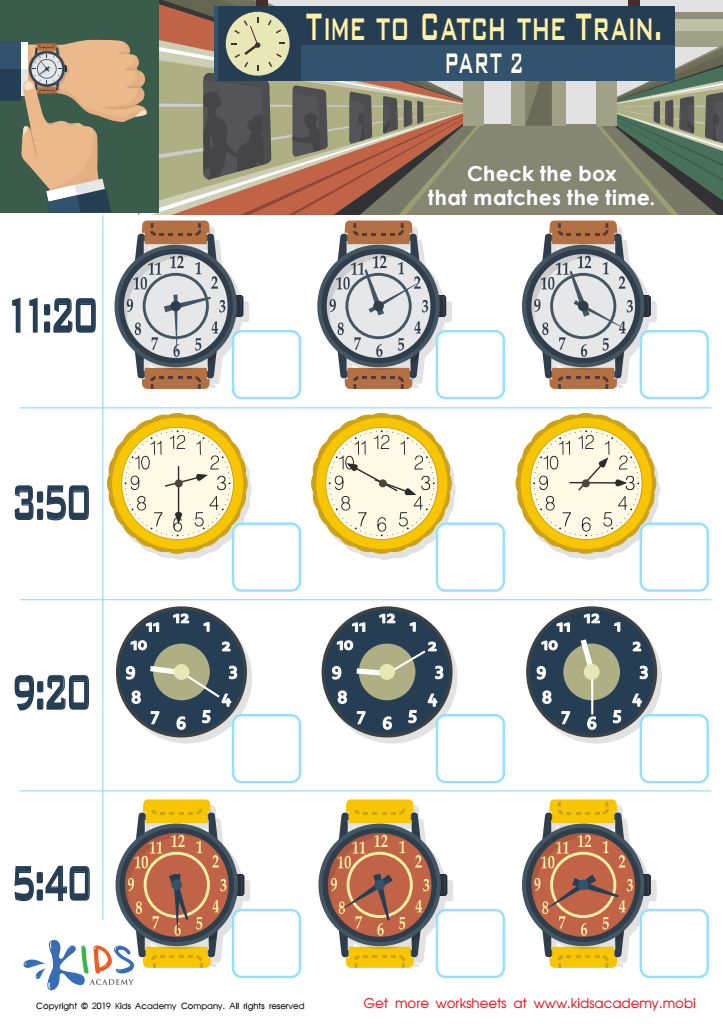
Time to Catch the Train Part 2 Worksheet
Teach your kids the importance of telling time and how to do it. Explain that there are multiple ways to show the time, such as written on the left side or watches in the picture. Guide them to check the box that matches the time. Knowing the time is essential to get things done and create order. Ensure your kids understand this and they will reap the benefits.
Time to Catch the Train Part 2 Worksheet
Worksheet
Join Kids Academy for Free
Who is primarily going to use this learning content?








Time recognition and measurement are critical skills for children aged 6-8, marking a key developmental milestone in education. At this age, children transition from conceptual understanding to practical applications of time, influencing their daily routines, academic tasks, and social interactions. Understanding time helps in developing essential life skills, such as punctuality and time management, which are vital for success both in school and later in life.
Simple tasks like organizing playdates, managing homework, or coordinating activities rely on a child’s ability to read clocks and comprehend duration. For parents and teachers, fostering this skill encourages responsibility and independence in children. Moreover, time measurement nurtures critical thinking as students often compare durations, estimate how long tasks will take, or sequence events, enhancing cognitive development.
Furthermore, engaging children with clocks, timers, and schedules in a playful yet educational manner can captivate their interest and make learning about time enjoyable. It sets a foundation for more complex mathematical concepts related to measurement and operations in later grades. Therefore, prioritizing time recognition and measurement is essential for holistic development, instilling lifelong skills while promoting academic confidence and effective communication in day-to-day life.








