
Counting practice Numbers 11–20 Worksheets for Ages 6-8
4 filtered results
Difficulty Level
Grade
Age
-
From - To
Subject
Activity
Standards
Unlock your child's potential with our Counting Practice Numbers 11–20 Worksheets for Ages 6-8! These engaging, educational worksheets help young learners master counting and number recognition for numbers 11 through 20. Packed with colorful, fun activities, children will enjoy practicing sequencing, identifying, and writing numbers, as well as simple addition and subtraction. Perfect for classroom use or additional practice at home, these worksheets support early math skills and build a strong numerical foundation. Spark your child’s enthusiasm for learning and track their progress with our expertly designed resources, fostering confidence and enrichment in their mathematical journey.
Favorites
With answer key
Interactive
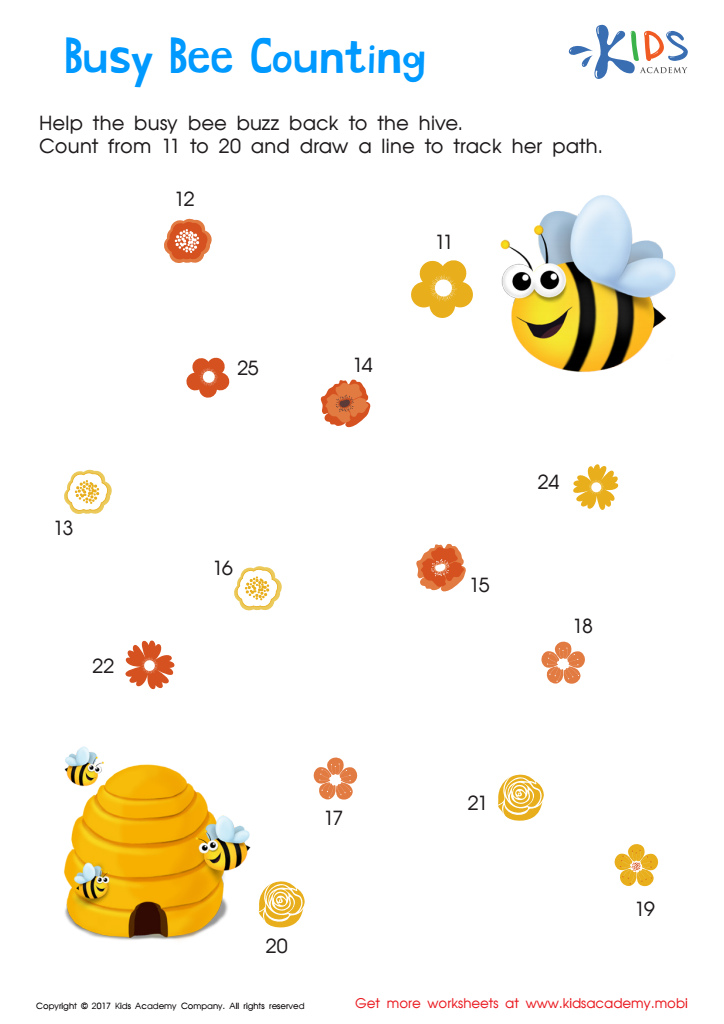
Ordering 11–20: Busy Bee Counting Worksheet
Help your child master counting from 11 to 20 with our connect the dot counting worksheet. Kids will have fun counting, drawing and problem-solving with this vibrant worksheet. With clear directions, adorable pictures and a sense of purpose, your child will develop crucial numeracy skills without even knowing it!
 Assign to My Students
Ordering 11–20: Busy Bee Counting Worksheet
Worksheet
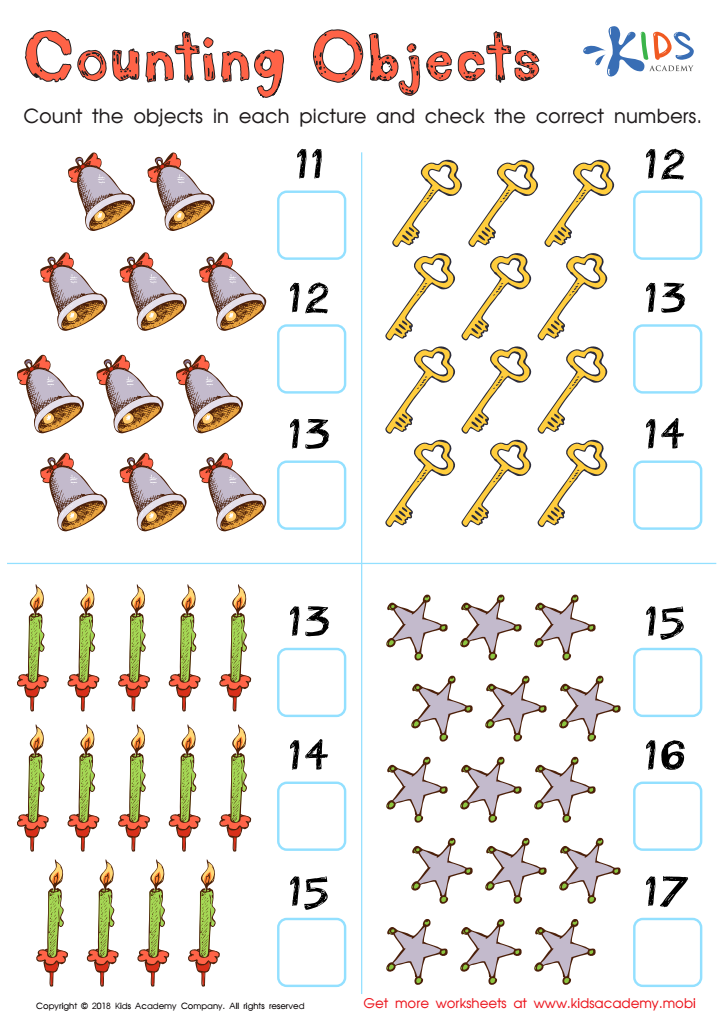
Counting Numbers Worksheet For Kindergarten
This worksheet is a great way to get your child practicing foundational math skills. With bright pictures to count, counting numbers just got a lot more fun! Get them ready for future math success and help them hone their early math skills.
Counting Numbers Worksheet For Kindergarten
Worksheet
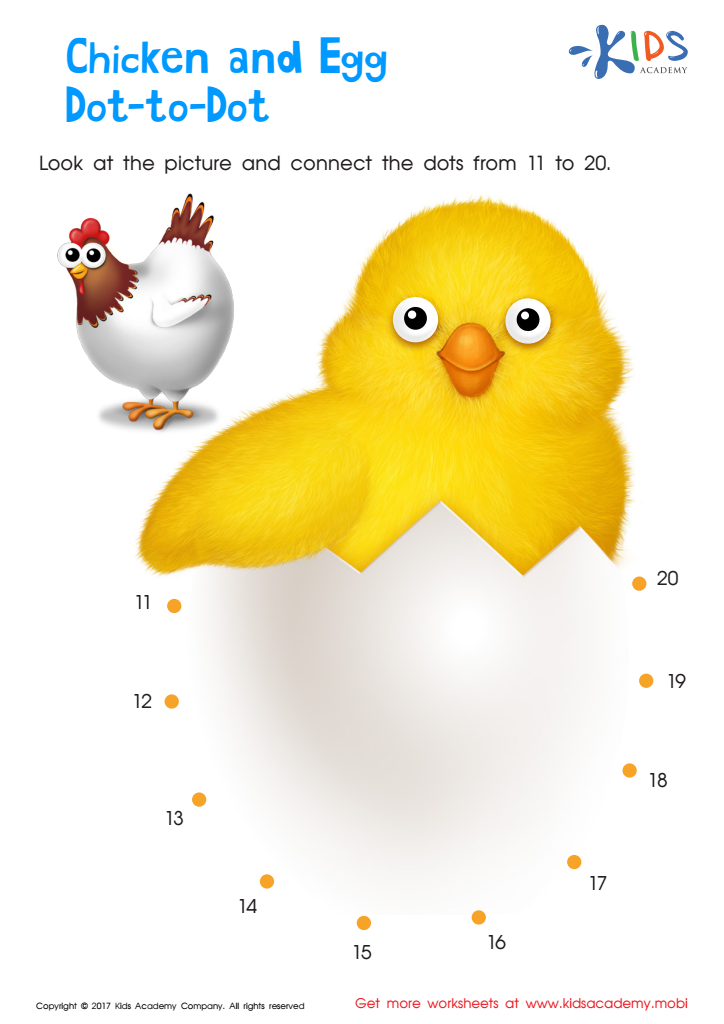
Ordering 11–20: Chicken & Egg Dot–to–dot Worksheet
Help your child hatch the chick and practice their counting skills with this dot to dot worksheet – the chicken came first! Connect the dots 11-20 to have fun and learn at the same time. Experience meaningful practice and gain confidence while drawing great pictures.
Ordering 11–20: Chicken & Egg Dot–to–dot Worksheet
Worksheet
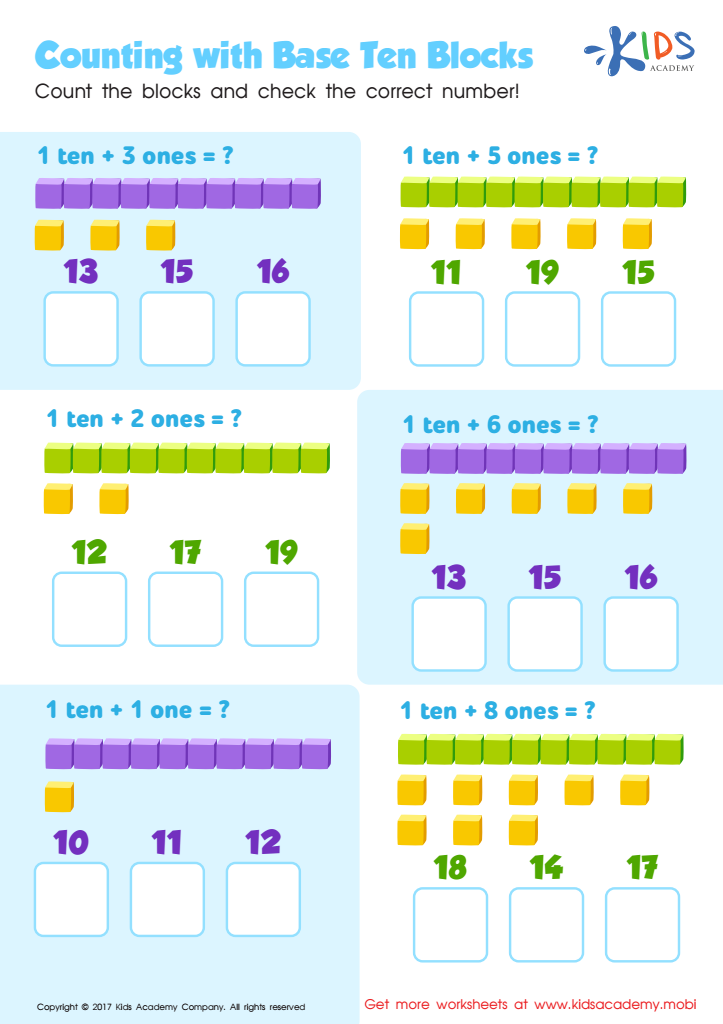
Counting with Base Ten Blocks Worksheet
Math has different levels and gets harder as your child progresses. Don't be surprised when they bring home an algebra worksheet! In this one, they will add 1 tens to varying numbers and fill in the total. This builds their understanding of base tens.
Counting with Base Ten Blocks Worksheet
Worksheet
Join Kids Academy for Free
Who is primarily going to use this learning content?



Counting practice for numbers 11-20 is fundamental for children aged 6-8 as it lays the groundwork for more complex mathematical concepts. Understanding these 'teen' numbers is critical because they serve as a bridge between single-digit numbers and the two-digit numeral system, which is foundational for mathematical literacy.
Mastery of counting from 11 to 20 helps children grasp the base-ten system, where they begin recognizing patterns in numbers, an important skill for addition, subtraction, and eventually, multiplication and division. For instance, knowing that 14 is made up of one ten and four ones furthers their number sense and aids in mental calculations later on.
For this age group, developing proficiency counting in this range also supports cognitive skills such as sequencing, memory, and problem-solving. It fosters confidence and reduces anxiety around math, promoting a more positive attitude toward the subject. Both parents and teachers should prioritize counting practice to ensure a strong mathematical foundation, paving the way for academic success.
Regular practice, through interactive and engaging activities, also aids in reinforcing what children learn in the classroom, making the transition from concrete to more abstract mathematical thinking smoother. This early focus not only boosts academic achievement but can also instill a lifelong love and appreciation for learning mathematics.








