Subtraction practice Subtraction Worksheets for Ages 6-8
33 filtered results
-
From - To
Enhance your child's math skills with our engaging Subtraction Practice Worksheets, specifically designed for ages 6-8. Our collection features a variety of printable subtraction exercises that simplify math learning while keeping it fun. Each worksheet reinforces essential subtraction concepts through colorful visuals and interactive challenges tailored for young learners. Parents and teachers can utilize these resources to help students build confidence and mastery in subtraction. With clear instructions and varying levels of difficulty, our worksheets cater to all learners. Start empowering your child's mathematical abilities today with our comprehensive subtraction practice tools. Explore our worksheets to make math an exciting adventure!
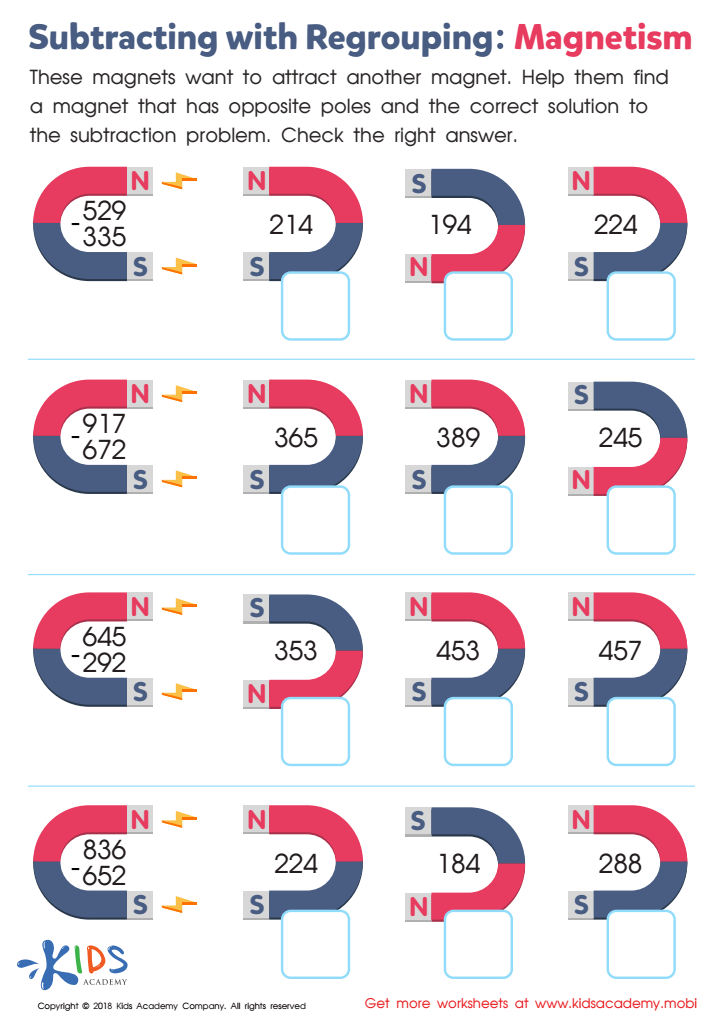
Subtracting with Regrouping: Magnetism Worksheet
 Assign to My Students
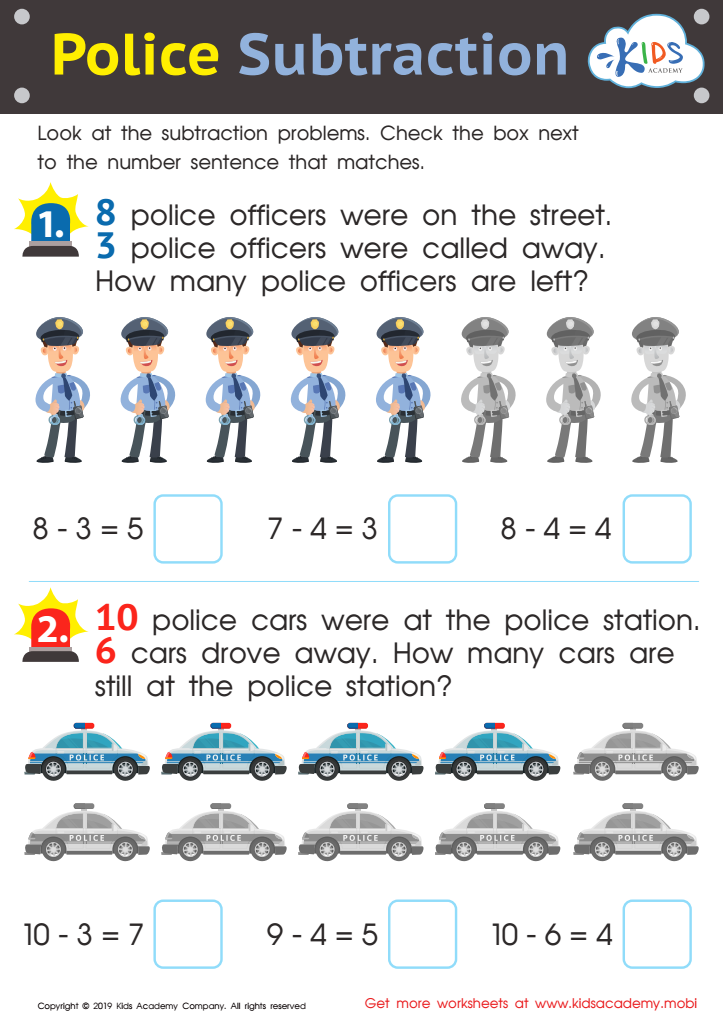
Police Subtraction Worksheet
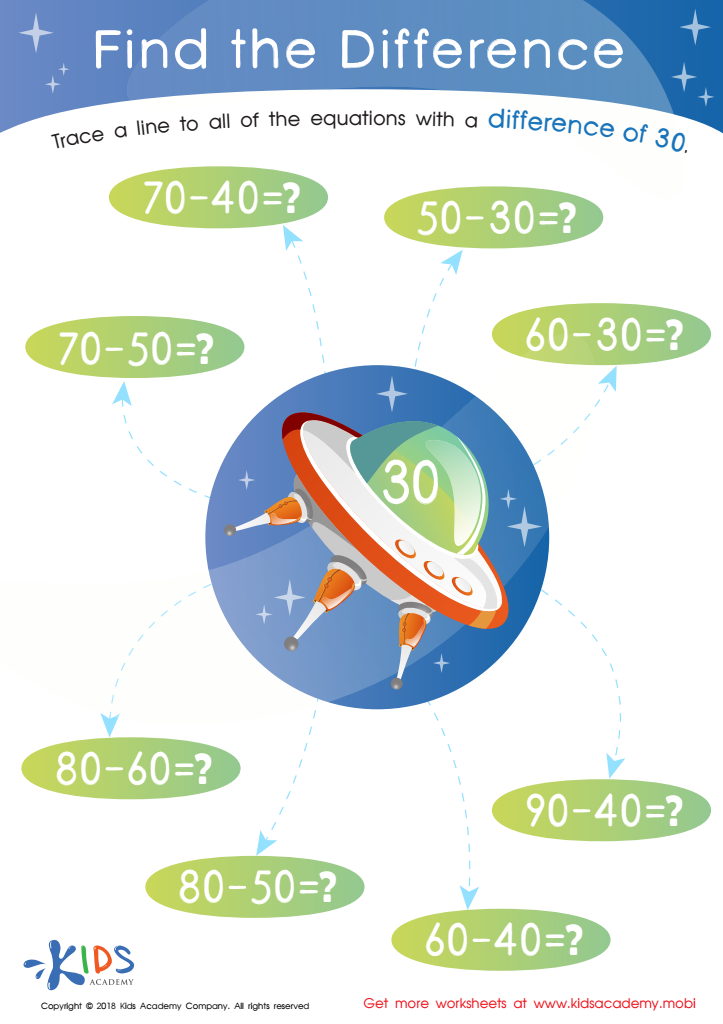
Find The Difference Worksheet
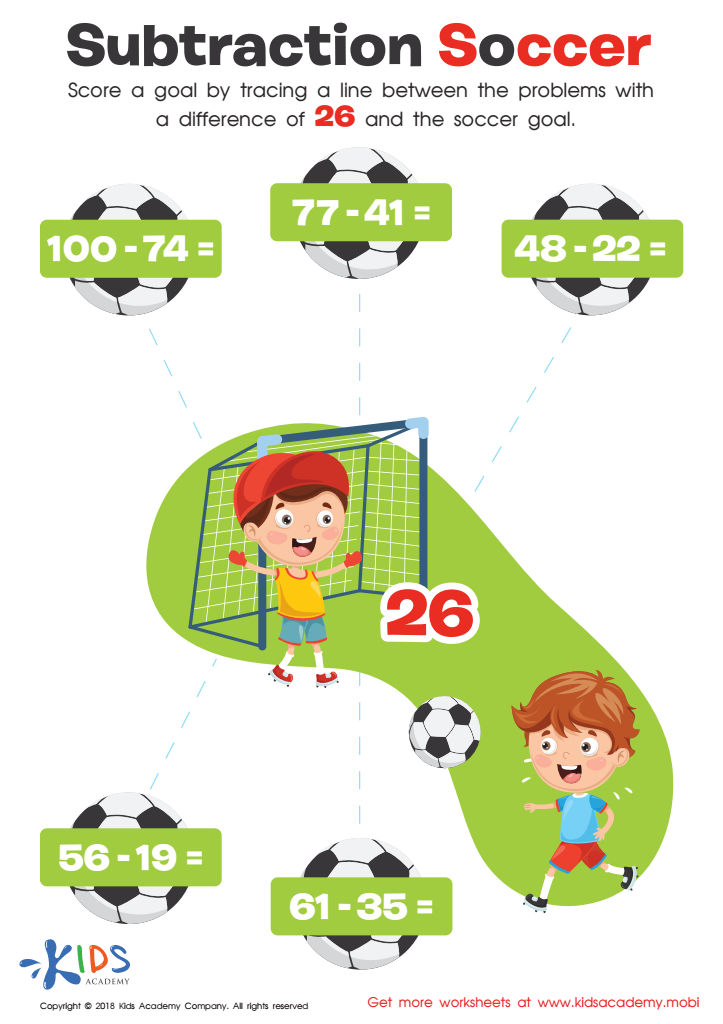
Subtraction Soccer Worksheet
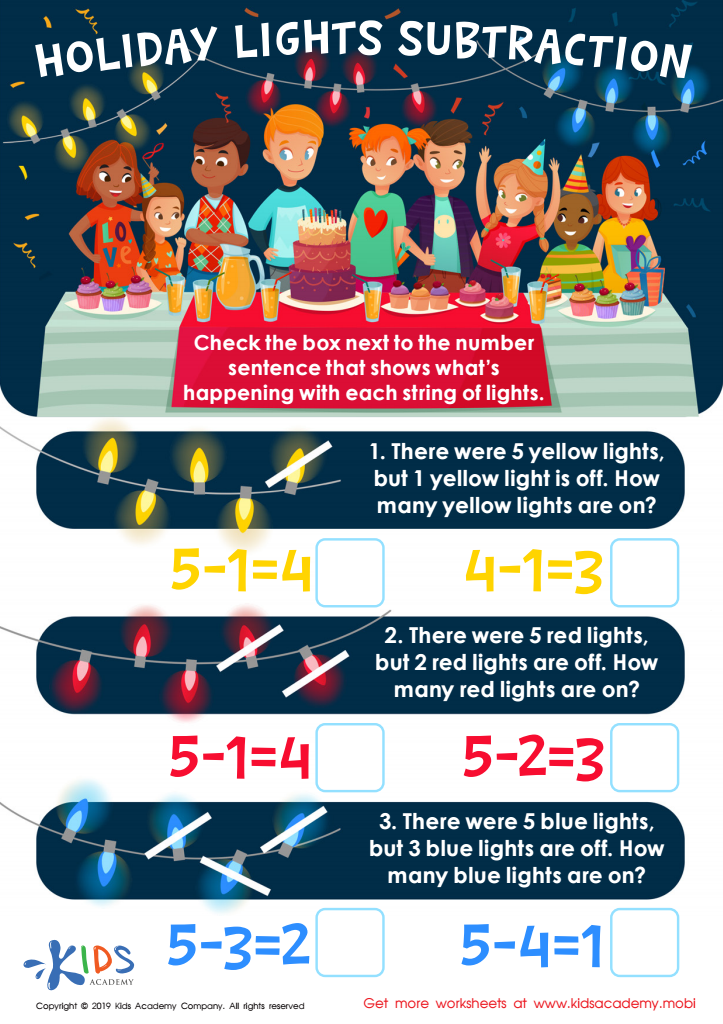
Holiday Lights Subtraction Worksheet
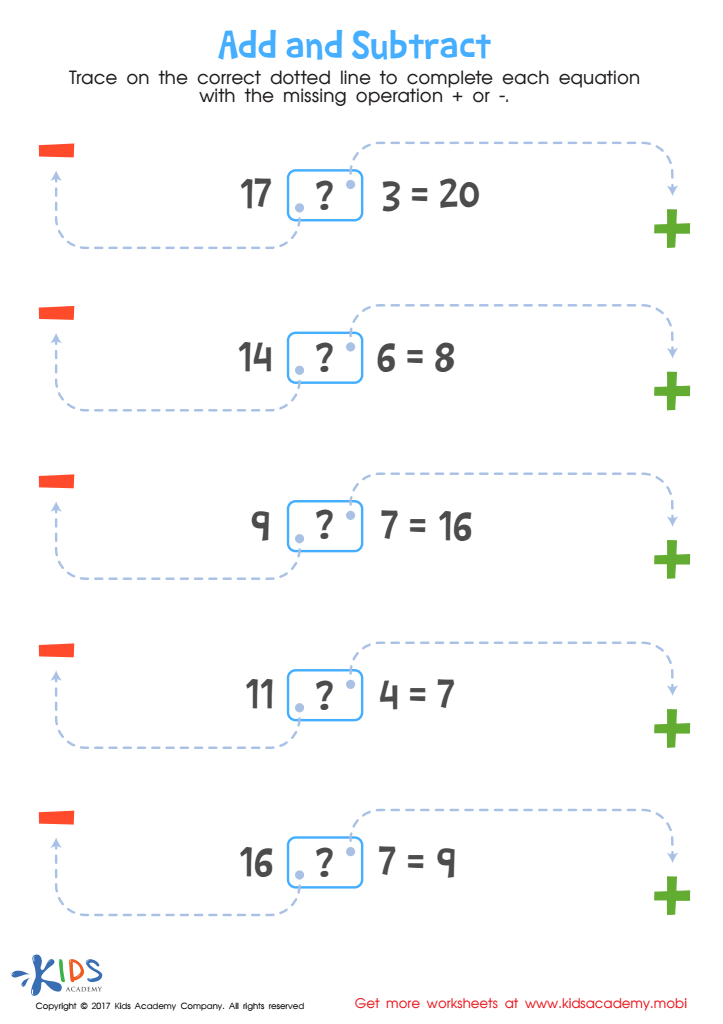
Add and Subtract Worksheet
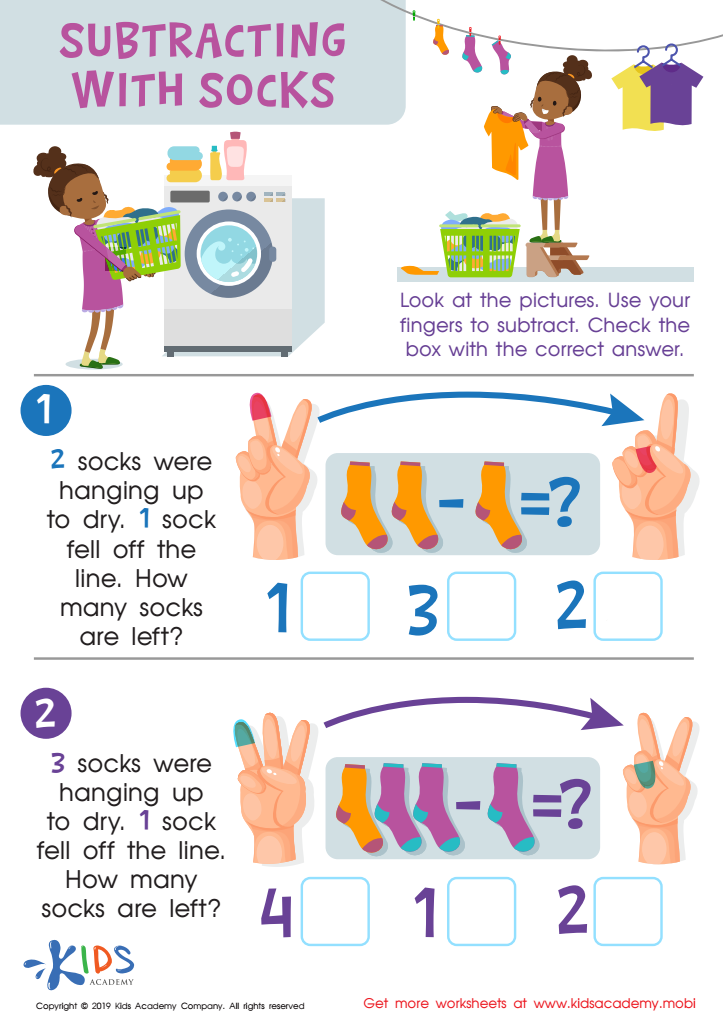
Subtracting Socks Worksheet
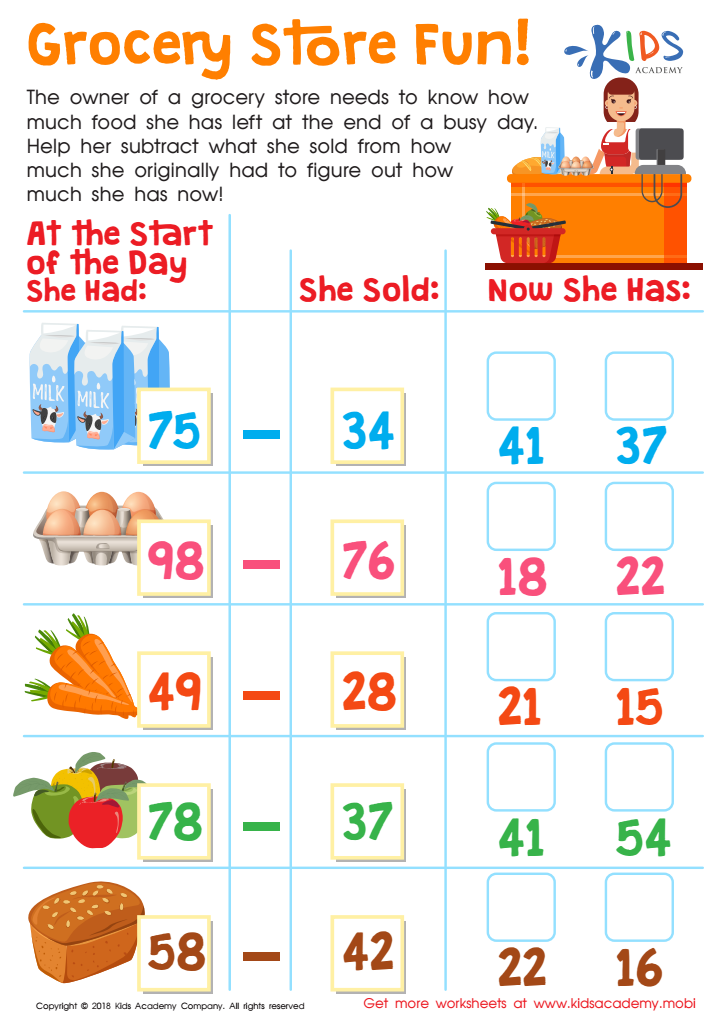
Grocery Store Fun! Worksheet
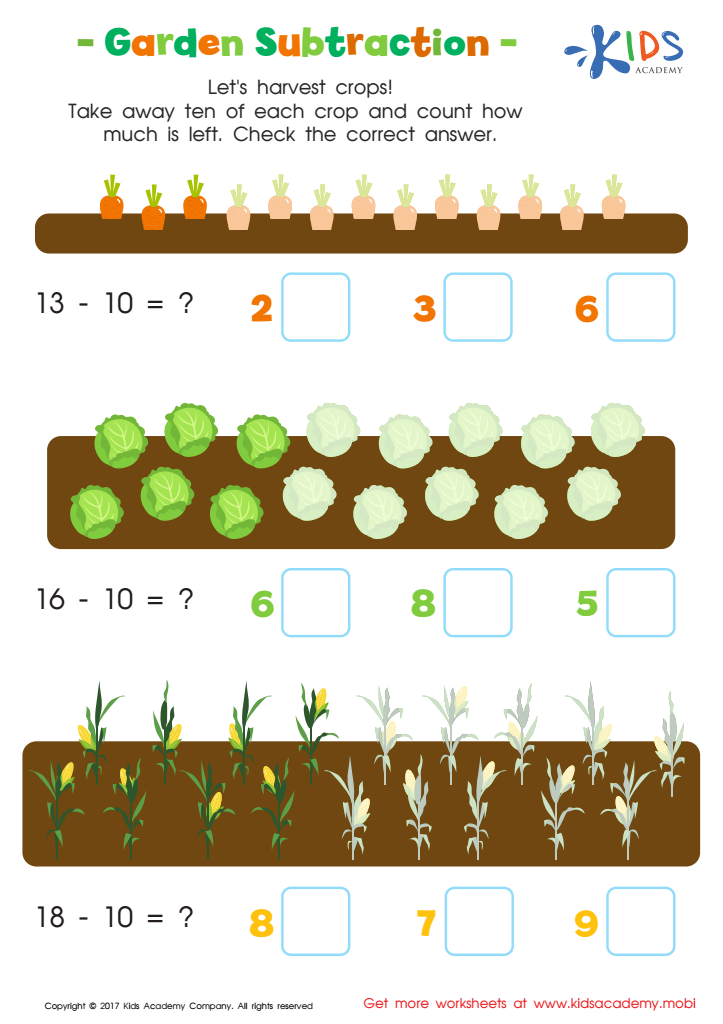
Garden Subtraction Worksheet
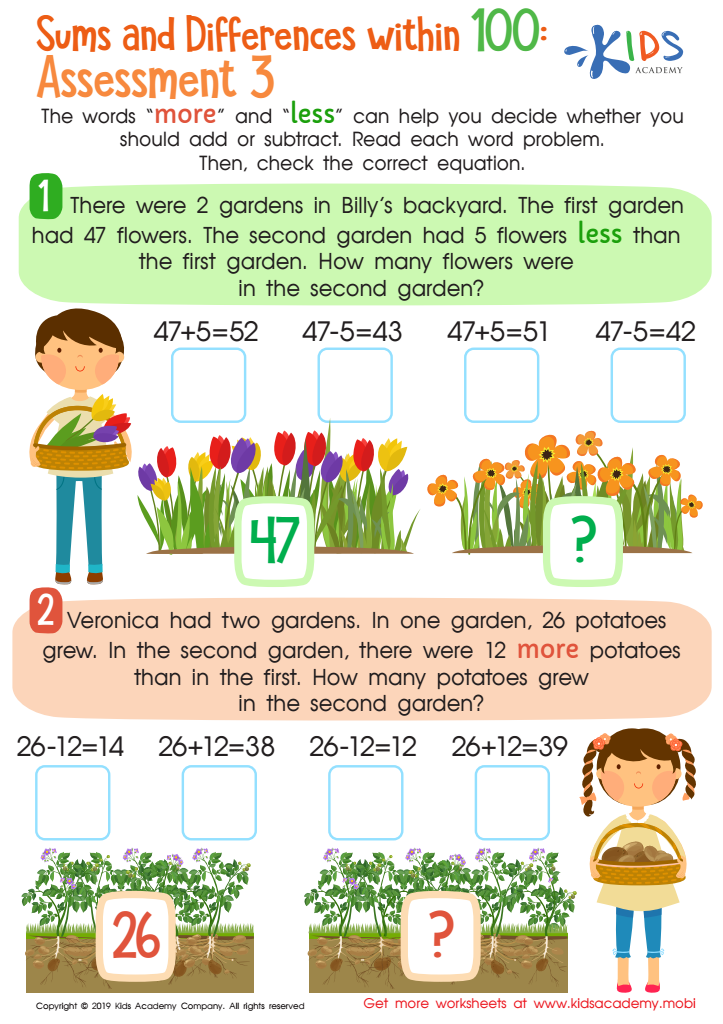
Sums and Differences Within 1 - Assessment 1 Worksheet
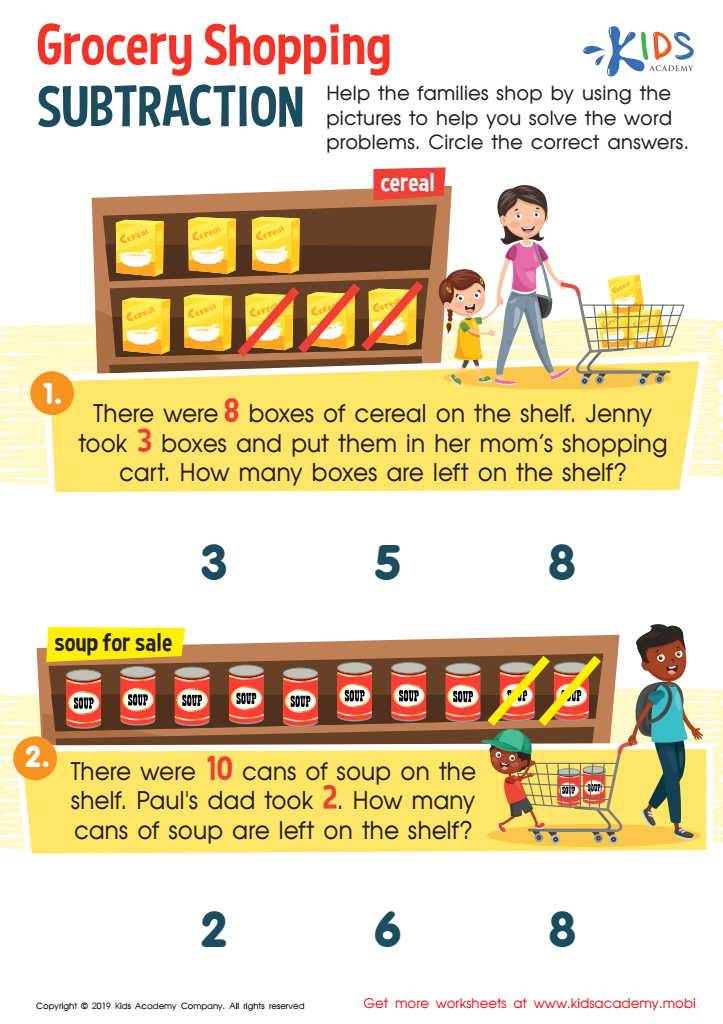
Grocery Shopping Subtraction Worksheet
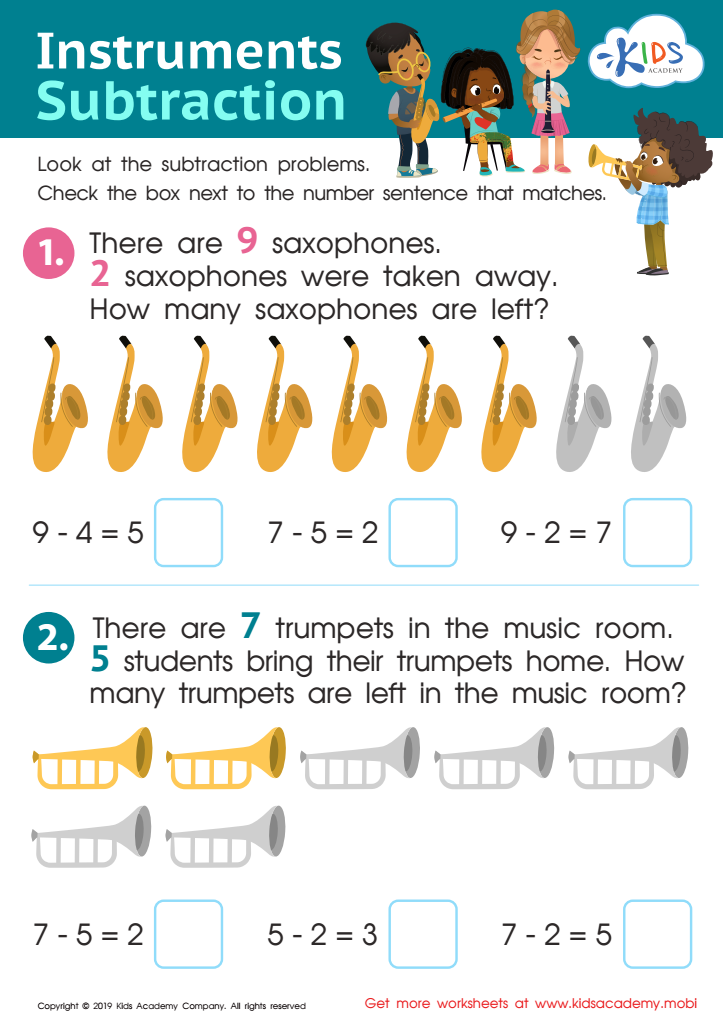
Instrument Subtraction Worksheet
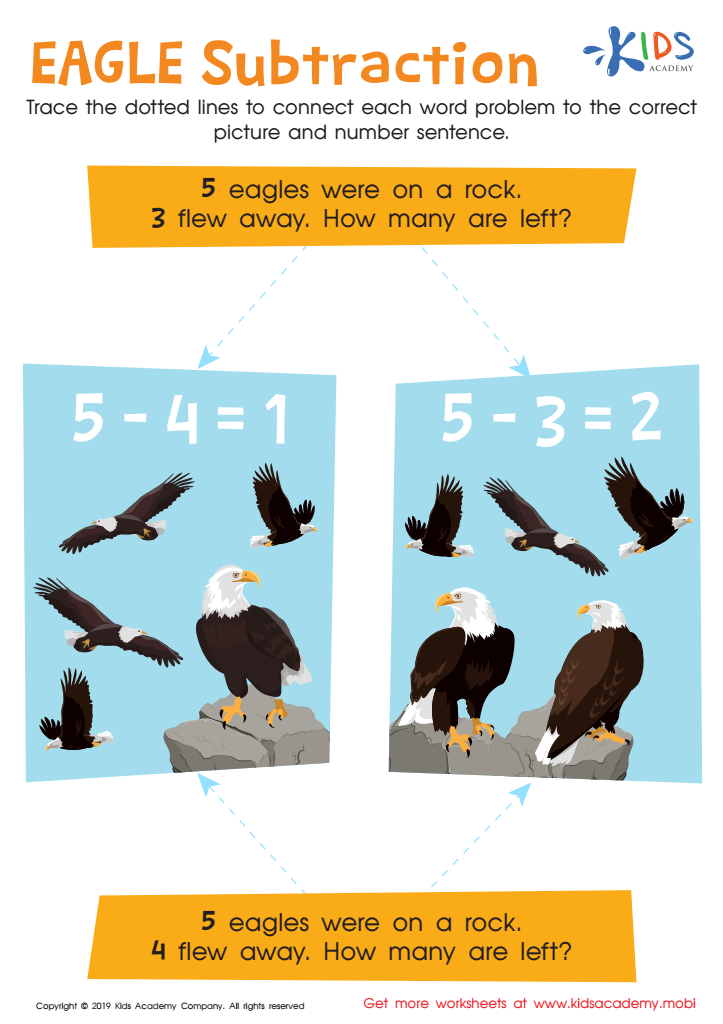
Eagle Subtraction Worksheet
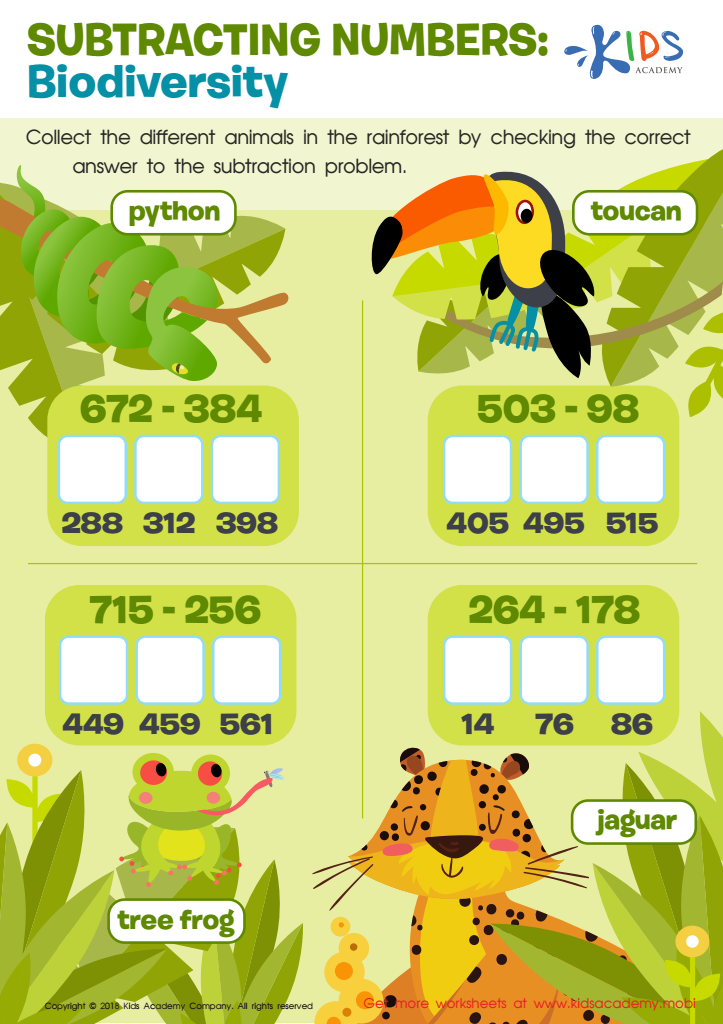
Subtracting Numbers: Biodiversity Worksheet
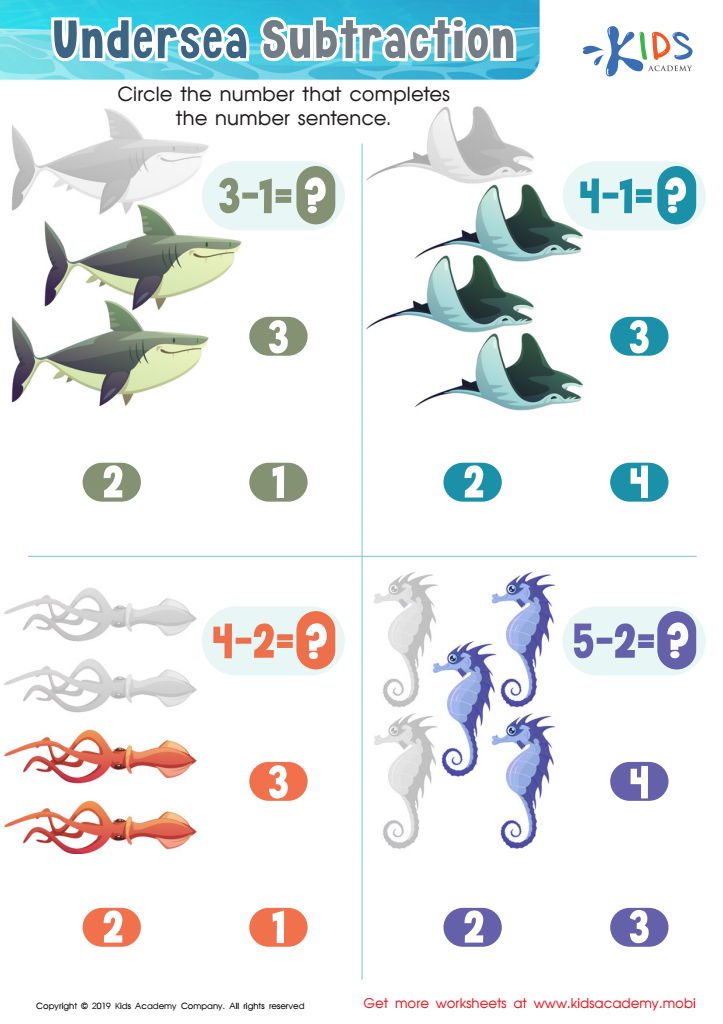
Undersea Subtraction Worksheet
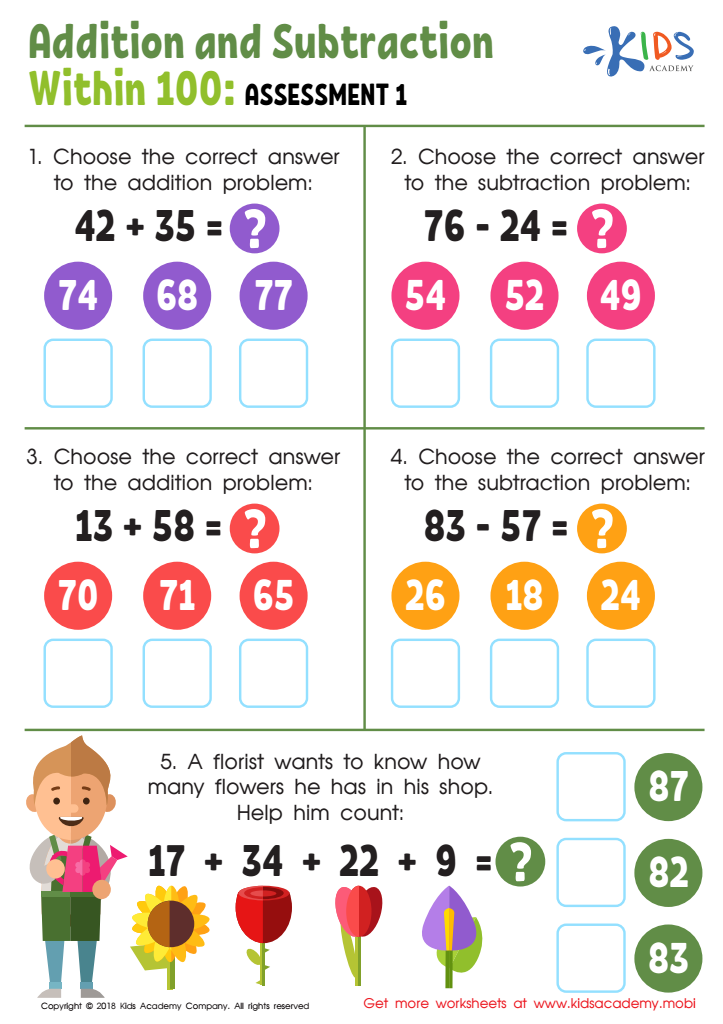
Addition and Subtraction Within 100 Worksheet
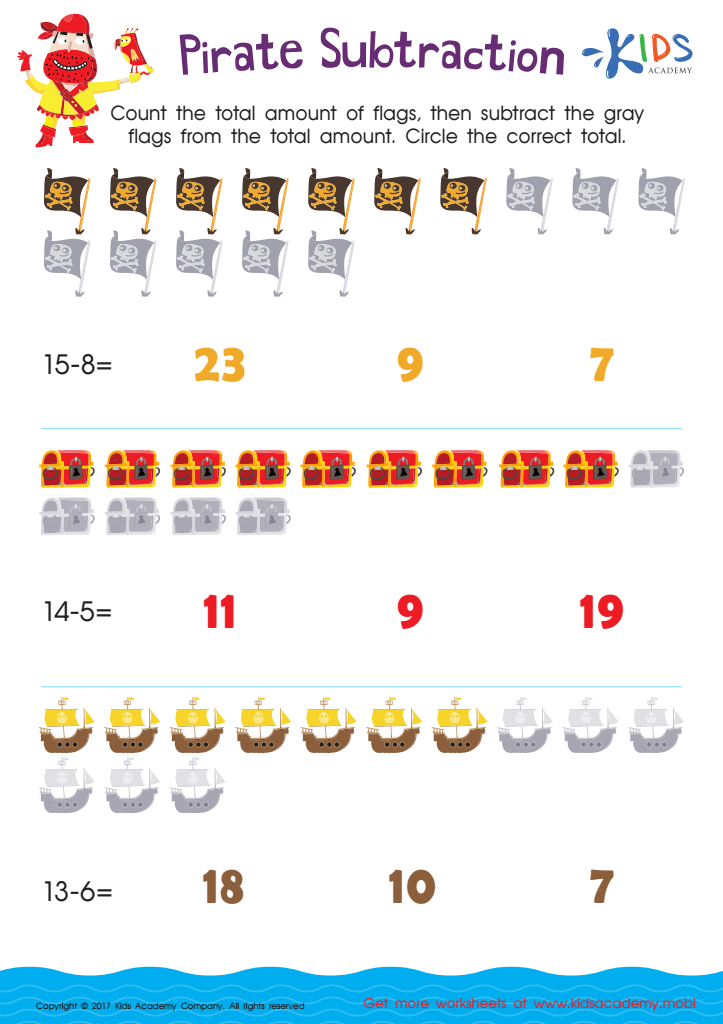
Pirate Subtraction Substraction Worksheet
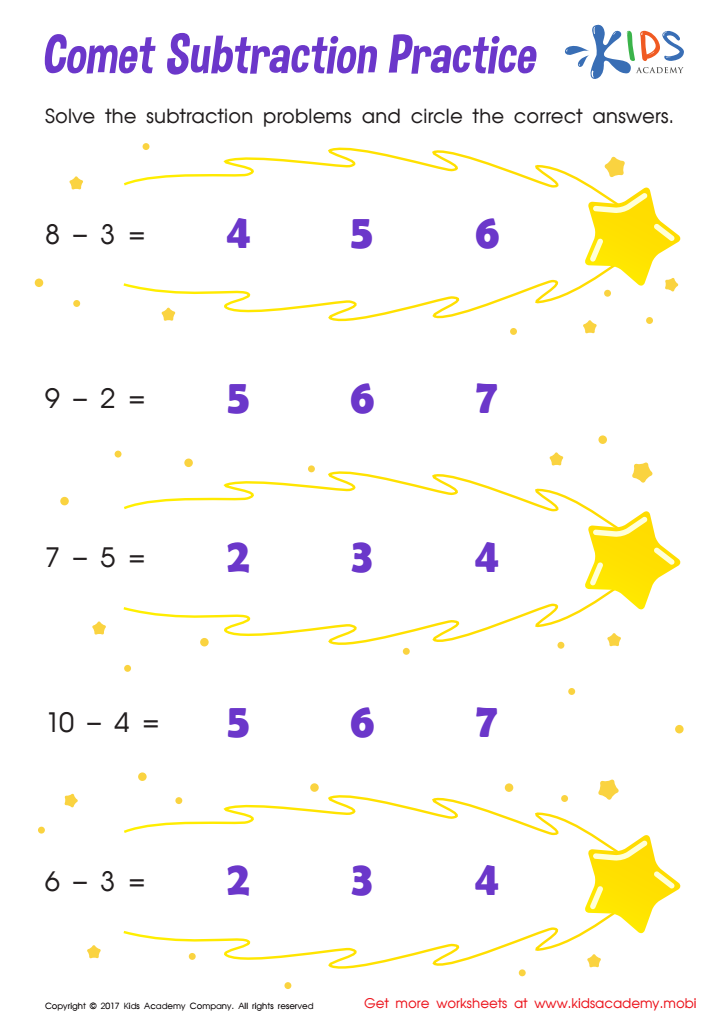
Comet Subtraction Practice Substraction Worksheet
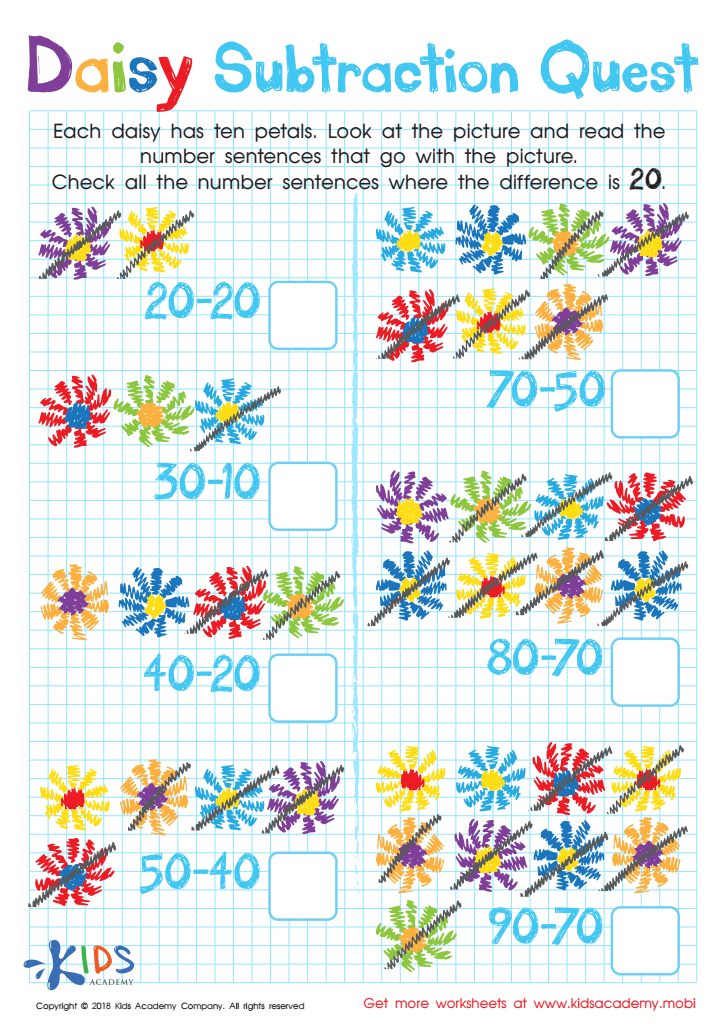
Daisy Subtraction Quest Worksheet
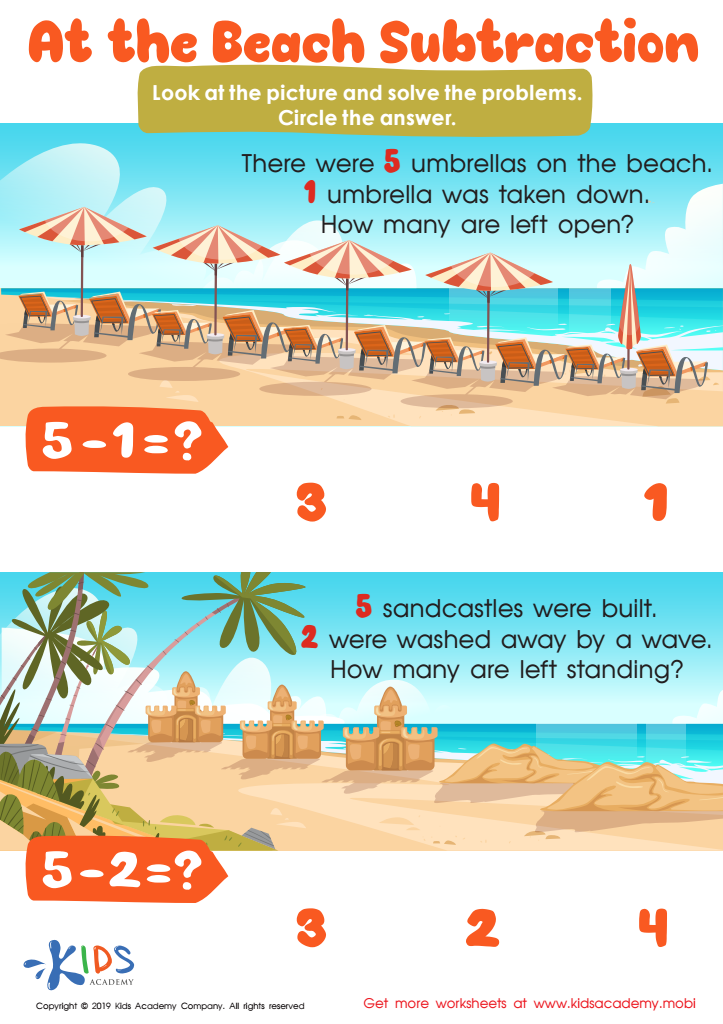
At the Beach Subtraction Worksheet
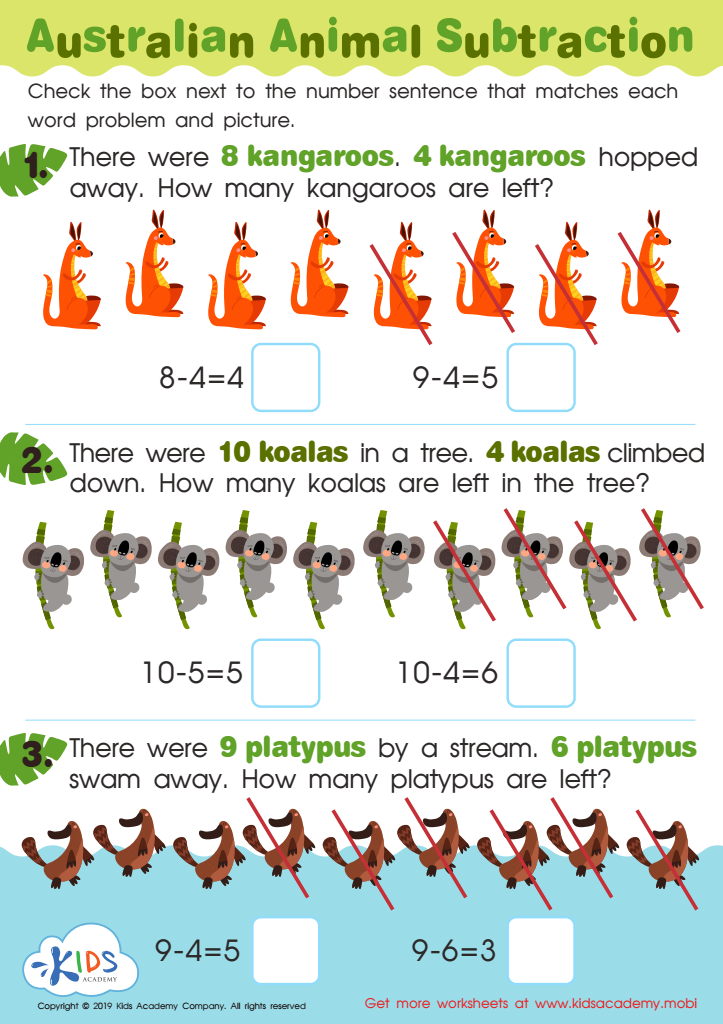
Australian Animal Subtraction Worksheet
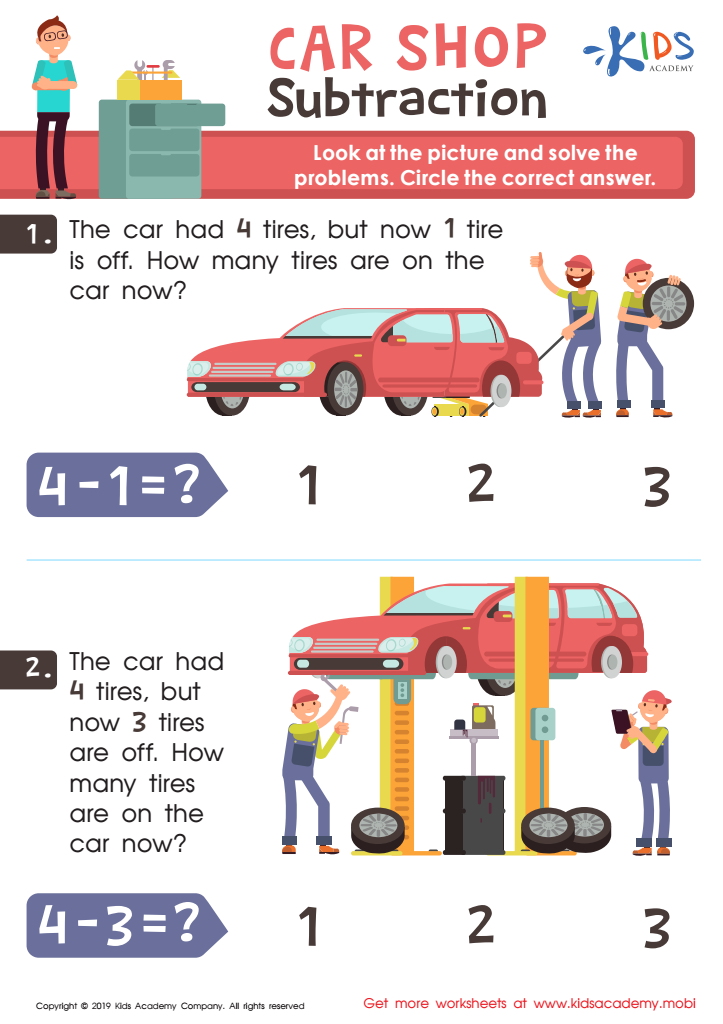
Car Shop Subtraction Worksheet
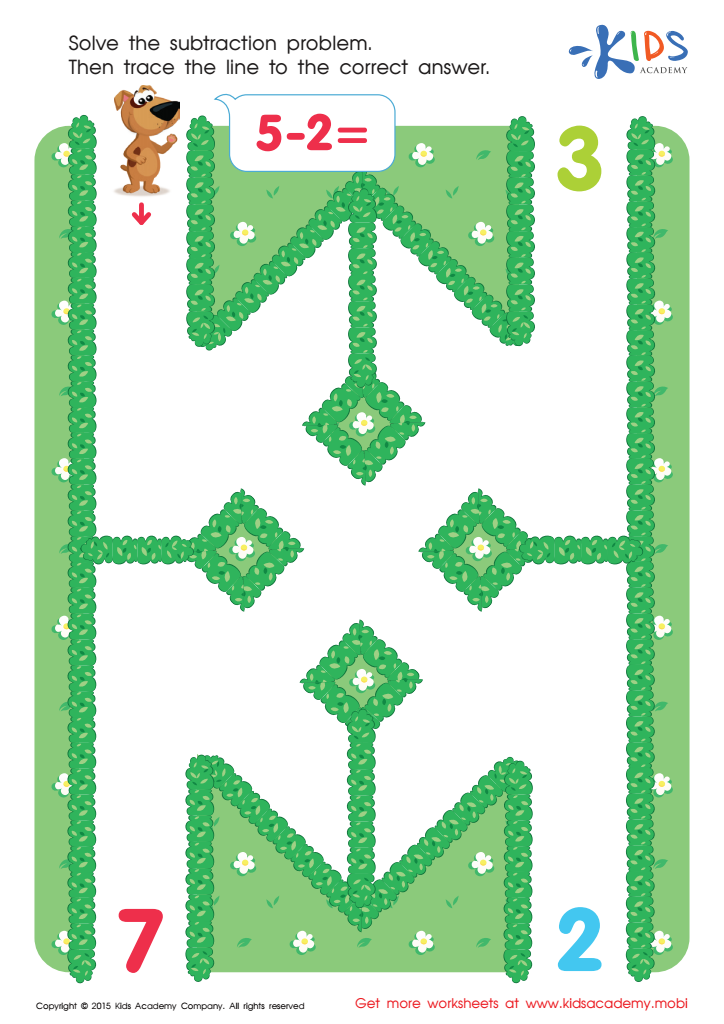
Five Minus Two Worksheet
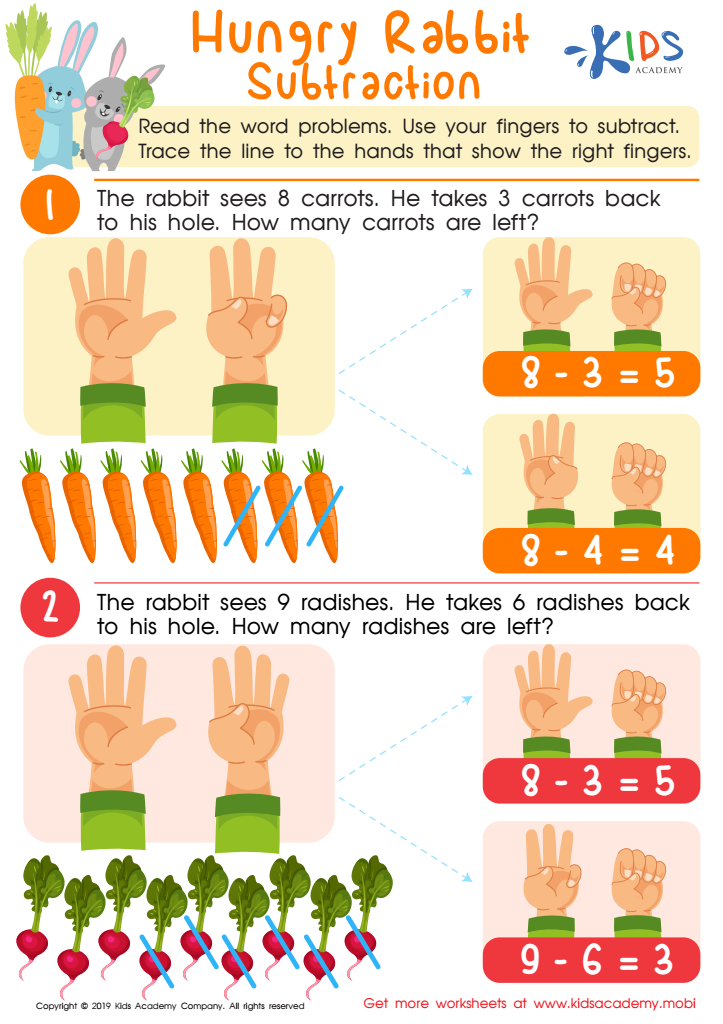
Hungry Rabbit Subtraction Worksheet








Subtraction practice for ages 6-8 is crucial for several reasons. First, mastering subtraction lays the foundation for essential arithmetic skills that children will use throughout their education and daily lives. At this age, students develop their understanding of numbers and how they relate to one another, making subtraction practice vital for building number sense.
Moreover, solid subtraction skills enhance problem-solving abilities and logical thinking. As children practice subtraction, they learn to break down problems and think critically, skills that are beneficial not only in math but also in other subject areas.
Engaging in regular subtraction practice also boosts a child's confidence in their math abilities. When students succeed in solving subtraction problems, they gain a sense of accomplishment and motivation to tackle more complex challenges. Additionally, communication between parents and teachers becomes more nuanced when both parties support a child’s understanding of subtraction and other foundational math concepts.
Incorporating subtraction practice into daily routines or learning activities can lead to better retention of facts and greater applicability of learned skills. Ultimately, supporting subtraction practice is essential for fostering a child’s cognitive development, self-confidence, and overall academic success.








