Filters

6 filtered results

Clear all filters
Favorites
With answer key
Interactive

6 filtered results

Difficulty Level

Grade


Enhance your child's fine motor skills with our engaging Tracing Shapes Worksheets designed for ages 6-8. These worksheets provide a fun and interactive way for young learners to practice their hand-eye coordination while improving their precision and control. The colorful shapes encourage creativity, making learning enjoyable. As children trace various shapes, they develop essential skills that lay the groundwork for later writing and drawing activities. These worksheets are ideal for both home and classroom settings, offering endless opportunities for practice and growth. Download our Fine Motor Skills Tracing Shapes Worksheets today and watch your child's confidence and fine motor abilities flourish!

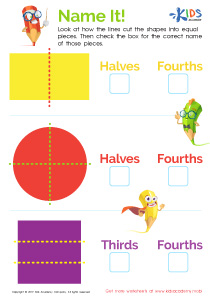
Check out this FREE Trial Lesson on Tracing Shapes for age 6-8!

Lesson 5- Combine and Find New Shapes

Favorites
With answer key
Interactive
  • 6-8
  • Fine Motor Skills
  • Tracing Shapes
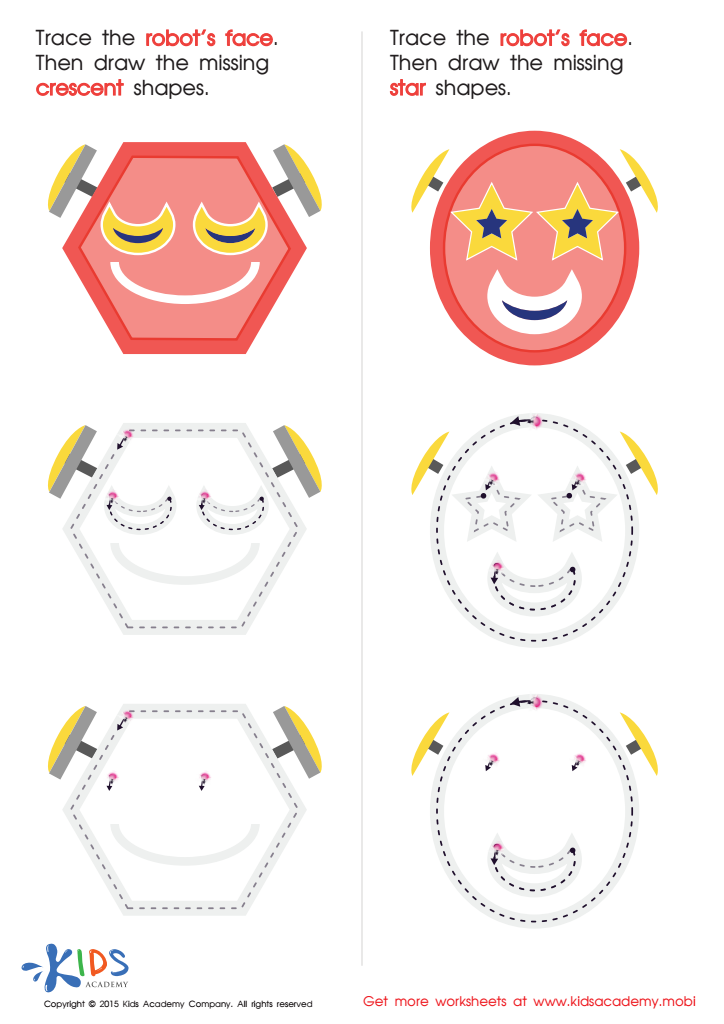
Geometric Shapes for Kids: Composing a Robot's Face of Crescents And Stars PDF

Composing a Robot's Face of Crescents And Stars Worksheet

Get free math geometry worksheets at Kids Academy! Help your child learn by practicing together - trace the robot's face and draw the missing crescent and star shapes. Be sure to remember their names! Have fun and learn with shapes for kids.
Composing a Robot's Face of Crescents And Stars Worksheet
Worksheet
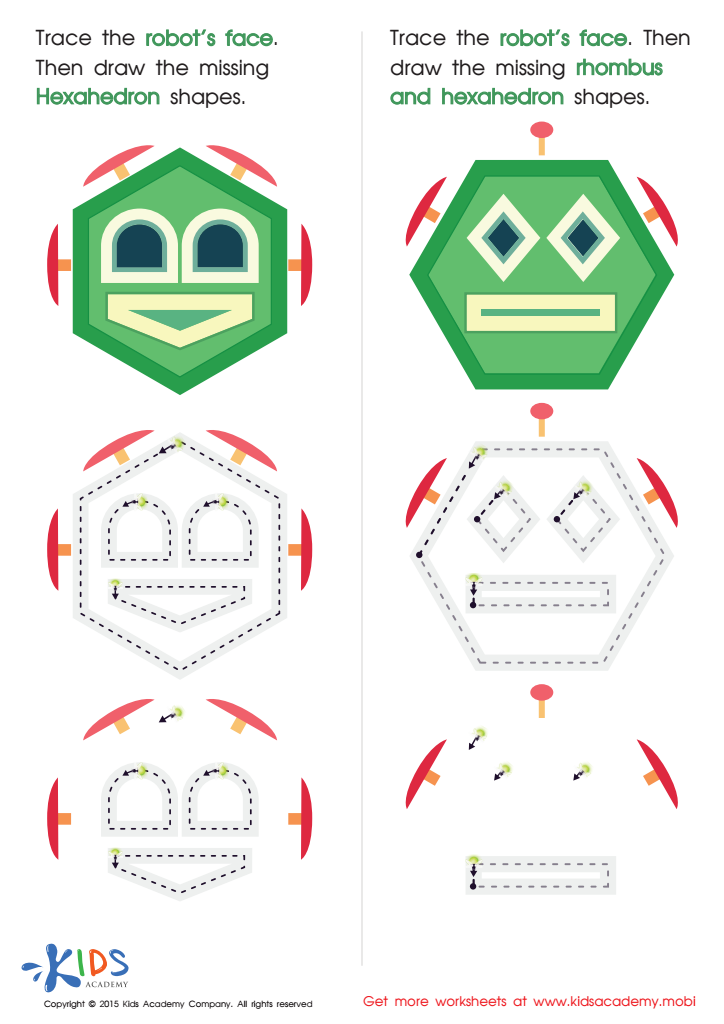
Geometric Shapes for Kids: Practice Drawing Hexahedrons And a Rhombus PDF

Practice Drawing Hexahedrons And a Rhombus Worksheet
Trace the Robot's face, draw hexahedron and rhombus shapes, then trace again. Our tracing shapes worksheets make it easy for kids to learn geometry. Get more materials from Kids Academy to practice all the shapes.
Practice Drawing Hexahedrons And a Rhombus Worksheet
Worksheet
Geometric Shapes for Kids: Learning to Draw Crescents And Triangles PDF

Learning to Draw Crescents And Triangles Worksheet
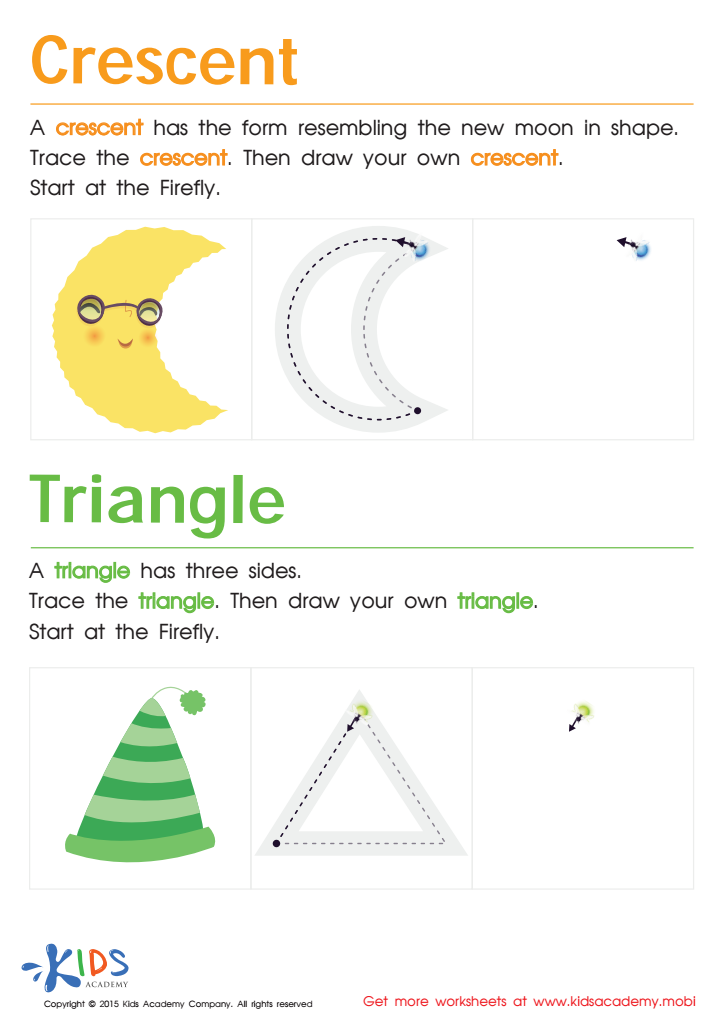
Help your kids draw a crescent and triangle with this free printable worksheet! Start by tracing a crescent in the form of the new moon, and then teach them that a triangle has three sides and looks like a hat. Find more geometry practice worksheets at Kids Academy!
Learning to Draw Crescents And Triangles Worksheet
Worksheet
Geometric Shapes for Kids: Let's Learn to Draw Hearts And Stars PDF

Let's Learn to Draw Hearts And Stars Printable
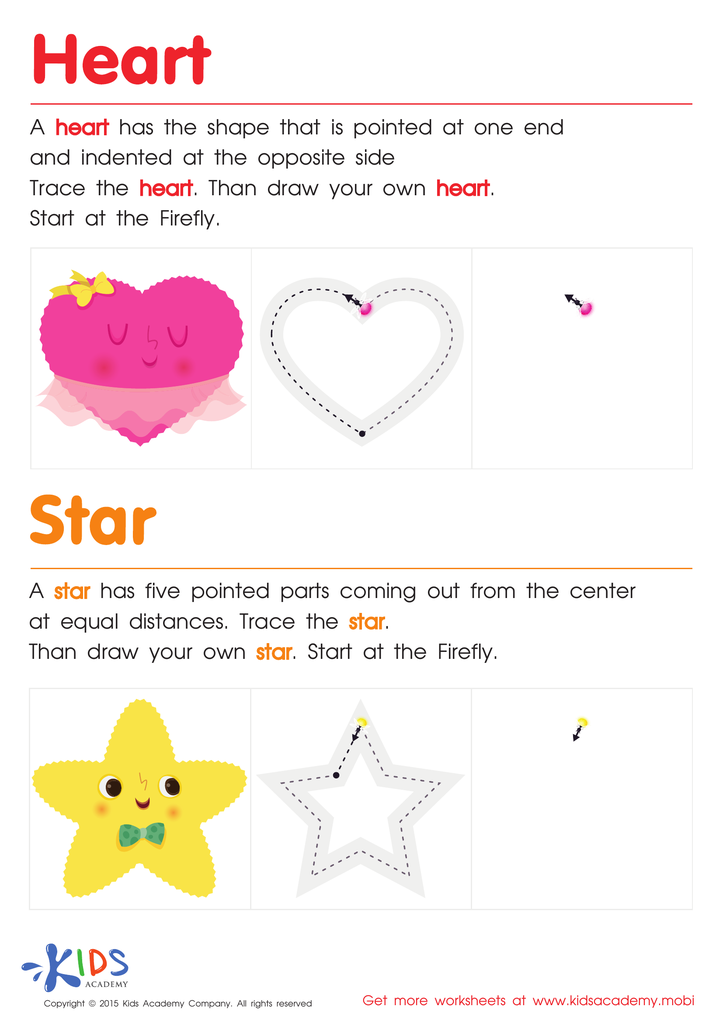
Trace and draw hearts and stars, learn their names and use them in your drawings. Start with the firefly and be creative!
Let's Learn to Draw Hearts And Stars Printable
Worksheet
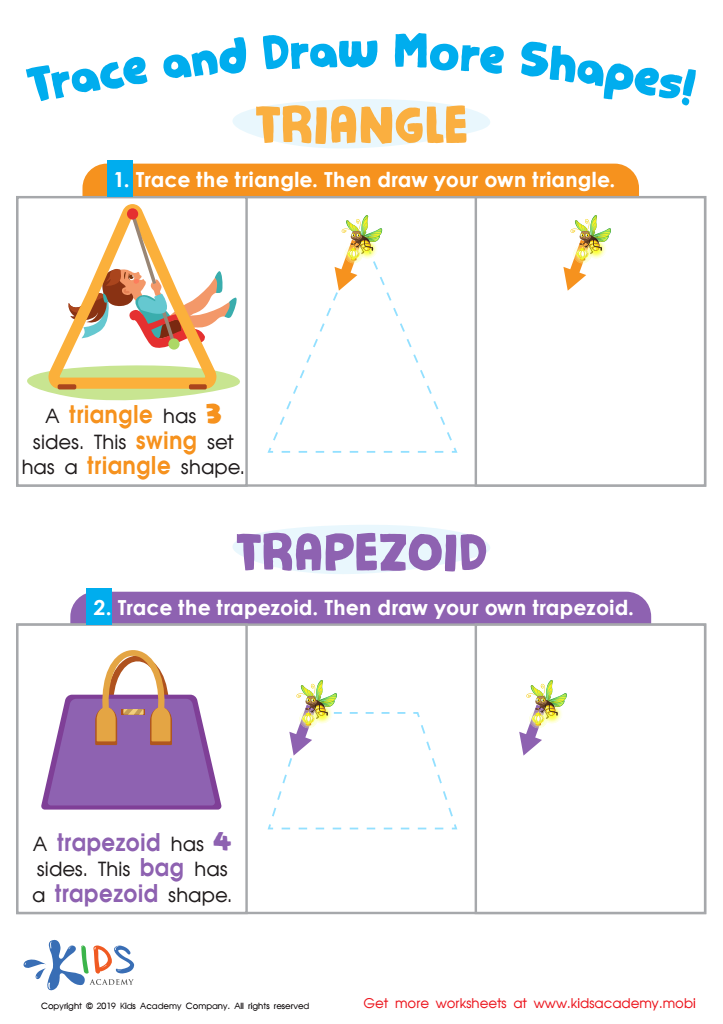
Trace and Draw More Shapes Worksheet

Trace and Draw More Shapes Worksheet

Help your kids with more learning! Look at images in the worksheet, read facts about the shapes, then help your kids trace and draw. This reinforces that learning is never done; use this simple worksheet to help your kids with school homework and more!
Trace and Draw More Shapes Worksheet
Worksheet
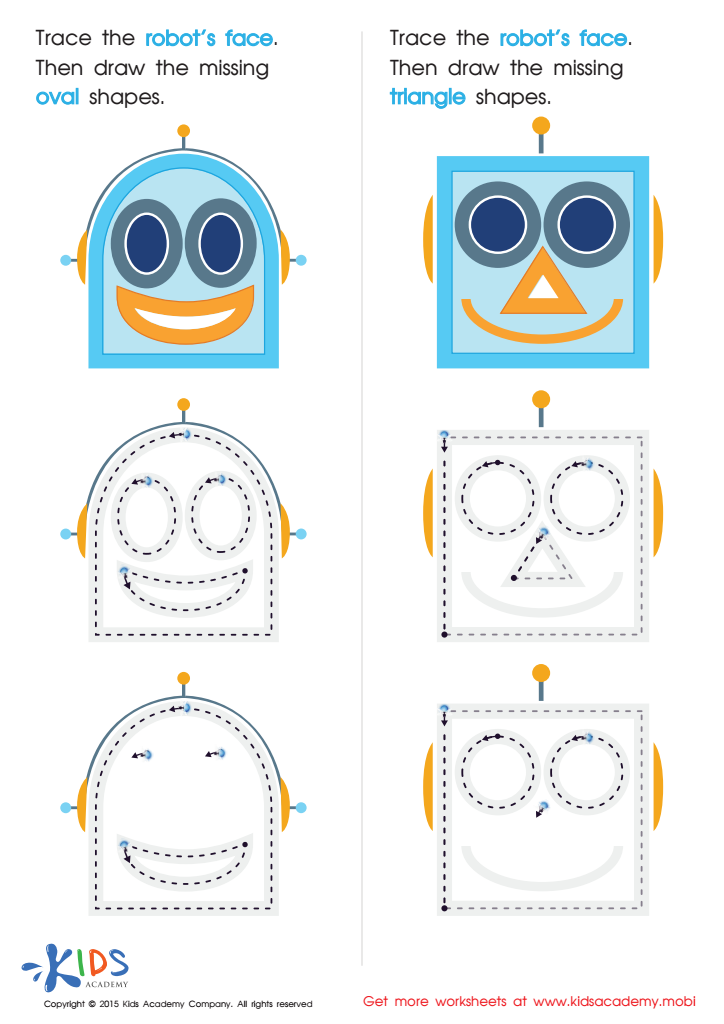
Geometric Shapes for Kids: Drawing Ovals And Triangles with Fun

Drawing Ovals And Triangles with Fun Printable

Trace the face and draw missing ovals and triangles. Test your memory and recall shapes' names. Check if you remember how to draw them!
Drawing Ovals And Triangles with Fun Printable

Worksheet


Fine motor skills are crucial for children's overall development, particularly between the ages of 6 to 8, as they directly impact academic performance, daily activities, and self-esteem. Tracing shapes is an engaging and effective method for honing these skills, allowing children to practice hand-eye coordination, precision, and control.

Parents and teachers should prioritize tracing exercises because they lay the foundation for more complex tasks in the future, such as writing, drawing, and other dexterous activities. As children become proficient in fine motor tasks, they gain confidence, which can positively influence their willingness to tackle new challenges.

Additionally, tracing helps cultivate focus and patience, essential traits for lifelong learning. The repetitive nature of tracing shapes offers a calming effect, enhancing concentration and reducing anxiety. Collaboration during these activities fosters social skills, as children share their work, trade tips, and learn from one another.

Moreover, by integrating tracing into the curriculum or at home, caregivers can create a structured yet playful learning environment that stimulates cognitive development. Ultimately, promoting fine motor skills in young learners sets them up for success both academically and personally, benefiting their growth and preparation for future learning opportunities.