
Grammar practice Reading Worksheets for Ages 6-8
5 filtered results
Difficulty Level
Grade
Age
-
From - To
Subject
Activity
Standards
Enhance your child's reading and grammar skills with our engaging Grammar Practice Reading Worksheets, perfect for ages 6-8. Designed to make learning fun, these worksheets feature age-appropriate activities that focus on sentence structure, punctuation, and parts of speech. As children complete exercises like fill-in-the-blanks and matching tasks, they will boost their comprehension and writing abilities. Our expertly crafted resources cater to young learners, making grammar accessible and enjoyable. Whether at home or in the classroom, these worksheets are an excellent tool for reinforcing grammar concepts and fostering a love for reading. Explore our collection to support your child’s educational journey today!
Favorites
With answer key
Interactive
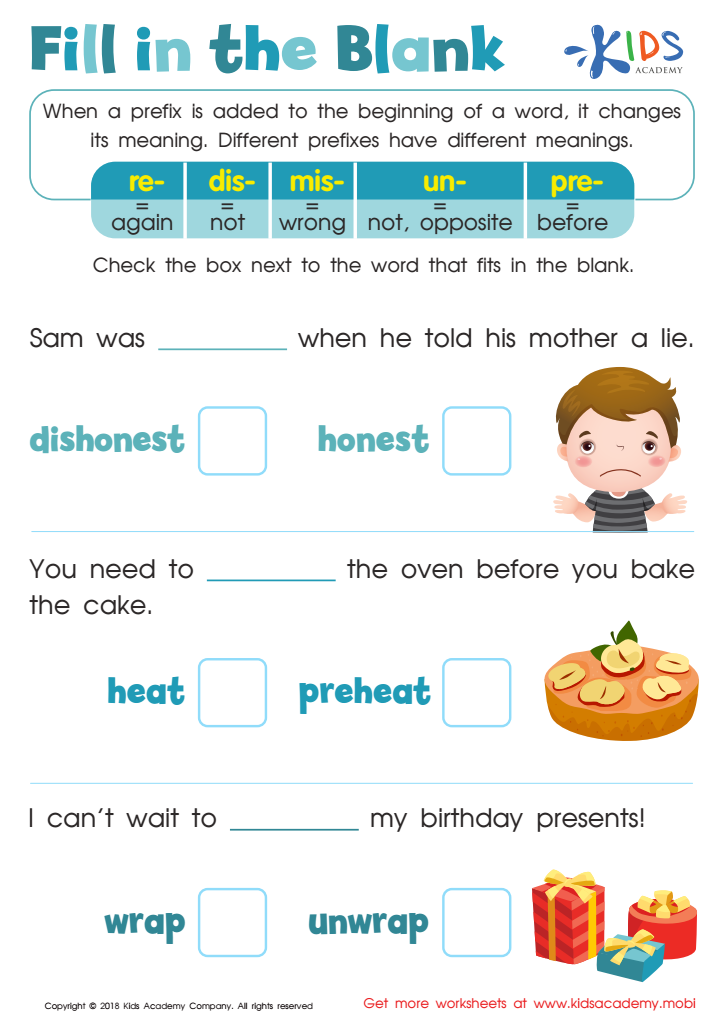
Reading: Fill in the Blank Worksheet
Students can practice understanding the meaning of common prefixes with this worksheet. They read sentences and pick the correct word with the appropriate prefix to complete it. Downloadable and a great addition to reading and vocabulary resources, this helps improve comprehension with mastery of the skill!
 Assign to My Students
Reading: Fill in the Blank Worksheet
Worksheet
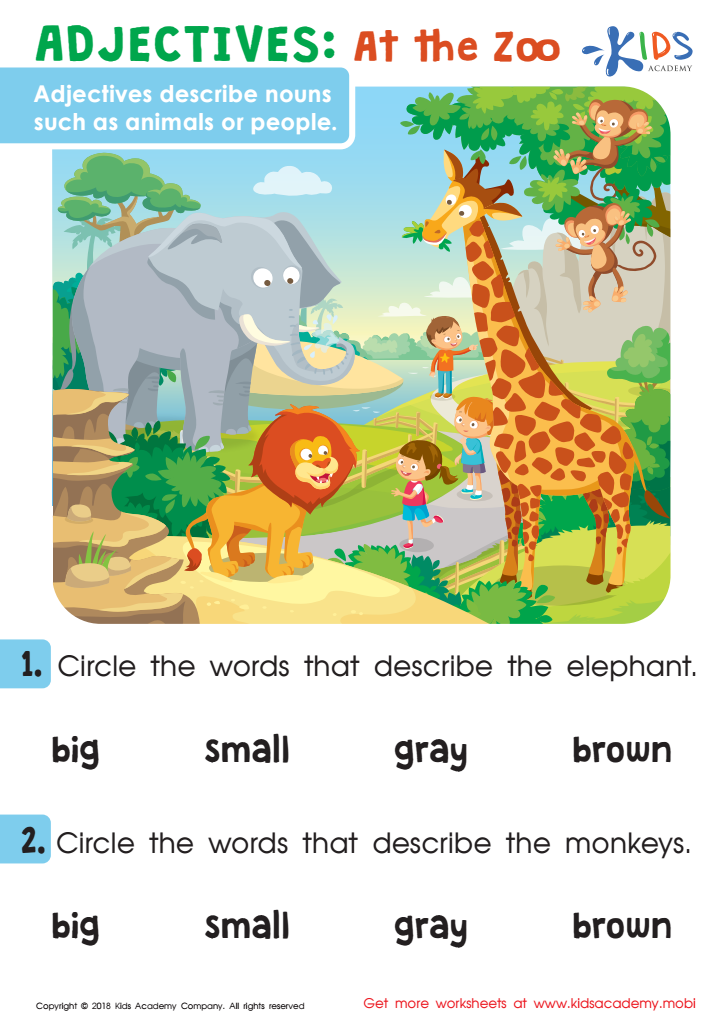
Adjectives: At The Zoo Worksheet
Take your kids to the zoo and ask them about their favorite activities and animals. This worksheet is a great way for kids to learn about adjectives. Explain that adjectives describe nouns like people or animals (e.g. big, tall, dark). Look at the printout with your kids and help them circle words that describe the animals in the picture.
Adjectives: At The Zoo Worksheet
Worksheet
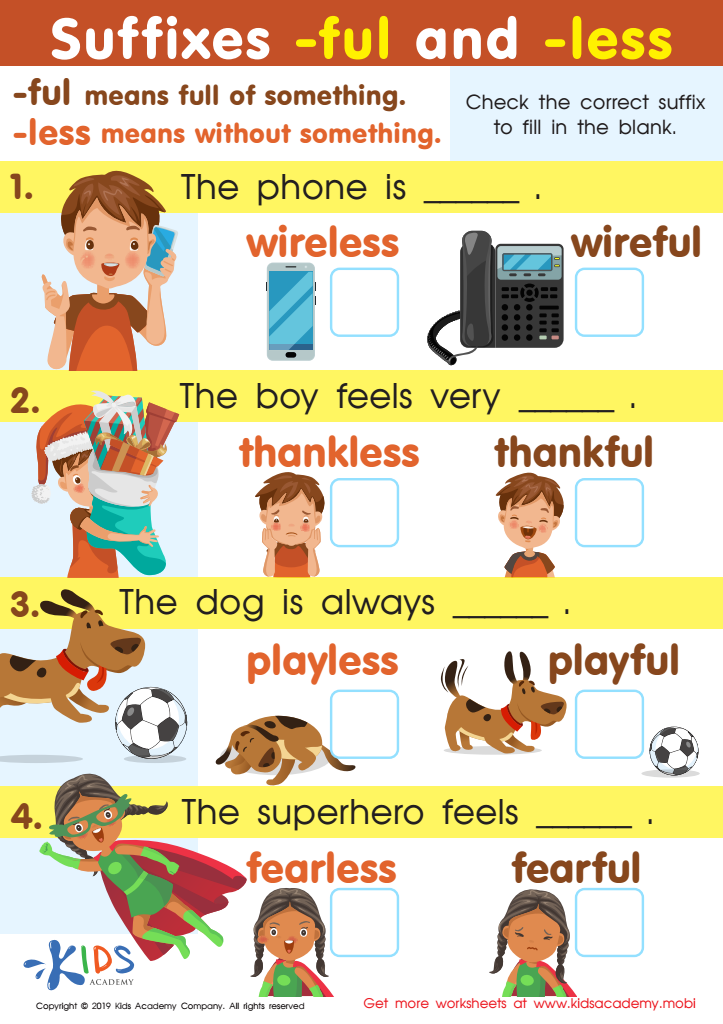
Suffixes –ful and –less Worksheet
Before you start this worksheet, make sure your kids know about suffixes. Explain that they're added to the end of words to change their meaning. In the worksheet, kids will learn about the suffixes –ful and –less. Look at the sentences in the picture with them, and help them to choose the right one for each blank.
Suffixes –ful and –less Worksheet
Worksheet
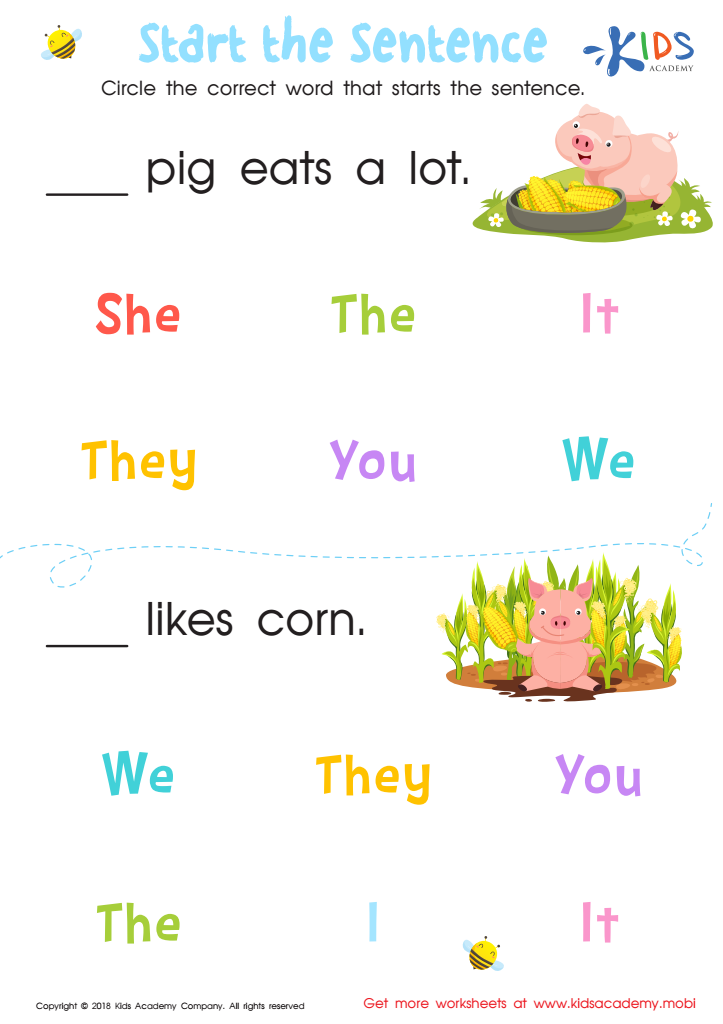
Start the Sentence Worksheet
Test your students' understanding of sentences with this easy worksheet. Ask them to read the sentences and circle the correct word that starts each. This will show how well their lessons have paid off and if they can construct short simple sentences.
Start the Sentence Worksheet
Worksheet
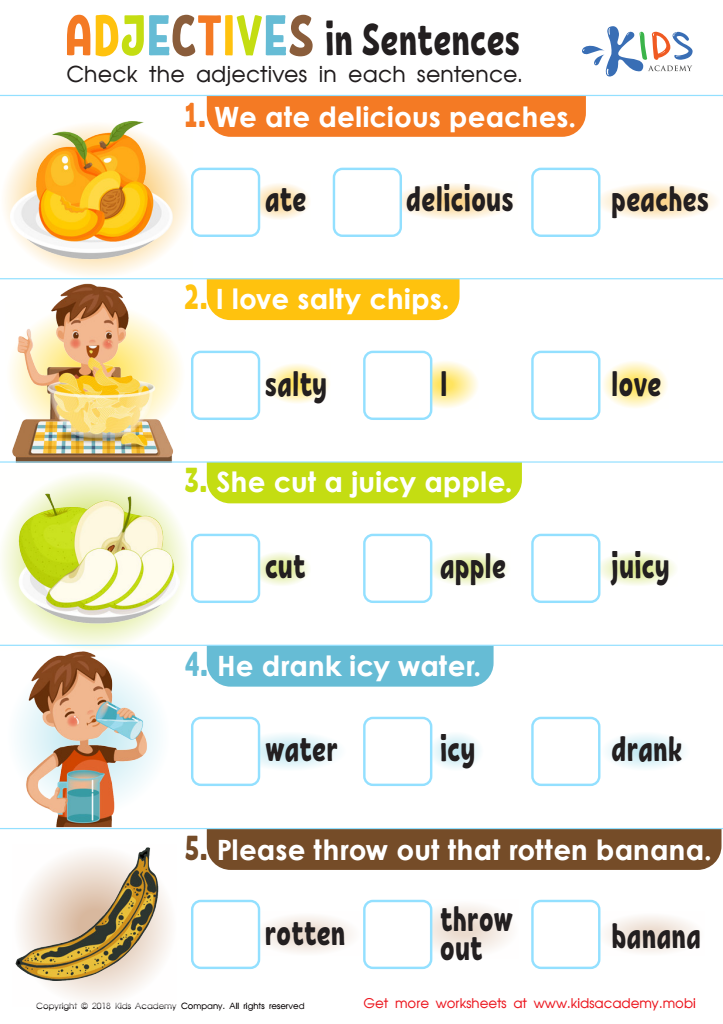
Adjectives in Sentences Worksheet
Our learners can find it hard to use writing to add detail, but adjectives can help. With this fun worksheet, kids can identify adjectives that describe food and drink. Guide them through each sentence, discussing the words and having them choose the one that gives information about the food/drink.
Adjectives in Sentences Worksheet
Worksheet
Join Kids Academy for Free
Who is primarily going to use this learning content?








Parents and teachers should prioritize grammar practice reading for children ages 6-8 because it lays the foundation for effective communication skills that are essential for academic success and personal expression. At this critical stage, children begin to develop their reading comprehension and writing abilities, which are intricately linked to their understanding of grammar.
Grammar practice helps students recognize sentence structures, punctuation, and parts of speech, enabling them to construct clearer and more coherent sentences in both spoken and written forms. This is especially important as they begin to write narratives, respond to prompts, and engage in discussions. Strong grammar skills bolster a child's confidence in expressing their thoughts and ideas, reducing frustration in learning.
Moreover, engaging activities that incorporate grammar into reading can foster a love for literature. When students see how grammar enhances storytelling, they become more interested in reading and writing. As they practice grammar through context, they are more likely to retain the information compared to rote memorization.
In summary, grammar practice reading nurtures essential literacy skills, boosts confidence, and enhances a child’s ability to communicate effectively, laying the groundwork for higher-level learning as they progress through their education.








