Moral lesson understanding Reading Worksheets for Ages 6-8
5 filtered results
-
From - To
Explore our engaging Moral Lesson Understanding Reading Worksheets designed specifically for children ages 6-8! These worksheets help young learners develop critical thinking skills as they identify and analyze moral lessons in various stories. Each vibrant activity encourages discussion and reflection on character choices, values, and consequences. Children will enjoy honing their reading comprehension while learning to recognize essential life lessons through relatable narratives. Ideal for teachers and parents, these resources promote a love for reading while instilling important ethical principles. Dive into the world of morality in storytelling and watch your child grow in both understanding and empathy!
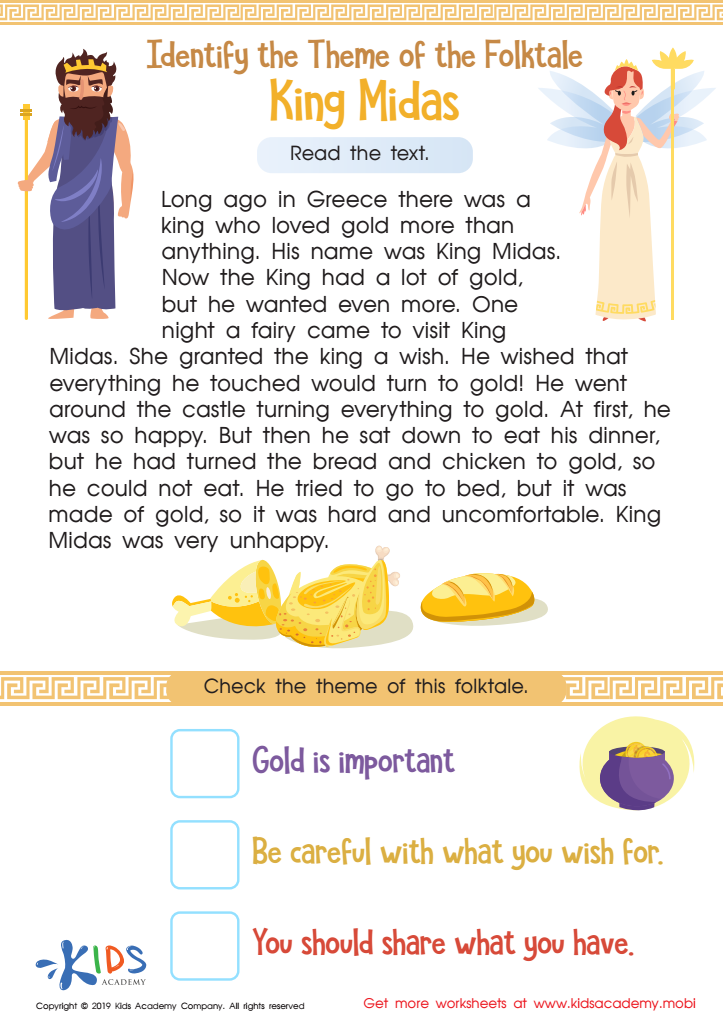
King Midas Worksheet
 Assign to My Students
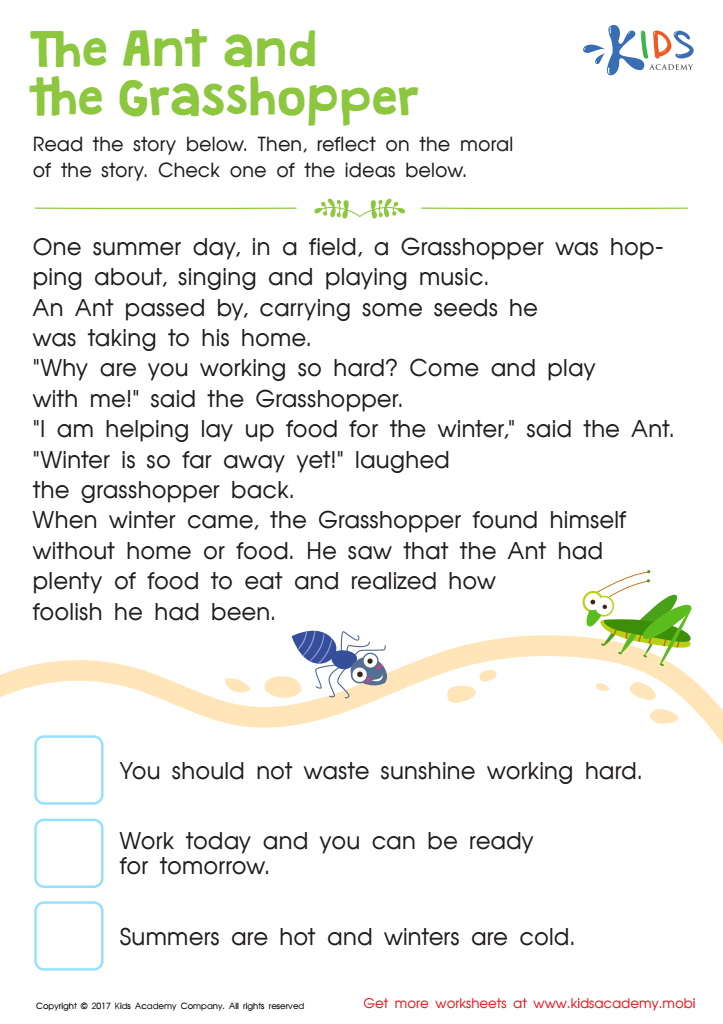
The Ant and The Grasshopper Printable
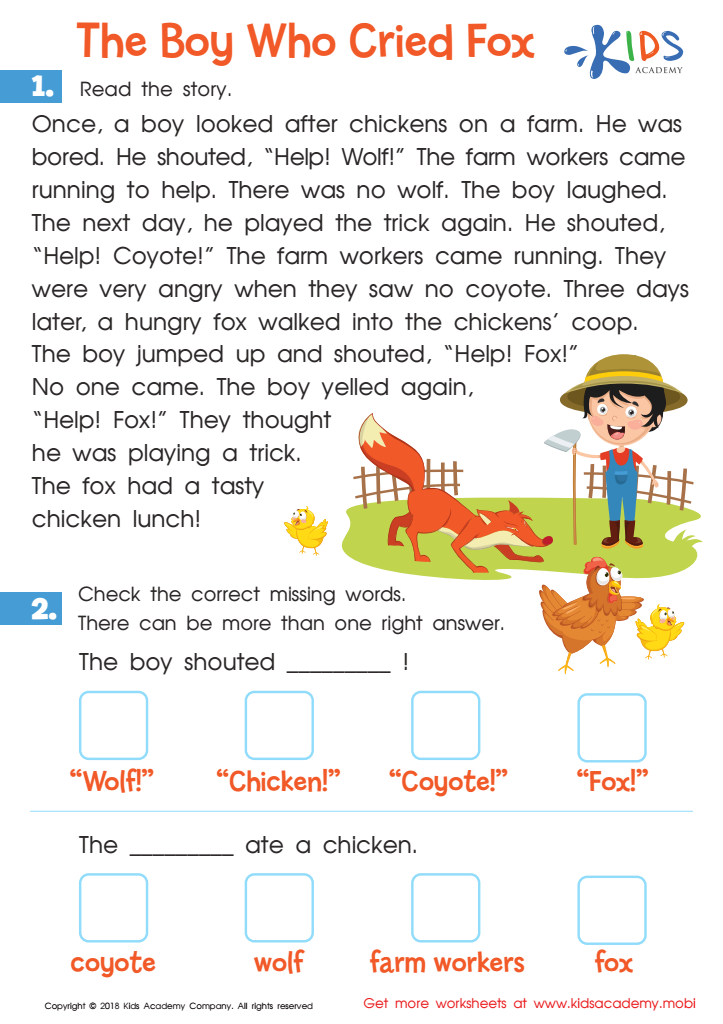
The Boy Who Cried Fox Worksheet
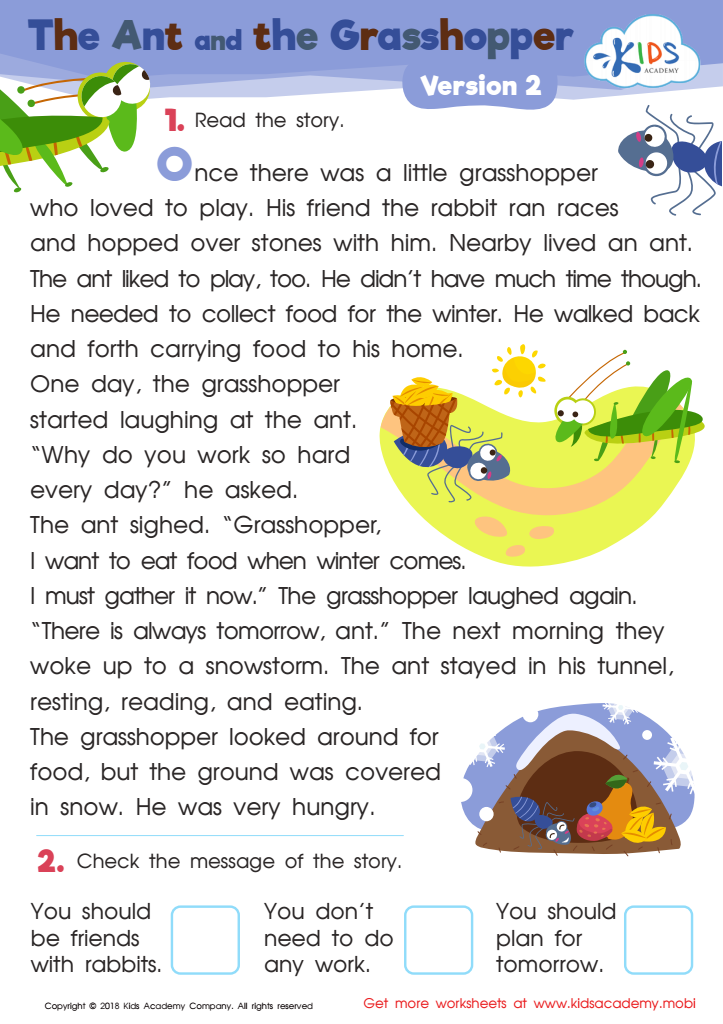
The Ant and The Grasshopper Version 2 Worksheet
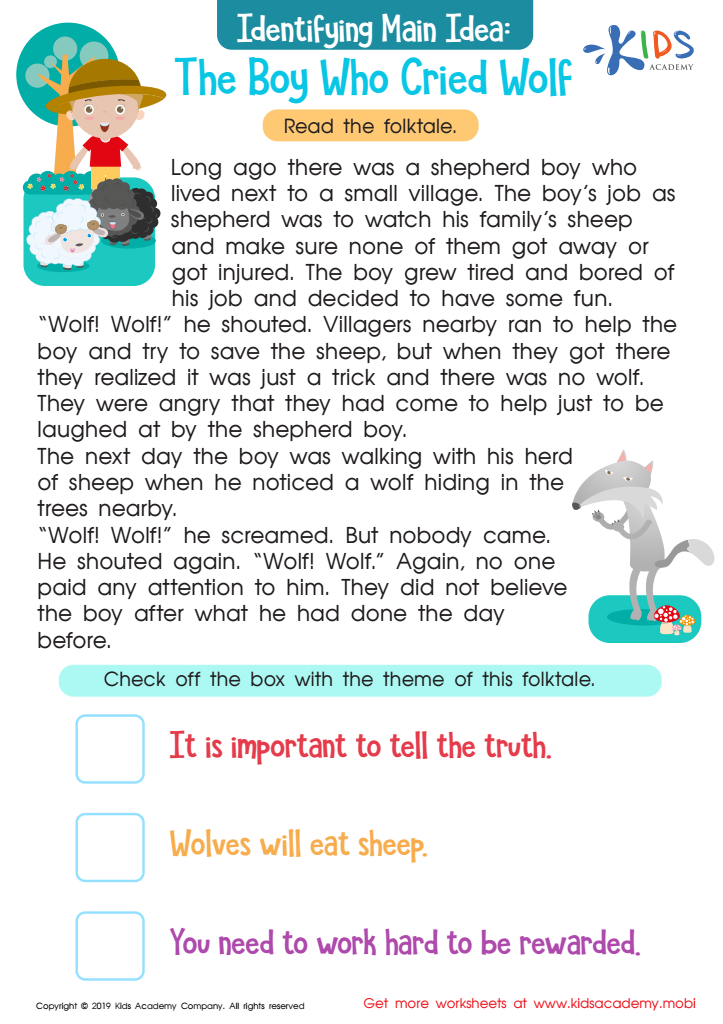
The Boy Who Cried Wolf Part 2 Worksheet





.jpg)

Moral lessons in reading are invaluable for children aged 6-8 as they lay the groundwork for ethical development and social understanding. At this age, children are not only honing their reading skills but also beginning to understand complex social interactions. Stories often encapsulate moral dilemmas, offering children relatable scenarios where they can reflect on concepts such as kindness, honesty, empathy, and justice.
Parents and teachers play a critical role in facilitating discussions around these moral lessons. Engaging children in conversations about characters’ choices and consequences encourages them to think critically about their own actions and the impact on others. This understanding can foster emotional intelligence, helping children to better navigate their relationships with peers, siblings, and family.
Moreover, moral lessons promote resilience and the ability to think beyond oneself, cultivating a sense of community. By integrating moral reflection with reading, adults can reinforce positive behavior, guiding children to develop their own values. Ultimately, this process not only enhances literacy but also produces well-rounded individuals who are more likely to contribute positively to society. Supporting moral lesson understanding in reading helps shape empathetic, responsible citizens today and in the future.








