Recognizing shapes Reading Worksheets for Ages 6-8
9 filtered results
-
From - To
Discover our engaging "Recognizing Shapes" reading worksheets specifically designed for children ages 6-8! These interactive resources help young learners develop their shape recognition skills while enhancing their reading abilities. With colorful illustrations and fun activities, these worksheets make learning enjoyable and effective. Kids will explore various shapes through reading exercises, improving their vocabulary and comprehension in the process. Perfect for both classroom use and at-home learning, our worksheets cater to different learning styles and are aligned with educational standards. Help your child build a strong foundation in math and reading with our user-friendly, printable resources. Start their learning journey today!
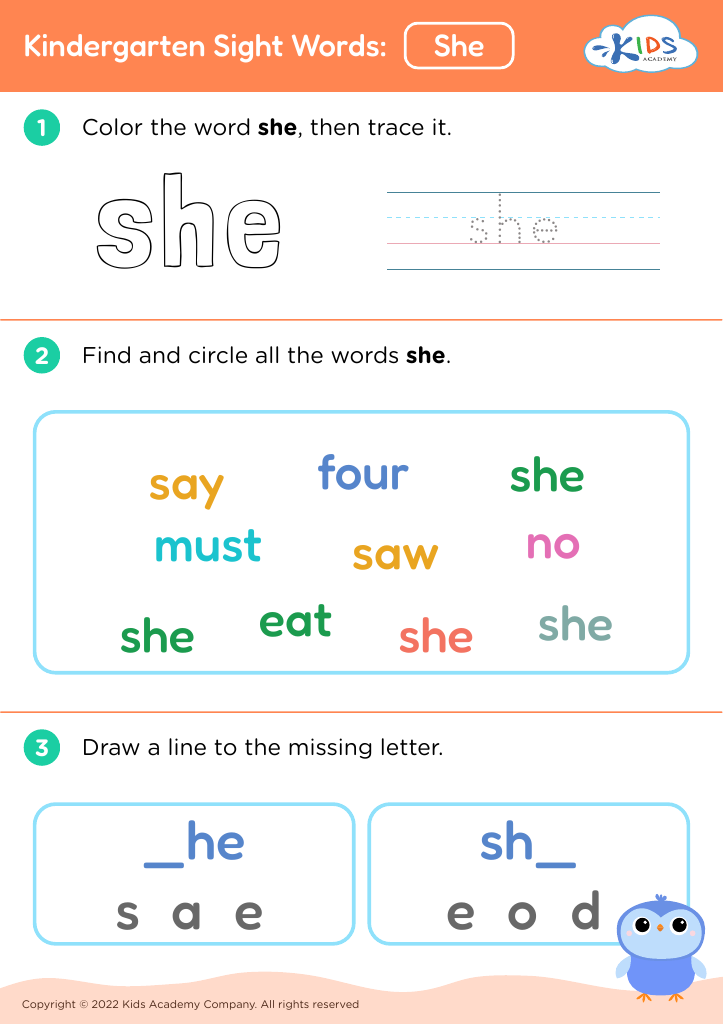







Recognizing shapes is a foundational skill for children aged 6-8 that plays a crucial role in their overall cognitive development. Parents and teachers should care about this skill as it lays the groundwork for more complex mathematical concepts. Understanding shapes helps children develop spatial awareness, which is essential in everyday life, from navigating their environment to understanding geometry later in their education.
Moreover, recognizing shapes is intertwined with language development. As children identify shapes, they learn to categorize objects and articulate their thoughts, boosting their vocabulary and communication skills. This reinforces critical thinking, as children explore and discuss properties of different shapes.
Additionally, early exposure to shape recognition fosters creativity and problem-solving. Activities that involve shapes—such as building with blocks or drawing—stimulate imaginative expression and can enhance fine motor skills.
Incorporating shape recognition into daily learning not only aligns with educational standards but makes learning dynamic and enjoyable. Parents and teachers who understand its importance can prioritize activities that support this skill, ultimately fostering a stronger foundation for their child's academic success and everyday experiences. By nurturing shape recognition, adults play a vital role in shaping confident learners ready for future challenges.








