Rhyming skills development Reading Worksheets for Ages 6-8
3 filtered results
-
From - To
Enhance your child's reading skills with our engaging Rhyming Skills Development Worksheets, designed for ages 6-8. These fun and interactive worksheets help young learners recognize and create rhymes, boosting their phonetic awareness and vocabulary. Through a variety of worksheets including matching games, fill-in-the-blanks, and rhyme generation activities, students will develop critical reading skills while enjoying the learning process. Perfect for classrooms or home learning, these resources capture children's interest and foster a love for reading. Explore our collection and watch your child's confidence soar as they master the art of rhyming, laying a strong foundation for future literacy success.
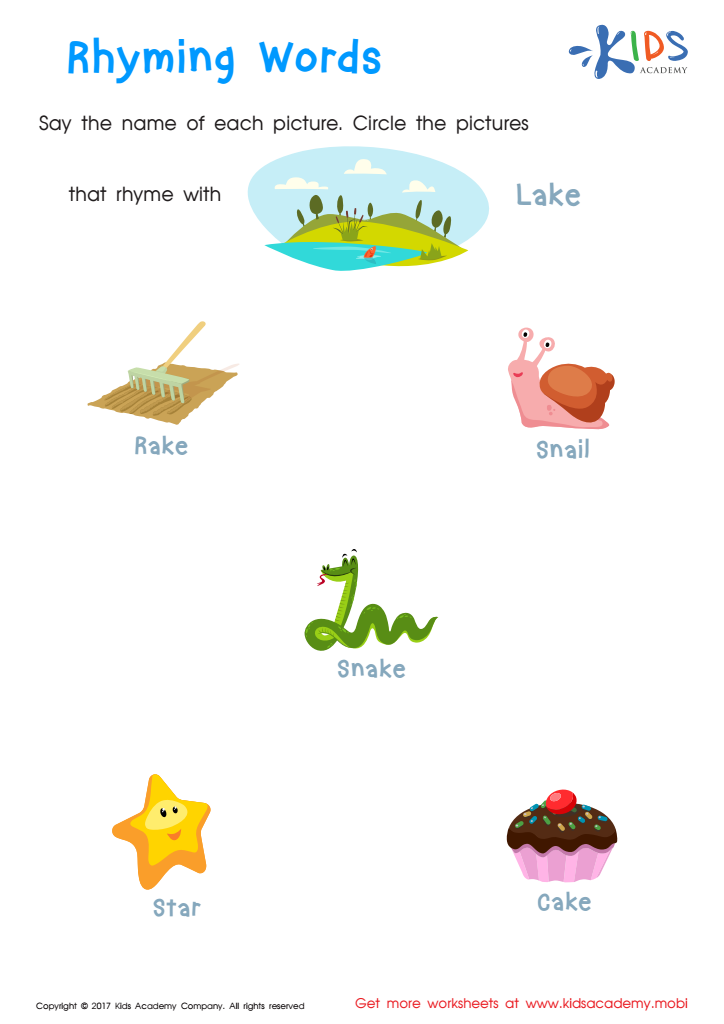
Rhyming Words Rhyming Worksheet
 Assign to My Students
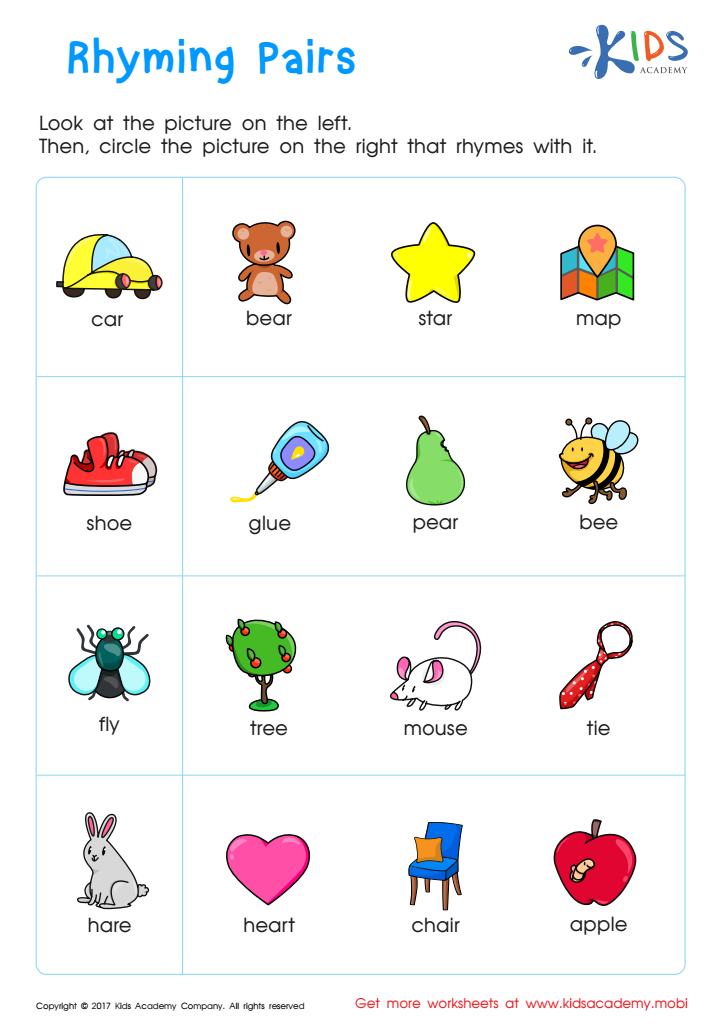
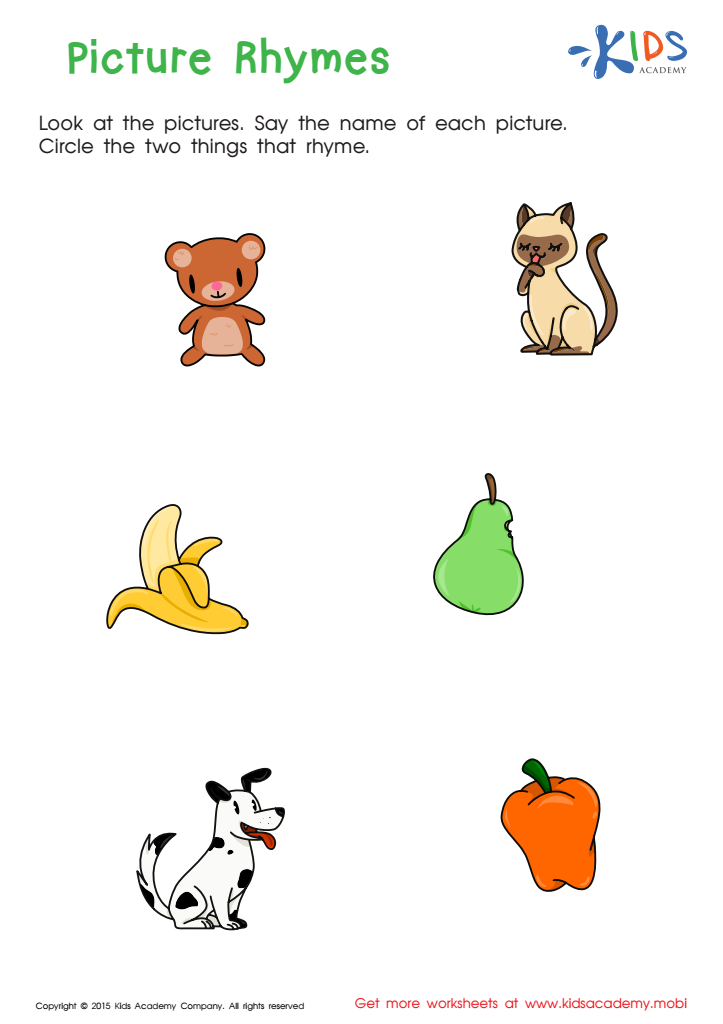
First Words: Picture Rhymes Worksheet







Rhyming skills are an essential component of early reading development for children aged 6 to 8. These skills lay the foundation for phonemic awareness, which is the ability to recognize and manipulate sounds in spoken language. When children can identify and produce rhymes, they become more attuned to the sounds of words, which aids in decoding and spelling as they learn to read.
Rhyming also enriches vocabulary and strengthens comprehension by exposing children to patterns in language, enhancing their ability to make connections between words. Engaging with rhyming texts, such as poems and songs, promotes a love for language and literature, making reading a more enjoyable experience. Furthermore, exposure to rhymes supports memory and auditory discrimination, lending to better listening skills.
For parents and teachers, fostering rhyming skills can be easily integrated into daily activities through simple games, chants, and shared reading experiences. By supporting rhyming development, adults play a crucial role in building foundational literacy skills that contribute to academic success. Ultimately, rhyming not only transforms learning into a fun and interactive experience but also equips children with the tools they need to succeed as confident readers.








