Understanding subtraction Reading Worksheets for Ages 6-8
3 filtered results
-
From - To
Discover our "Understanding Subtraction" worksheets designed specifically for children ages 6-8! These engaging reading worksheets help young learners grasp the fundamental concepts of subtraction through clear explanations, visual aids, and practice problems. Our materials are crafted to build confidence and enhance math skills in an enjoyable way. Children will engage in fun, interactive exercises that promote comprehension of subtraction ideas, including story problems and relatable scenarios. Ideal for at-home learning or classroom use, these worksheets support educators and parents in nurturing mathematical understanding. Download now to empower your child’s journey towards becoming a subtraction expert while enjoying the learning process!
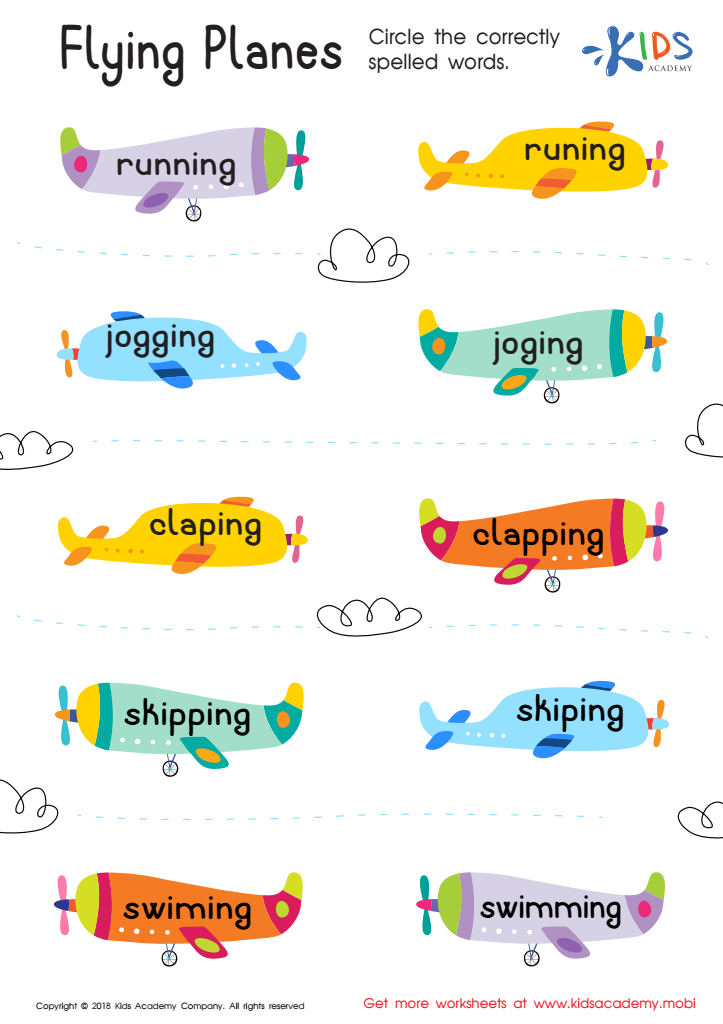
Flying Planes Worksheet
 Assign to My Students








Understanding subtraction is a fundamental skill for children aged 6-8, and it encompasses much more than just solving math problems. For parents and teachers, fostering this understanding is crucial, as it lays the groundwork for a child’s mathematical confidence and overall academic success.
Firstly, subtraction is often viewed as a stepping stone to more complex mathematical concepts, such as addition, multiplication, and division. If a child grasps subtraction, they are better equipped to tackle these topics with ease. Additionally, understanding subtraction enhances critical thinking skills, encouraging children to analyze problems and develop effective strategies for problem-solving.
Moreover, everyday applications of subtraction—from counting change to understanding time—are integral to real-life decision-making and responsibilities. By reinforcing these concepts through engaging materials, parents and teachers can create a supportive learning environment that encourages exploration and cognitive development.
Also, recognizing the individual learning pace of each child helps leave no one behind; understanding subtraction can often be a challenge for some. Therefore, parents and teachers need to work collaboratively to provide tailored guidance and resources; fostering an environment where math is seen as a fun and integral part of daily life contributes to building a lifelong positive relationship with learning.








