Verb identification Reading Worksheets for Ages 6-8
3 filtered results
-
From - To
Explore our engaging Verb Identification Reading Worksheets designed specifically for children ages 6-8. These interactive resources aim to enhance your child's understanding of verbs through fun activities and exercises that encourage active learning. Each worksheet is crafted to improve reading comprehension and language skills, featuring vibrant illustrations and diverse contexts. Kids will practice identifying verbs in sentences, helping them become more confident readers and writers. Perfect for classroom use or at-home practice, our worksheets ensure a solid foundation in grammar while making learning enjoyable. Start empowering your child's vocabulary today with our educational and entertaining verb identification resources!
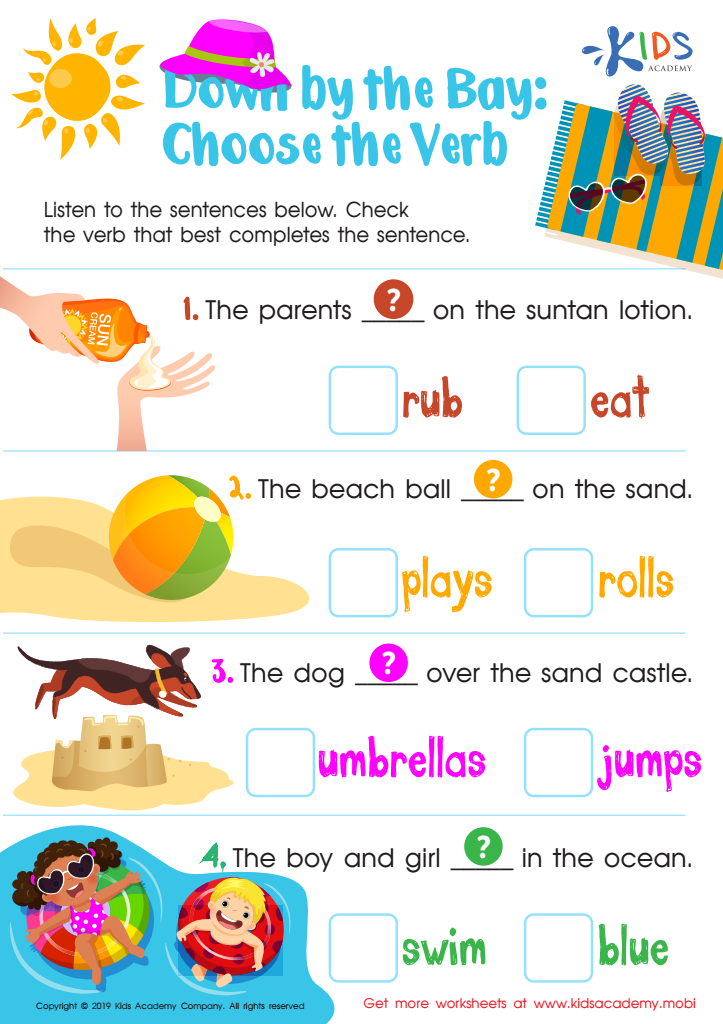
Down by the Bay: Choose the Verb Worksheet
 Assign to My Students
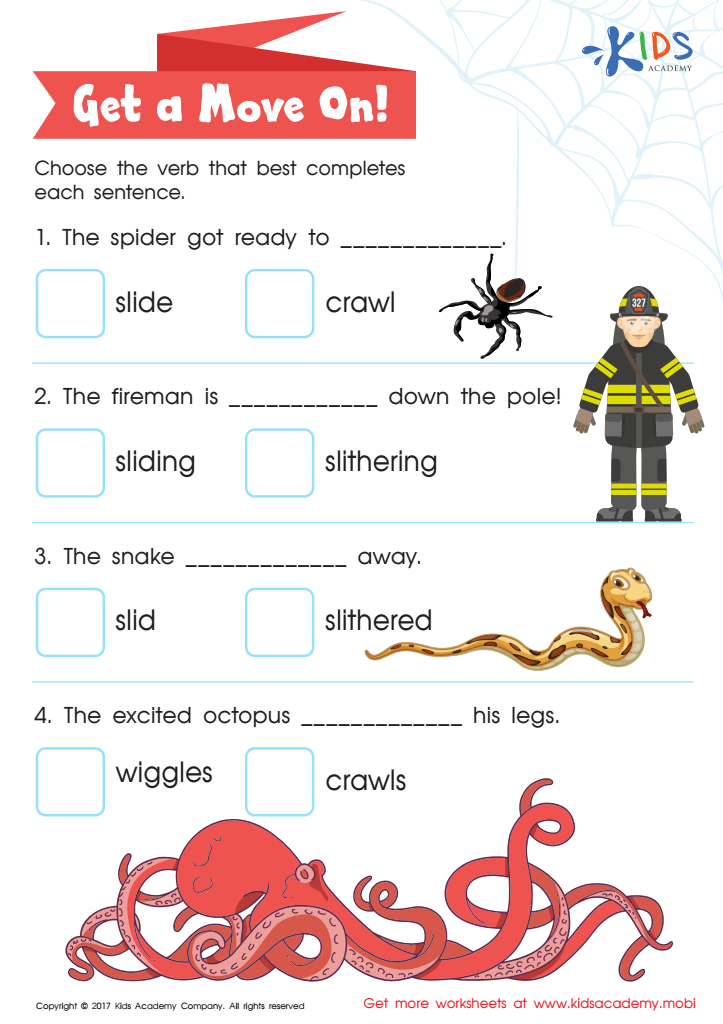
Verb Worksheet
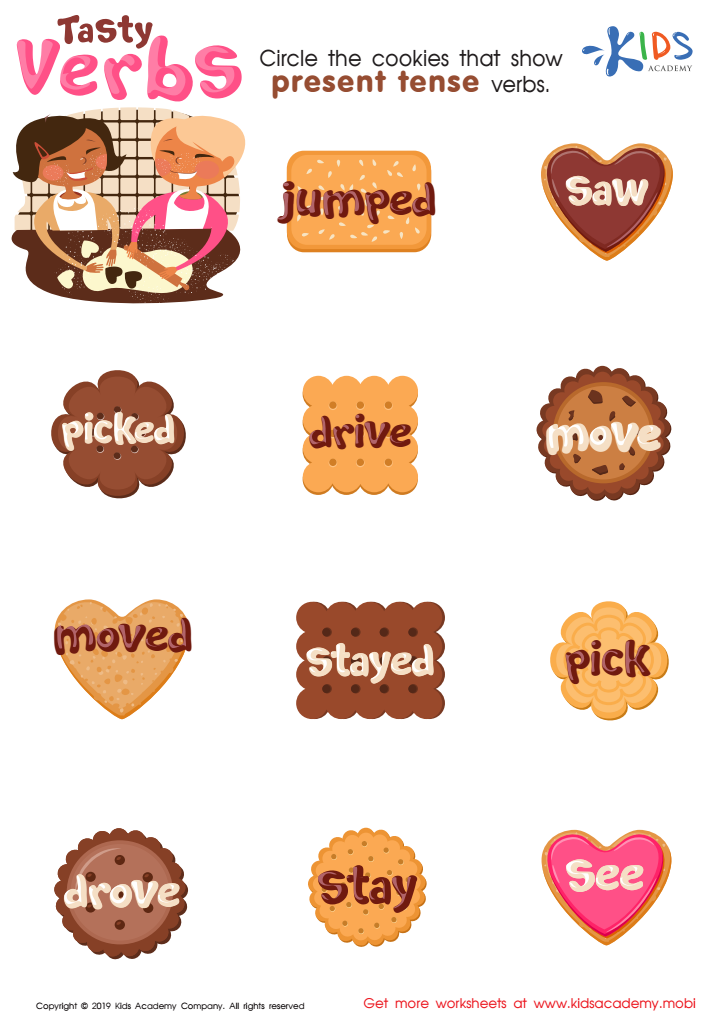
Tasty Verbs Worksheet








Verb identification is a critical skill for children aged 6-8, as it forms the foundation for effective reading and language development. At this developmental stage, children are beginning to understand sentence structure and the roles of different words in conveying meaning. By recognizing verbs, they learn to identify action, which helps them to better grasp the narratives within texts.
For parents and teachers, focusing on verb identification can significantly enhance comprehension skills. When children can identify verbs, they are more likely to understand the main idea of a sentence, which is essential for reading fluency and overall literacy development. This skill also supports vocabulary expansion, as children encounter new verbs in context, facilitating learning and retention.
Moreover, fostering verb identification encourages engagement with reading. Children begin to actively interact with texts rather than passively consuming information. This interaction lays the groundwork for critical thinking and analytical skills, as they start to explore how actions drive stories and messages.
Ultimately, nurturing this crucial reading skill ensures that children become confident readers and communicators, laying the path for future academic success and a lifelong love for reading and learning.








