Vocabulary improvement Reading Comprehension Worksheets for Ages 6-8
3 filtered results
-
From - To
Discover engaging Vocabulary Improvement Reading Comprehension Worksheets designed for children ages 6-8! Our thoughtfully crafted materials enhance vocabulary skills while boosting reading comprehension. Each worksheet features captivating stories and exercises that encourage critical thinking and help young learners make connections between words and their meanings. Aligned with educational standards, these resources are perfect for both classroom and home settings. As children dive into enjoyable narratives, they'll expand their word bank and improve their understanding of text. Foster a love for reading and empower your child with the skills they need to succeed. Explore our worksheets today for an enriching learning experience!
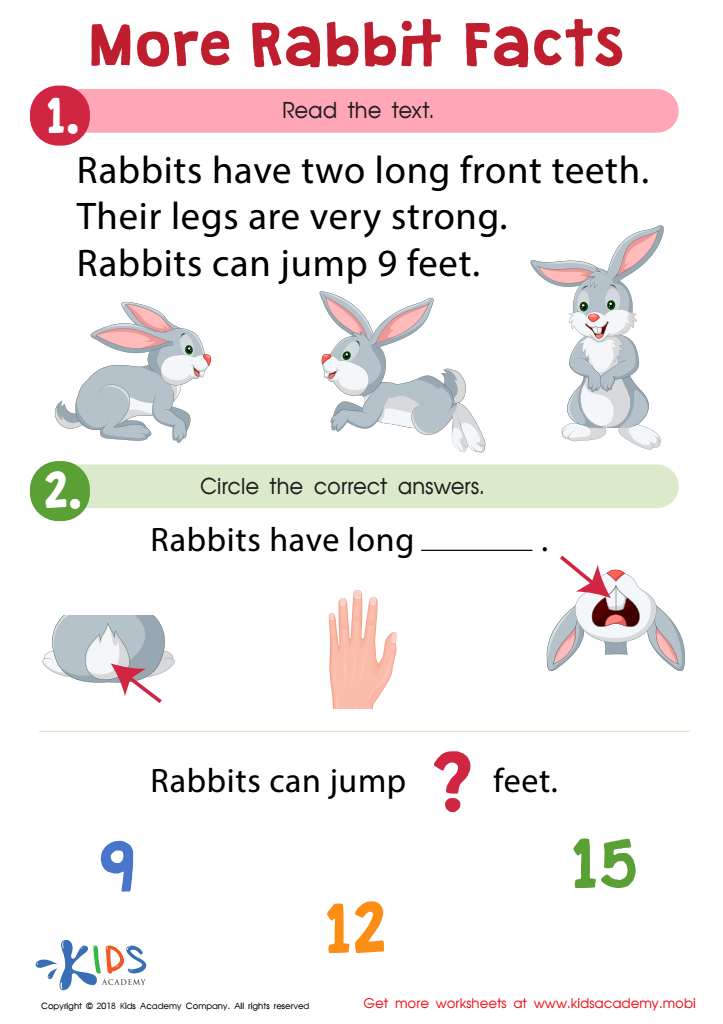
More Rabbit Facts Worksheet
 Assign to My Students
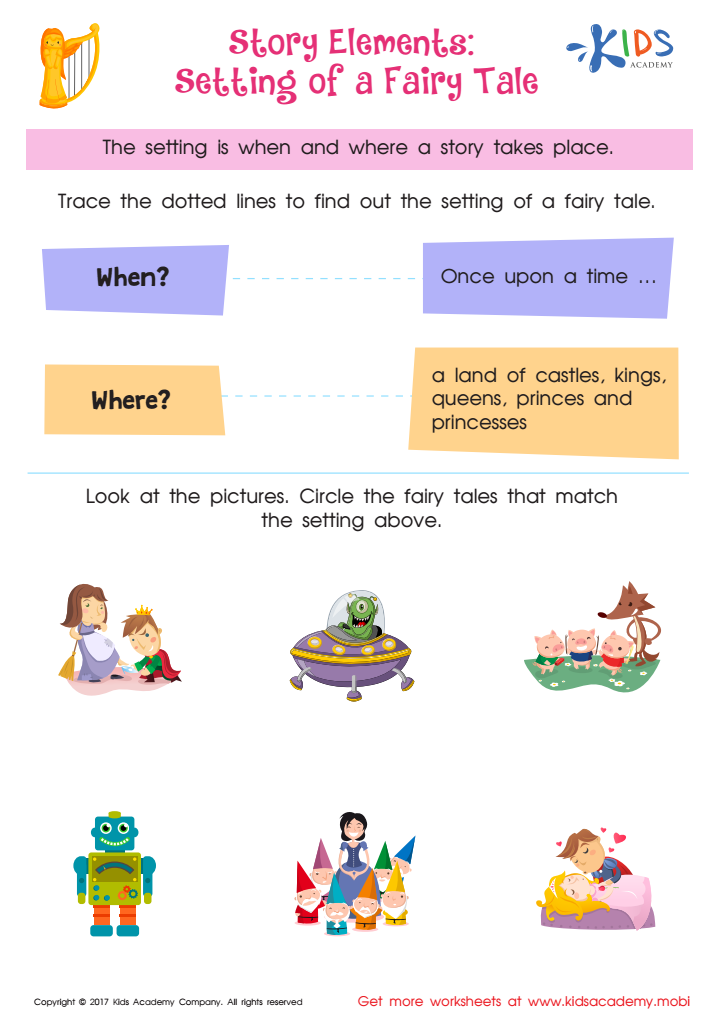
Story Elements: Setting of a Fairy Tale Printable
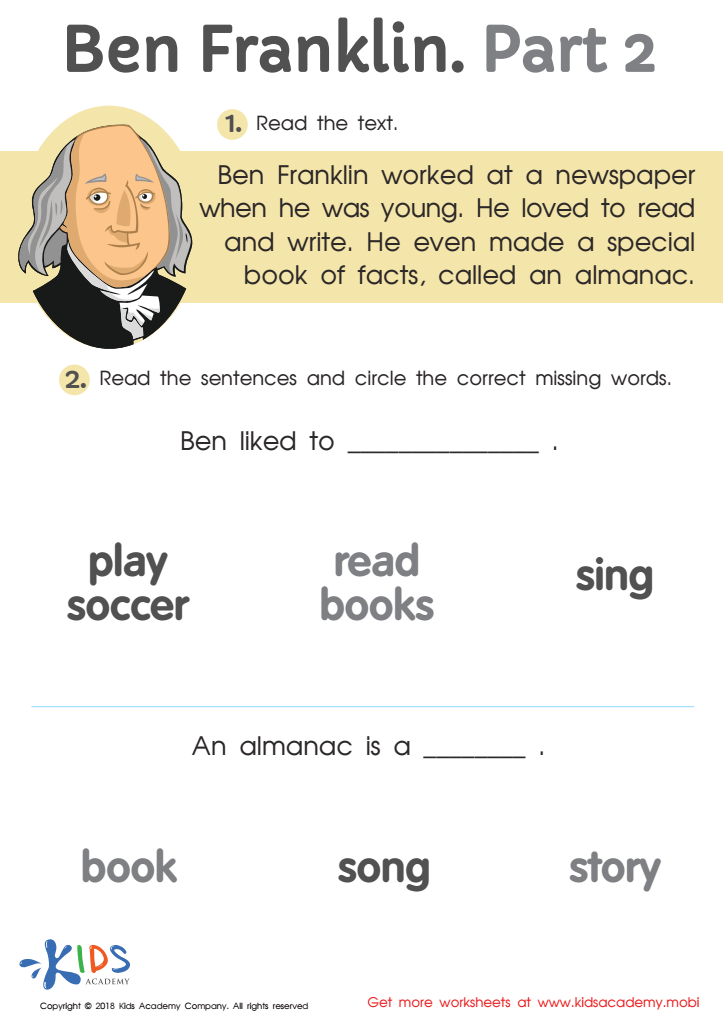
Ben Franklin Part 2 Worksheet








Parents and teachers should prioritize vocabulary improvement and reading comprehension for children ages 6-8 because these skills are foundational for lifelong learning and academic success. At this stage, children are transitioning from learning to read to reading to learn, making strong vocabulary knowledge essential for understanding text and concepts.
A robust vocabulary enhances children's ability to express themselves clearly and confidently, not only in written assignments but also in verbal communication. This skill fosters better interaction with peers and adults, improving social relationships and self-esteem. Additionally, vocabulary development is closely linked to reading comprehension. When children decipher the meaning of words, they gain a deeper understanding of the material, which is crucial for performing well in school and on assessments.
Moreover, a rich vocabulary supports critical thinking and imagination, as children are better equipped to explore complex ideas and scenarios. These skills are not just academic; they influence everyday situations, from following instructions to interpreting social cues. By focusing on vocabulary and reading comprehension, parents and teachers can provide children with the tools they need to become competent readers and effective communicators, laying the groundwork for future educational achievements and personal growth.








