Critical Thinking Science Worksheets for Ages 6-8 - Page 2
25 filtered results
-
From - To
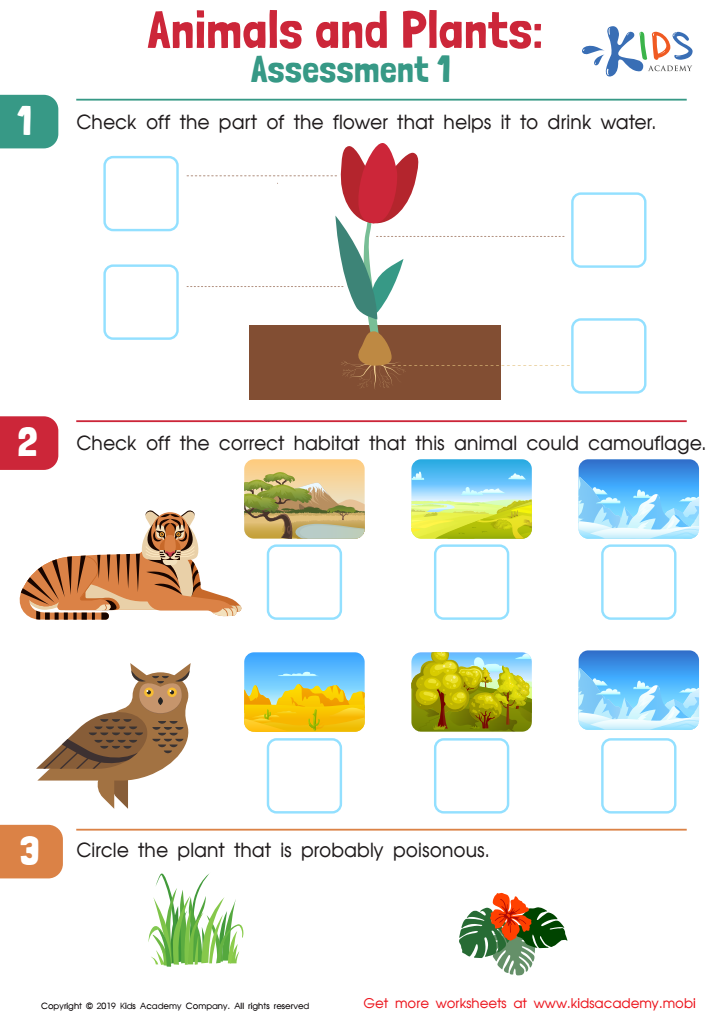
Animals and Plants: Assessment 1 Worksheet
 Assign to My Students






Critical Thinking Science for ages 6-8 is integral in shaping young minds, fostering their ability to analyze, question, and understand the world around them. At this formative stage, children are naturally curious and eager to explore; leveraging that curiosity through critical thinking can deepen their engagement with science.
Teachers and parents should prioritize this approach because it cultivates important life skills. Encouraging children to ask questions, identify problems, and seek evidence helps develop their reasoning abilities and enhances creativity. This foundation in scientific thinking lays the groundwork for future academic success and prepares children for real-world challenges, making them adaptive learners capable of making informed decisions.
Moreover, critical thinking in science promotes collaboration and communication skills. As children work together on experiments or explore concepts, they learn to articulate their thoughts, value differing opinions, and engage in healthy debate. These social interactions are vital for emotional intelligence and effective teamwork.
Incorporating Critical Thinking Science not only sparks interest in STEM fields but also nurtures a mindset geared toward inquiry, resilience, and innovativeness. This multifaceted growth is essential for shaping proactive, responsible citizens who can tackle the complexities of the future. Thus, investing in critical thinking science education is a commitment to a child’s holistic development.







