Science knowledge Science Worksheets for Ages 6-8
3 filtered results
-
From - To
Expand your child's scientific horizons with our Science Worksheets for Ages 6-8! Designed to ignite curiosity, these engaging worksheets introduce young learners to fundamental science concepts through fun experiments, colorful illustrations, and hands-on activities. Each worksheet encourages critical thinking and enhances understanding of the natural world, laying the foundation for lifelong science exploration. From learning about animals and plants to exploring weather patterns and the human body, our comprehensive collection nurtures a love for discovery. Perfect for homeschooling or supplementary practice, these science worksheets foster a passion for learning in budding scientists. Explore today at Kids Academy!
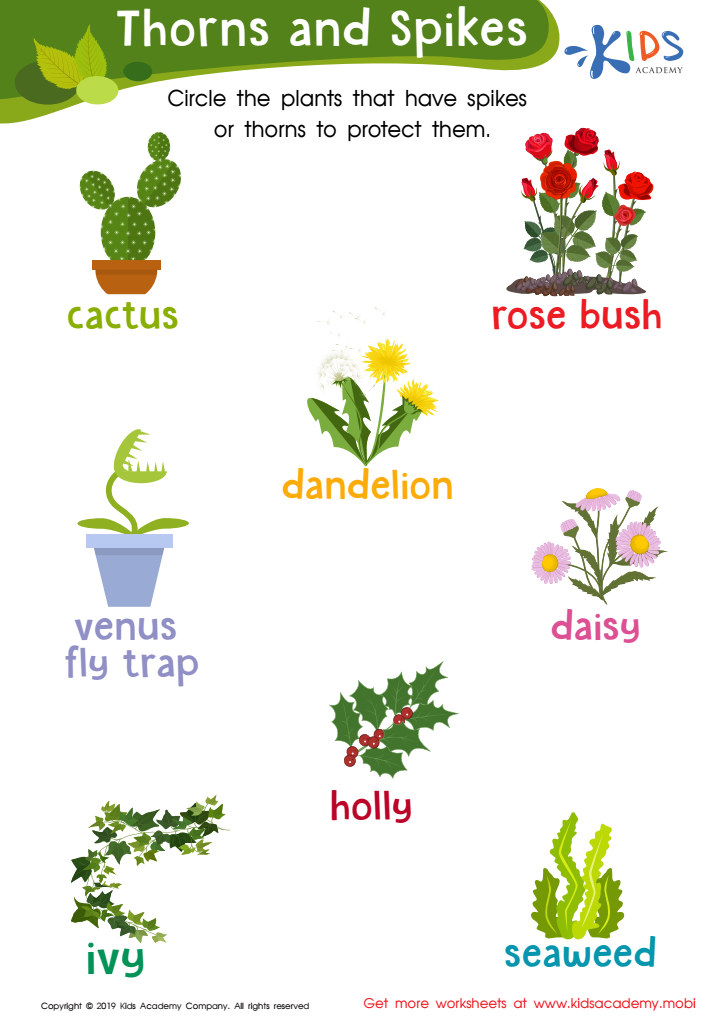
Thorns and Spikes Worksheet
 Assign to My Students
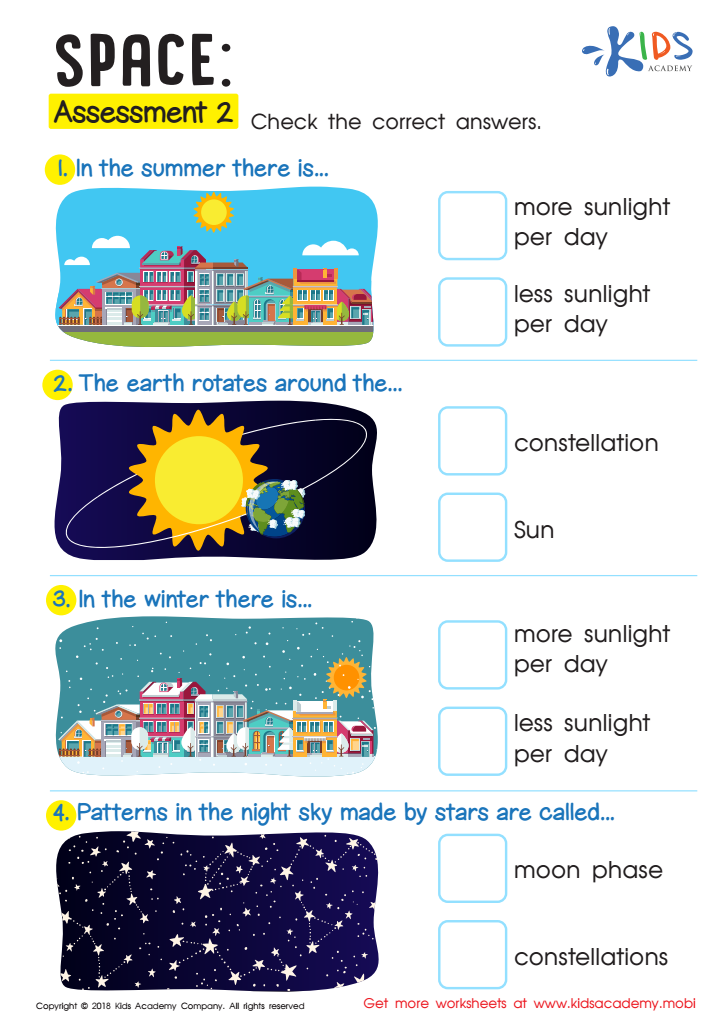
Space: Assessment 2 Worksheet






.jpg)
Introducing children aged 6-8 to science is crucial for their overall development and fosters a sense of curiosity and inquisitiveness. At this age, children's brains are incredibly receptive to learning new concepts and skills, and science offers a structured way to explore the world around them.
First, early exposure to science helps to build foundational knowledge that supports later academic success. Young children naturally exhibit curiosity about how things work, why they are the way they are, and how they relate to one another. Guiding them through scientific experiments and observations nurtures this curiosity and turns it into a lifelong love for learning.
Second, science education enhances critical thinking and problem-solving skills. Children learn to ask questions, form hypotheses, conduct experiments, and draw conclusions based on observed evidence. These skills are not only fundamental to science but also transferable to other subjects and real-life situations.
Additionally, early exposure to science promotes language development, math skills, and logical reasoning. For example, measuring ingredients in a simple science experiment or keeping a journal of findings can improve numeracy and literacy skills.
Finally, learning science fosters a sense of environmental stewardship and responsibility. Understanding the natural world and our impact on it can inspire young minds to take care of the environment and contribute positively to societal growth.
In summary, an early introduction to science builds critical skills and fosters curiosity, which is essential for future school success and responsible global citizenship.







