Understanding light sources Science Worksheets for Ages 6-8
6 filtered results
-
From - To
Explore our “Understanding Light Sources” science worksheets designed for children aged 6-8! These engaging resources introduce young learners to the fascinating world of light, differentiating between natural and artificial sources. Through vibrant illustrations and interactive activities, students will discover how light impacts their everyday lives. Our worksheets focus on enhancing critical thinking and observational skills while making learning enjoyable. Perfect for classroom settings or at-home learning, these worksheets will encourage curiosity and ignite a passion for science in your child. Download them today and watch your little ones illuminate their understanding of light sources with creativity and fun!
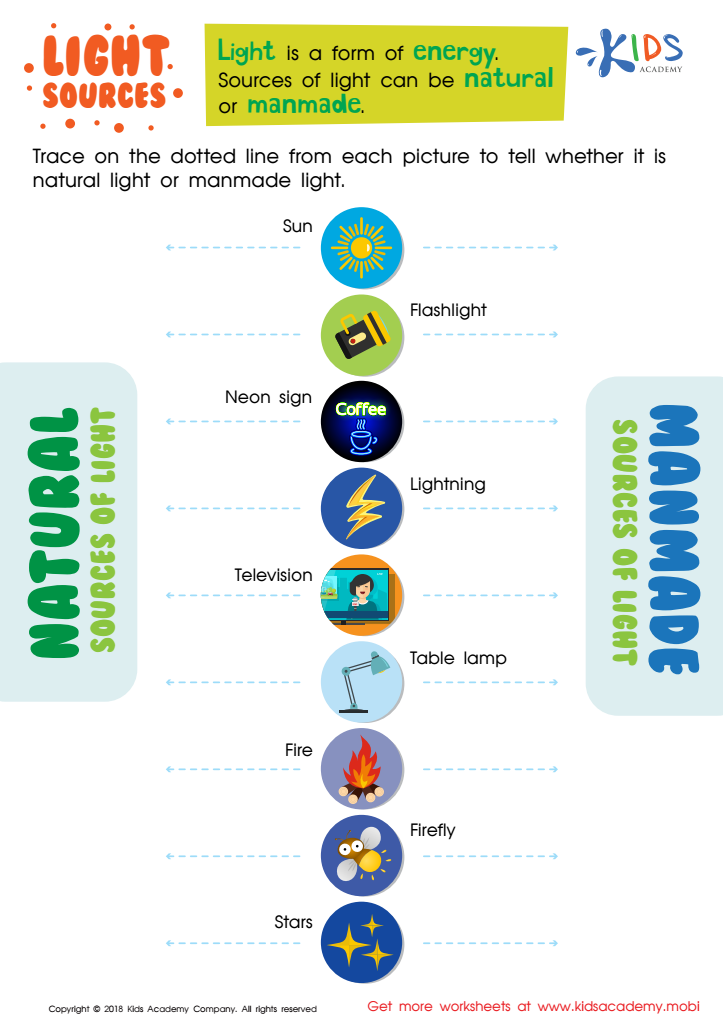
Natural and Manmade Light Sources Worksheet
 Assign to My Students
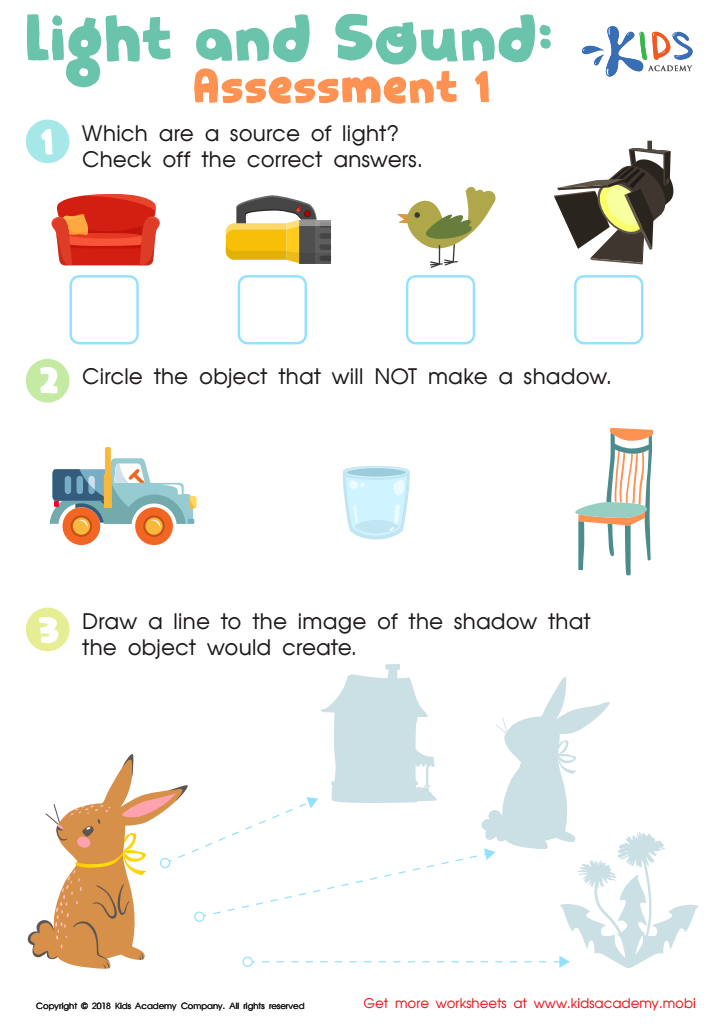
Light and Sound: Assessment 1 Worksheet
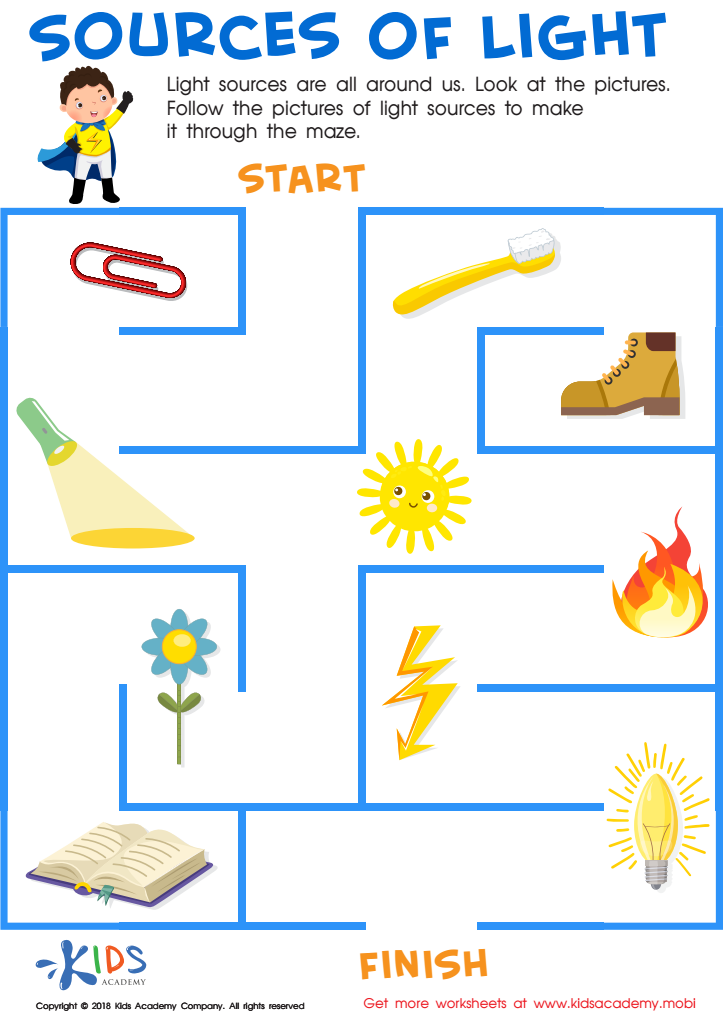
Sources of Light Worksheet
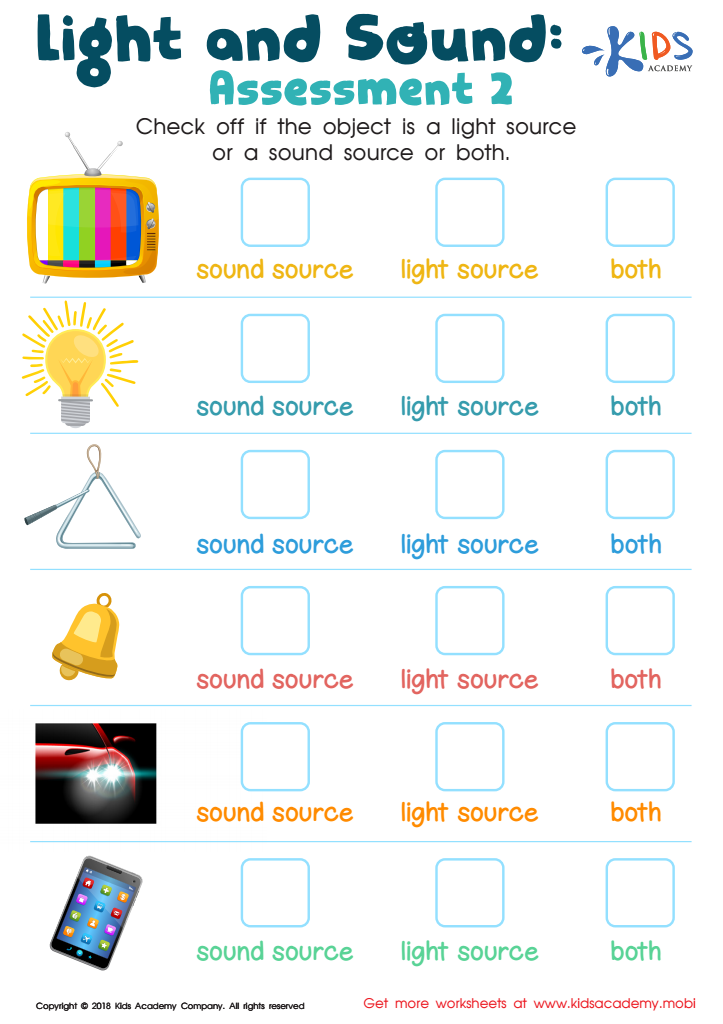
Light and Sound: Assessment 2 Worksheet
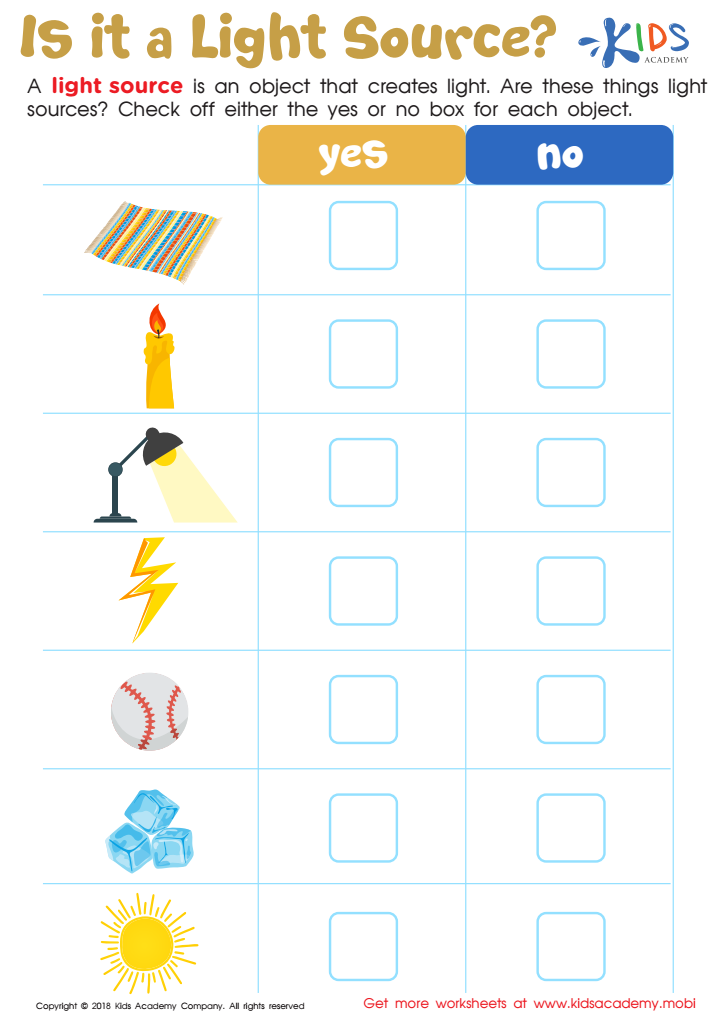
Is It a Light Source? Worksheet
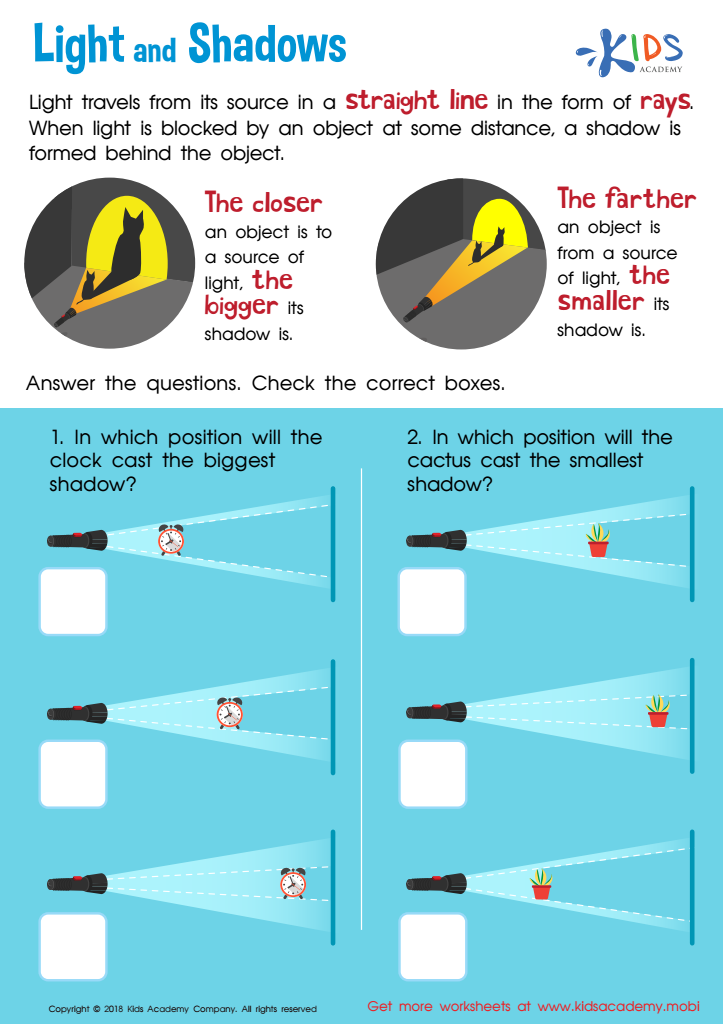
Light and Shadow Worksheet for Grade 3








Understanding light sources is crucial for children aged 6-8, as it lays the foundation for scientific thinking and curiosity. At this age, children are naturally inquisitive and eager to explore the world around them. By introducing them to the concept of light sources, parents and teachers can enhance their understanding of fundamental scientific principles.
Learning about different light sources, such as the sun, light bulbs, and fireflies, allows children to distinguish between natural and artificial light, fostering observational skills. This subject encourages critical thinking, as students will begin to ask questions like, "What makes this light?" or "Why does sunlight shine brighter than a flashlight?" Engaging in discussions and experiments related to light can spark creativity and innovative thinking.
Additionally, understanding light sources is pivotal for safety awareness, such as recognizing the importance of sunlight for health or being cautious with fire. It also enhances vocabulary and communication skills, as children learn specific terminology related to light and its properties. Ultimately, grasping this foundational science concept instills a sense of wonder about the world, making learning a fun and engaging experience for young learners, and encouraging lifelong interest in science and discovery.







