Understanding life cycles Life Science Worksheets for Ages 6-8
3 filtered results
-
From - To
Discover our engaging "Understanding Life Cycles Life Science Worksheets" designed for ages 6-8! These worksheets are crafted to spark curiosity and deepen understanding of various life cycles, from plants and animals to insects. With a range of interactive activities, young learners will explore each stage of the life cycle, enhancing their observational and analytical skills. Perfect for both classroom and home use, our worksheets foster a love for science through fun, educational exercises. Watch your child’s knowledge bloom as they follow the fascinating journey of living organisms from birth to maturity! Make learning dynamic and exciting with Kids Academy.
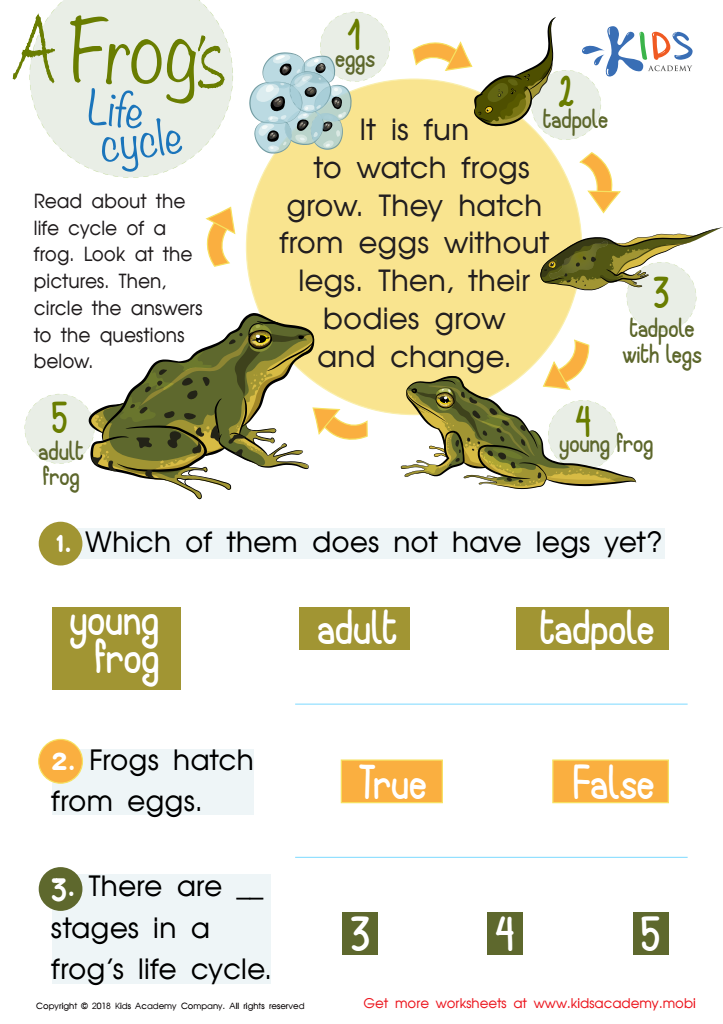
A Frog’s Life Cycle Worksheet
 Assign to My Students
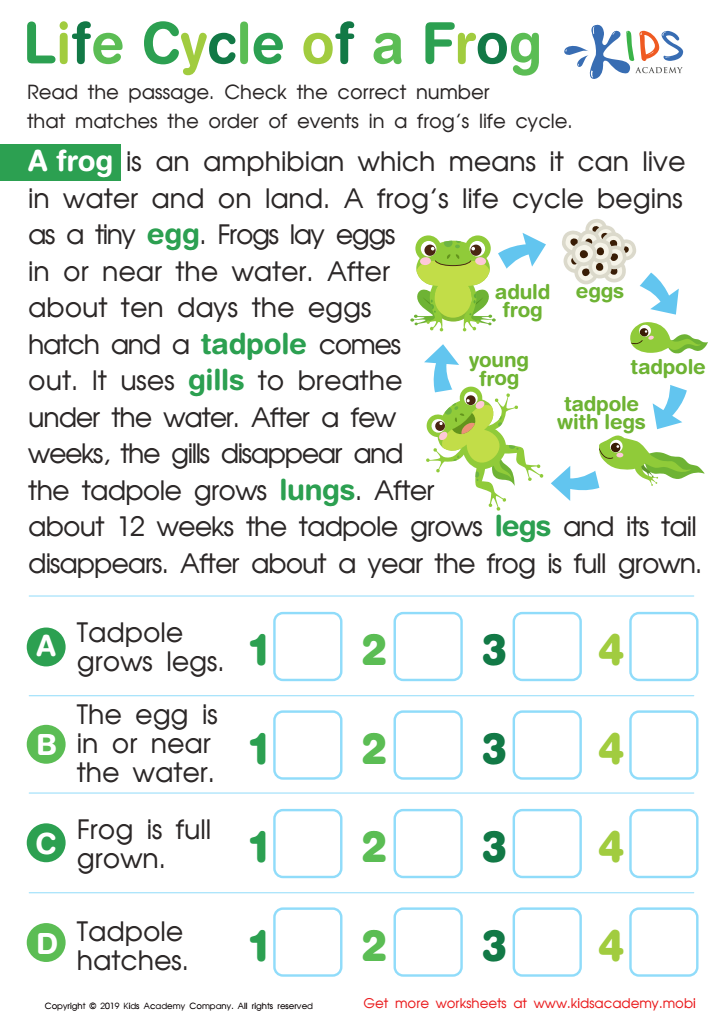
Life Cycle of a Frog Worksheet
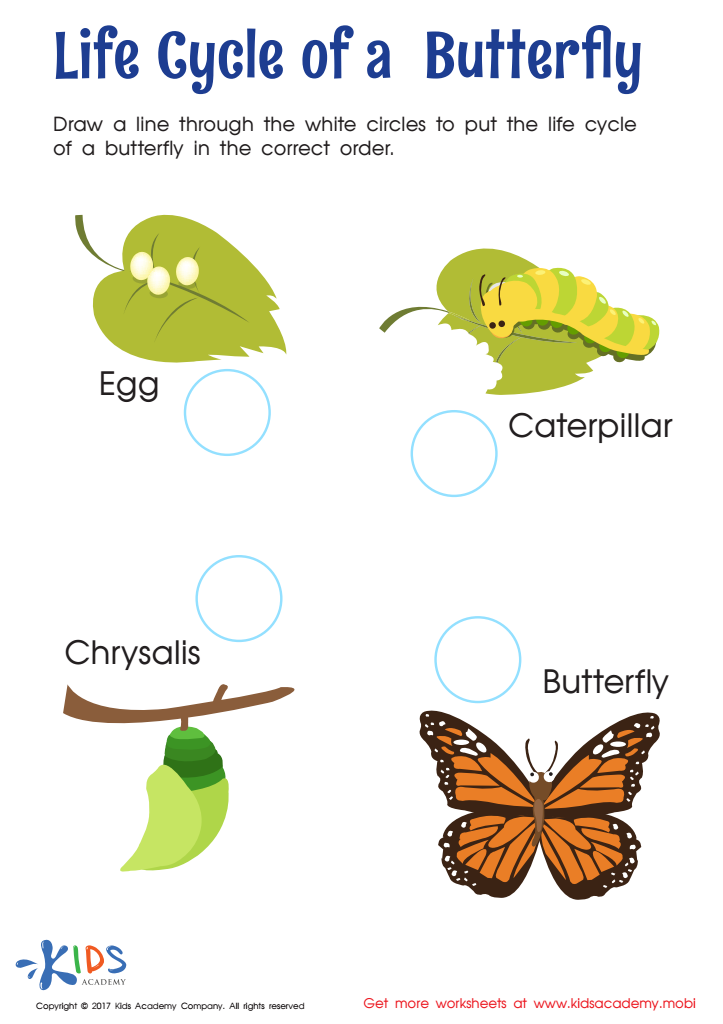
Life Cycle of Butterfly Worksheet




%20(1).jpg)


Understanding life cycles in life science is crucial for children ages 6-8, as it lays foundational knowledge about the natural world and its processes. At this developmental stage, children are naturally curious and eager to explore their surroundings. Learning about life cycles taps into this curiosity, enabling them to see connections between different living organisms such as plants, animals, and even insects. Such understanding fosters a sense of respect and empathy for life.
For parents and teachers, incorporating life cycles into education helps instill scientific literacy from an early age. Children learn key concepts such as growth, change, and adaptation, which are not only relevant to biology but also to understanding broader patterns in life and the environment. Additionally, life cycles can be a stepping-stone to discussing important issues like conservation, environmental stewardship, and sustainability.
Hands-on activities like observing the metamorphosis of a butterfly or planting seeds and watching them grow can make these lessons engaging and memorable. Such experiences enhance observational and critical thinking skills, which are valuable across all subjects. Ultimately, understanding life cycles helps children appreciate the continuity and interdependence of life, influencing how they interact with the world around them in compassionate and informed ways.








