Spatial awareness Physical Science Worksheets for Ages 6-8
4 filtered results
-
From - To
Enhance your child's understanding of spatial awareness with our engaging Physical Science worksheets designed for ages 6-8. These age-appropriate, printable resources encourage kids to explore concepts such as direction, shape recognition, and spatial relationships through fun activities. Our worksheets help young learners develop essential cognitive skills while fostering a love for science. Interactive exercises include identifying objects in relation to one another, completing visual puzzles, and practicing measurement. Perfect for both classroom and home learning, these worksheets lay a strong foundation for future STEM success. Unlock your child’s potential and watch them thrive as they master spatial awareness concepts!
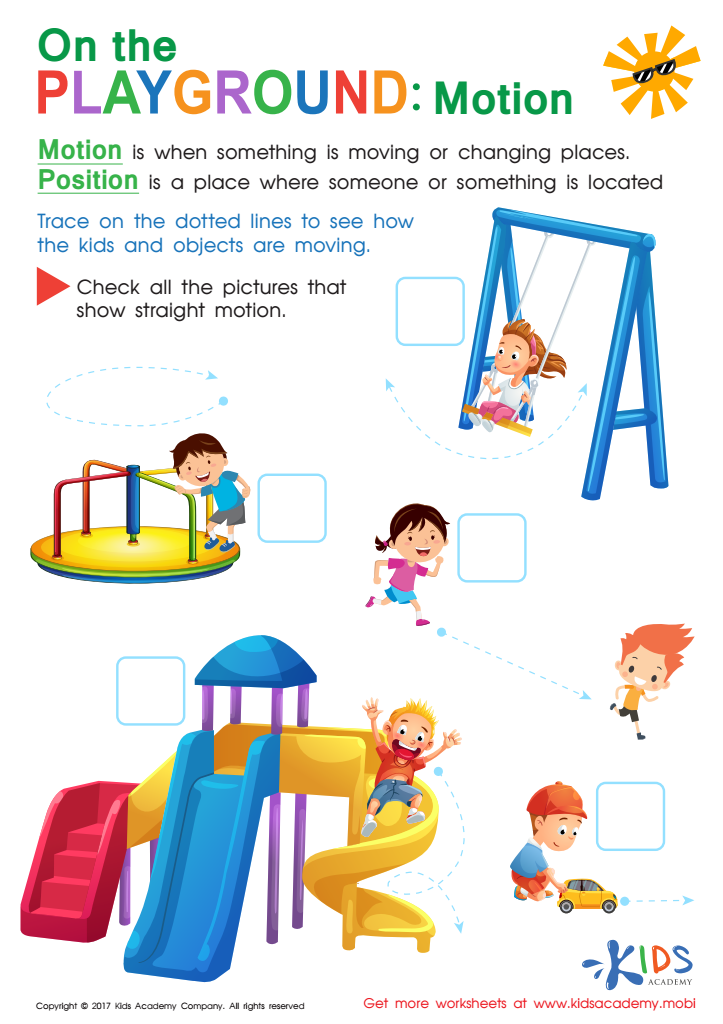
Position and Motion Worksheet
 Assign to My Students
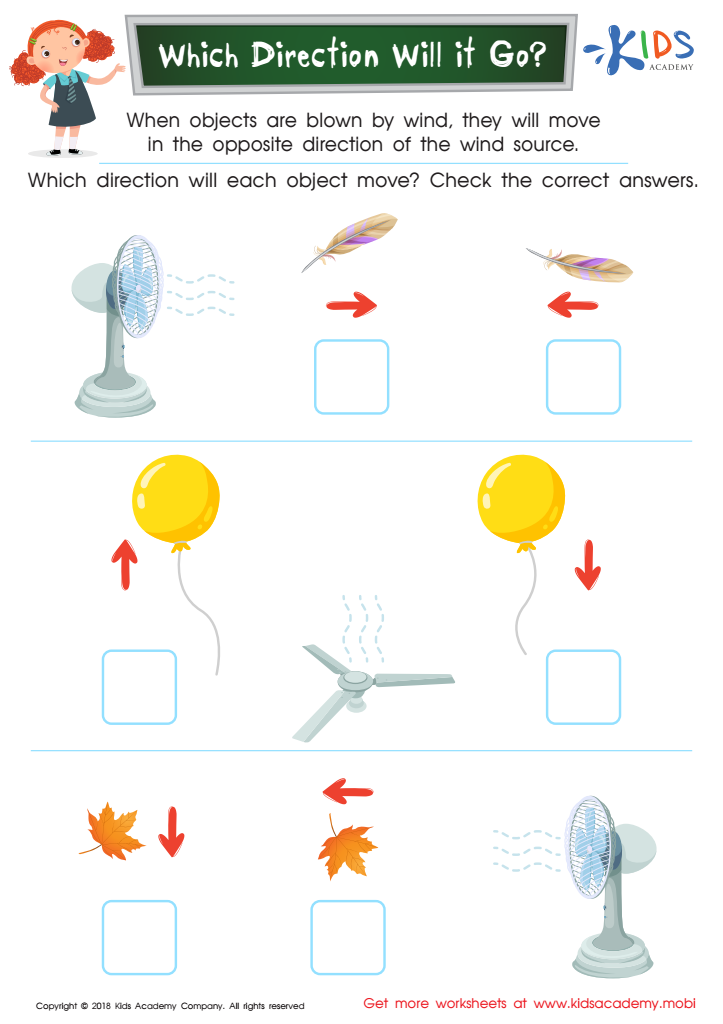
Which Direction Will it Go? Worksheet
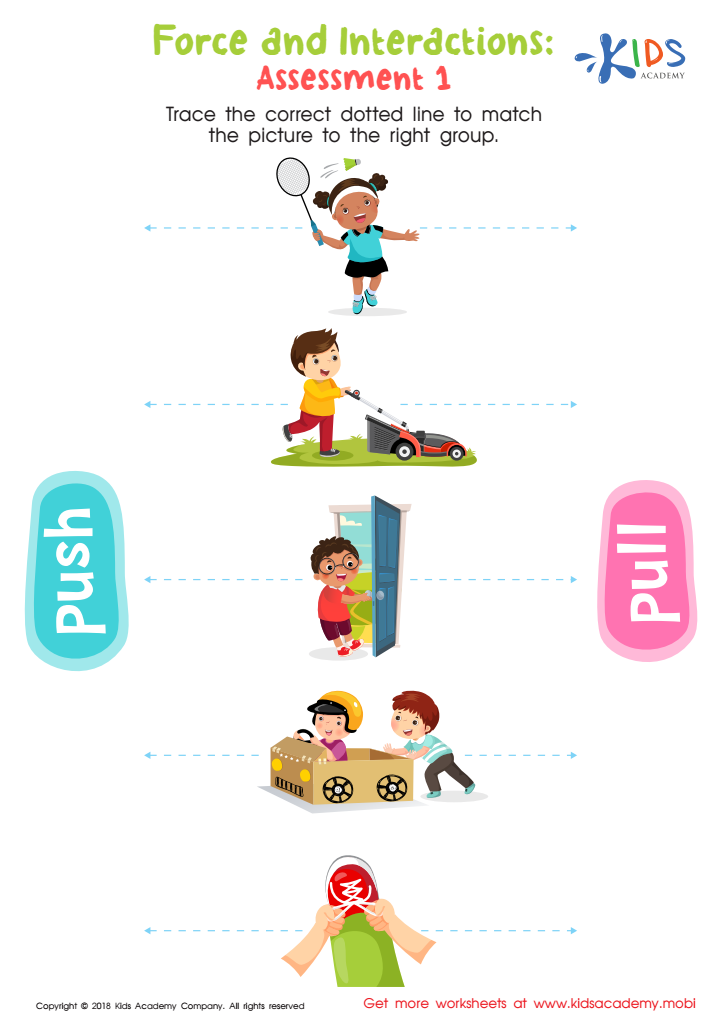
Force and Interactions: Assessment 2 Worksheet
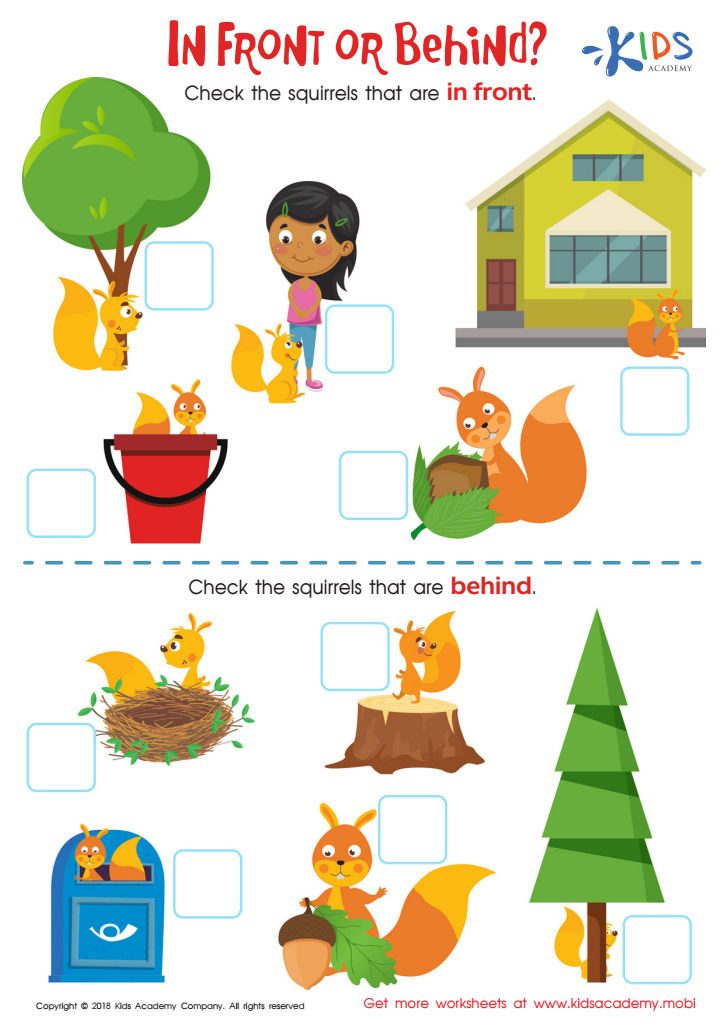
In Front or Behind: Part 2 Worksheet







Spatial awareness is a critical component of early childhood development, particularly within the realm of physical science for children aged 6-8. At this stage, children are naturally curious about their environment and are beginning to understand concepts like shape, size, distance, and direction. By nurturing spatial awareness, parents and teachers can provide children with the foundational skills needed for future academic success.
Spatial awareness helps children make sense of the world around them and develop problem-solving abilities. It enhances their critical thinking as they learn to visualize objects and how they move and interact within space, which is essential for grasping more complex scientific concepts later on. Activities such as building with blocks, playing sports, or even art projects can significantly bolster spatial skills while also promoting creativity and cooperation.
Additionally, strong spatial skills are linked to improved performance in subjects like math and science, as these often require visualization and manipulation of objects in space. Therefore, emphasizing spatial awareness at this young age not only lays the groundwork for future learning but also instills a sense of exploration and curiosity, fostering lifelong learners who are well-prepared to navigate and understand the complexities of the world.







