Critical thinking development Plants and Animals Worksheets for Ages 6-8
3 filtered results
-
From - To
Explore our engaging "Critical Thinking Development: Plants and Animals Worksheets" designed for ages 6-8! These interactive worksheets encourage young learners to think critically about the relationships between plants and animals. Through hands-on exercises, children enhance their analytical skills by observing, comparing, and categorizing various species while learning about their habitats, life cycles, and ecological roles. Ideal for home or classroom use, these resources help educators foster an inquisitive mindset, sparking curiosity about the natural world. Download our thoughtfully crafted worksheets today to inspire your child's critical thinking and deepen their understanding of plants and animals!
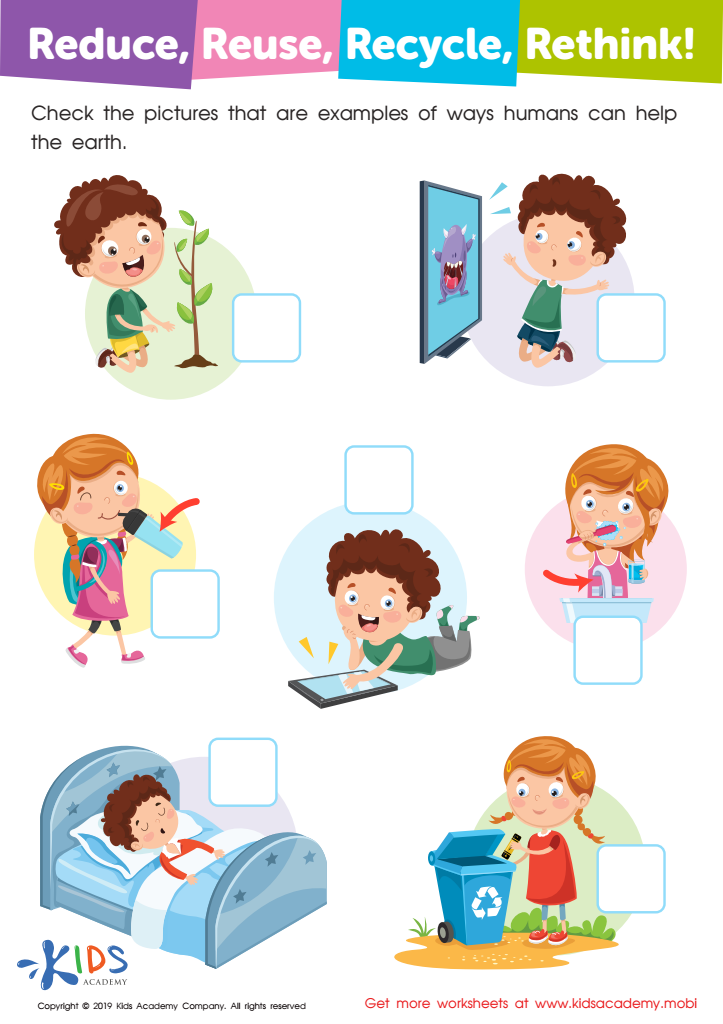
Reduce, Reuse, Recycle, Rethink Worksheet
 Assign to My Students











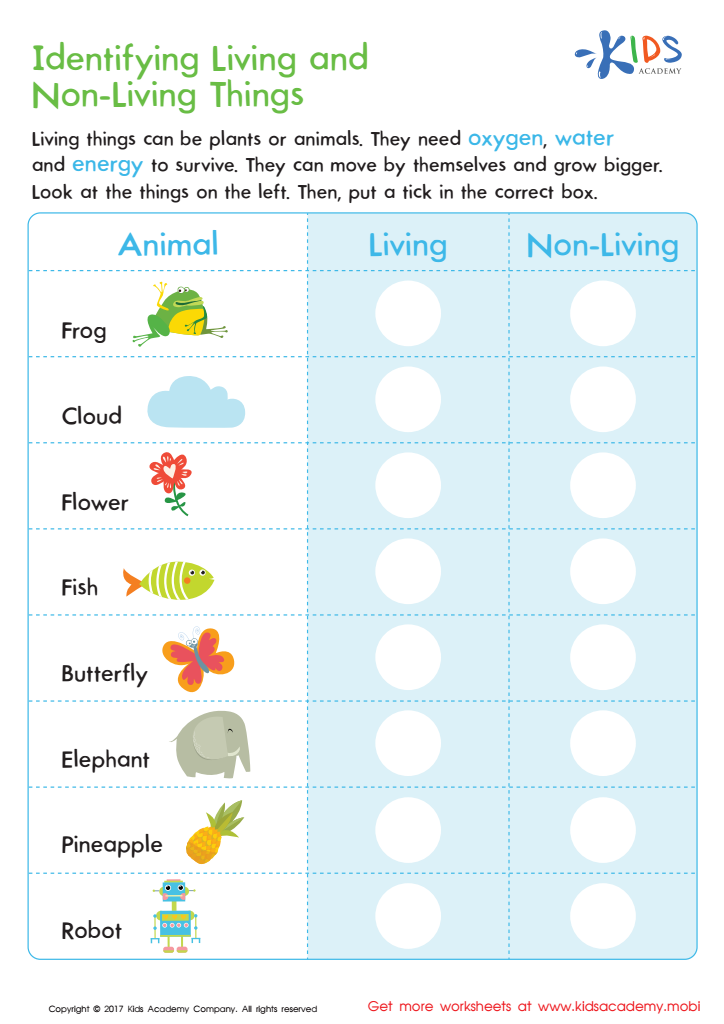
Identifying Living or Non–living Worksheet
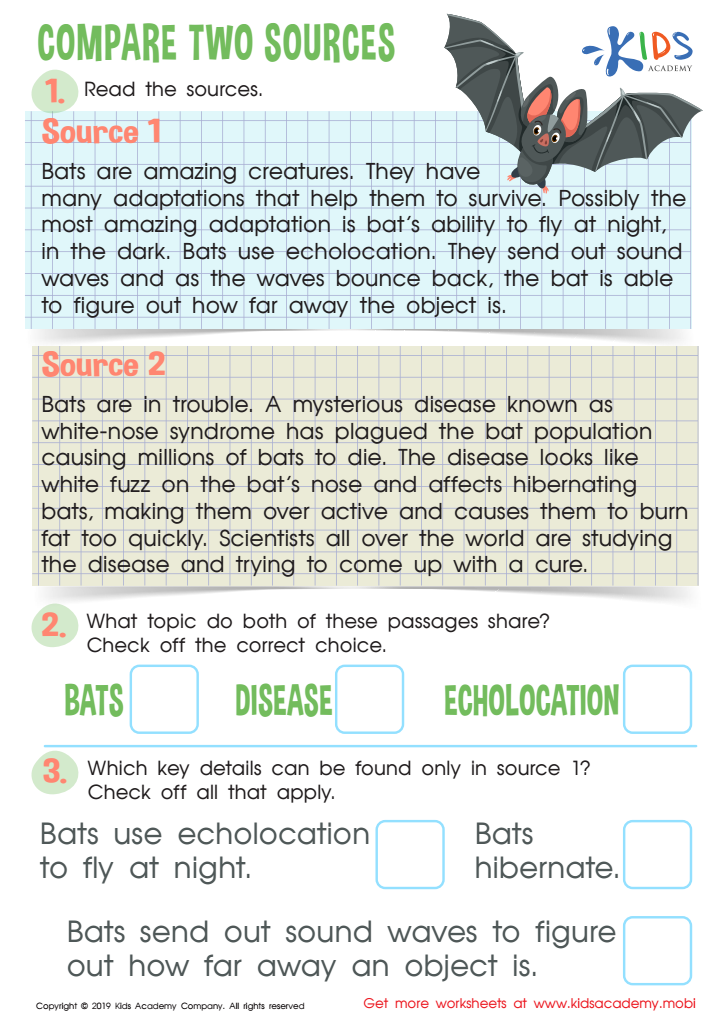
Compare Two Sources Worksheet








Critical thinking development in the context of plants and animals for ages 6-8 is vital because it lays the foundation for children’s cognitive, social, and emotional growth. During this developmental stage, children are naturally curious and eager to explore the world around them. Engaging them in topics related to plants and animals encourages inquiry-based learning, where they can ask questions, make observations, and seek answers. This process not only improves their understanding of biological concepts but also enhances their analytical skills.
Furthermore, critical thinking fosters problem-solving abilities. For instance, investigating the needs of plants and the habitats of animals can lead children to make connections between ecosystems, food chains, and environmental conservation. These lessons promote compassion and responsibility, as children learn the importance of respecting living organisms and their environments.
Parents and teachers play a crucial role in nurturing this development by providing opportunities for hands-on experiences, such as gardening or observing wildlife. Encouraging discussions about their findings cultivates language skills and emotional intelligence as they articulate their thoughts and feelings. Ultimately, prioritizing critical thinking about plants and animals helps children become informed, empathetic individuals who can thrive in their environments and contribute positively to society.








