Observational skills Space Worksheets for Ages 6-8
3 filtered results
-
From - To
Enhance your child's observational skills with our engaging Space Worksheets for ages 6-8! Tailored specifically for young learners, these worksheets invite kids to explore the wonders of the universe, encouraging critical thinking and attention to detail. Packed with interactive activities, your child will enjoy identifying celestial bodies, comparing sizes, describing patterns, and recording their findings. Our resources foster a love for science while promoting cognitive development and problem-solving abilities. Ideal for at-home learning and classroom settings, these worksheets make studying space both fun and educational. Download now to ignite curiosity and expand your child's knowledge of the cosmos!
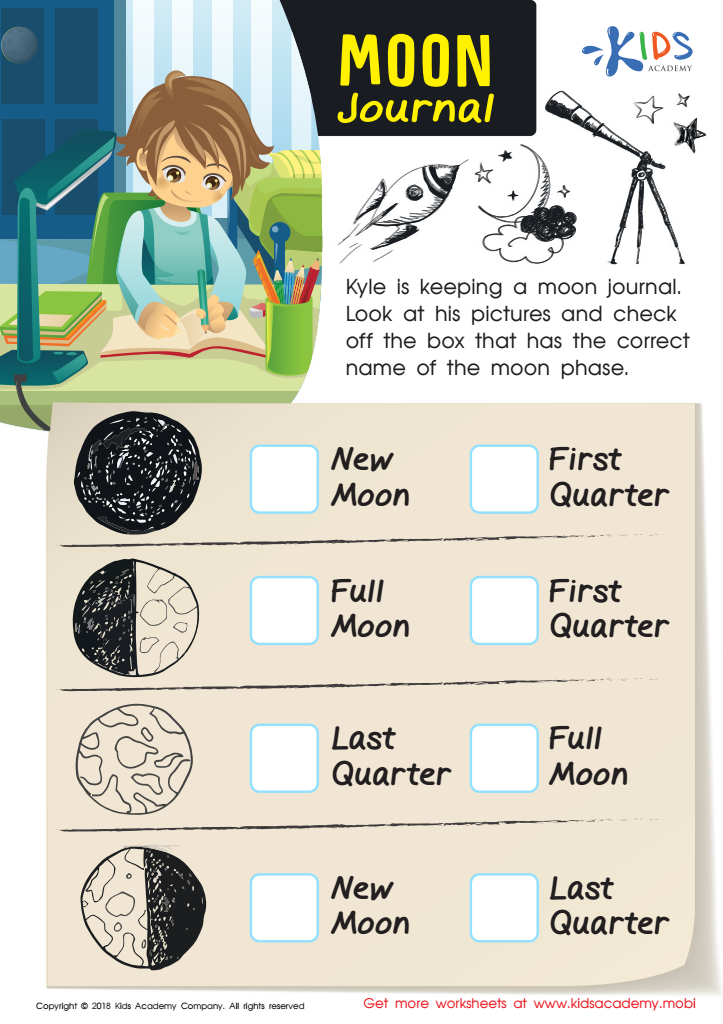
Moon Journal Worksheet
 Assign to My Students
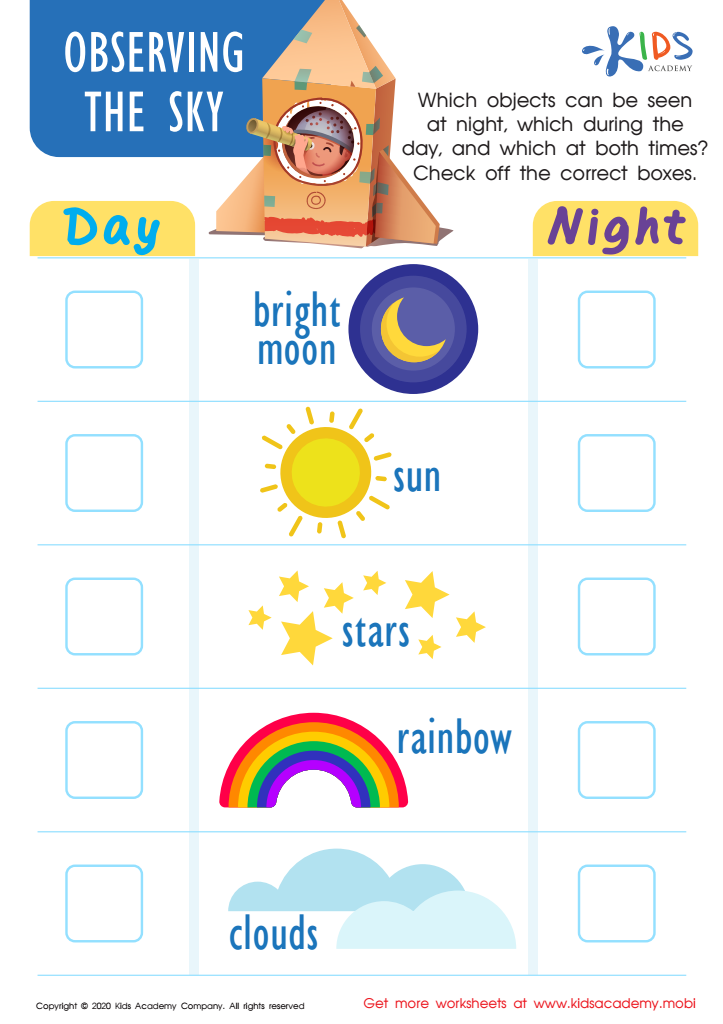
Observing the Sky Worksheet
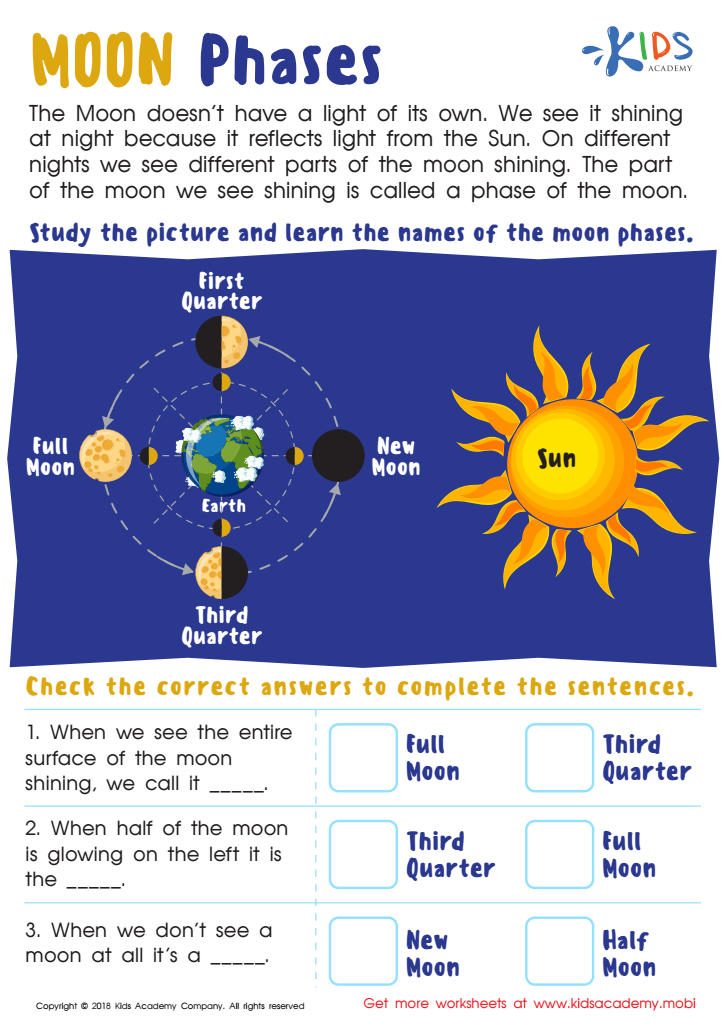
Moon Phases Worksheet





%20(1).jpg)


Observational skills are crucial for children aged 6-8, as they form the foundation for critical thinking and learning. During this developmental phase, children are naturally curious and eager to explore their surroundings. By fostering strong observational skills, parents and teachers can enhance a child's ability to notice details, make connections, and engage with the world meaningfully.
Observational skills help children improve their comprehension abilities, enabling them to understand and interpret information more effectively. This is especially important in subjects like science and literature, where observation is key for making predictions, asking questions, and drawing conclusions. Furthermore, enhancing these skills encourages active participation in learning activities, promoting a lifelong love of exploration and discovery.
Additionally, good observational skills contribute to emotional and social development. Children learn to read body language and facial expressions, helping them navigate social interactions and build empathy. As a result, nurturing these skills lays the groundwork for healthy relationships and conflict resolution.
In summary, investing in observational skills for children ages 6-8 supports academic success, social development, and a growth mindset—benefits that will extend far beyond the classroom and into their future endeavors. Engaging families and educators in this process is essential for well-rounded child development.







