
Enhancing critical thinking Community Worksheets for Ages 6-8
3 filtered results
Difficulty Level
Grade
Age
-
From - To
Subject
Activity
Standards
Enhancing critical thinking is vital for young learners, and our Community Worksheets for ages 6-8 are designed to nurture these essential skills. Available on Kids Academy, these worksheets immerse children in scenarios that require logical analysis, problem-solving, and decision-making. With vibrant illustrations and engaging activities, kids explore various aspects of community life while refining their critical thinking abilities. Covering essential social studies topics, these worksheets not only build core knowledge but also encourage thoughtful discourse and reflection. Perfect for classroom or home use, they make learning an interactive, enjoyable experience while laying a strong foundation for future academic success.
Favorites
With answer key
Interactive
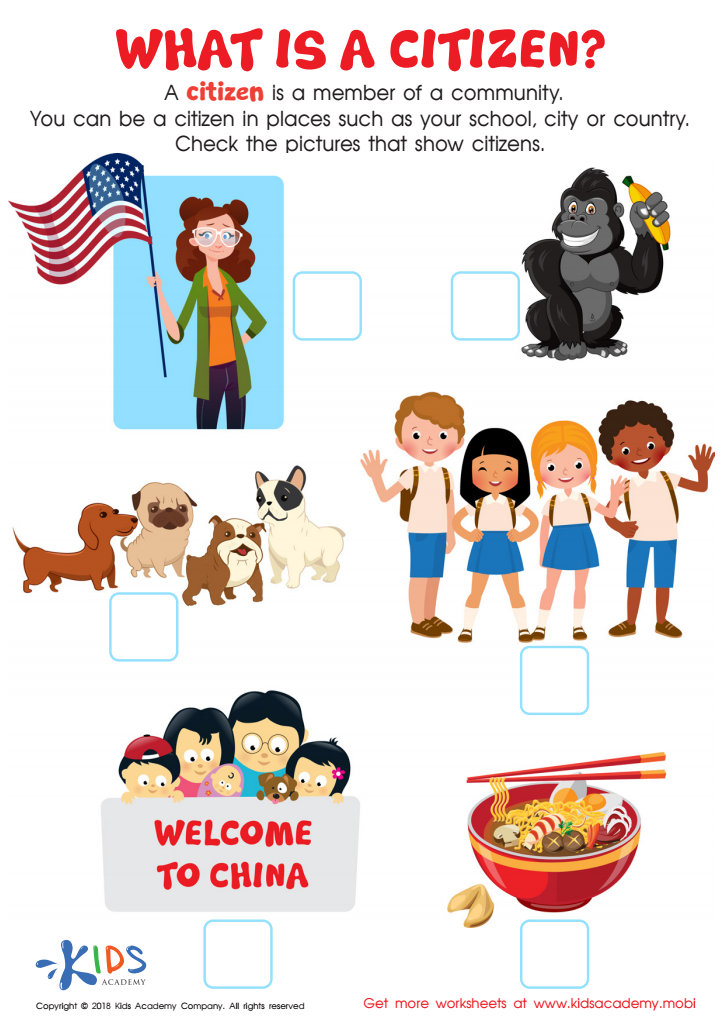
What is a Citizen? Worksheet
Do your students know who a citizen is? Use this worksheet to teach them: a citizen is a member of a community, such as your school, city or country. Look at the pictures in the pdf with your students. Ask them to identify who or what is in the pictures, and help them check which are citizens.
 Assign to My Students
What is a Citizen? Worksheet
Worksheet
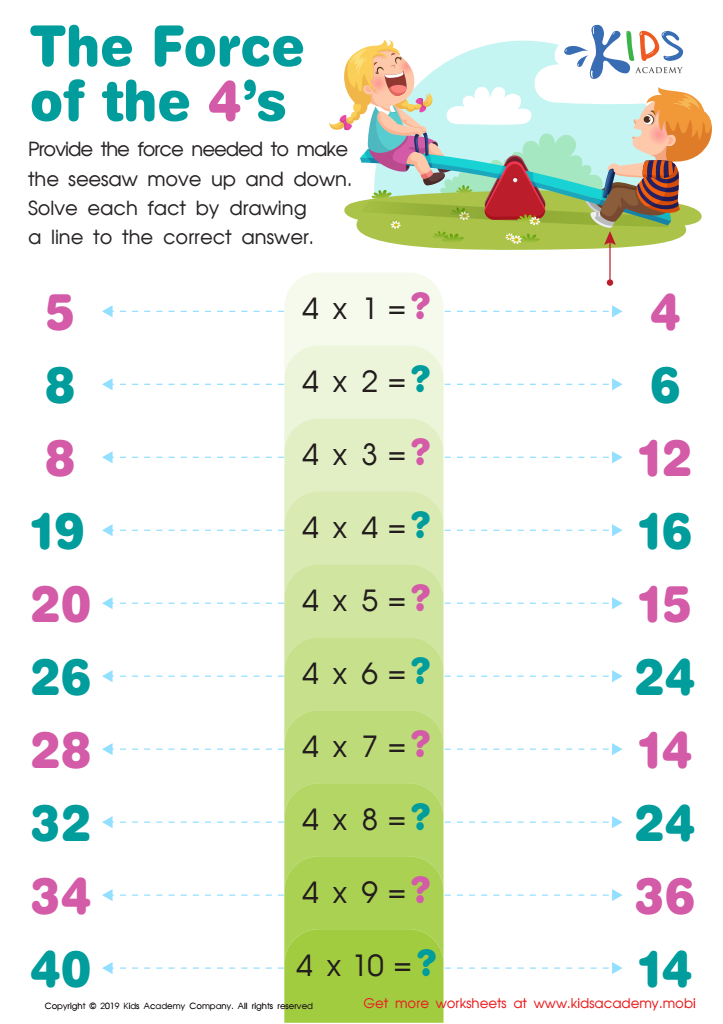
The Force of the 4's Worksheet
Ride a seesaw with your child and explore the physics behind it! Explain how it needs two people and how force makes it go up and down. Use the memories of the pleasurable experience to teach your kid a lesson in force. Show them how to solve the worksheet by drawing a line to the correct answer. This way, they'll learn the force needed for the seesaw to move.
The Force of the 4's Worksheet
Worksheet
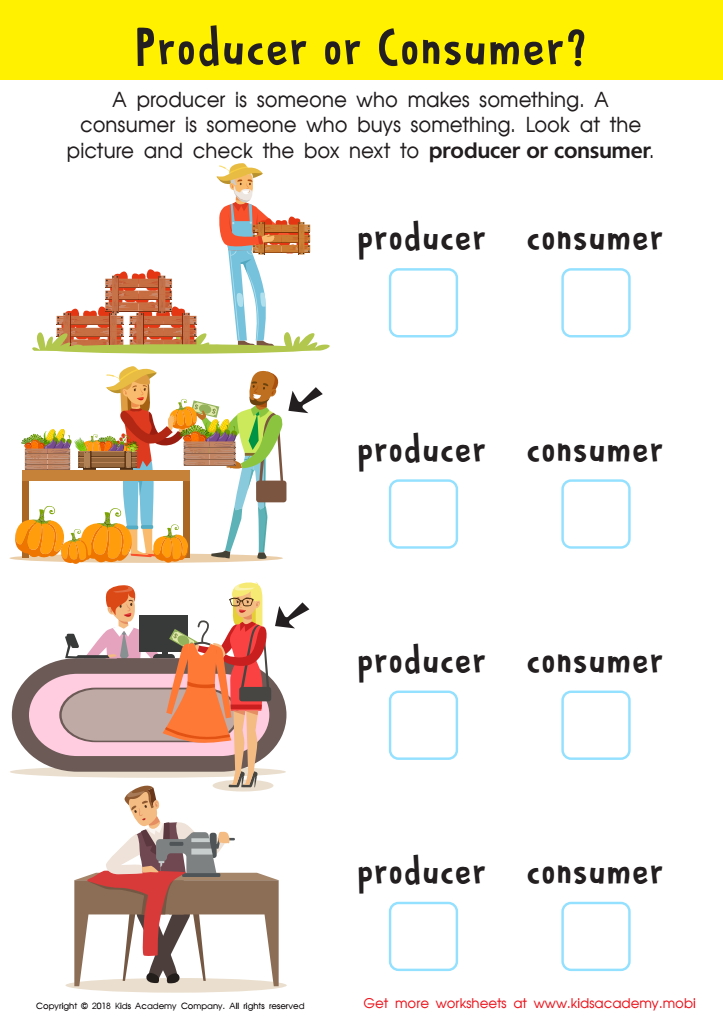
Producer or Consumer? Worksheet
Test your child's knowledge by asking who's a producer and consumer. Explain producer makes things and consumer buys them. Use a snack example. Look at the picture with your kids and help them check the box next to producer or consumer.
Producer or Consumer? Worksheet
Worksheet
Join Kids Academy for Free
Who is primarily going to use this learning content?








Enhancing critical thinking in children aged 6-8 is essential for fostering well-rounded, analytical individuals. This age group marks a critical developmental stage where kids learn foundational cognitive skills. Encouraging critical thinking equips them to approach learning and life challenges effectively.
For parents and teachers, instilling these skills means facilitating a child's ability to question, analyze, and make reasoned decisions. This is vital in navigating an information-rich world where discerning facts from misinformation is important. It also aids in developing problem-solving skills, allowing children to tackle academic subjects with a more in-depth understanding and innovative solutions.
Beyond academics, critical thinking cultivates independence and confidence in young minds. Children begin to understand diverse perspectives, improving their social interactions and empathy. In a classroom or community setting, this communal encouragement of critical thinking can contribute to a more engaging, inquisitive, and collaborative environment.
Taking these developmental steps can also have long-term benefits. Kids who master critical thinking early on are better prepared for complex future challenges, enhancing their lifelong learning capabilities and positioning them as thoughtful, responsible members of society. Parents and teachers thus play a crucial role in nurturing these skills, shaping a foundation for future intellectual growth and societal contribution.








