Vocabulary development Community Worksheets for Ages 6-8
7 filtered results
-
From - To
Enhance your child's vocabulary development with our engaging community worksheets designed for ages 6-8! These printable resources focus on essential vocabulary skills through fun activities that relate to their surrounding community. Each worksheet is crafted to spark curiosity and facilitate learning, allowing children to explore vital terms and their meanings in an interactive way. From identifying community helpers to understanding local places, our exercises help young learners expand their linguistic abilities while promoting social awareness. Foster a love for language and community with our thoughtfully designed worksheets, perfect for both home and school use. Dive into a world of words today!
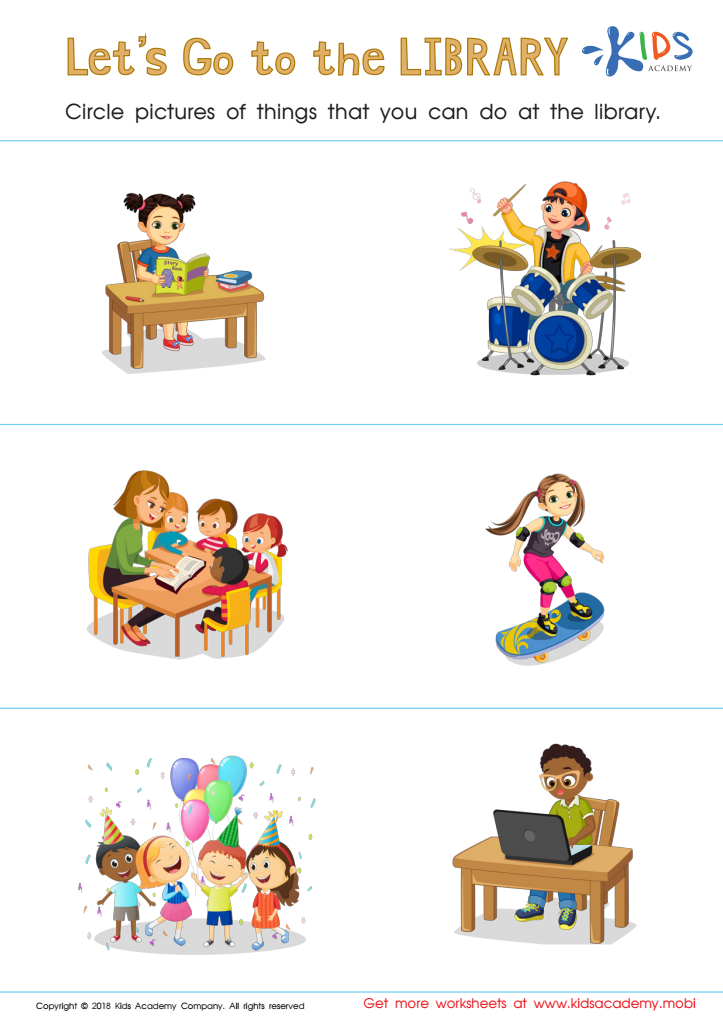
Let's Go to the Library! Worksheet
 Assign to My Students

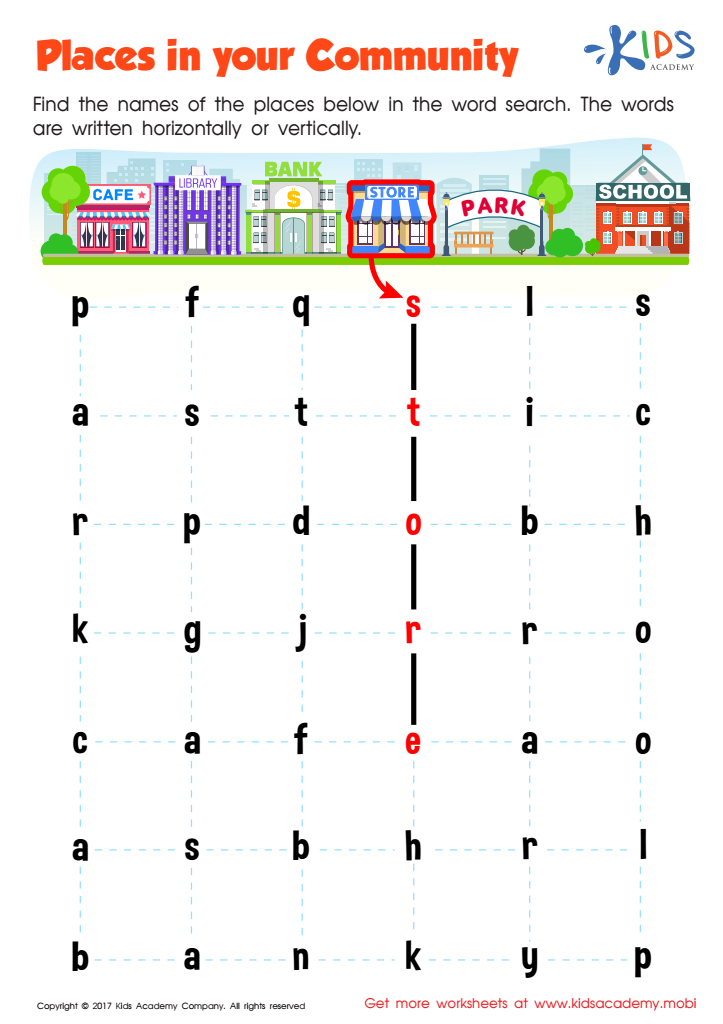
Places in Your Community Worksheet
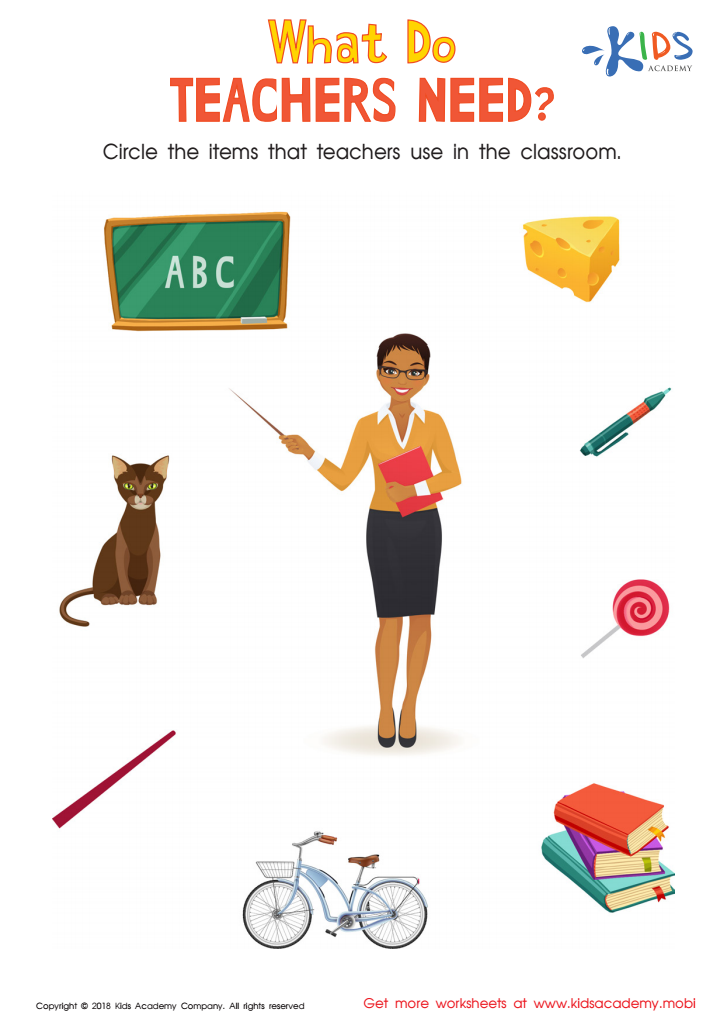
What Do Teachers Need Worksheet
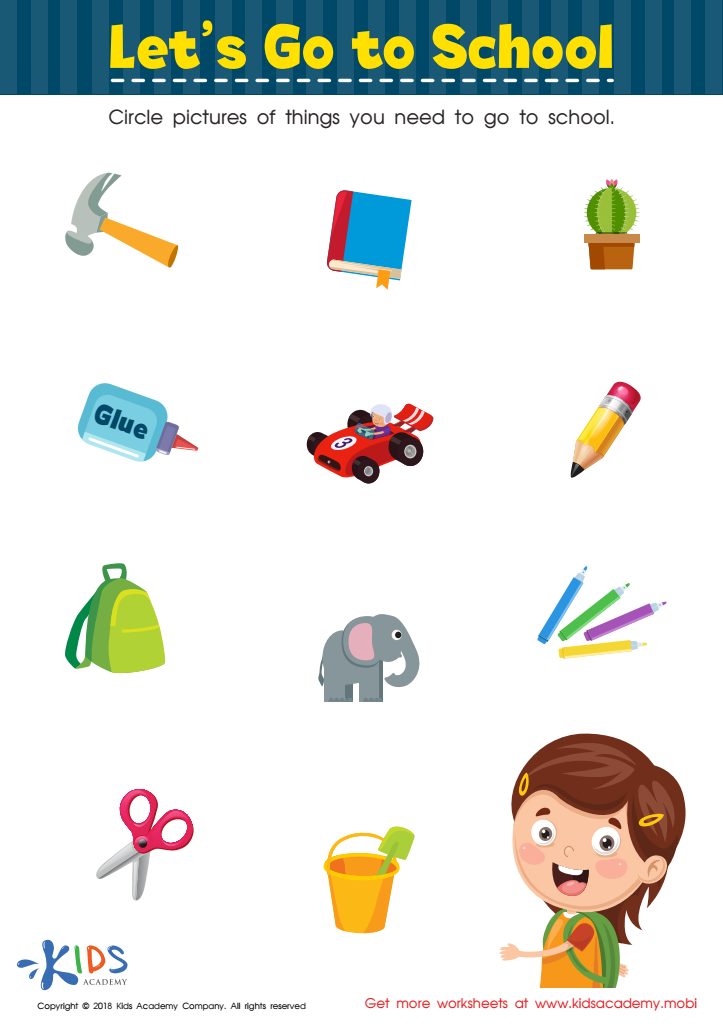
Let's Go to School! Worksheet
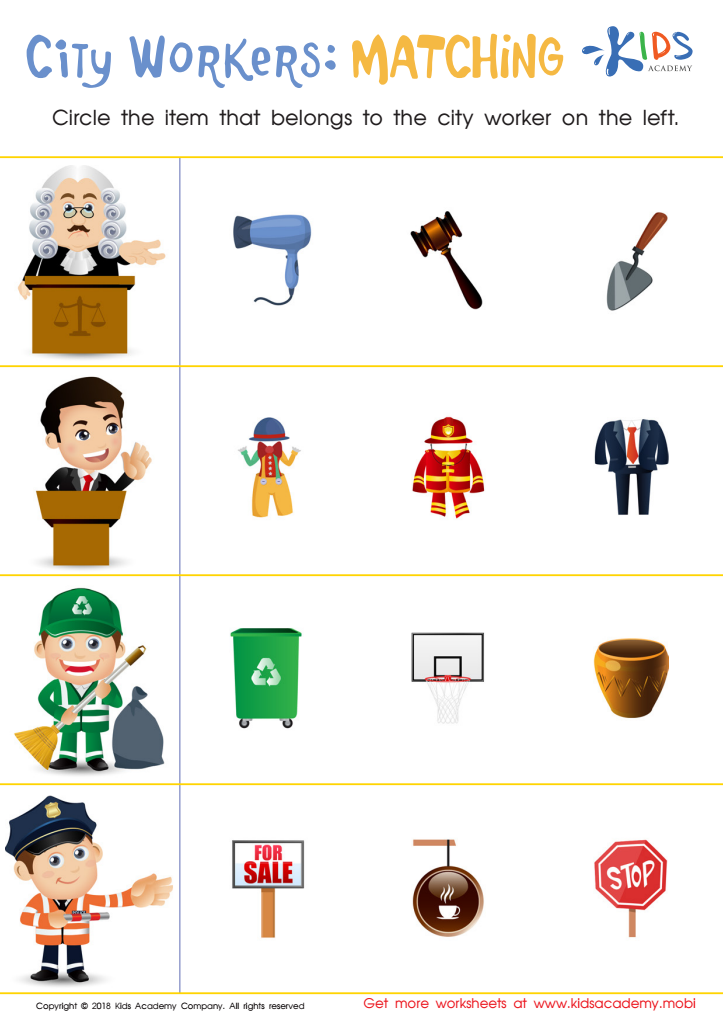
City Workers: Matching Worksheet
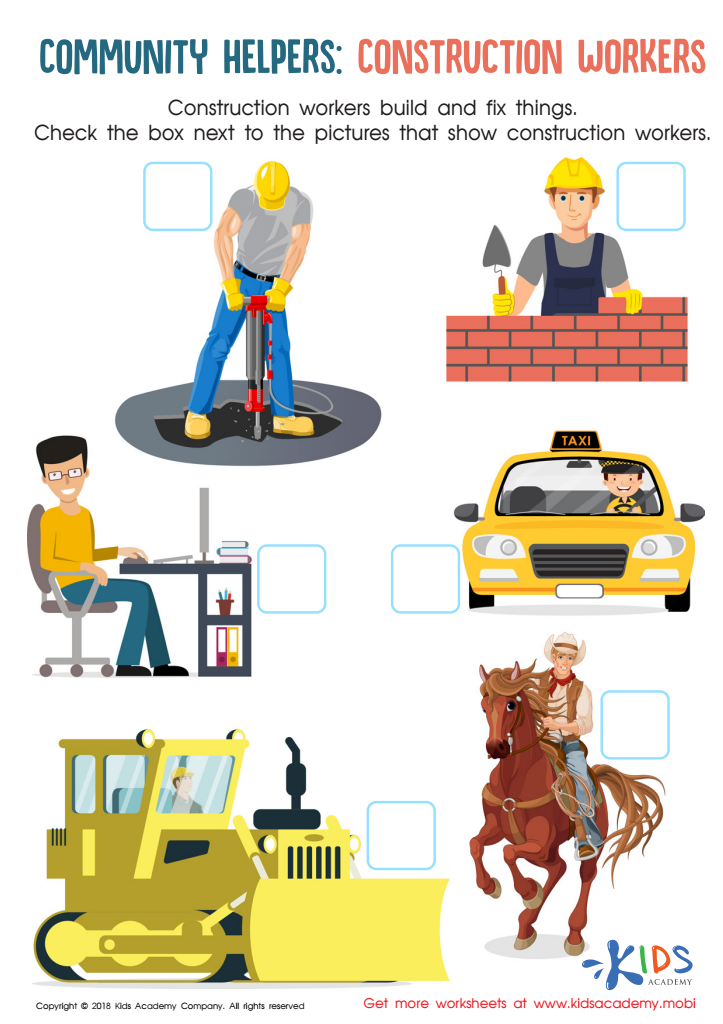
Construction Workers Community Helpers Worksheet








Vocabulary development is crucial for children aged 6-8, as it forms the foundation for their overall academic success and communication skills. Parents and teachers should prioritize fostering a rich vocabulary environment because this age group is critically expanding their language abilities; they are beginning to read independently and engage in more complex conversations.
A robust vocabulary aids in reading comprehension, allowing children to grasp the meaning of texts and express their thoughts effectively. As they encounter new words, they also develop better writing skills, which are essential for academic assignments and creative expression.
Moreover, a strong vocabulary supports social interactions and emotional intelligence. Children who can articulate their feelings and thoughts are more adept at forming relationships with peers and adults, enhancing their social skills, empathy, and confidence.
Community involvement is equally vital. It exposes children to diverse experiences and languages, enriching their understanding of the world. By engaging families, schools, and local libraries in vocabulary-rich activities—such as storytelling, reading clubs, and word games—parents and teachers can create an inclusive, stimulating environment that fosters lifelong language learning. Ultimately, investing in vocabulary development empowers children to become more proficient learners and communicators, setting them up for future success.








