Comprehension skills History Worksheets for Ages 6-8
4 filtered results
Difficulty Level
Grade
Age
-
From - To
Subject
Activity
Standards
Discover engaging and educational comprehension skills history worksheets designed for children ages 6-8 at Kids Academy! Our carefully curated materials aim to enhance young learners' understanding of historical events and figures. Each worksheet integrates reading passages with questions that promote critical thinking, vocabulary development, and reading comprehension. These resources make learning about history fun and interactive, helping kids build essential skills while connecting with the past. Perfect for use in classrooms or as homework, our history worksheets will ignite curiosity and foster a love for learning. Try them today and watch your child's historical knowledge thrive!
Favorites
With answer key
Interactive
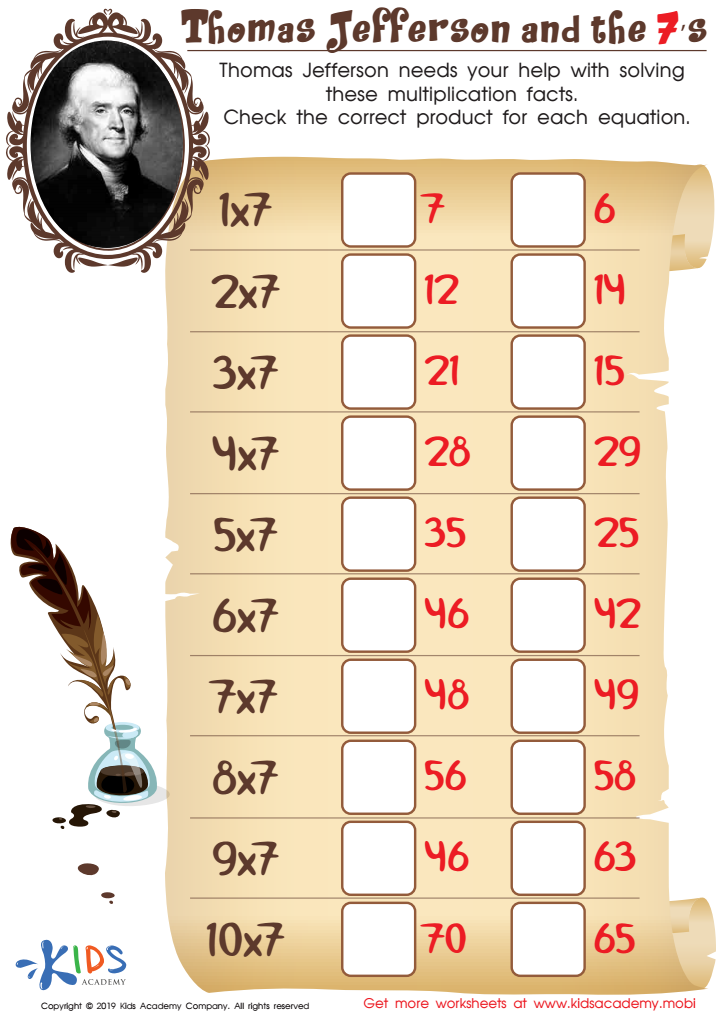
Thomas Jefferson and the 7’s Worksheet
Thomas Jefferson championed education and wants kids to know their times tables. Help your child with this worksheet focusing on 7's. Check the box for the correct answer for each multiplication problem. Make sure your child gets the facts right!
 Assign to My Students
Thomas Jefferson and the 7’s Worksheet
Worksheet
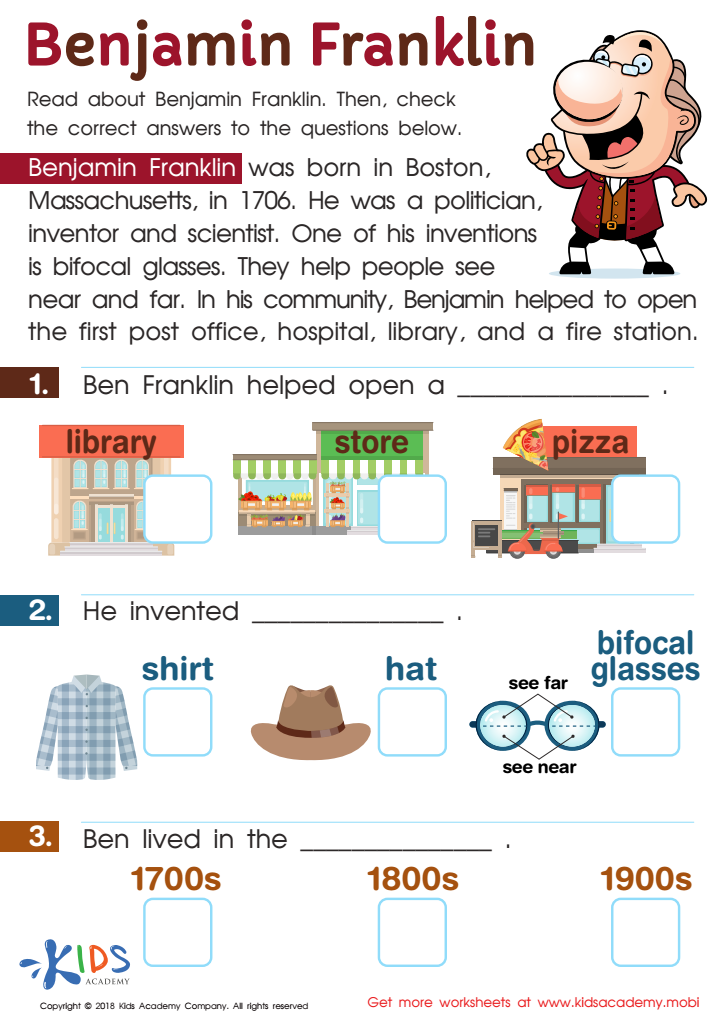
Benjamin Franklin Worksheet
Introduce your kids to one of history's most important figures - Benjamin Franklin! Tell them all about his remarkable contributions to the world and then use this worksheet to teach them even more. Read the text to them and check their answers against the questions afterwards.
Benjamin Franklin Worksheet
Worksheet
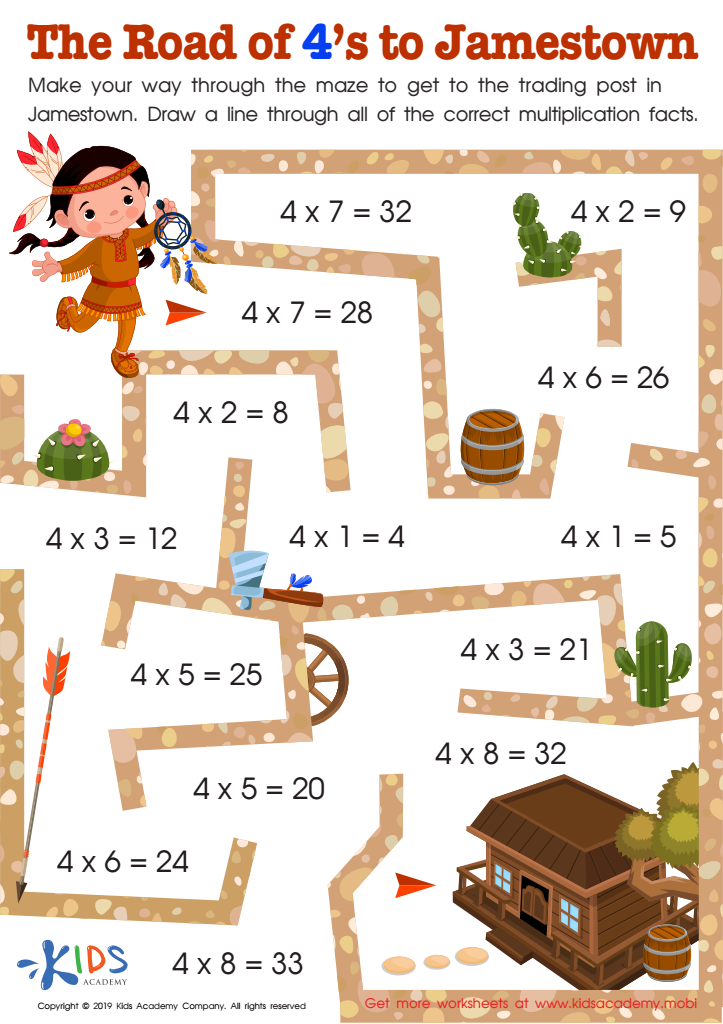
The Road of 4’s to Jamestown Worksheet
Does your child enjoy trips? Help them remember the best ones with this fun worksheet maze! Get your kid to look at the picture and draw a line through all the right multiplication facts to get to Jamestown's trading post. This worksheet is a great way to stimulate their problem-solving skills.
The Road of 4’s to Jamestown Worksheet
Worksheet
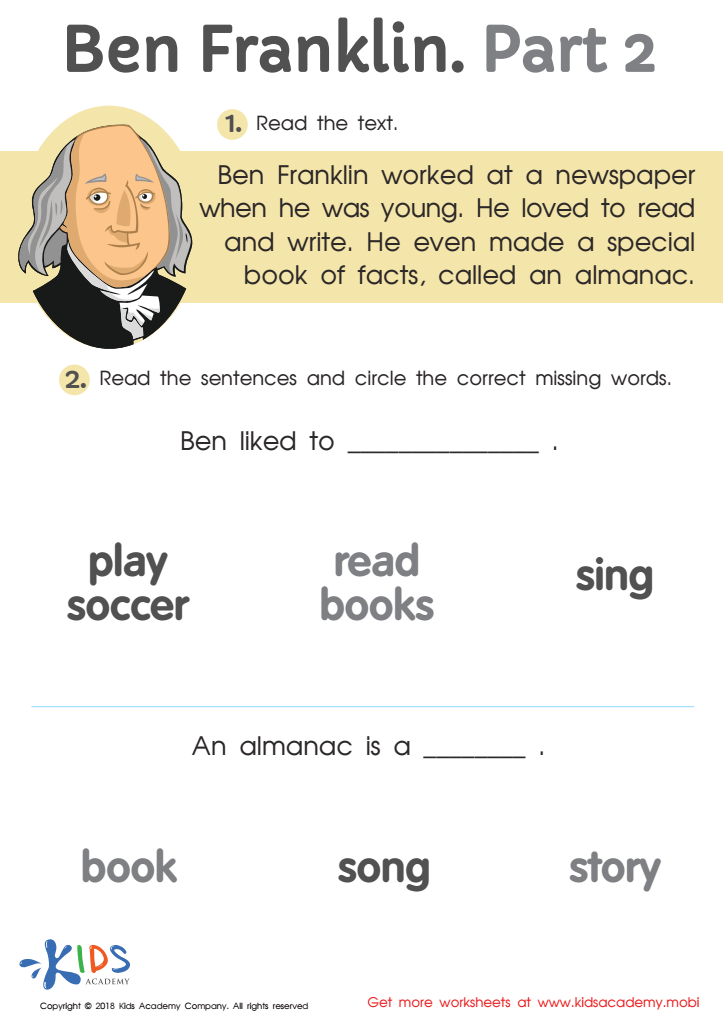
Ben Franklin Part 2 Worksheet
History is filled with great figures, like Benjamin Franklin. Let your kids in on the legacy by introducing them to the founder of the US fire department, diplomat, and inventor. Then, use a worksheet to have them fill in the blanks with the correct word to teach them more. Read the text, then read the sentences and have them circle the missing word.
Ben Franklin Part 2 Worksheet
Worksheet
Join Kids Academy for Free
Who is primarily going to use this learning content?







.jpg)
Comprehension skills in history for ages 6-8 are crucial as they lay the foundation for critical thinking, reasoning, and a better understanding of the world. At this age, children are naturally curious and enthusiastic about learning new things, making it the perfect opportunity to introduce them to historical concepts and narratives. Caring about comprehension skills in history helps kids develop the ability to understand, interpret, and critically evaluate information from a young age.
Early exposure to history allows children to learn about different cultures, significant events, and influential figures, fostering an appreciation for diversity and varying perspectives. This understanding can contribute to emotional intelligence, empathy, and the ability to make thoughtful connections between past and present. Moreover, comprehension skills in history improve vocabulary, reading, and communication abilities. Children learn to identify main ideas, recognize cause and effect, summarize information, and ask pertinent questions—skills that are transferrable to other subjects and essential for their academic success.
For parents and teachers, investing in the comprehension skills of young children means nurturing informed, curious, and reflective individuals. These skills not only contribute to higher academic performance but also help children become responsible, knowledgeable citizens who can thoughtfully engage with their community and the wider world.