Historical Knowledge Social Studies Worksheets for Ages 6-8 - Page 2
26 filtered results
-
From - To
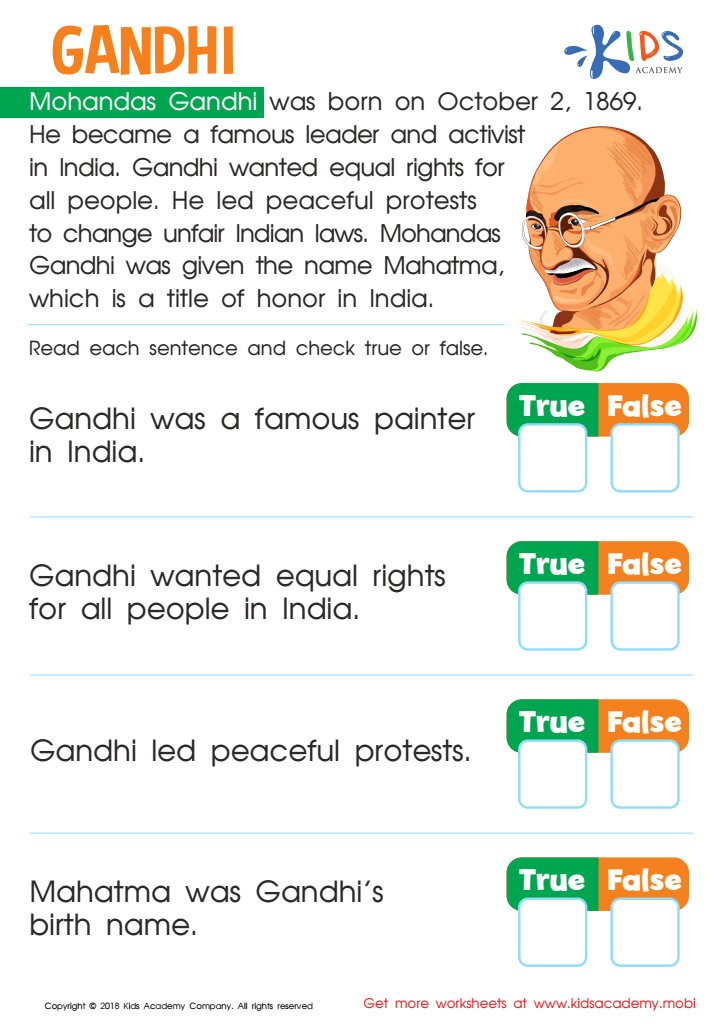
Gandhi Worksheet
 Assign to My Students
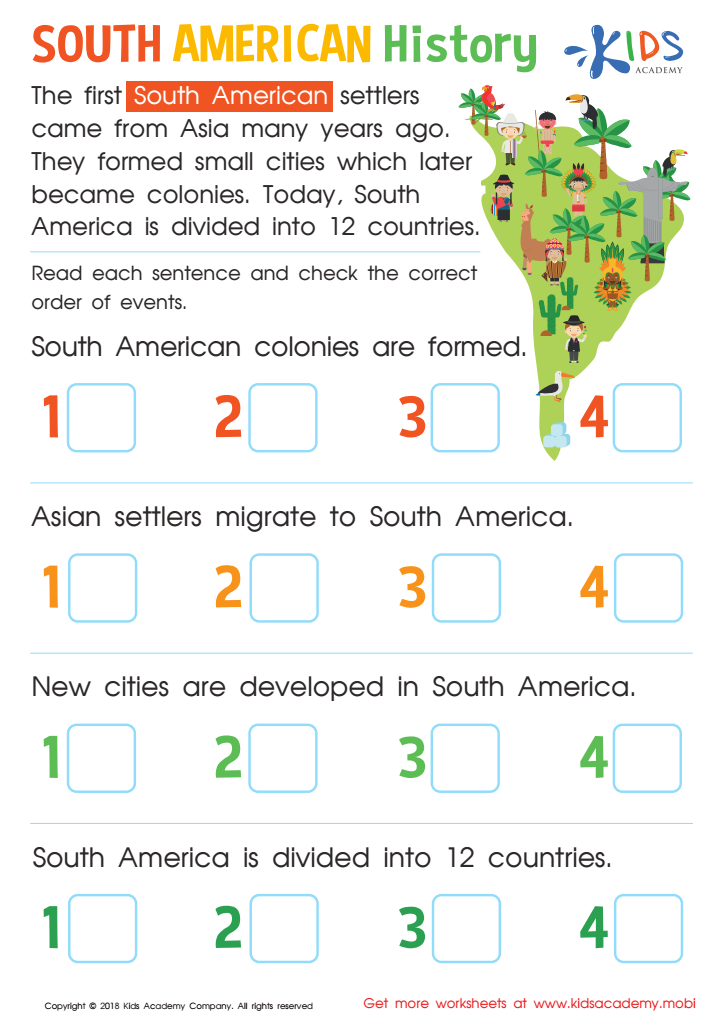
South American History Worksheet




.jpg)


Parents and teachers should care about historical knowledge in social studies for children aged 6-8 because it lays the foundation for deeper understanding of the world and fosters critical thinking skills. At this formative age, children are naturally curious and begin to seek answers about their surroundings. Introducing them to historical events and figures helps develop their identities, connects them to their cultural heritage, and nurtures a sense of belonging.
Learning history also encourages empathy, as children explore diverse perspectives and understand the complexities of human experiences. This fosters respect for others and promotes social cohesion by recognizing common values despite differences. Moreover, acquiring historical knowledge enhances literacy and language skills as children engage with stories, timelines, and discussions.
Incorporating social studies early on equips children with the tools to analyze information, question perceptions, and make informed decisions as they grow. It nurtures responsible citizenship, teaching children the importance of social contributions and community involvement. Ultimately, a solid foundation in historical knowledge shapes well-rounded, informed individuals who can appreciate their past and contribute positively to society in the future.