Multiplication practice Social Studies Worksheets for Ages 6-8
9 filtered results
-
From - To
Discover engaging Multiplication Practice Social Studies Worksheets designed for ages 6-8. These educational resources blend math and social studies, fostering dual learning as students practice multiplication while exploring community roles, historical figures, and geographic concepts. Created to captivate young minds, our worksheets feature rich, playful illustrations and age-appropriate challenges that make learning fun and effective. Perfect for classroom or home use, these activities build foundational math skills and enhance social studies understanding. Boost your child’s academic journey and confidence with our innovative, printable worksheets tailored to developing young learners. Get started today at Kids Academy!
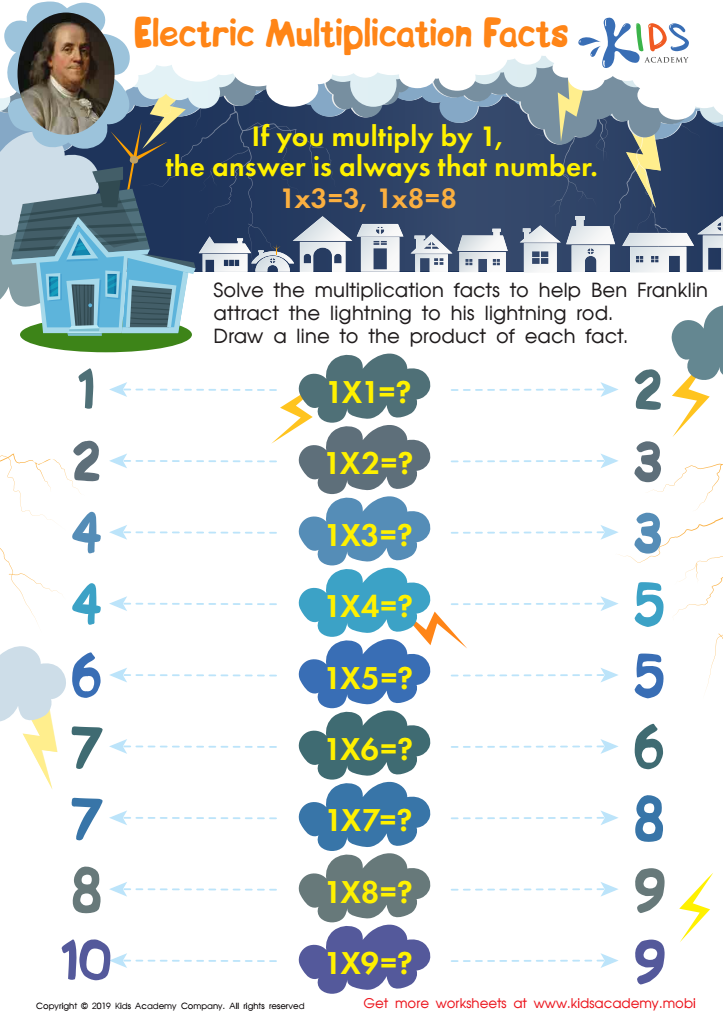
Electric Multiplication Facts Worksheet
 Assign to My Students
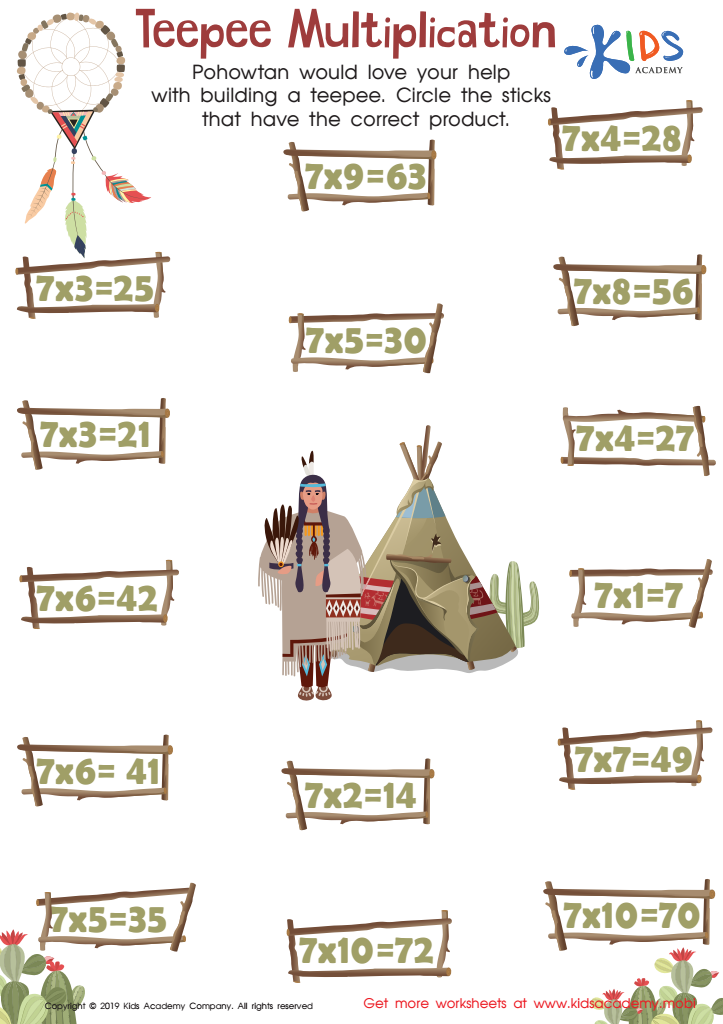
Teepee Multiplication Worksheet
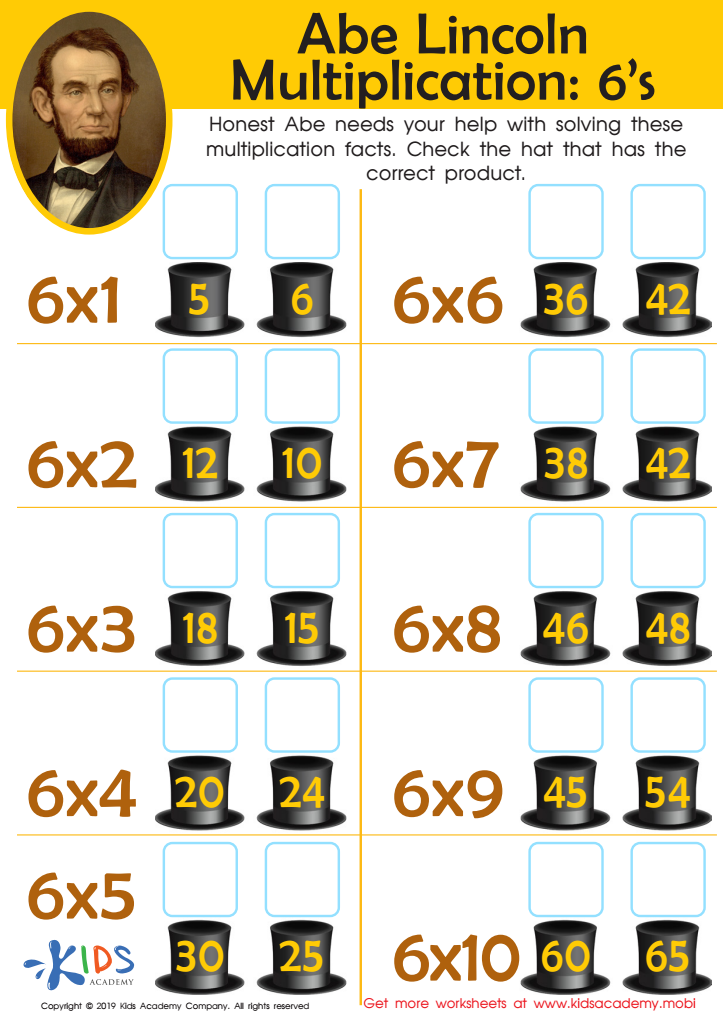
Abe Lincoln Multiplication: 6’s Worksheet
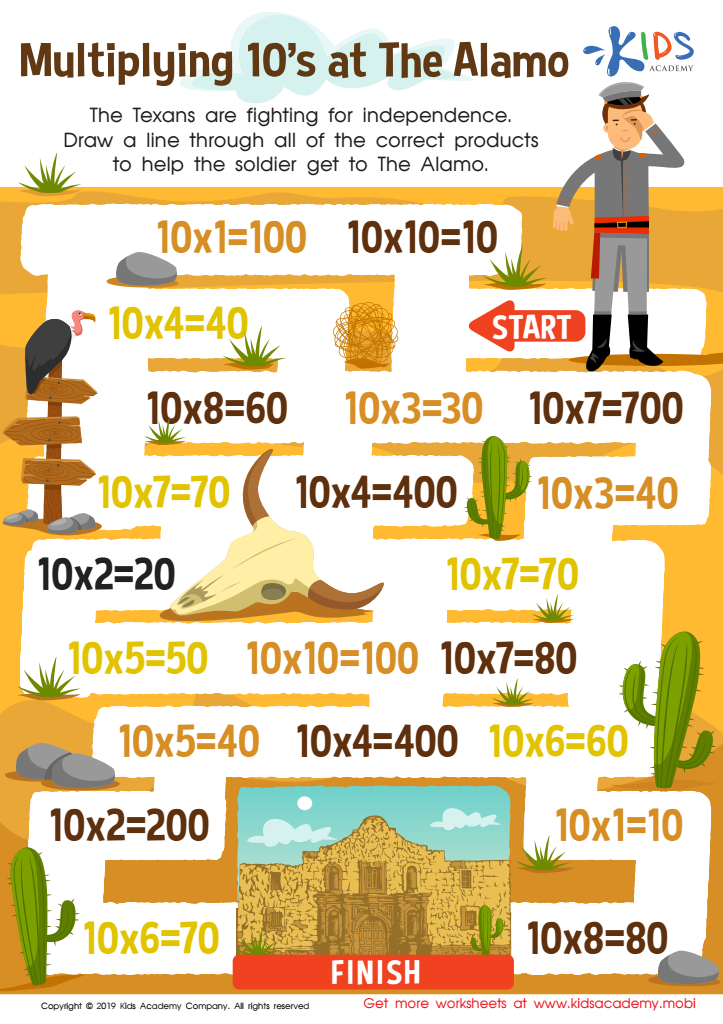
Multiplying 10’s at The Alamo Worksheet
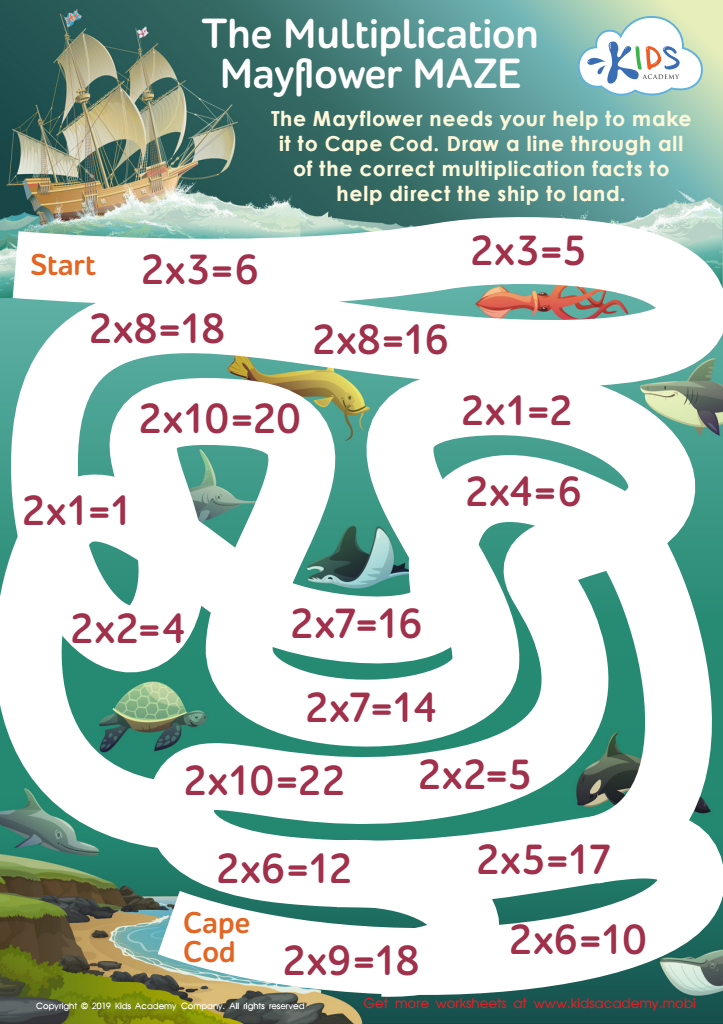
The Multiplication Mayflower Maze Worksheet
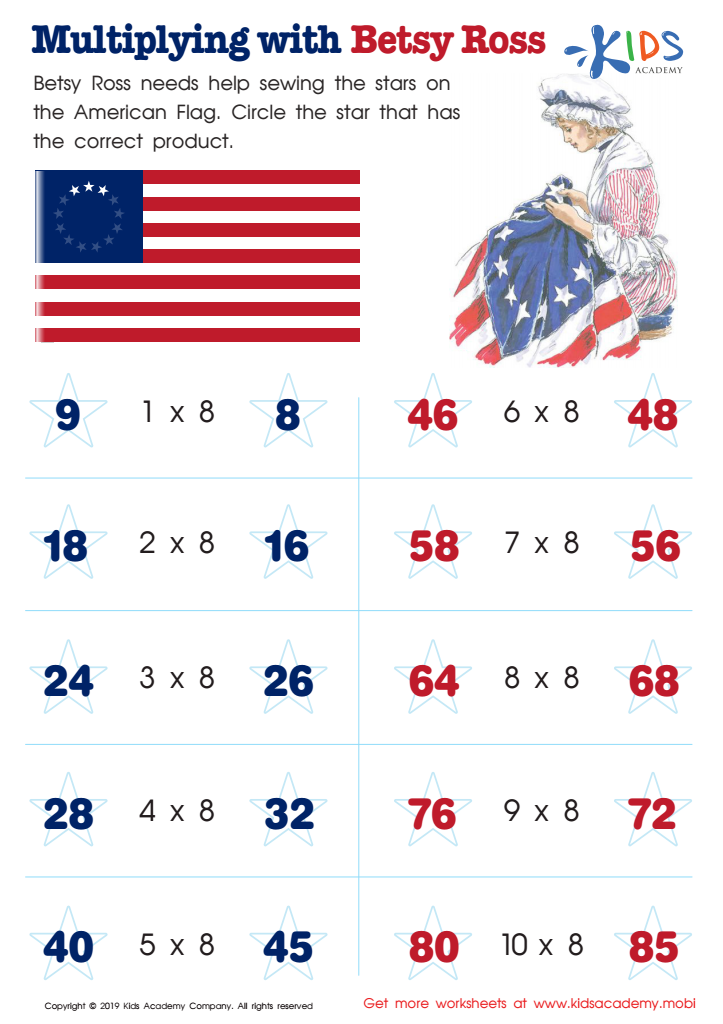
Multiplying with Betsy Ross Worksheet
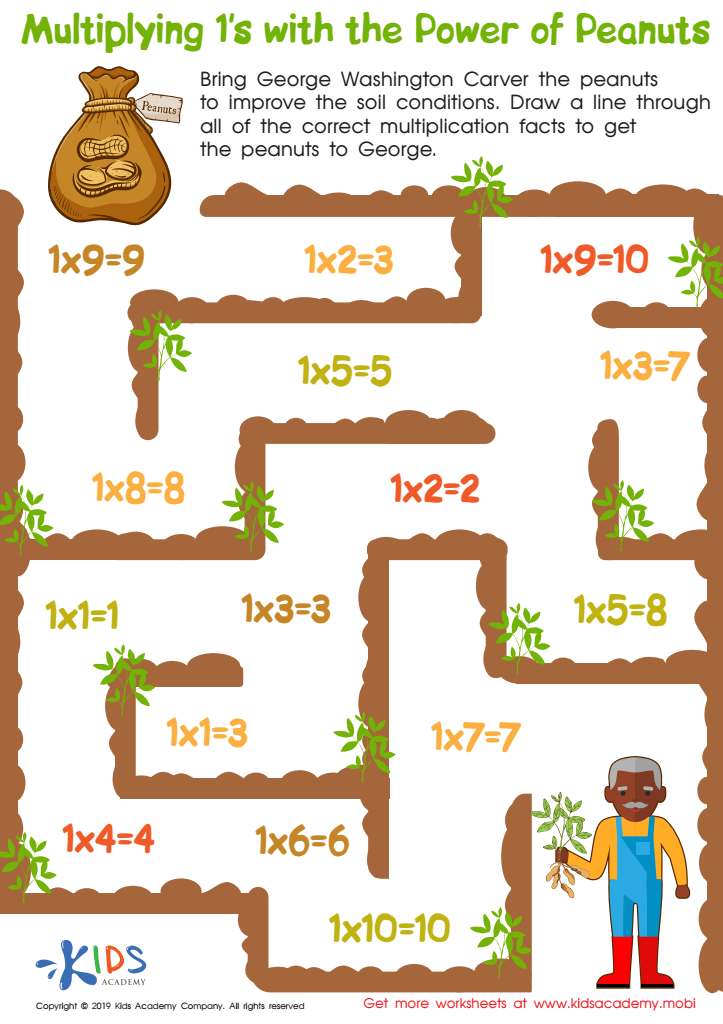
Multiplying 1’s With the Power of Peanuts Worksheet
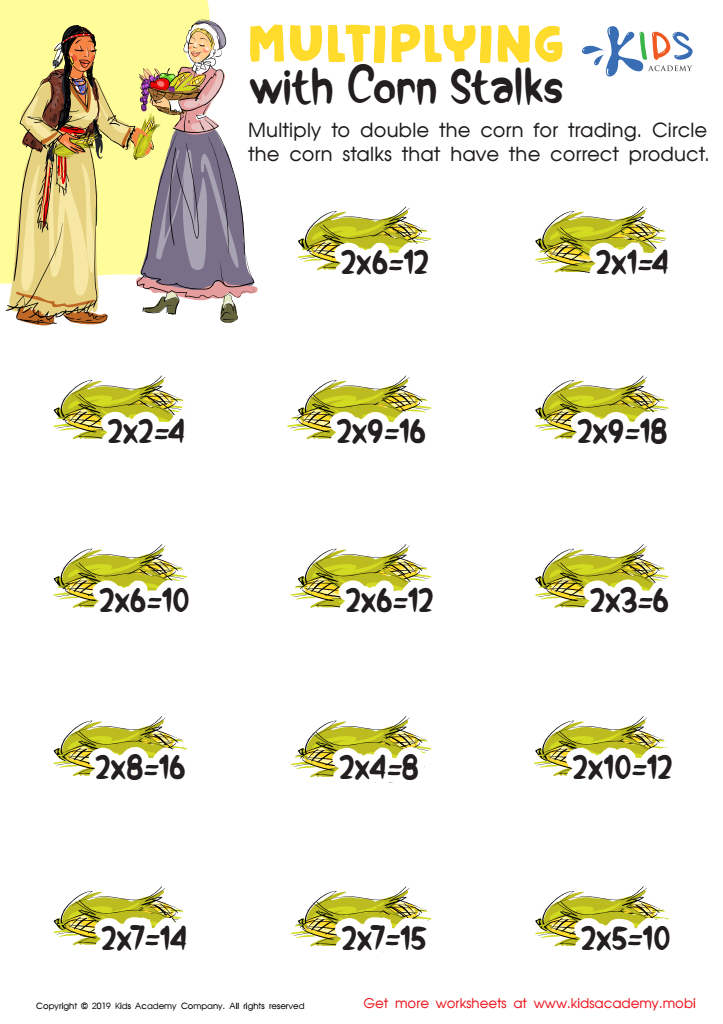
Multiplying With Corn Stalks Worksheet
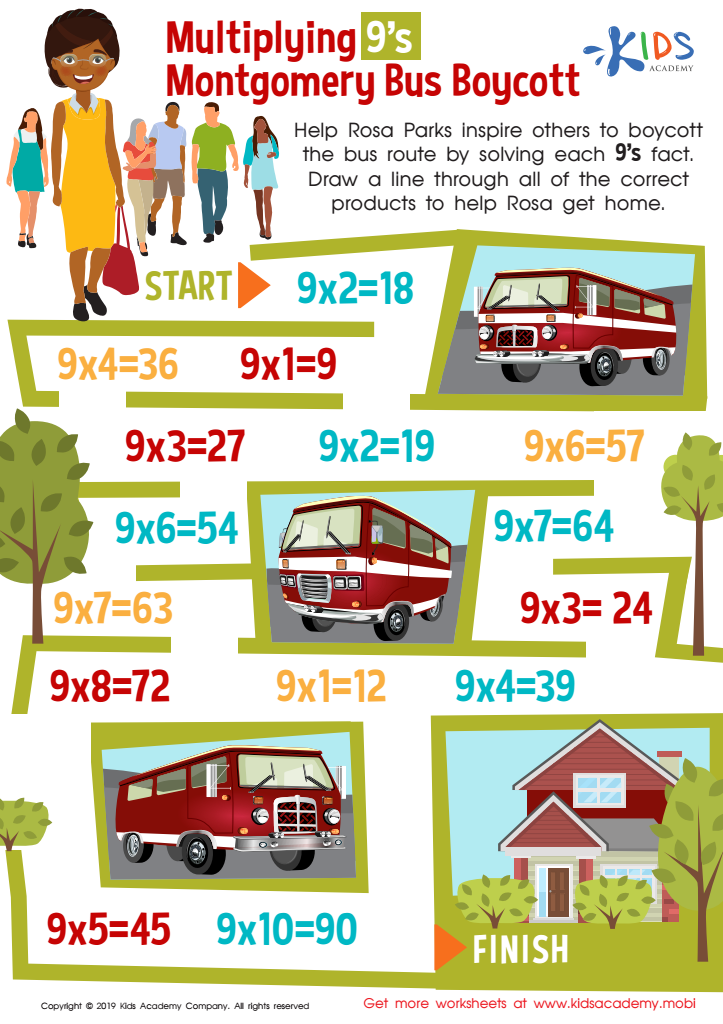
Multiplying 9’s Montgomery Bus Boycott Worksheet








Parents and teachers should prioritize multiplication practice in social studies for ages 6-8 because it foundationally strengthens both math and critical thinking, essential skills for young learners. Multiplication acts as a building block for more complex math concepts, boosting computational fluency. Introducing this within a social studies context—such as calculating distances on a map or understanding historical timelines with repeated events—makes learning interdisciplinary and relevant, fostering better engagement and retention.
Social studies enriches children’s understanding of the world, and infusing math practice provides practical applications that bridge abstract numbers with real-world scenarios. For example, if students calculate the multiplication of travel days between cities or populations, they simultaneously enhance their numeric skills and knowledge about different cultures and history.
Moreover, this dual-focused approach promotes problem-solving and analytical thinking since children learn to apply mathematical logic to contextual problems. It helps develop their cognitive flexibility and ability to link varied content areas, thereby fostering a holistic educational experience.
Ultimately, focusing on multiplication within social studies for this age group nurtures curiosity and enjoyment in learning. As kids see the relevance of math in their environment, it bolsters their confidence and competence, preparing them for academic success across multiple subjects.








