Spatial awareness Social Studies Worksheets for Ages 6-8
6 filtered results
-
From - To
Unlock the potential of young minds with our engaging Spatial Awareness Social Studies Worksheets, designed for ages 6-8. These printable resources from Kids Academy use fun and interactive activities to enhance children's understanding of objects' relationships and positions in space, fostering critical thinking and problem-solving skills. Our worksheets feature colorful maps, shape identification, and personal space exercises that align with educational standards, making learning dynamic and effective. Ideal for parents and teachers, these tools support the development of essential spatial awareness skills, paving the way for academic success in young learners. Explore, learn, and grow with confidence!
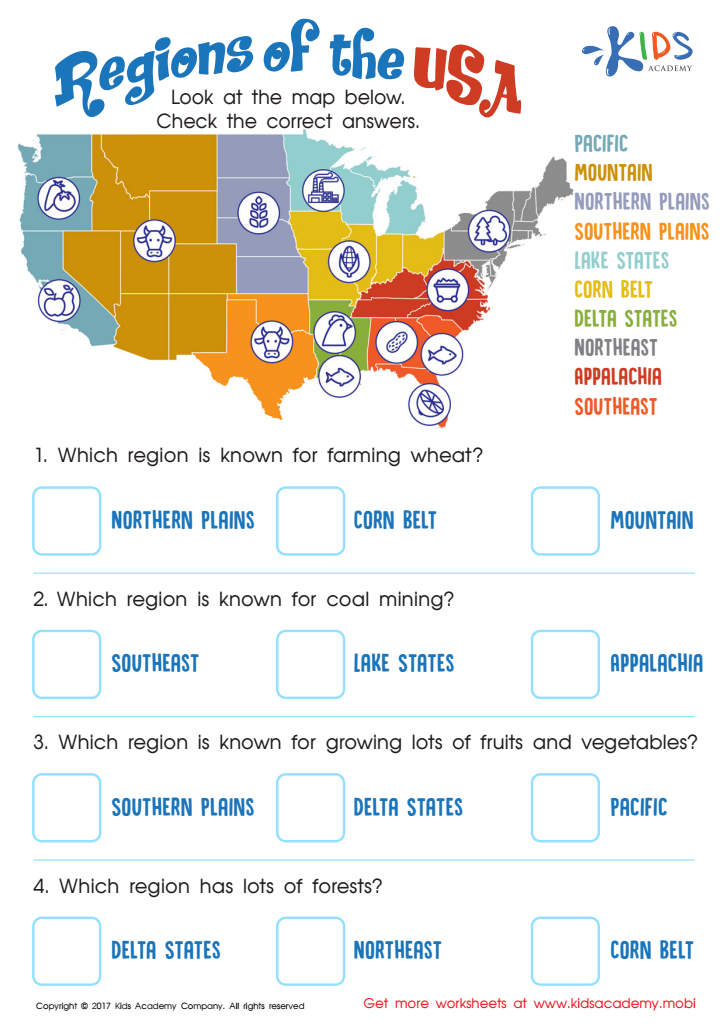
Regions of the USA Worksheet
 Assign to My Students
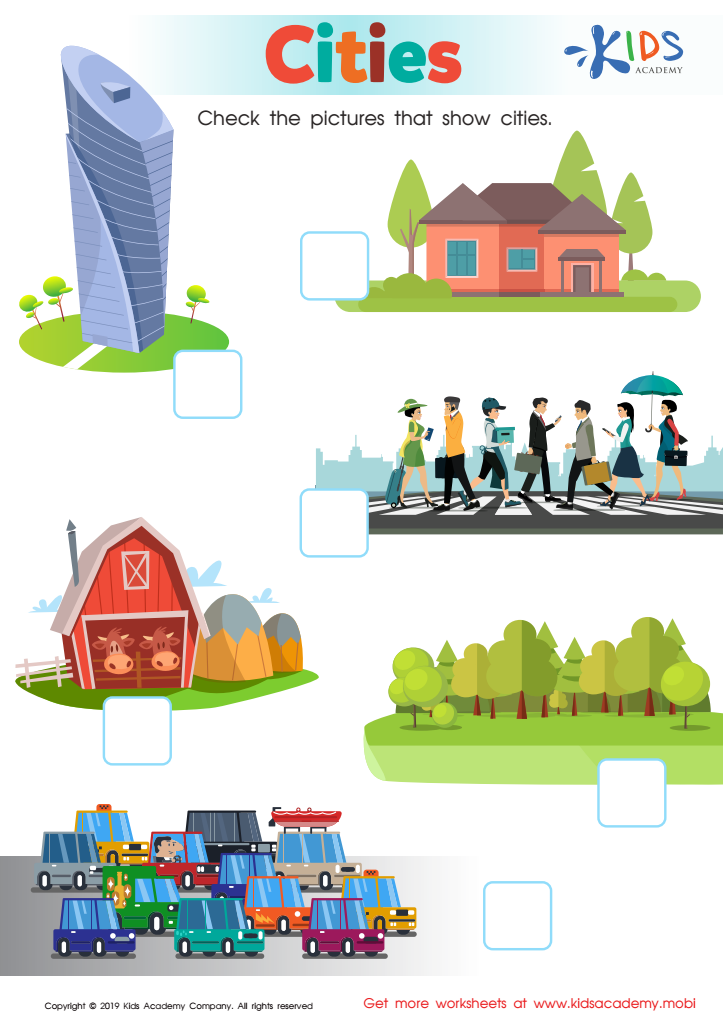
Cities Worksheet
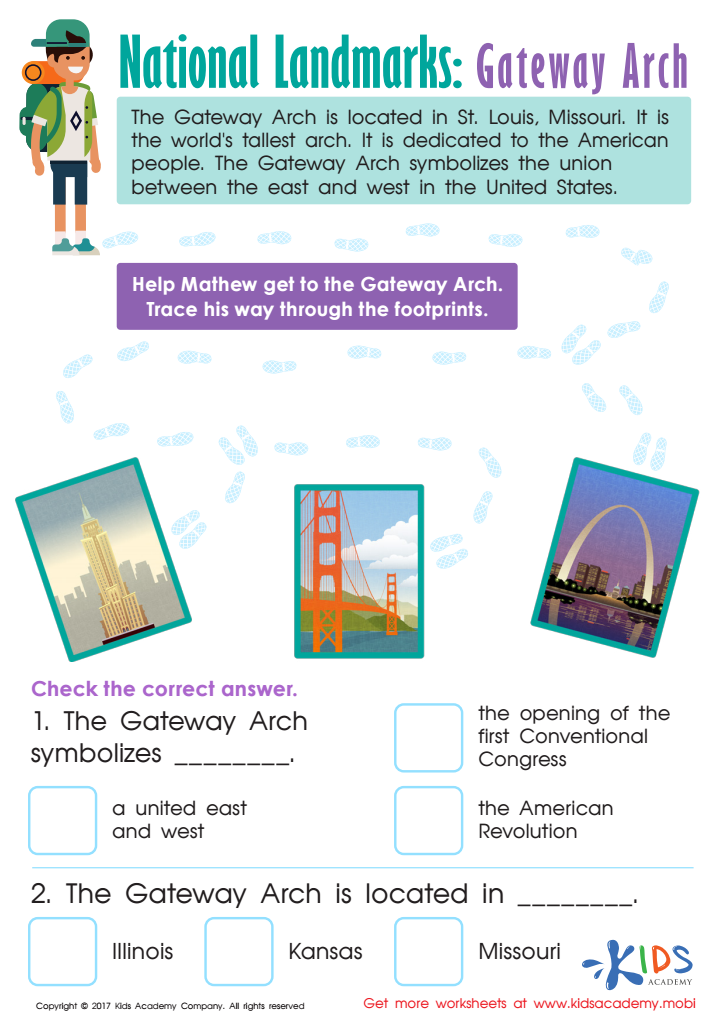
Gateway Arch Printable Worksheet
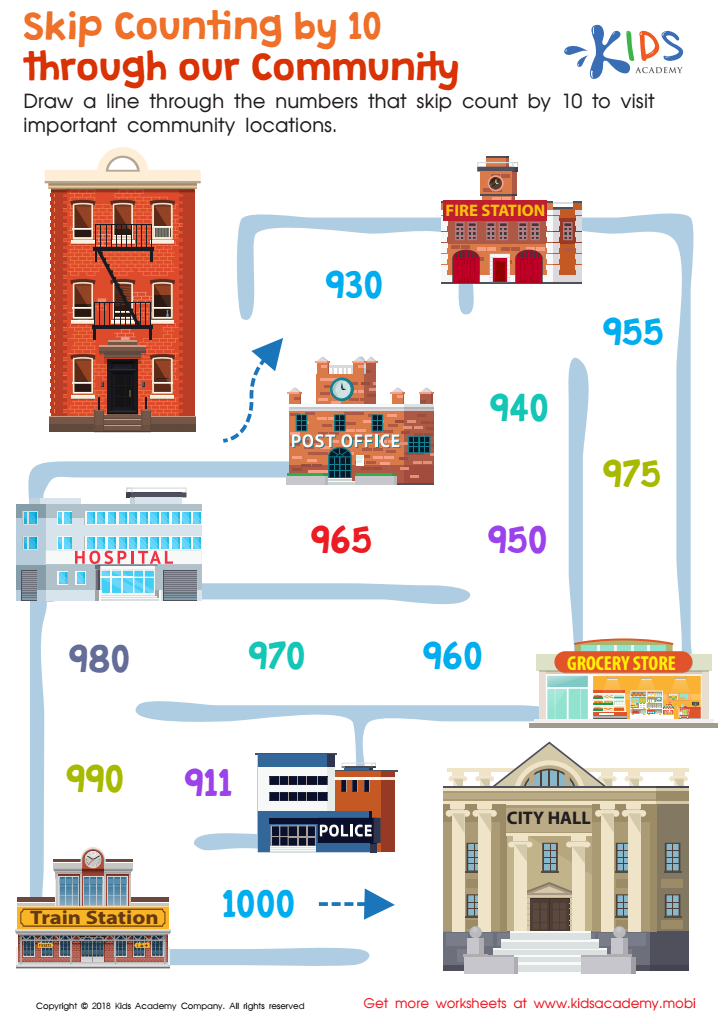
Skip Counting by 10 Through Our Community Worksheet
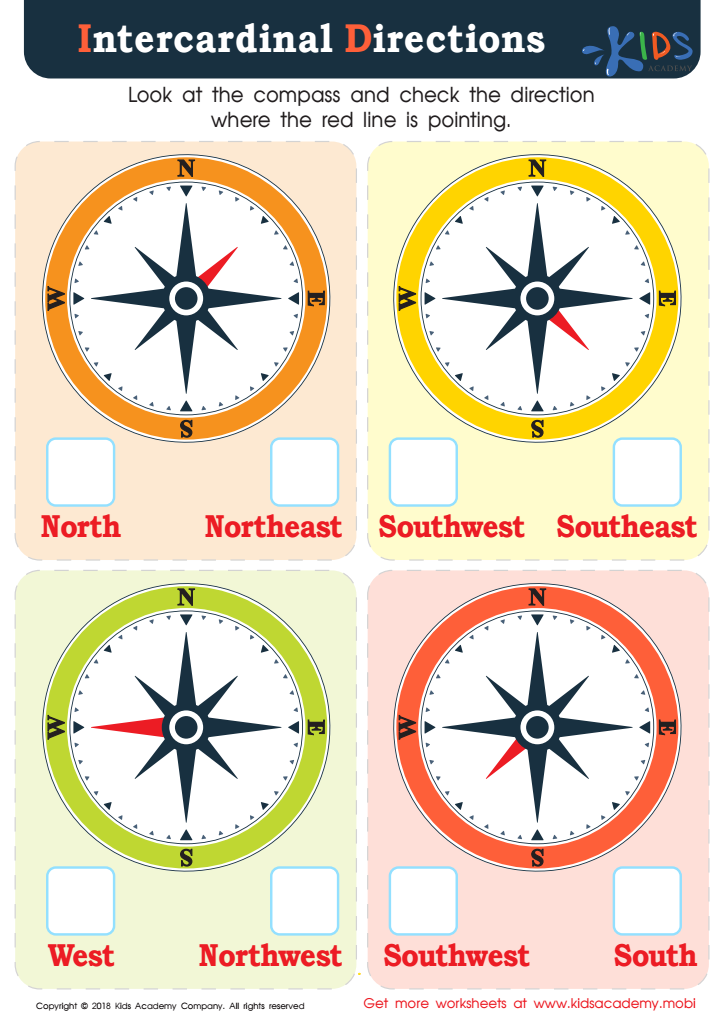
Intercardinal Directions Worksheet
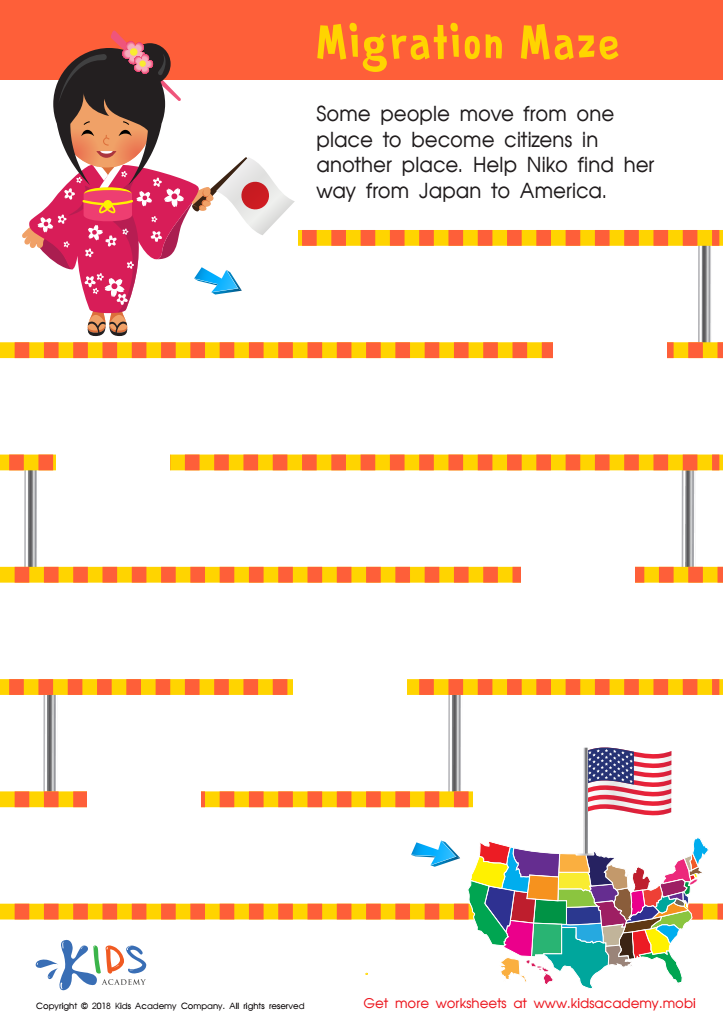
Migration Maze Worksheet






Spatial awareness in Social Studies is crucial for young children, particularly those aged 6-8, as it forms the foundation for understanding more complex geographical, mathematical, and problem-solving concepts later in life. For parents and teachers, cultivating spatial awareness means helping children recognize and relate to the world around them in concrete ways.
Firstly, spatial awareness helps children grasp the concept of maps, which are fundamental tools in Social Studies. Understanding maps involves recognizing locations, distances, directions, and physical features, which enhances geographical literacy and navigational skills. This foundational knowledge leads to better comprehension of global cultures, environments, and historical events.
Secondly, spatial skills are closely linked to cognitive development. They improve children's abilities to visualize objects, create mental pictures, and understand spatial relationships, which are crucial for success in STEM (Science, Technology, Engineering, and Mathematics) subjects. Studies show that better spatial skills in early childhood often correlate with higher achievements in these fields later on.
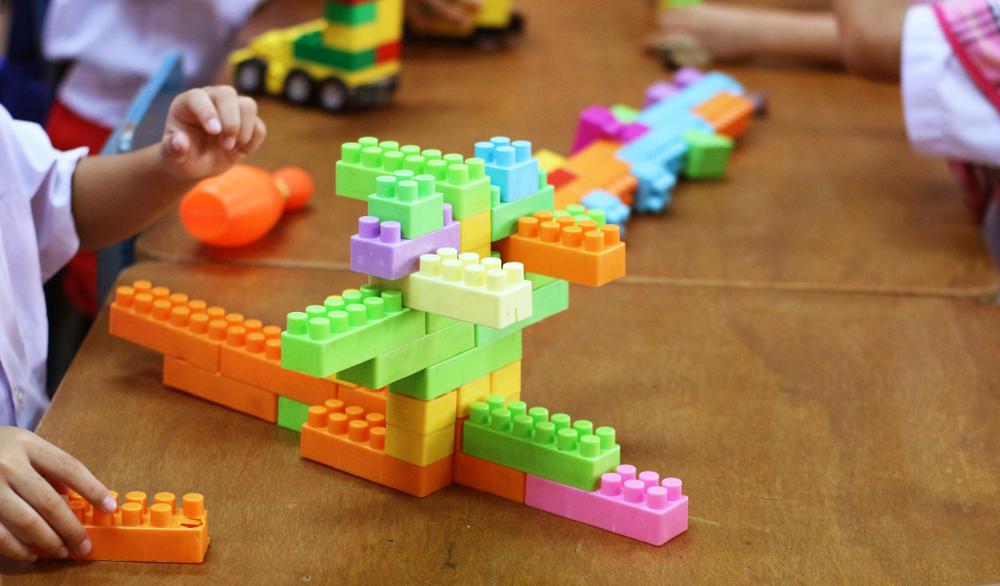
Lastly, strengthening spatial awareness can foster social development. Activities that require children to work together on spatial tasks, like building models or creating maps, teach cooperation, communication, and problem-solving skills.
By prioritizing spatial awareness in early education, parents and teachers equip children with essential tools to navigate both their immediate environments and the larger world effectively.