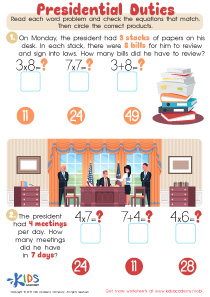
Understanding democracy Social Studies Worksheets for Ages 6-8
3 filtered results
-
From - To
Explore our engaging "Understanding Democracy" Social Studies worksheets designed specifically for children aged 6-8. These interactive resources help young learners grasp the fundamental concepts of democracy, such as voting, fairness, and active citizenship. With colorful illustrations and age-appropriate activities, kids will enjoy learning about their roles and responsibilities in a democratic society. Each worksheet encourages critical thinking and discussions, making complex ideas accessible and relatable. Perfect for classroom or home use, these worksheets aim to inspire a deeper understanding of democratic values and empower children to become informed and active participants in their communities. Encourage your child's civic knowledge today!
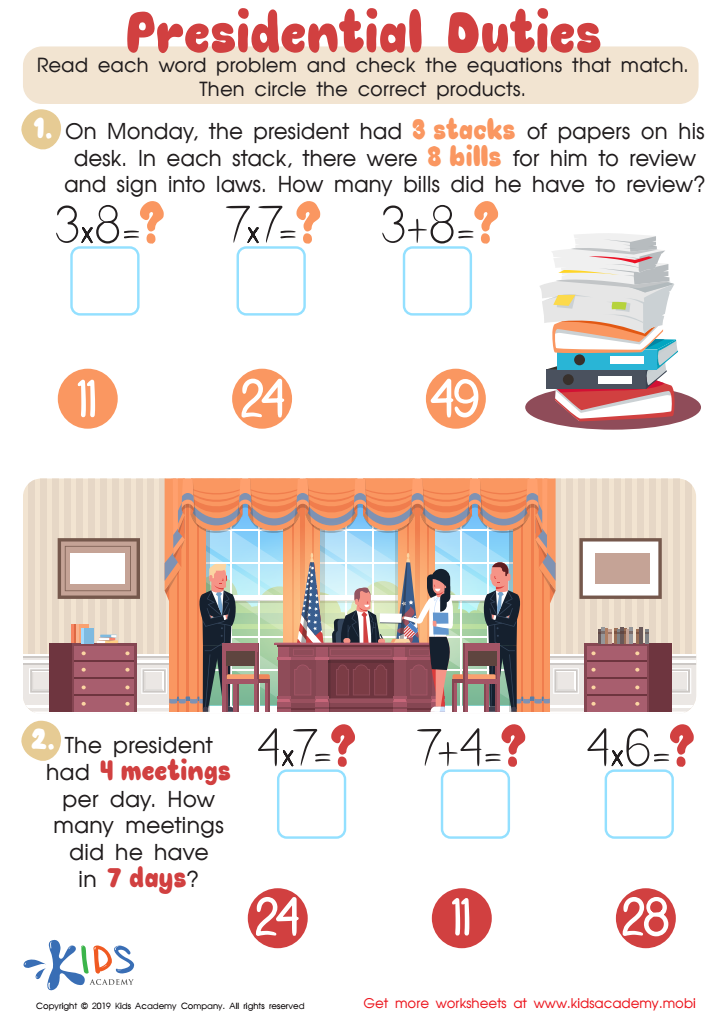
Presidential Duties Worksheet
 Assign to My Students
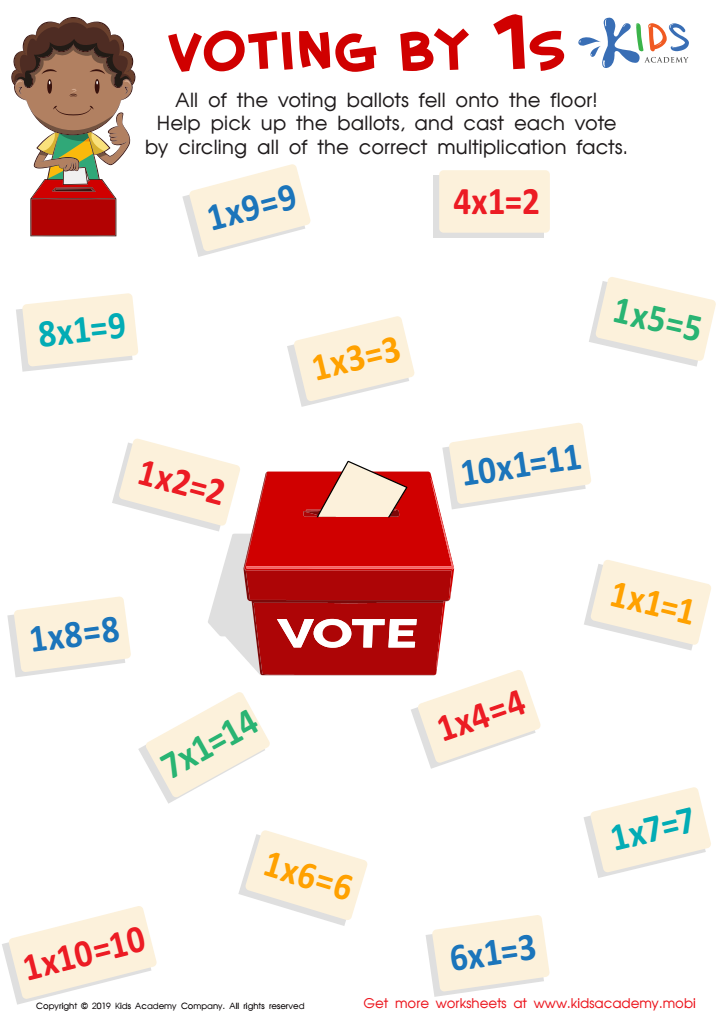
Voting by 1s Worksheet
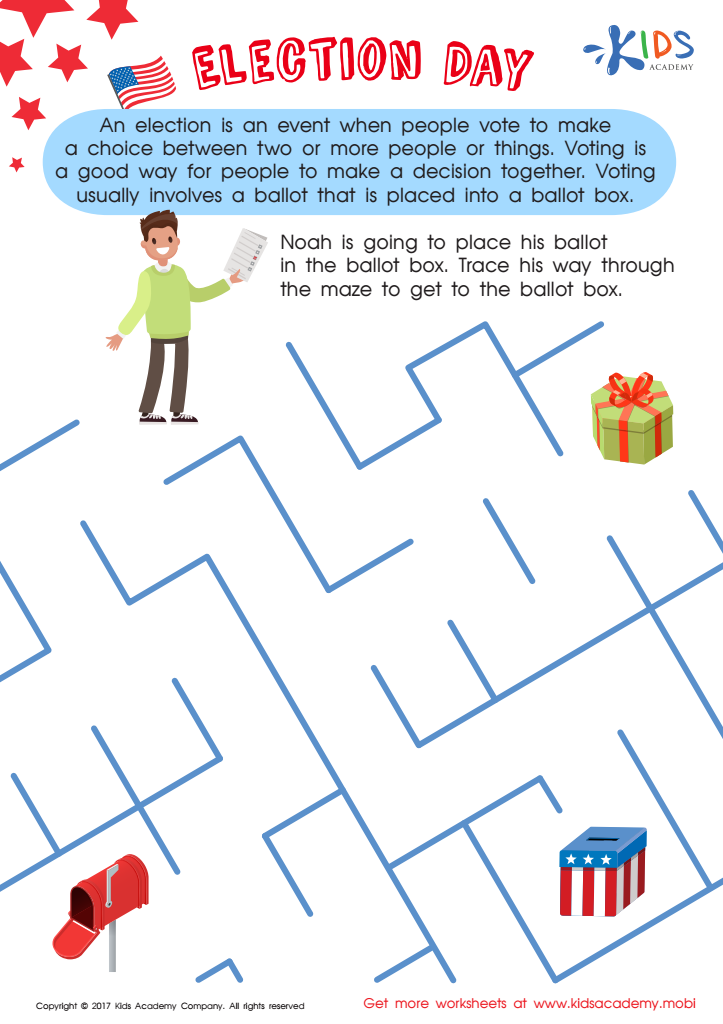
Election Day Worksheet





Understanding democracy is essential for children aged 6-8, as it lays the foundation for responsible citizenship and active participation in society. Parents and teachers should care about introducing this concept at an early age because it nurtures critical thinking, fosters respect for diversity, and encourages active engagement in community life.
By teaching children about democracy, they learn the importance of individual voices and collective decision-making. This understanding empowers them to express their opinions, value others’ perspectives, and develop skills such as empathy and cooperation. Engaging with democratic principles helps children recognize fundamental rights and responsibilities, instilling a sense of fairness and justice.
Incorporating democracy in social studies not only supports social-emotional development but also inspires a curiosity about the world around them. Hands-on activities, like group discussions and role-playing, make learning about democracy interactive and enjoyable, helping cement these important concepts.
Ultimately, fostering an understanding of democracy equips young learners with the tools they need to navigate their environment thoughtfully and responsibly. Parents and teachers play a vital role in shaping this foundation, enabling future generations to contribute positively to society and promote democratic values across all aspects of life.