Enhance young learners' language abilities with our Grammar Worksheets for Ages 6-8! These specially designed worksheets from Kids Academy focus on fundamental grammar skills, helping children develop strong writing foundations. Perfect for first, second, and third graders, the engaging activities cover parts of speech, sentence structure, punctuation, and more. Every worksheet includes clear instructions and fun exercises to keep kids motivated and learning while they practice. Ideal for both classroom use and homeschooling, our expertly crafted grammar resources make learning enjoyable and effective. Jumpstart your child's grammar improvement journey with Kids Academy today!

Check out this FREE Trial Lesson on Grammar for age 6-8!

Reflexive pronouns

Favorites
With answer key
Interactive
  • 6-8
  • Grammar skills improvement
  • Grammar
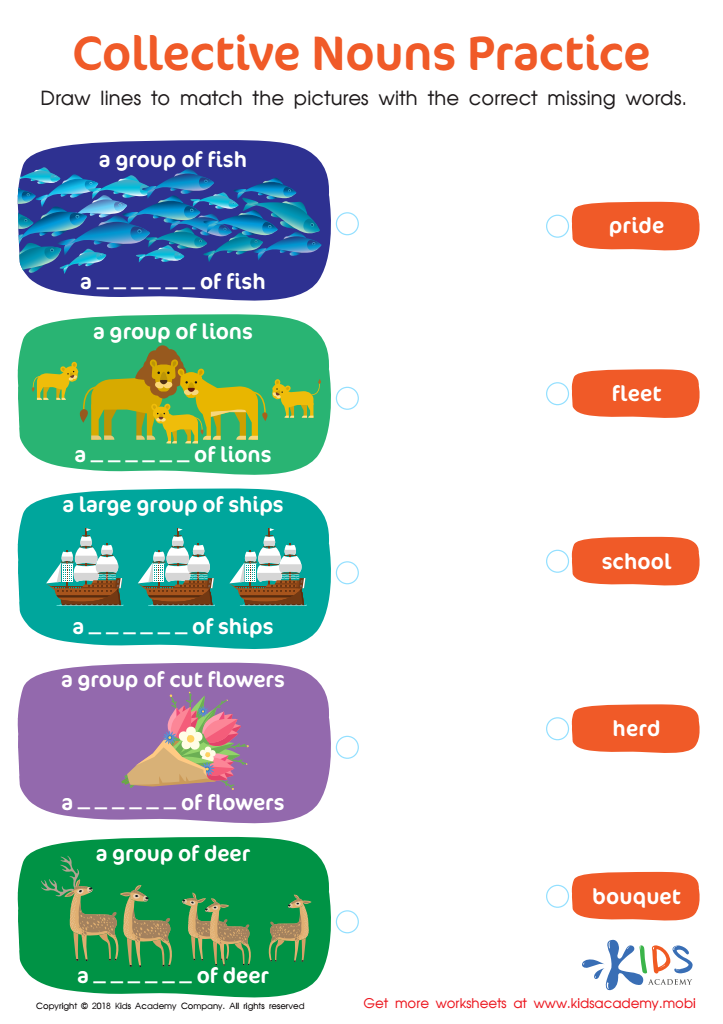
Collective Nouns Practice Worksheet

Collective Nouns Practice Worksheet

This worksheet helps your child master collective nouns. Five pictures show different groups of nouns, and your child must draw lines to the right collective noun words. It's a great way to help them sort out the words and understand collective nouns.
Collective Nouns Practice Worksheet
Worksheet
Reading: Follow the Suffixes Worksheet

Reading: Follow the Suffixes Worksheet

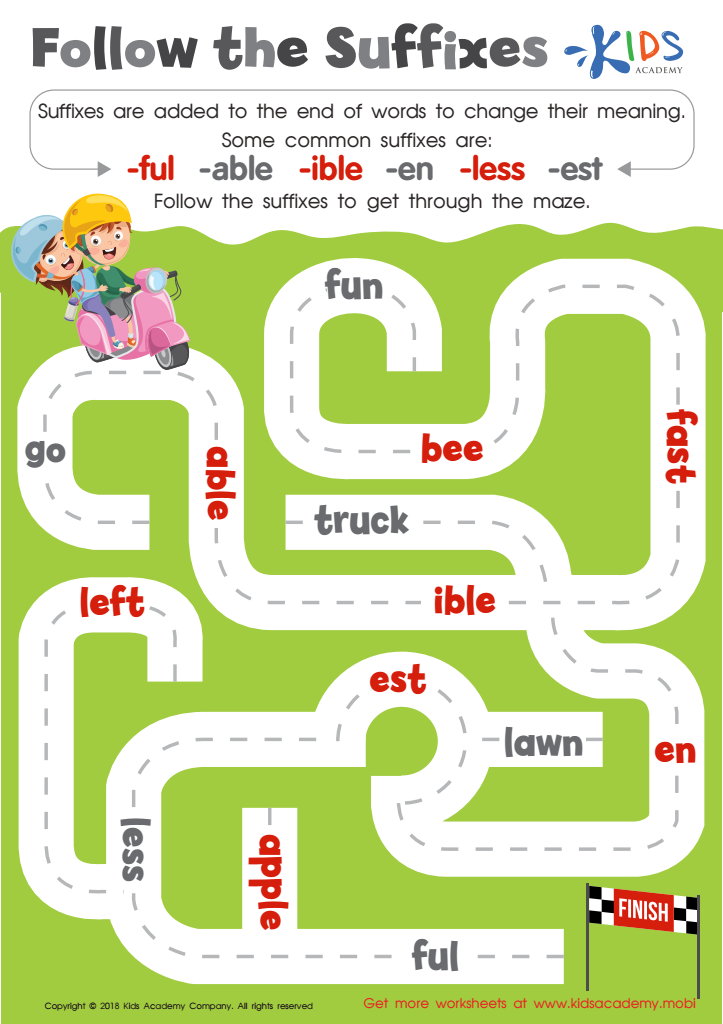
Students use suffixes to find the right way through a maze in this enjoyable activity! Understanding suffixes helps kids decode and comprehend more words, leading to better reading fluency. A great addition to your reading classes, keep this printable close!
Reading: Follow the Suffixes Worksheet
Worksheet
Reflexive pronouns worksheet for 2nd grade

Reflexive Pronouns Worksheet

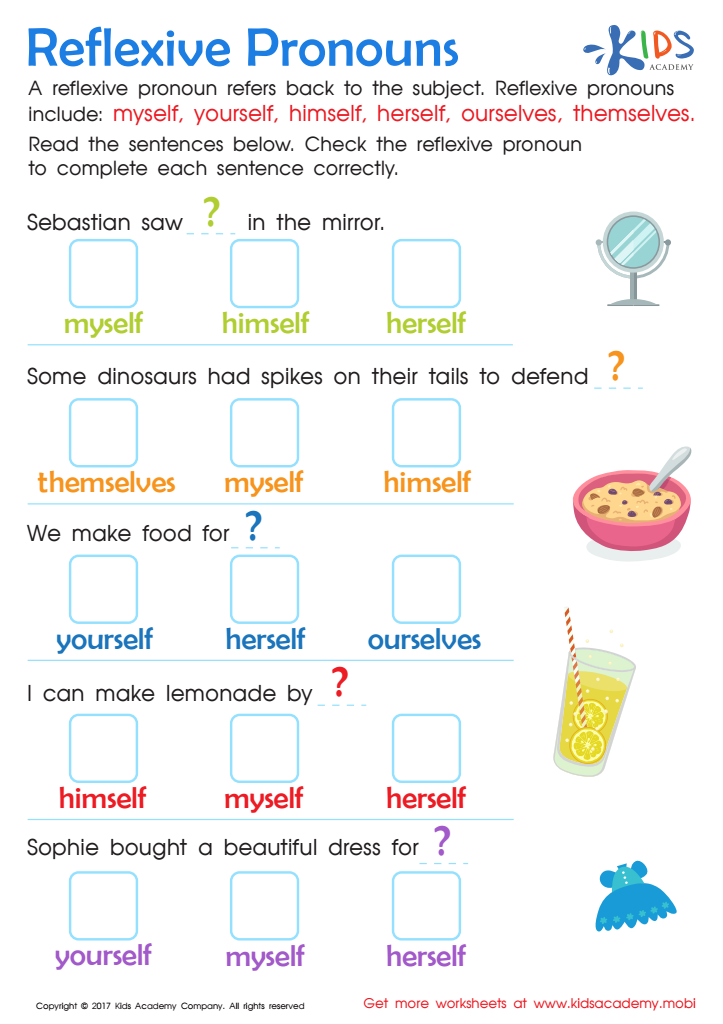
The 2nd grade reflexive pronouns worksheet by Kids Academy offers clear explanations and fun activities to help master reflexive pronouns. Kids Academy's 2nd grade reflexive pronouns worksheet has everything you need to brush up on reflexive pronouns. It includes a brief explanation and fun activities with sentences and pictures to check your understanding. Master reflexive pronoun usage in no time!
Reflexive Pronouns Worksheet
Worksheet
Parts of speech PDF worksheet for grade 3

Parts of Speech Worksheet for Grade 3
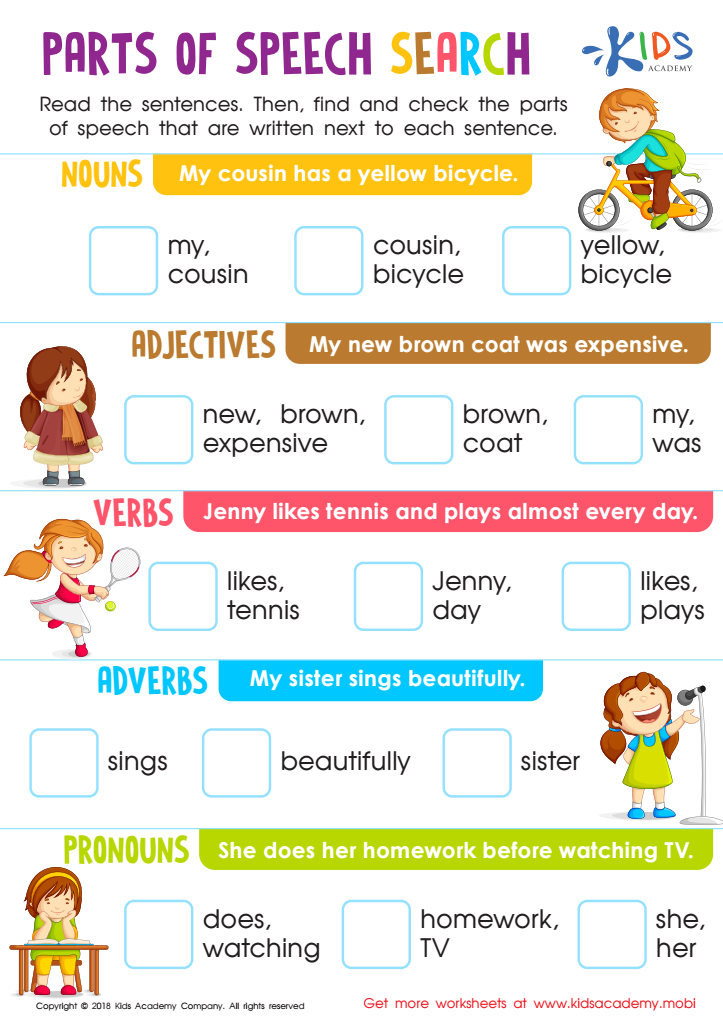
This worksheet is ideal for 3rd graders to review tricky parts of speech! It is vibrantly illustrated and contains sentences to read through. Each sentence has a category to select the correct word or words that match the part of speech indicated. Try it today!
Parts of Speech Worksheet for Grade 3
Worksheet
Scrambled Sentences Part 2 Worksheet

Scrambled Sentences Part 2 Worksheet

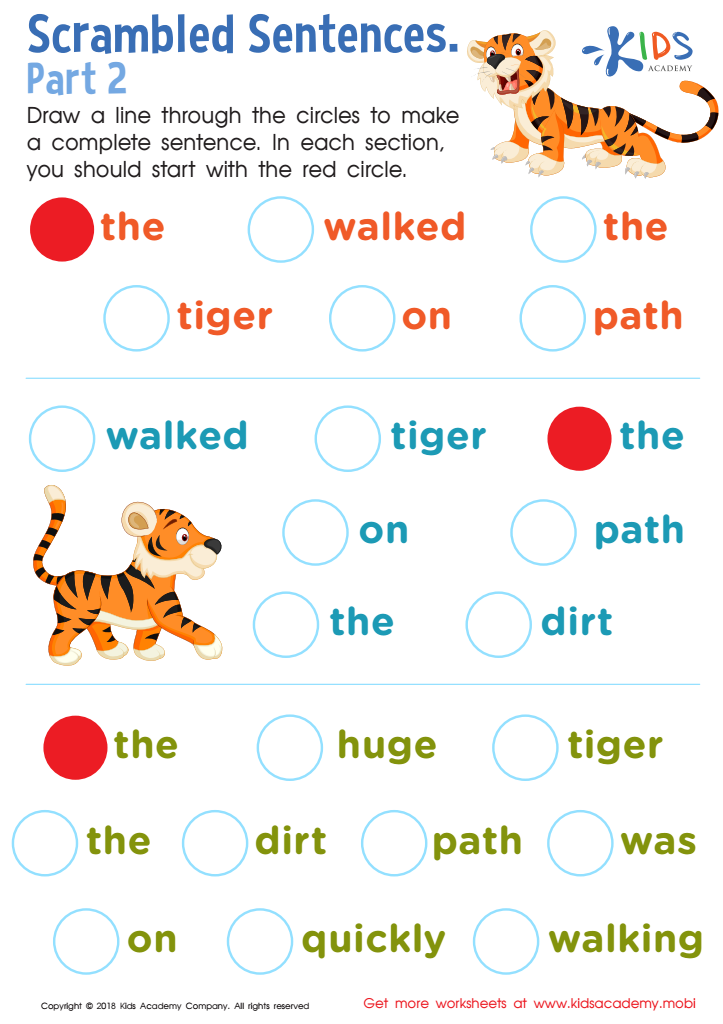
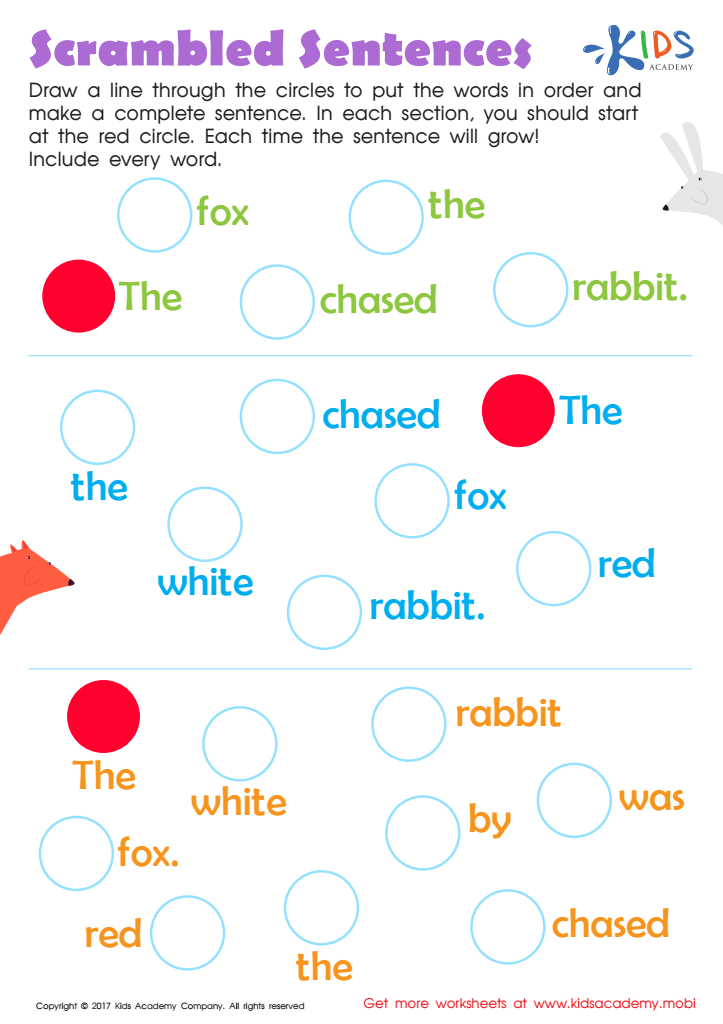
This printable worksheet helps kids construct simple, correct sentences. Introduce them to making sentences if they're new to it. Have them draw a line through the circles to form a sentence, starting with the red circle. After completing this exercise, they'll be able to craft short sentences with confidence.
Scrambled Sentences Part 2 Worksheet
Worksheet
Adjectives Worksheet

Adjectives Worksheet

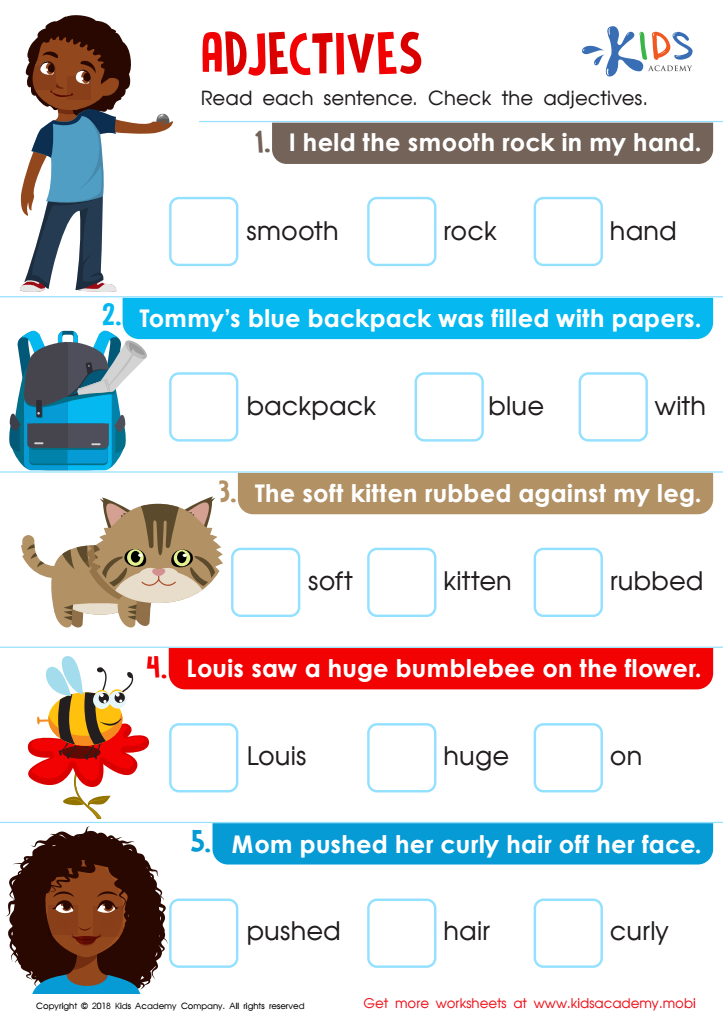
Adjectives are words that describe a noun. Examples include "beautiful" and "good". Ask your students to use these adjectives in a sentence and have them identify the adjectives in five sentences on a worksheet. Point out that adjectives are essential to understand, and have them check their answers.
Adjectives Worksheet
Worksheet
Where Are Pronouns? Worksheet

Where Are Pronouns? Worksheet

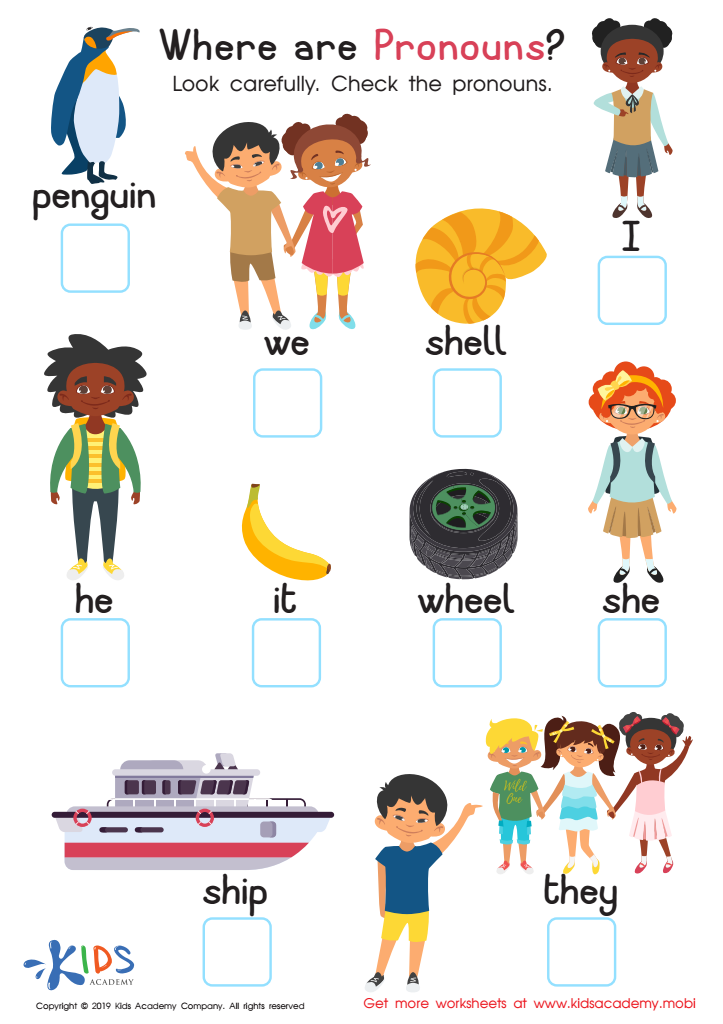
Pronouns make language flow, substituting "he" or "she" for names. Kids know and use them in their speech, but identifying pronouns in grammar helps build writing skills. This worksheet challenges kids to pick out pronouns from other nouns. Go through the worksheet, view the pictures and read the words. Ask kids to check boxes in front of pronouns to mark answers.
Where Are Pronouns? Worksheet
Worksheet
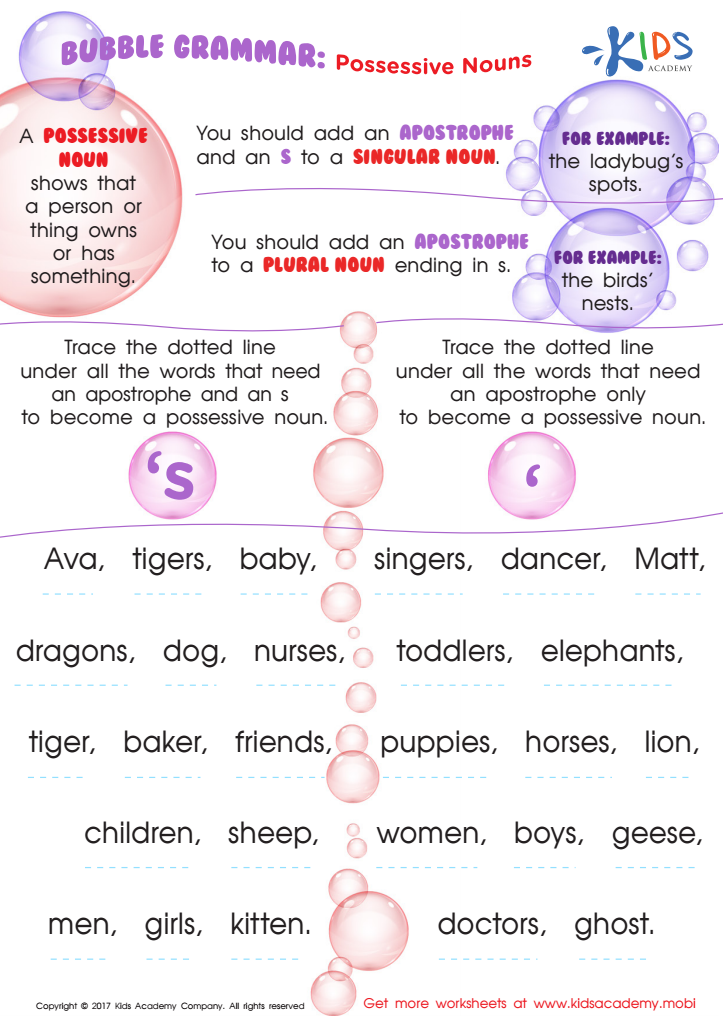
Possessive Nouns Worksheet for Grade 3 PDF

Possessive Nouns Worksheet for Grade 3 PDF

Help your child understand how to use nouns effectively in writing with this fun, bubble-themed possessive nouns PDF worksheet for grade 3. It'll teach them to recognize and punctuate possessive nouns!
Possessive Nouns Worksheet for Grade 3 PDF
Worksheet
Scrambled sentences worksheet pdf

Scrambled Sentences Worksheet

Kids will have fun with the scrambled sentences worksheet: draw lines to make complete sentences. As the sentence grows, they'll learn sentence structure and word order. Easy instructions included!
Scrambled Sentences Worksheet
Worksheet


Grammar skills are foundational for effective communication, and focusing on their improvement in children ages 6-8 is crucial. During these formative years, children are not only learning how to read and write but also how to express themselves clearly and understand others. Mastering grammar rules at an early age creates a strong linguistic foundation that aids in academic success across all subjects.

For parents and teachers, nurturing grammar skills enhances a child's ability to structure sentences, use correct tense, and apply punctuation, helping them convey thoughts more effectively. This clarity boosts confidence when speaking and writing, enabling children to participate more fully in classroom activities and conversations. Improved grammar also plays a critical role in reading comprehension. By understanding sentence structure and syntax, children can better interpret texts, leading to greater enjoyment and engagement in reading.

Furthermore, strong grammar skills connect to enhanced critical thinking. When children learn to structure their sentences properly, they also learn to organize their thoughts logically. This organization aids in problem-solving and decision-making, skills essential for lifelong learning.

Ultimately, prioritizing grammar education early not only lays the groundwork for future academic and professional success but also empowers children to articulate themselves confidently and understand others better, fostering stronger social connections.