Letter-sound recognition Alphabet Worksheets for Ages 6-9
3 filtered results
-
From - To
Enhance your child's literacy skills with our engaging Letter-Sound Recognition Alphabet Worksheets, designed specifically for ages 6-9. These worksheets provide a fun and interactive way for kids to learn the connections between letters and their corresponding sounds. Empower young learners through various activities that promote recognition and pronunciation. Each worksheet is crafted to make learning enjoyable, fostering better phonemic awareness and reading readiness. Perfect for at-home practice or classroom use, these resources will help your child develop a strong foundation in reading, ensuring they thrive in their educational journey. Start exploring our stimulating alphabet worksheets today!
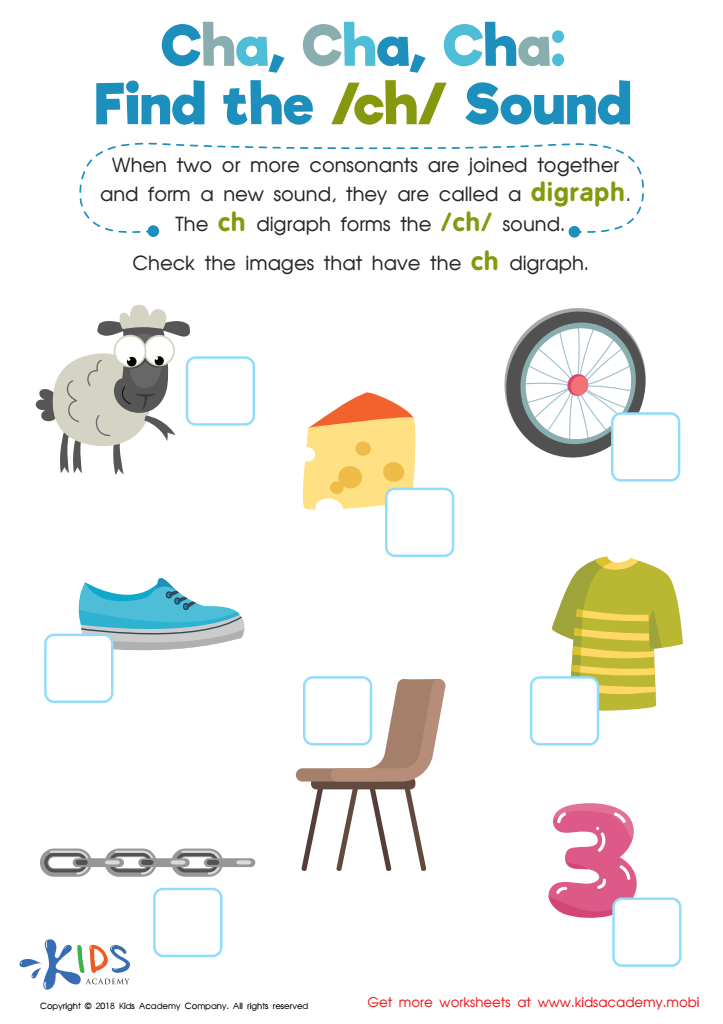
Cha, Cha, Cha: Find the /Ch/ Sound Worksheet
 Assign to My Students
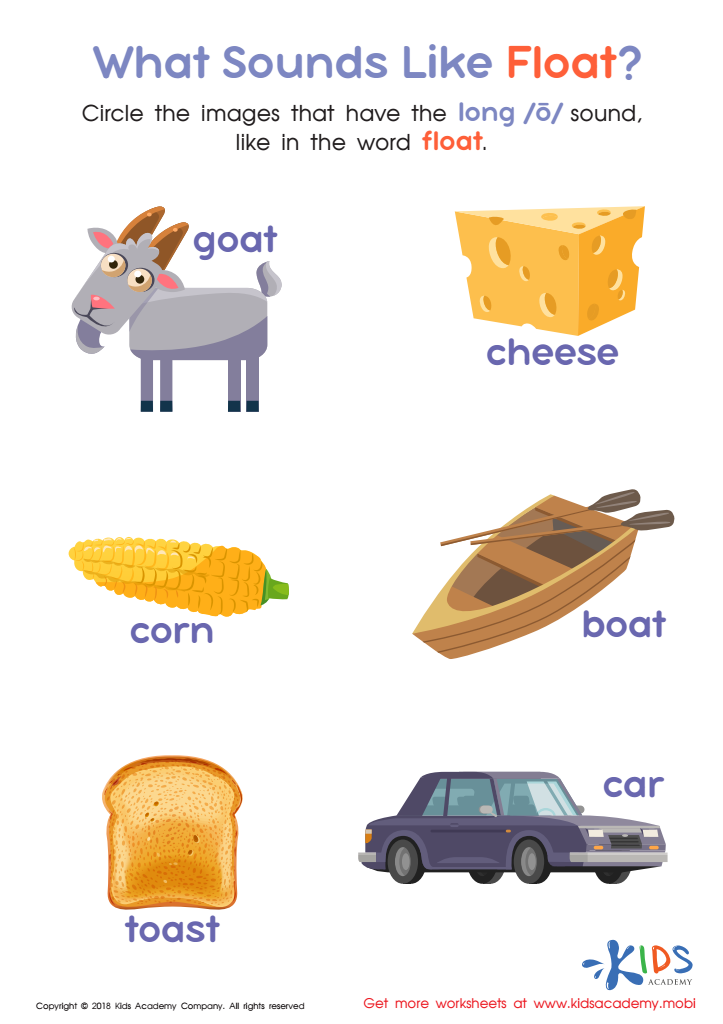
What Sounds Like Float? Worksheet
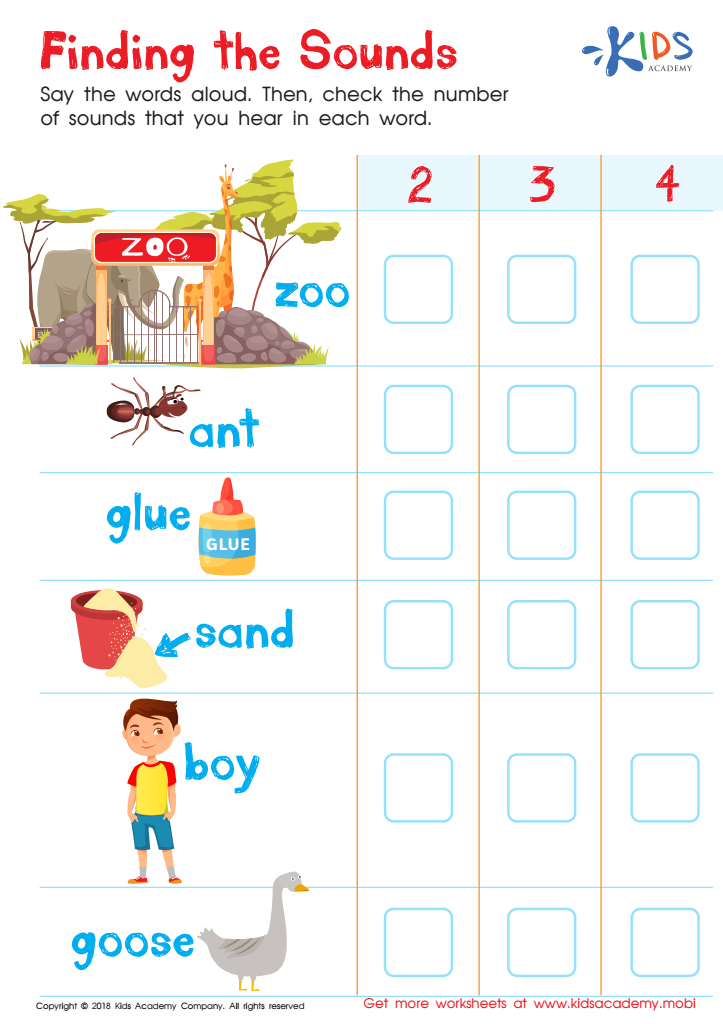
Finding the Sounds Worksheet







Letter-sound recognition, encompassing the ability to connect letters with their corresponding sounds, is a fundamental skill for children ages 6 to 9. This early literacy concept forms the foundation for reading and writing, significantly influencing a child's academic journey. Parents and teachers should prioritize this skill because it enhances phonetic awareness, which is crucial for decoding words and building vocabulary.
At this age, children's cognitive abilities are rapidly developing, making it an ideal time for introducing structured letter-sound correlations. Strong letter-sound recognition fosters confidence in reading, as children feel empowered to tackle new words independently. Furthermore, solid foundational skills in literacy positively correlate with performance in other subjects, improving overall academic achievement.
Moreover, when parents and teachers engage children in activities like phonics games, storytelling, and interactive reading, they not only reinforce these skills but also create enjoyable learning environments. This encourages a lifelong love for reading, critical for lifelong learning and personal growth.
By valuing letter-sound recognition, parents and teachers play a vital role in equipping children with essential tools for literacy success, ultimately shaping their futures in and beyond the classroom. Prioritizing this skill paves the way for fluent, confident readers and critical thinkers.







