Cognitive Development Chess Worksheets for Ages 6-9
5 filtered results
-
From - To
Discover our engaging Cognitive Development Chess Worksheets designed for children aged 6-9. These specially crafted activities focus on enhancing critical thinking, problem-solving, and logical reasoning skills through the fascinating game of chess. Each worksheet encourages young learners to strategize, analyze situations, and make decisions while having fun. Our printables cater to various learning styles, making them ideal for home or classroom use. Promote cognitive growth in a playful environment and watch your child develop attention to detail and improve memory retention with these stimulating chess puzzles and challenges! Empower your child's mind through the timeless game of chess today!
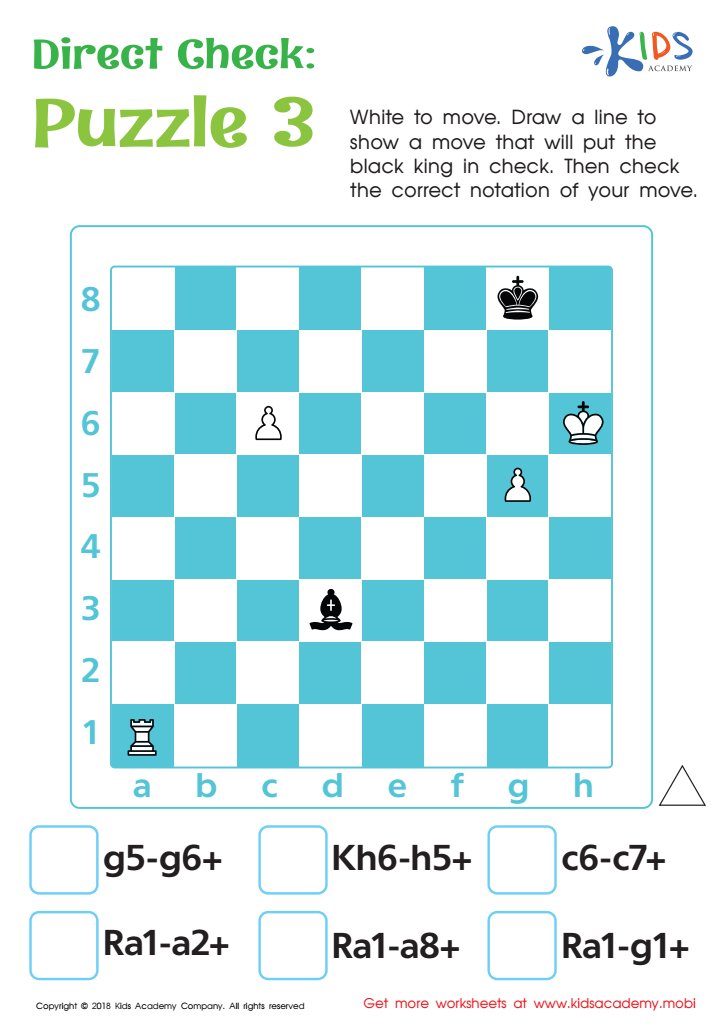
Direct Check: Puzzle 3 Worksheet
 Assign to My Students
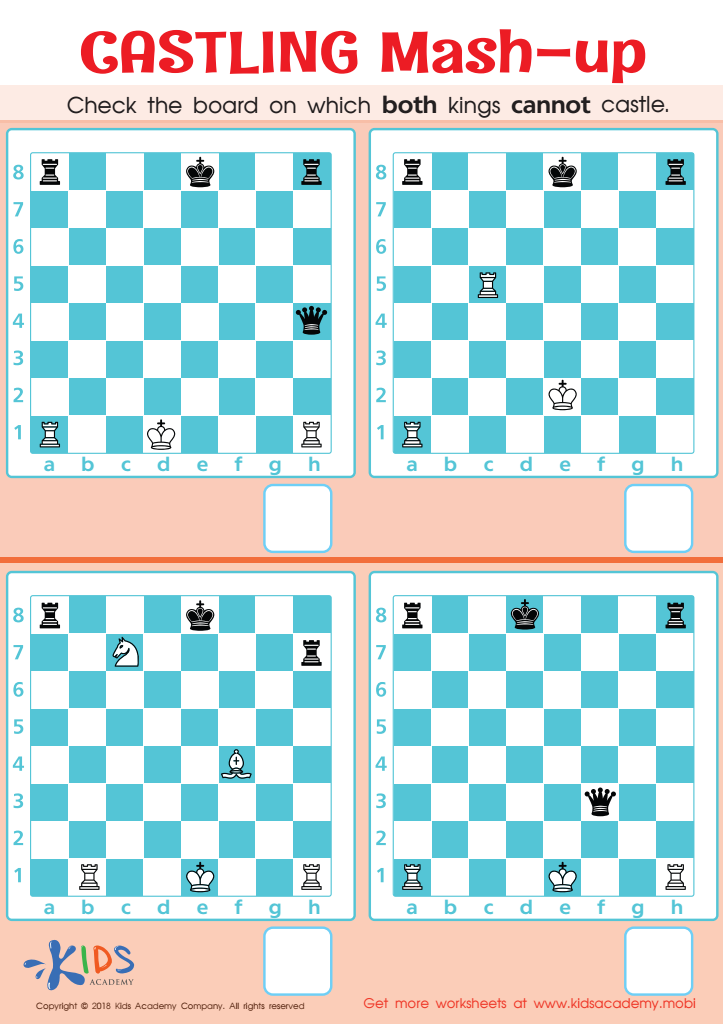
Castling Mash–up Worksheet
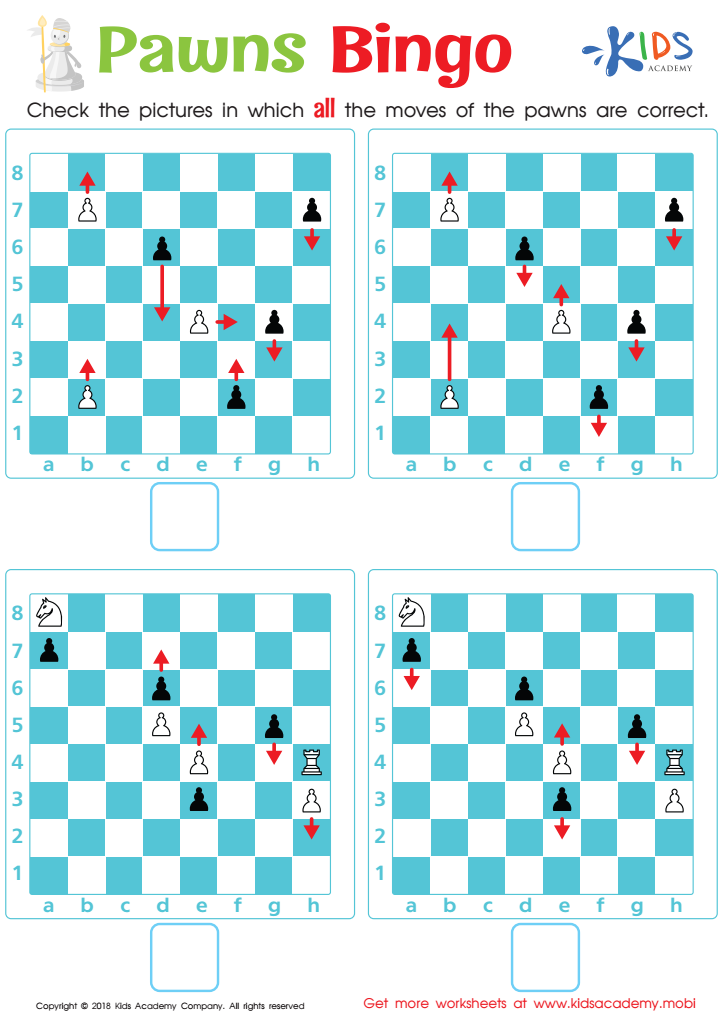
Pawns Bingo Worksheet
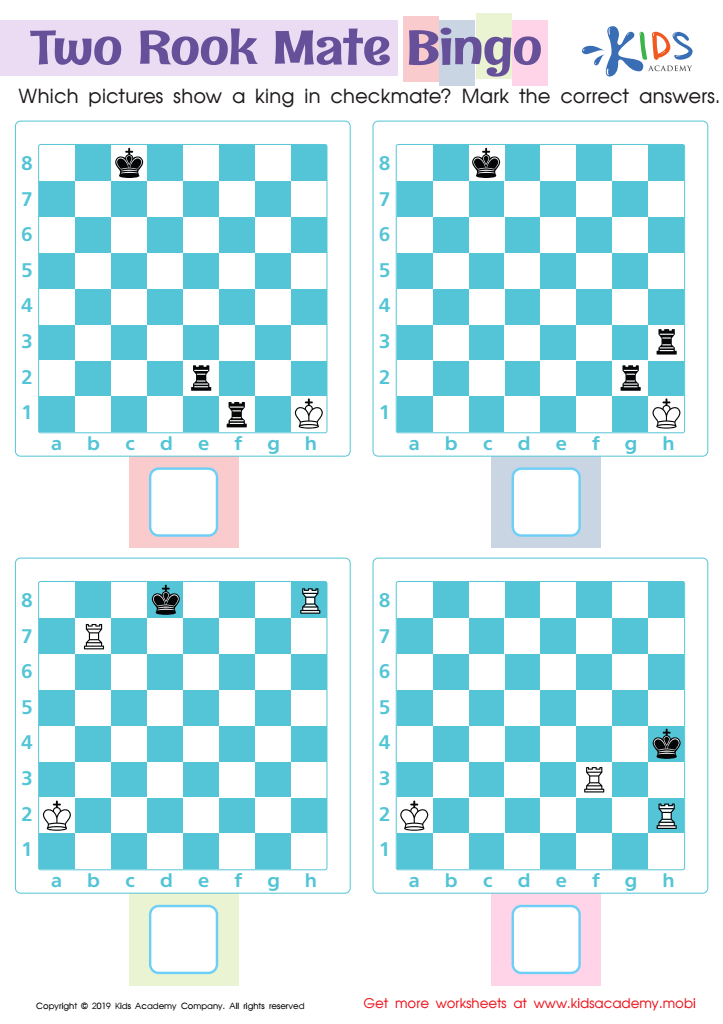
Two Rook Bingo Worksheet
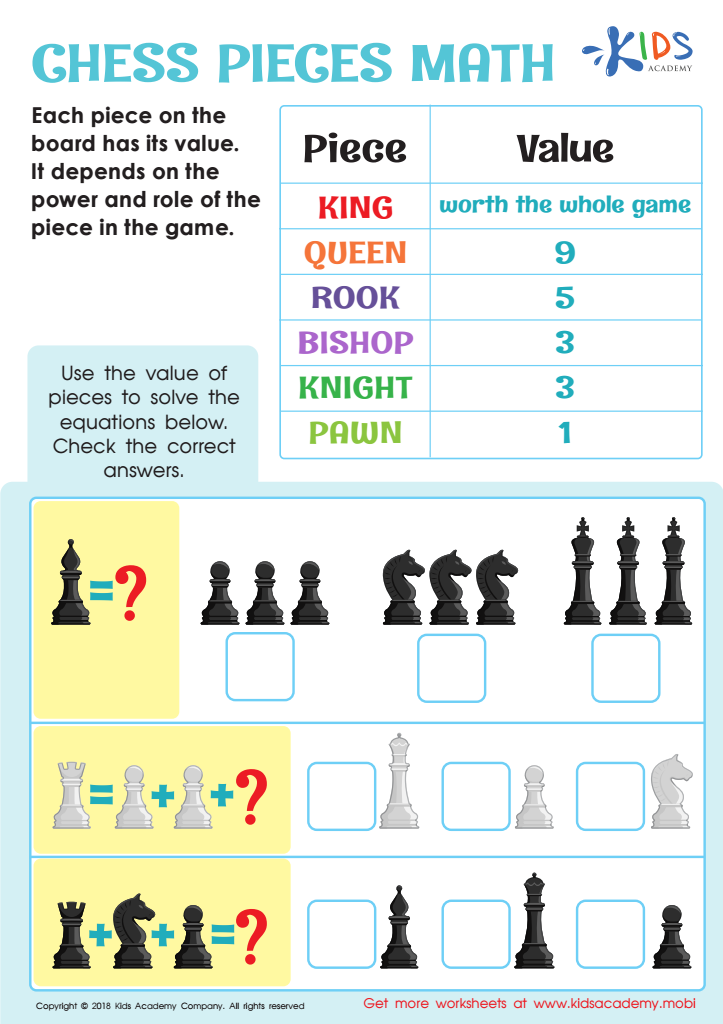
Chess Pieces Math Worksheet






Cognitive Development Chess is an invaluable tool for children aged 6-9, offering tremendous educational benefits that parents and teachers should prioritize. At this age, kids are rapidly developing critical thinking skills, problem-solving abilities, and decision-making processes. Introducing chess into their routine enhances these cognitive functions through strategic planning and foresight.
Playing chess requires children to analyze, visualize potential outcomes, and anticipate their opponent's moves, directly engaging their reasoning skills. This game nurtures patience and perseverance as they learn to work through challenges and handle setbacks gracefully—a vital life skill. Furthermore, chess fosters creativity as children devise unique strategies and explore diverse possibilities on the board.
In addition to cognitive gains, chess promotes social interaction, allowing children to interact, communicate, and build sportsmanship qualities. The game can also serve as a compelling bridge for lifelong learning, showing children that challenges can be transformed into opportunities for growth.
Lastly, engaging children in Cognitive Development Chess creates a fun and fulfilling activity that captivates their interest, making learning enjoyable rather than a chore. For these reasons, parents and teachers alike should wholeheartedly support the integration of chess into the lives of young learners.