Comparing shapes Worksheets for Ages 6-9
6 filtered results
-
From - To
Looking for fun and educational resources to help kids aged 6-9 sharpen their geometry skills? Our Comparing Shapes Worksheets are perfect for young learners. Each worksheet is designed to engage and challenge children to identify, compare, and analyze different shapes. By working through these activities, kids will enhance their understanding of basic geometric principles and improve their critical thinking abilities. These worksheets incorporate colorful illustrations and interactive exercises that make learning about shapes enjoyable and effective. Ideal for classroom use or at-home practice, our comparing shapes worksheets are essential tools for young learners' mathematical development.
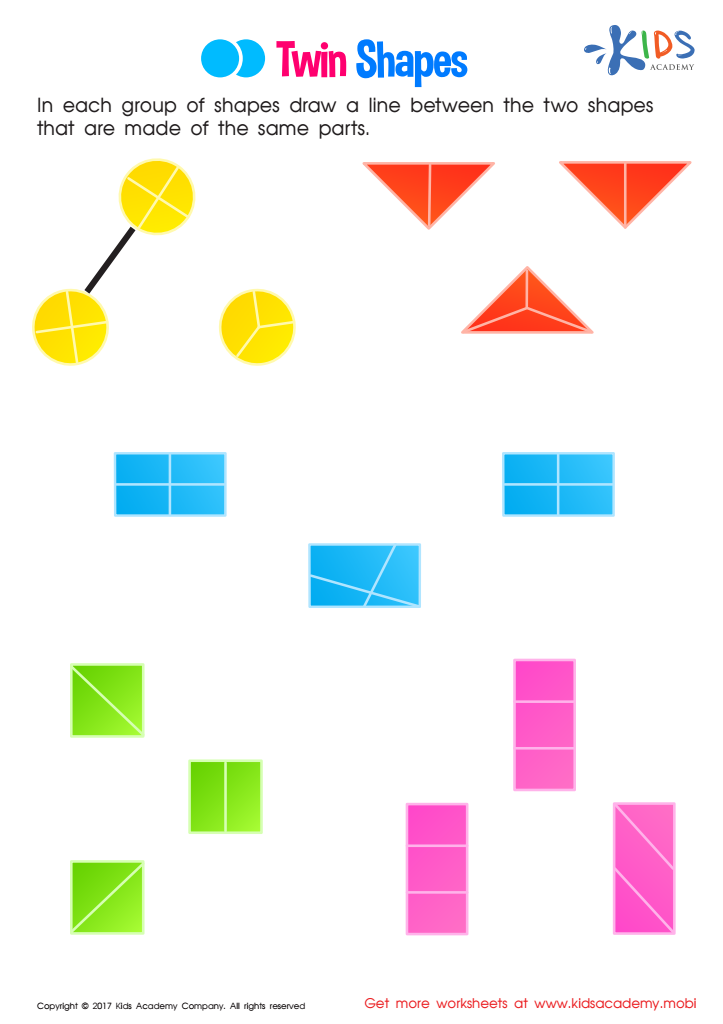
Twin Shapes Worksheet
 Assign to My Students
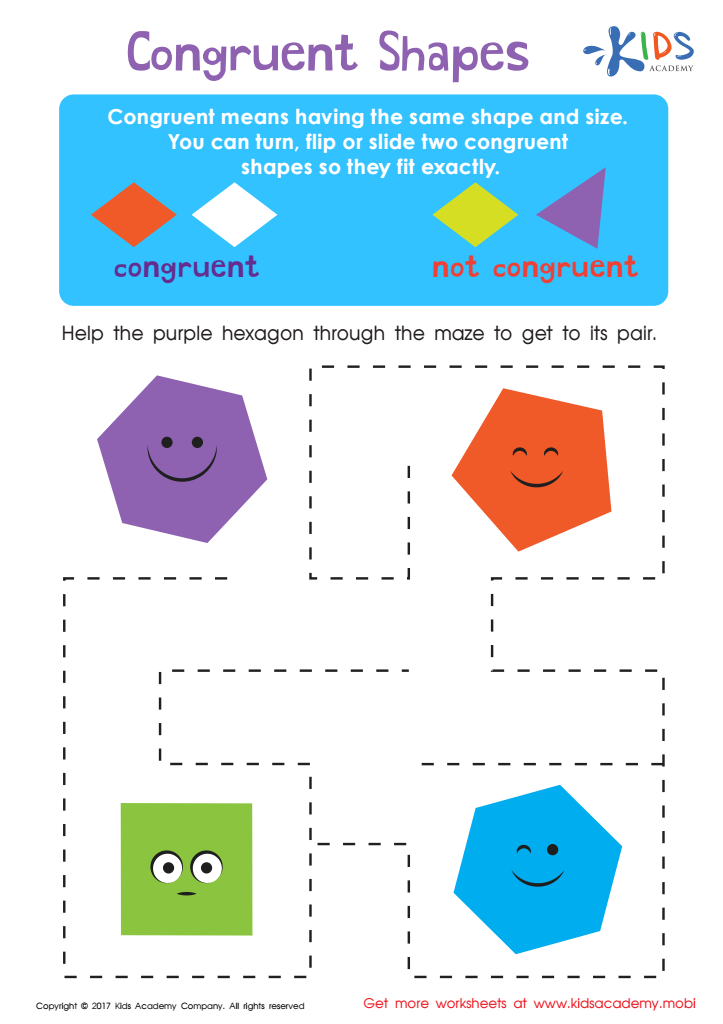
Congruent Shapes Worksheet
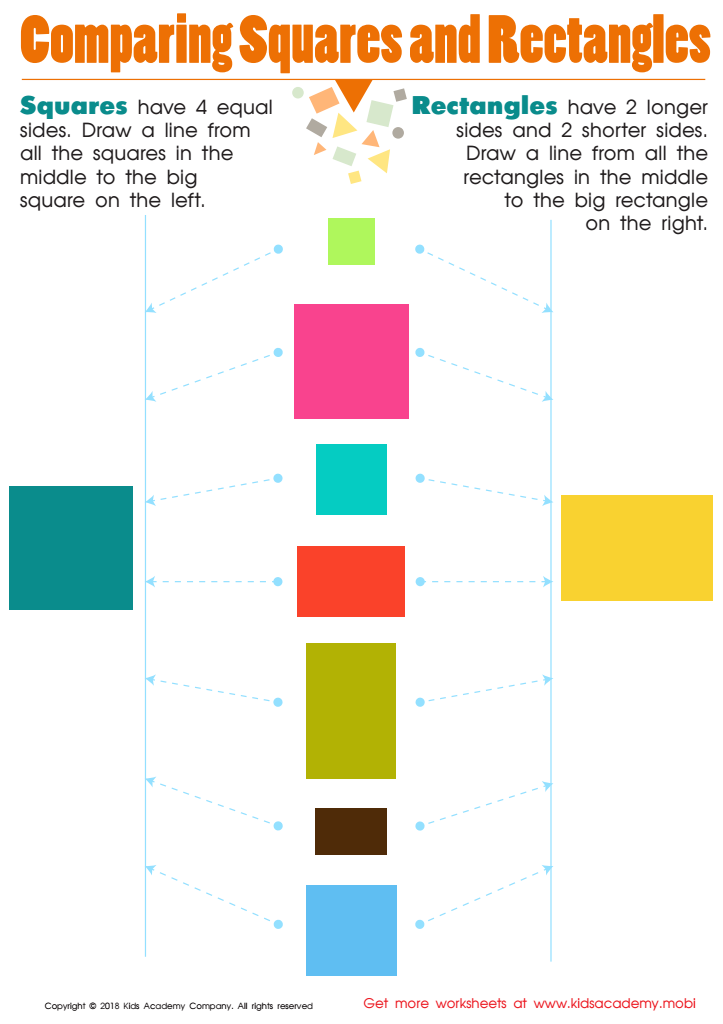
Comparing Squares Rectangles Worksheet
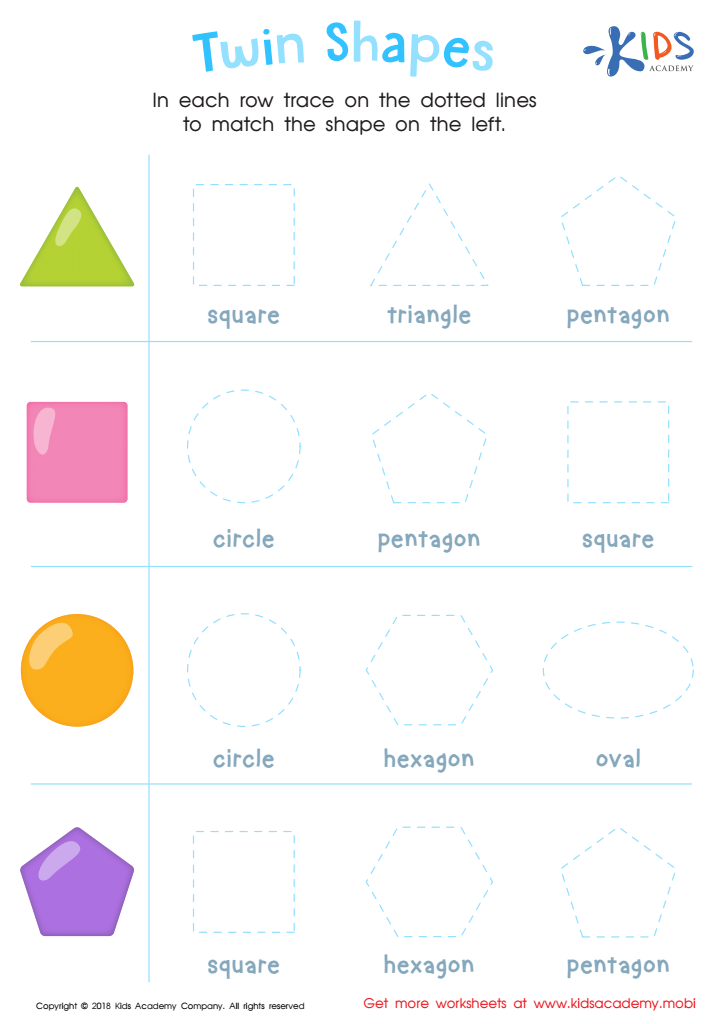
Twin Shapes Dot-to-Dot Worksheet








Comparing shapes is a fundamental mathematical skill for children aged 6-9. At this age, children's cognitive abilities are rapidly developing, and recognizing and comparing shapes can significantly enhance their spatial awareness and problem-solving skills. By learning to distinguish between different shapes, children lay the groundwork for more complex mathematical concepts they will encounter later, such as geometry and measurements.
Shape comparison helps improve visual perception and categorization skills. These skills are crucial not only for mathematics but also for reading and writing, as recognizing letter shapes and patterns plays a vital role in literacy. Additionally, understanding shapes fosters logical thinking as children learn to identify attributes like number of sides and angles, aiding in their ability to follow geometric principles and relationships.
Engaging in activities that involve comparing shapes also contributes to fine motor development. Tasks such as drawing or manipulating physical objects help enhance hand-eye coordination and precision. Furthermore, comparing shapes in a collaborative setting nurtures communication skills, as children must often articulate their reasoning and share observations.
Overall, parents and teachers supporting the understanding of shapes at this formative stage empowers children with a solid foundation in both academic and everyday problem-solving skills, setting them up for greater success in their future educational endeavors.








