
Constellation identification Worksheets for Ages 6-9
3 filtered results
Difficulty Level
Grade
Age
-
From - To
Subject
Activity
Standards
Introduce young stargazers to the wonders of the night sky with our Constellation Identification Worksheets for Ages 6-9. Designed to captivate and educate, these printable worksheets help children recognize and name various constellations through engaging activities and colorful illustrations. Ideal for enhancing observational skills and sparking curiosity about astronomy, our worksheets include step-by-step guides and fun challenges tailored for early learners. Perfect for home or classroom use, they support STEM education and foster a lifelong interest in the stars. Inspire your child to explore the galaxy with our comprehensive and enjoyable constellation identification resources!
Favorites
With answer key
Interactive
 Assign to My Students
The Night Sky: Leo Worksheet
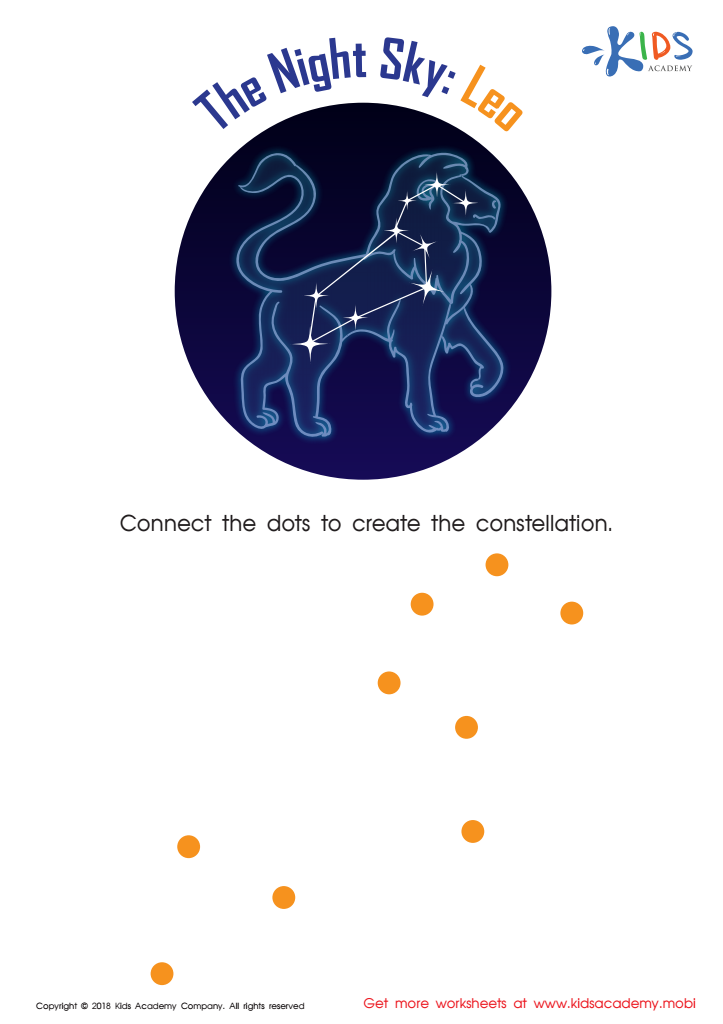
Let your kids explore the wonders of the stars with this fun worksheet! They'll connect the dots to create the constellation Leo. Night gazing instruments, a telescope or this printout can help your kids learn about constellations and horoscopes. Download the worksheet and let the star watching begin!
The Night Sky: Leo Worksheet
Worksheet
The Night Sky: Aries Worksheet
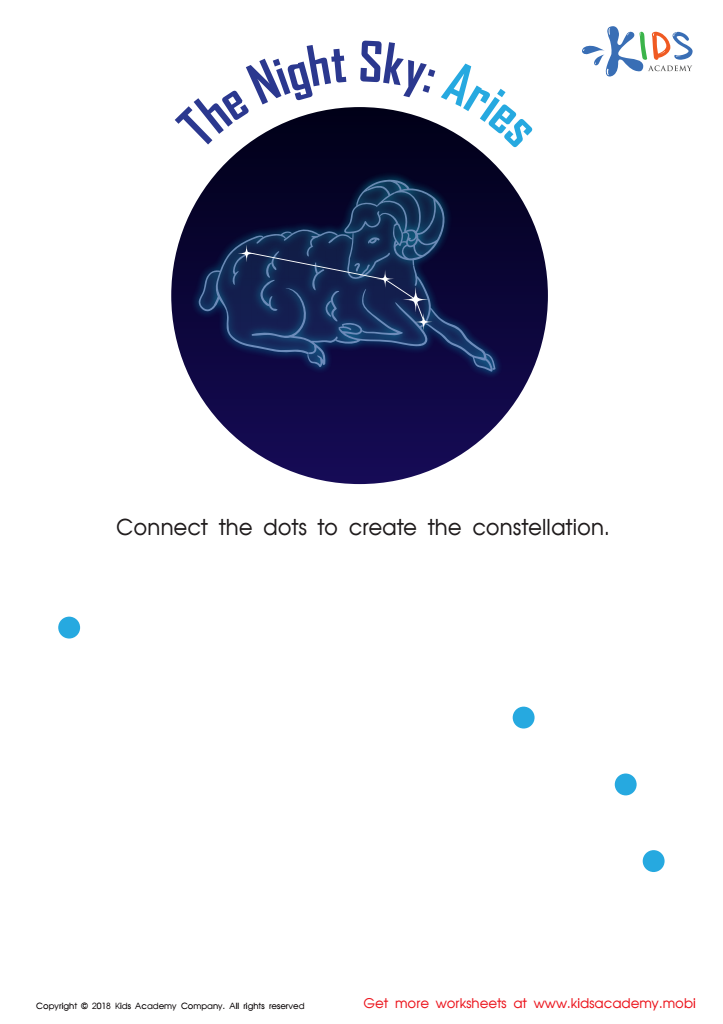
Does your child know constellations and horoscope? If you've got them interested in horoscope readings and star gazing, the Aries constellation in the pdf should be familiar. Have them look at the picture and identify it. If they can't, tell them it's Aries. Then, help them connect the dots to form the constellation.
The Night Sky: Aries Worksheet
Worksheet
Join Kids Academy for Free
Who is primarily going to use this learning content?





.jpg)


Parents and teachers should care about constellation identification for children ages 6-9 because it nurtures curiosity, science literacy, and a sense of wonder about the natural world. At this impressionable age, identifying constellations can be particularly exciting and educational, helping to lay the groundwork for essential skills and future interests in STEM fields (Science, Technology, Engineering, and Mathematics).
First, studying the stars encourages curiosity and an eagerness to explore. When children learn about constellations such as Orion or Ursa Major, it sparks questions about the universe, leading to enriched imagination and cognitive development. By observing the night sky, they practice pattern recognition and boost their spatial awareness, both crucial for problem-solving and critical thinking.
Additionally, understanding constellations provides historical and cultural insights. Many myths and stories are associated with different star formations, allowing children to get a glimpse into various cultures and ancient civilizations. This interdisciplinary learning fosters a deeper appreciation for both science and humanity’s shared heritage.
Furthermore, the simple joy of stargazing can improve mental well-being, offering a peaceful and awe-inspiring activity that parents and teachers can share with children. Taking the time to identify constellations together can strengthen bonds and enhance emotional development.
Overall, constellation identification is a multifaceted educational tool that enriches children's lives by blending science, culture, and emotional growth.








