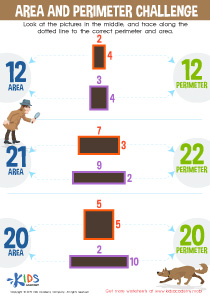
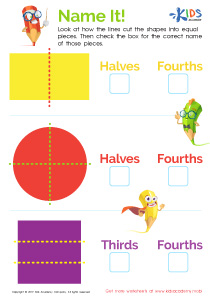
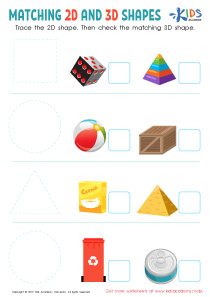
Comparing shapes 2D Shapes Worksheets for Ages 6-9
4 filtered results
-
From - To
Discover our engaging "Comparing 2D Shapes Worksheets" designed for children ages 6-9. These printable worksheets offer a fun and educational way for young learners to explore and compare different 2D shapes, enhancing their geometric understanding. Through various activities, kids will identify, analyze, and classify shapes based on their properties such as sides, angles, and symmetry. Perfect for both classroom and home use, these worksheets support critical thinking and boost confidence in mathematics. Equip your child with essential math skills and make learning enjoyable with our expertly crafted, visually appealing worksheets from Kids Academy.
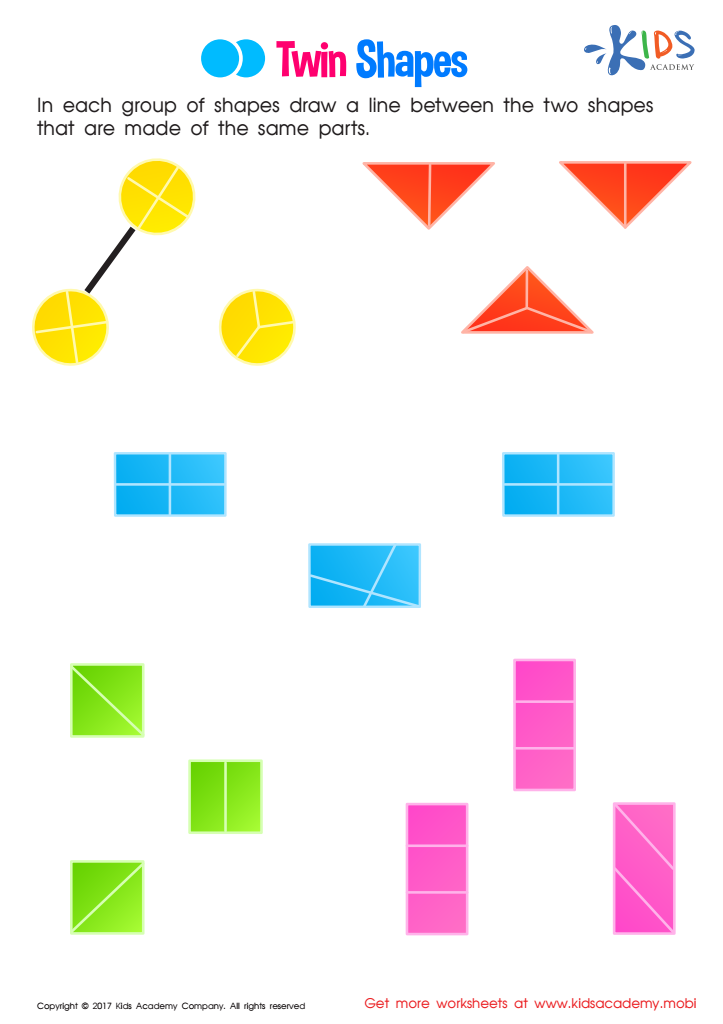
Twin Shapes Worksheet
 Assign to My Students

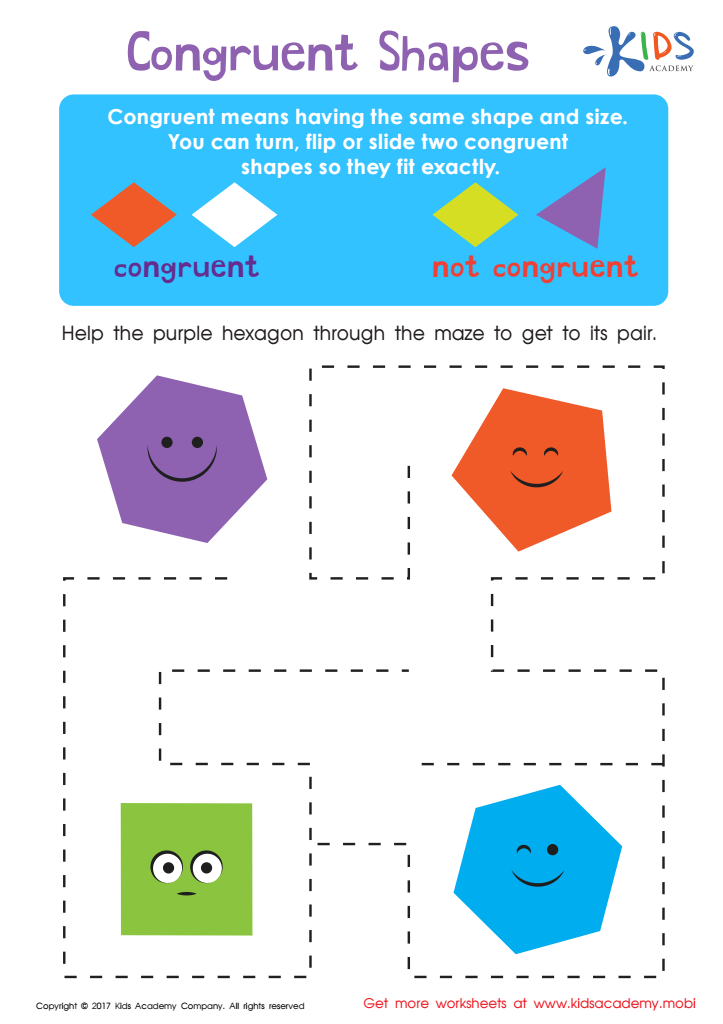
Congruent Shapes Worksheet
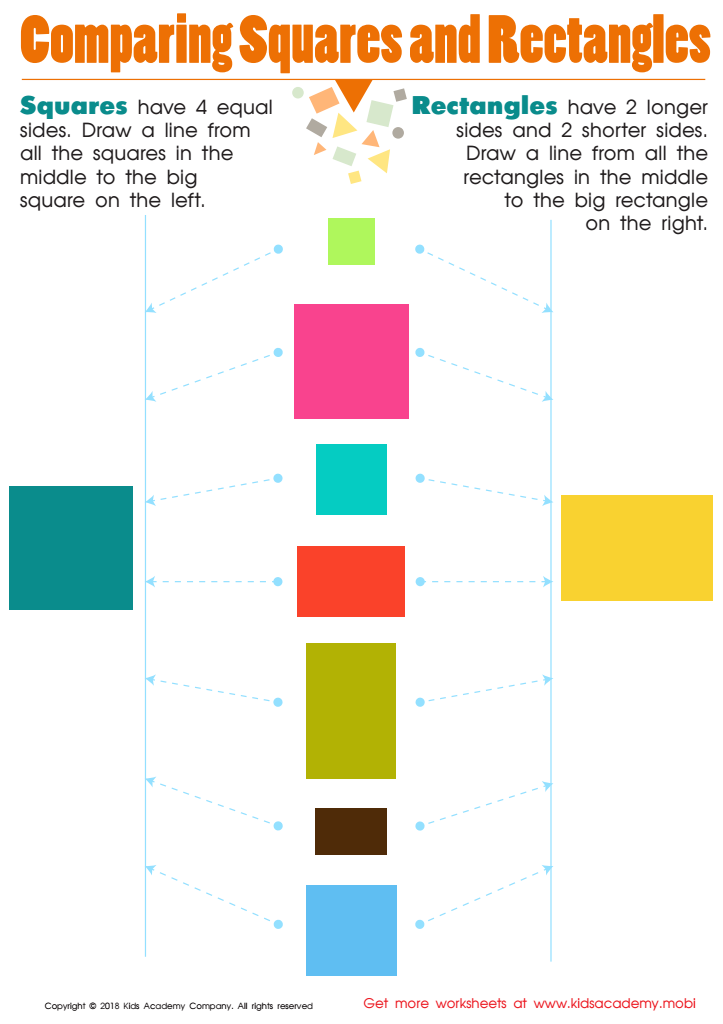
Comparing Squares Rectangles Worksheet
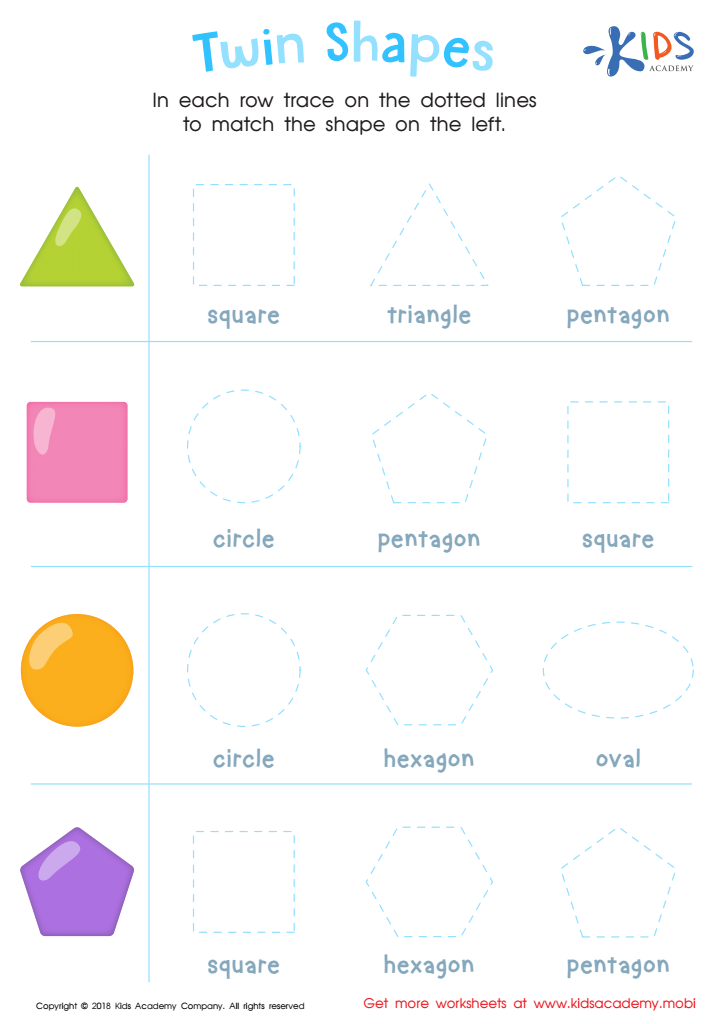
Twin Shapes Dot-to-Dot Worksheet








Comparing 2D shapes for children ages 6-9 is pivotal for their cognitive and academic development. At this formative stage, understanding shapes hones visual-spatial intelligence, a key component exploited in STEM fields, art, and everyday problem-solving. Recognizing and distinguishing between shapes like squares, circles, and triangles lay the groundwork for geometry, a fundamental aspect of mathematics. Encouraging children to notice attributes such as the number of sides, angles, and symmetry fosters critical thinking and attention to detail.
Parents and teachers should also note that comparing shapes ties closely to language development. As children describe differences and similarities, they naturally expand their vocabulary and improve their ability to articulate observations clearly. Interaction with 2D shapes can also refine fine motor skills – cutting out, tracing, or arranging paper shapes, for instance, strengthens hand-eye coordination.
Moreover, shape recognition is ubiquitous beyond academic environments; it's crucial in understanding symbols, reading maps, and perceiving the space around us. Introducing and comparing shapes through engaging activities at an early age can spark children's creativity and interest in learning, setting a solid foundation for future educational achievements. So, inculcating this basic geometric knowledge equips children with robust cognitive tools that extend well into varied facets of life.