Problem-solving ability Addition & Subtraction Worksheets for Ages 6-9
3 filtered results
-
From - To
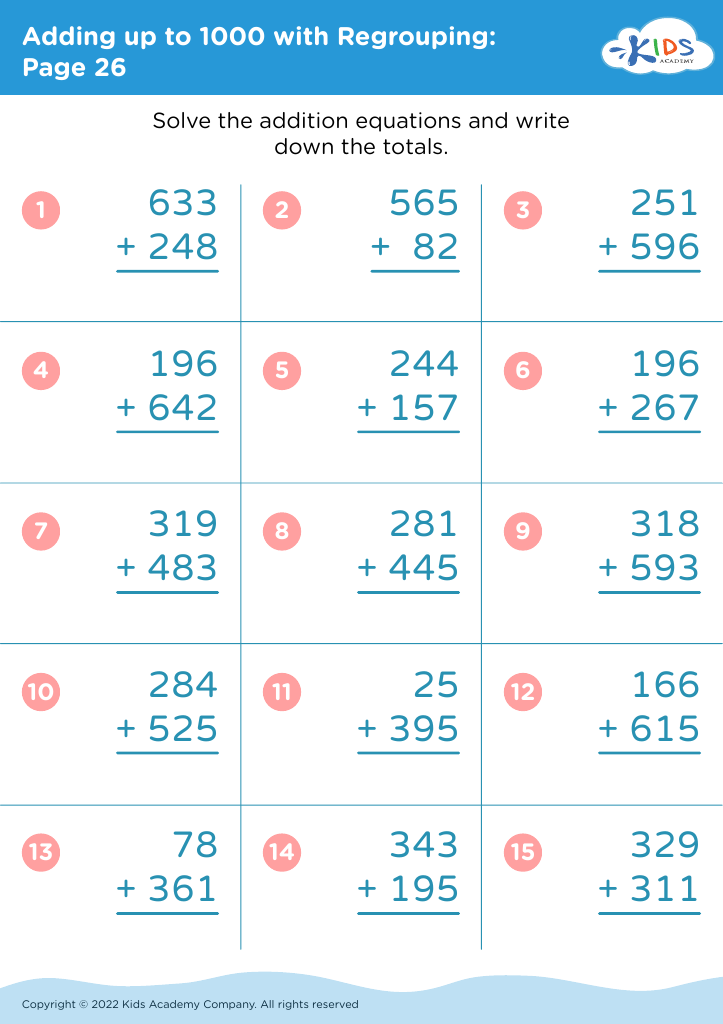
Enhance your child's problem-solving skills with our engaging addition and subtraction worksheets, designed specifically for ages 6 to 9. These worksheets focus on real-world applications of basic math concepts, helping children practice critical thinking and develop their analytical abilities. Each activity encourages kids to solve mathematical problems in context, boosting their confidence and understanding. With a variety of fun scenarios, young learners will explore addition and subtraction methods while tackling relatable challenges. Perfect for home or classroom use, these worksheets foster a love for math as children gain proficiency in essential problem-solving strategies. Start your child’s mathematical journey today!
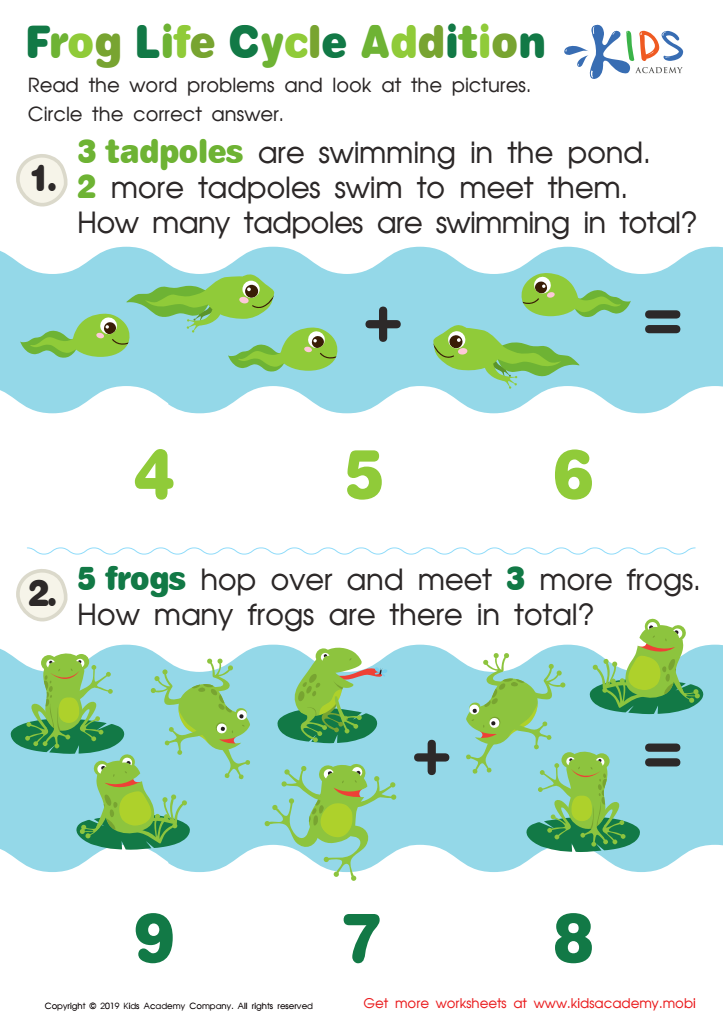
Frog Life Cycle Addition Worksheet
 Assign to My Students
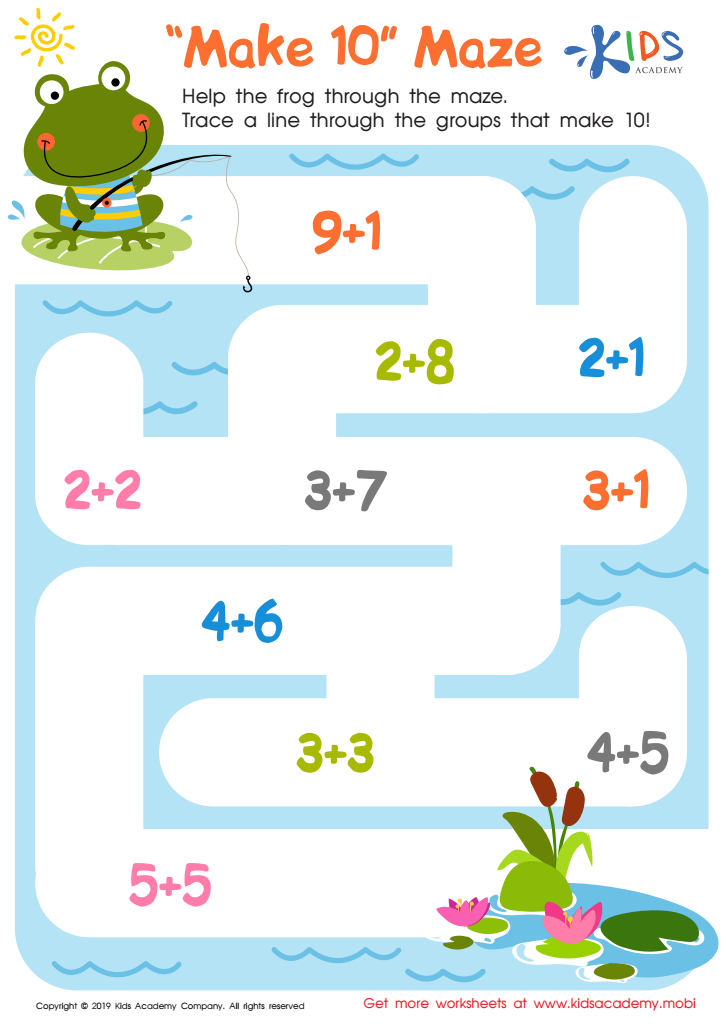
Make 10 Maze Worksheet








Parents and teachers should care about developing problem-solving abilities in addition and subtraction for children aged 6-9 because these foundational skills are crucial for academic success and everyday life. At this age, children are transitioning from simple arithmetic to more complex mathematical concepts. Strengthening their problem-solving skills helps them understand how to approach and solve various mathematical challenges, stimulating critical thinking and logical reasoning.
Additionally, robust problem-solving abilities foster a sense of confidence in children. When they can navigate mathematical problems independently, they build resilience and persistence, which are essential qualities for lifelong learning. Moreover, learning to solve mathematical problems enhances a child’s ability to understand real-world situations, such as budgeting, planning, or even cooking.
Furthermore, engaging children in problem-solving activities makes learning interactive, transforming mathematics from a mere set of rules into an exciting and relatable experience. This can lead to a greater interest in the subject, encouraging students to explore and ask questions.
Ultimately, effectively nurturing addition and subtraction problem-solving abilities sets the stage for higher-level mathematics and enhances cognitive development, empowering children not just in school, but in their daily decision-making and life skills.








