Hand-eye Coordination Addition Worksheets for Ages 6-9
10 filtered results
-
From - To
Boost your child's math skills with our Hand-eye Coordination Addition Worksheets specifically designed for ages 6-9! These engaging, printable activities combine fun with learning, helping young learners master addition while developing their hand-eye coordination. Each worksheet features colorful imagery and interactive challenges that will hold your child's attention and make math enjoyable. Perfect for home or classroom use, our worksheets cater to various learning styles, ensuring that every child can practice essential math concepts effectively. Enhance your child's cognitive abilities and confidence in math through these creative, hands-on exercises that seamlessly integrate movement with numerical learning!
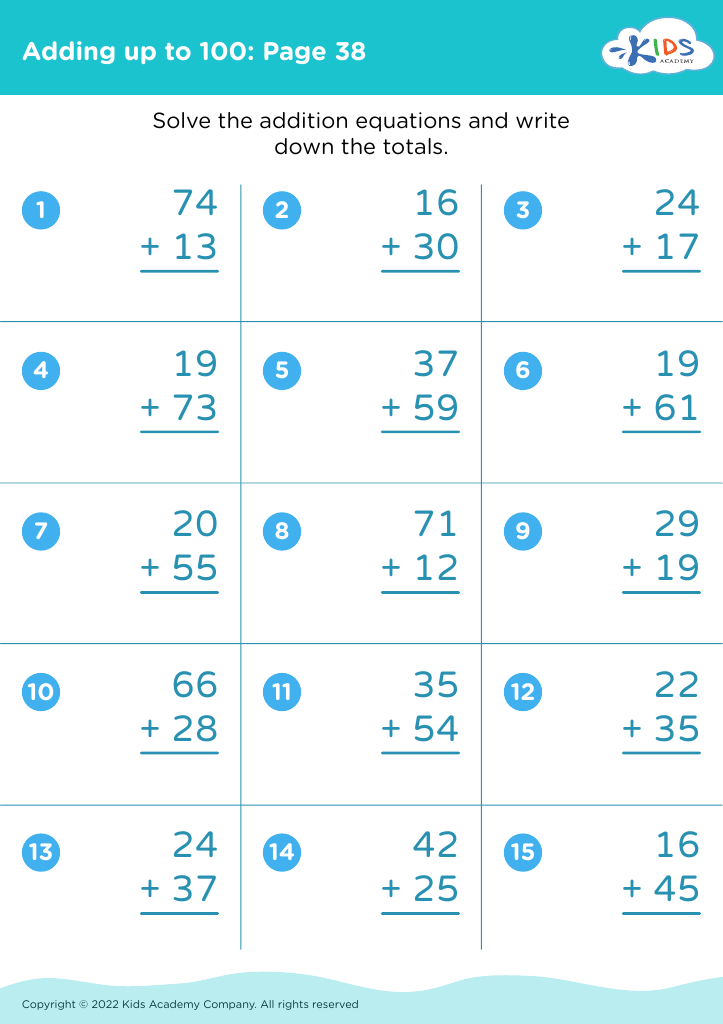
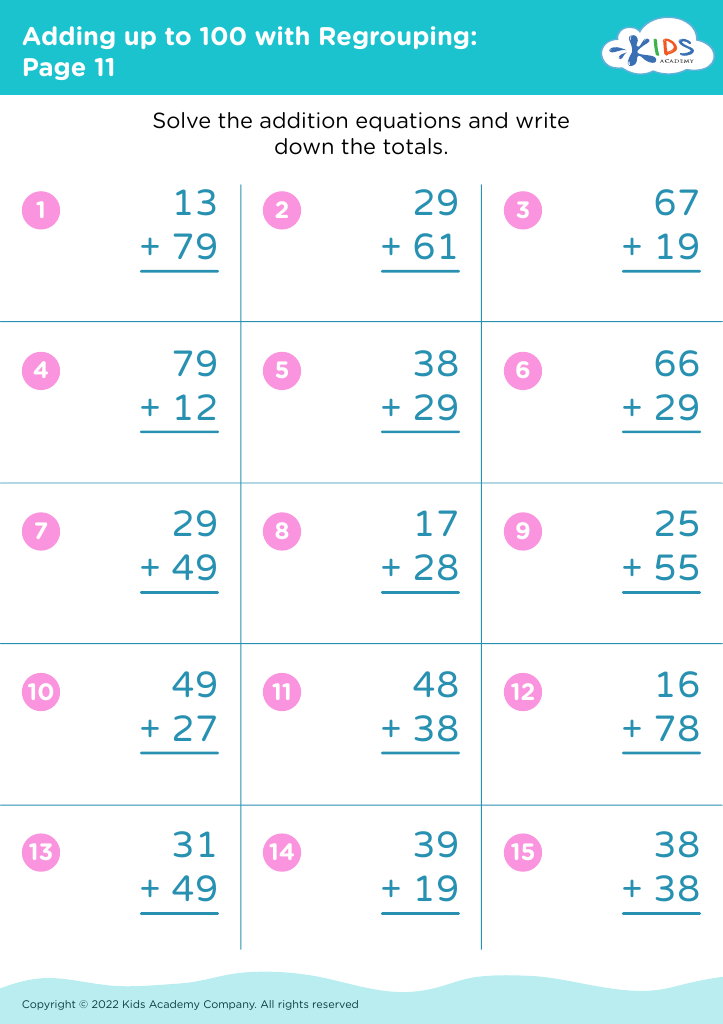
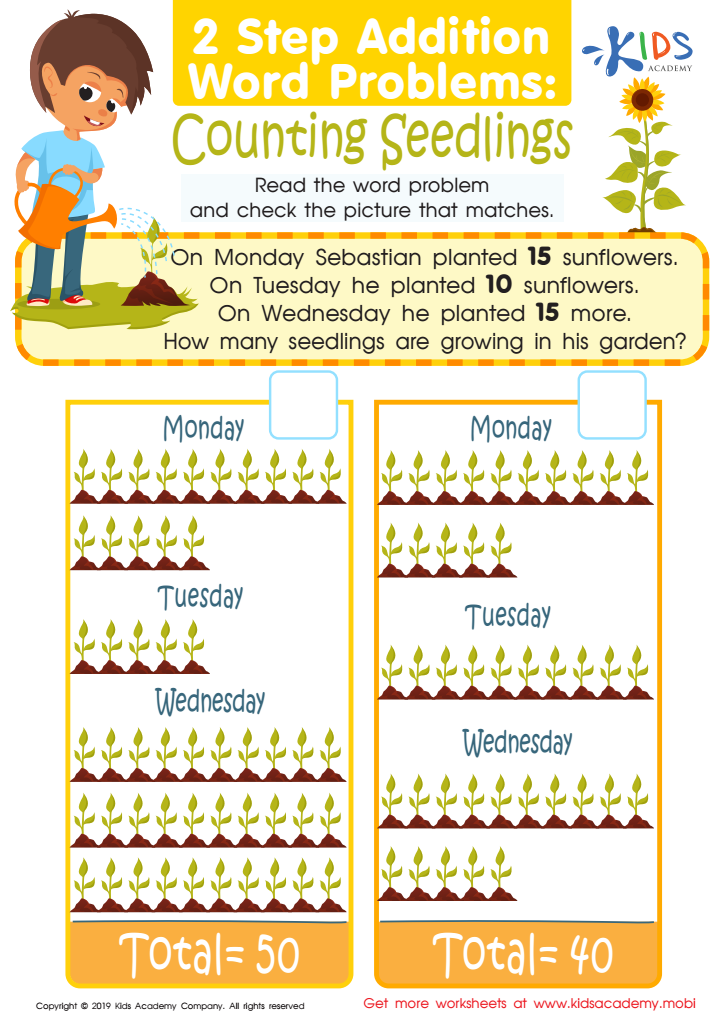
Counting Seedlings Worksheet
 Assign to My Students
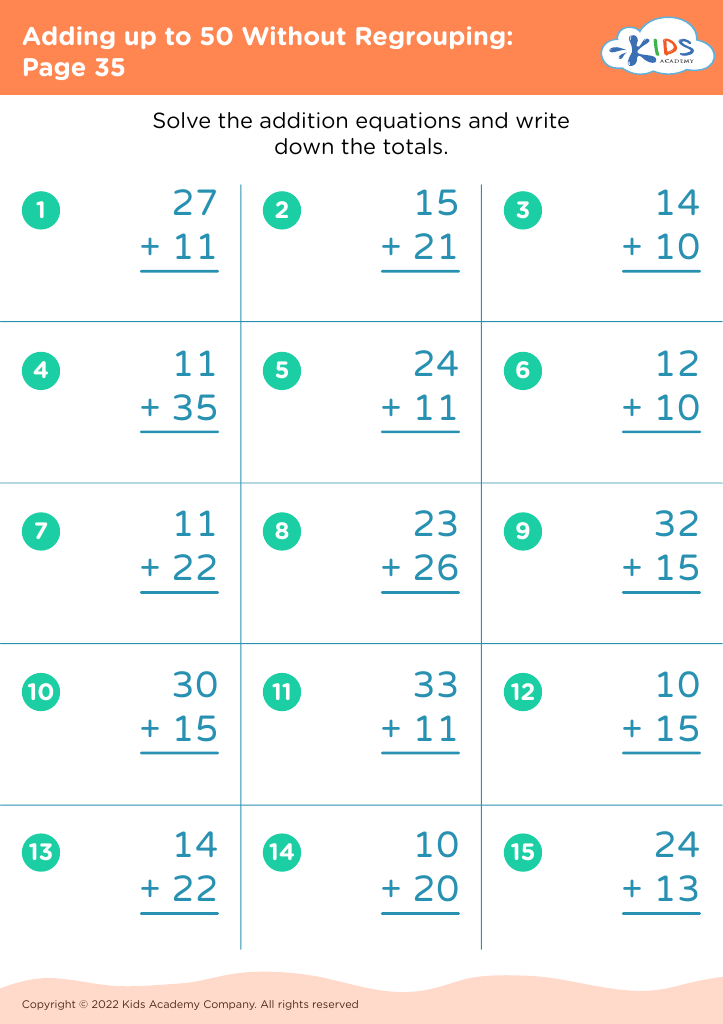
Adding up With Water Worksheet
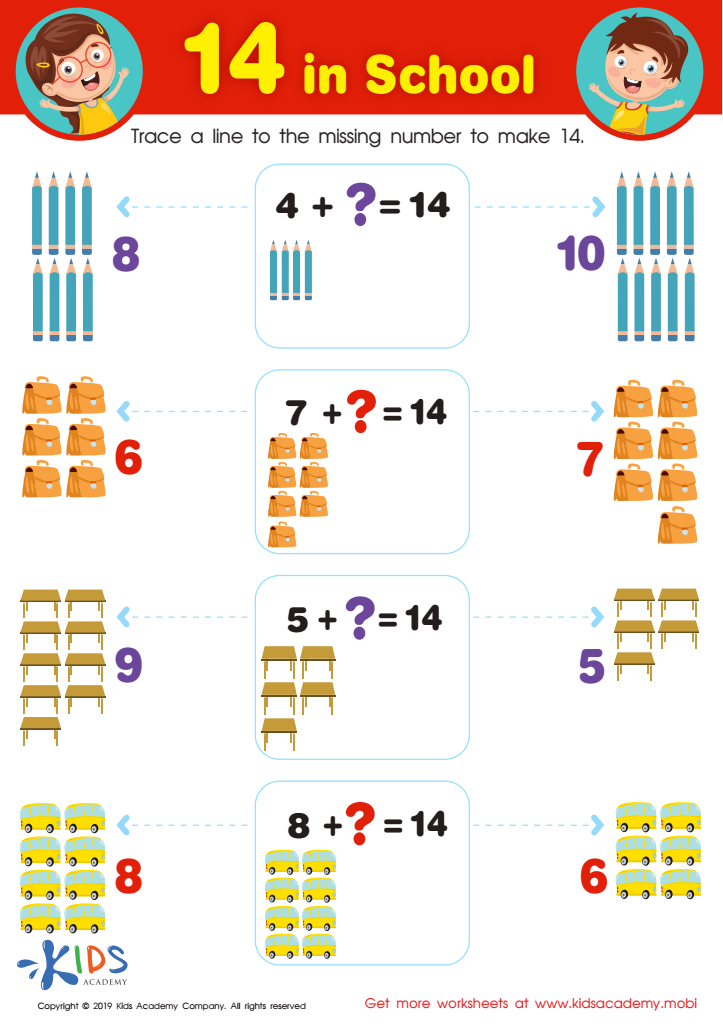
14 in School Worksheet
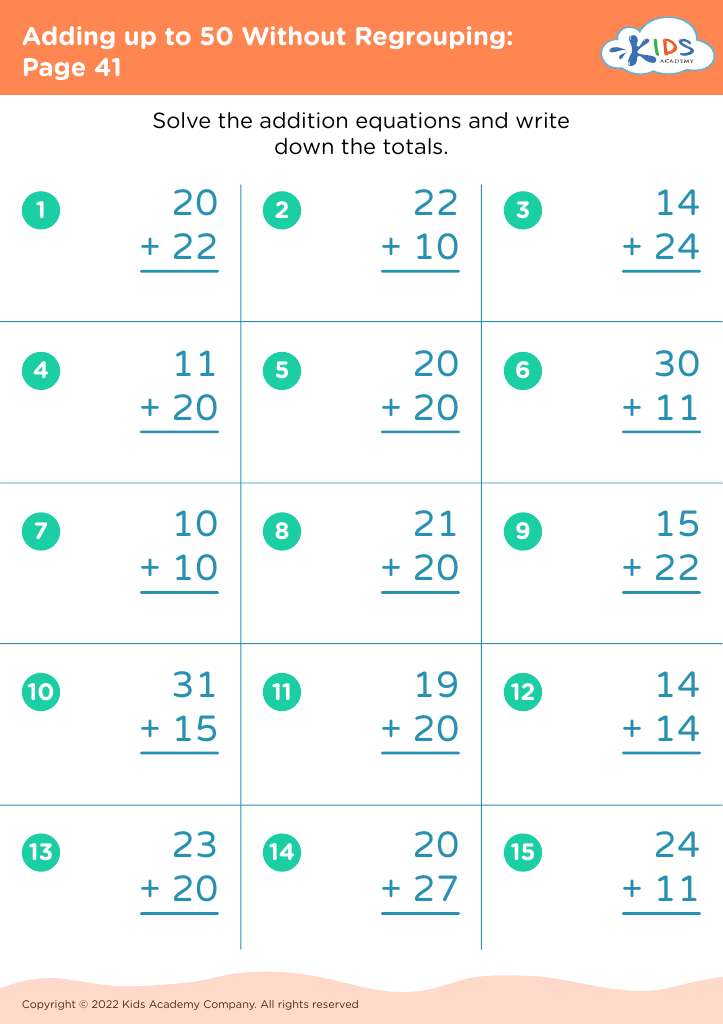





.jpg)


Hand-eye coordination is a crucial skill for children aged 6-9, significantly impacting their academic performance and overall development. Parents and teachers should prioritize this skill because it directly influences a child's ability to engage in various learning activities, especially those requiring fine motor skills, such as writing, drawing, and manipulating educational tools.
One key aspect is that hand-eye coordination fosters confidence in children. As they learn to control their movements and improve their accuracy, they are more likely to participate actively in classroom activities, enhancing their engagement and enthusiasm for learning. Furthermore, well-developed hand-eye coordination can ease the transition to more complex tasks, such as sports and science experiments, leading to better overall physical and cognitive development.
Additionally, practicing coordination exercises together encourages bonding moments between parents and children, enriching family interactions. When teachers incorporate hand-eye coordination activities into their curriculum, it creates a dynamic learning environment that aids in achieving developmental goals.
In summary, nurturing hand-eye coordination helps establish a foundation for lifelong skills, academic success, and emotional well-being, making it essential for both parents and educators to care about and actively support this matter in young children.








