Filters

110 filtered results

Clear all filters
Favorites
With answer key
Interactive

110 filtered results

Difficulty Level

Grade


Subject

    Check out this FREE Trial Lesson on Addition for age 6-9!

    H

    Favorites
    With answer key
    Interactive
    • 6-9
    • Problem-Solving Skills
    • Addition
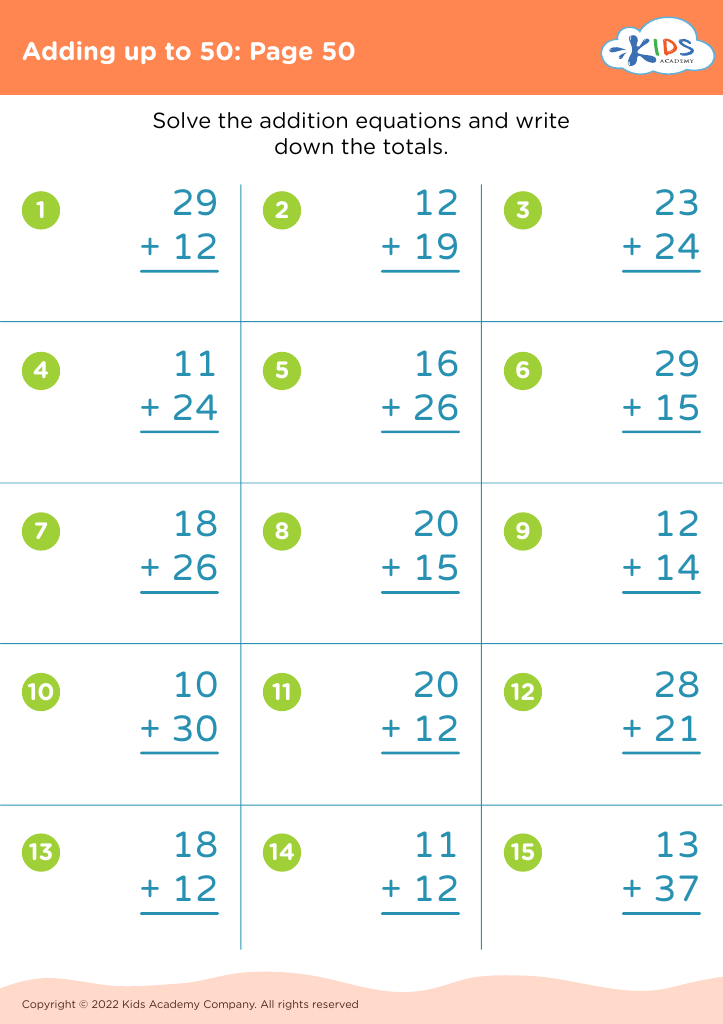
    Adding up to 50: Page 50
    Adding up to 50: Page 50

    Adding up to 50: Page 50

    Adding up to 50: Page 50
    Worksheet
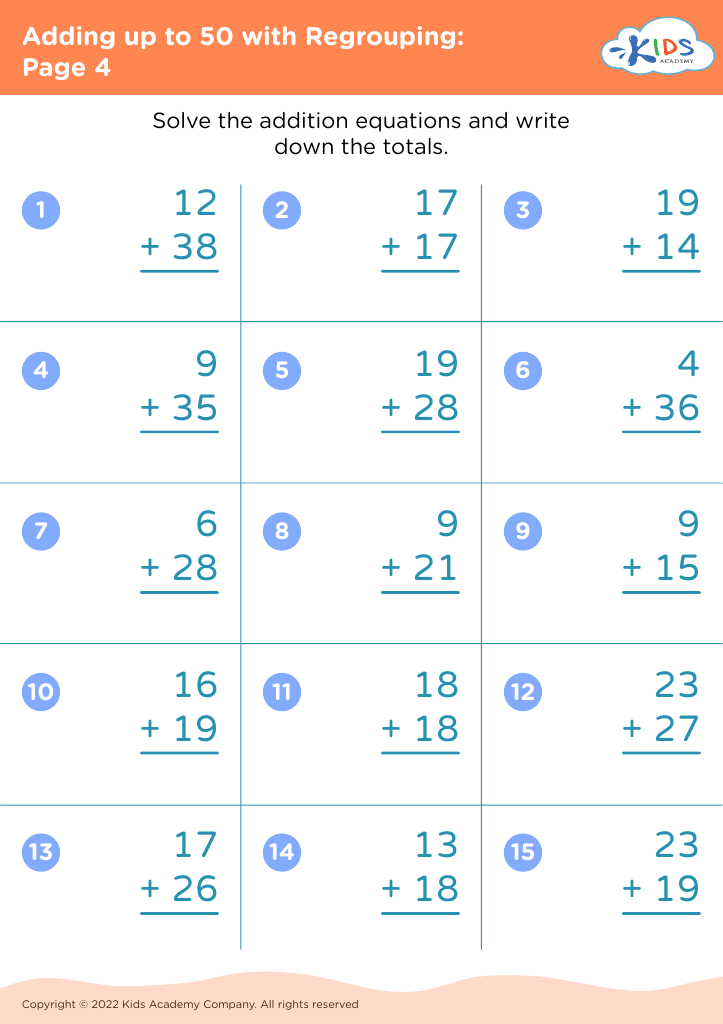
    Adding up to 50 with Regrouping: Page 4
    Adding up to 50 with Regrouping: Page 4
    Adding up to 50 with Regrouping: Page 4
    Worksheet
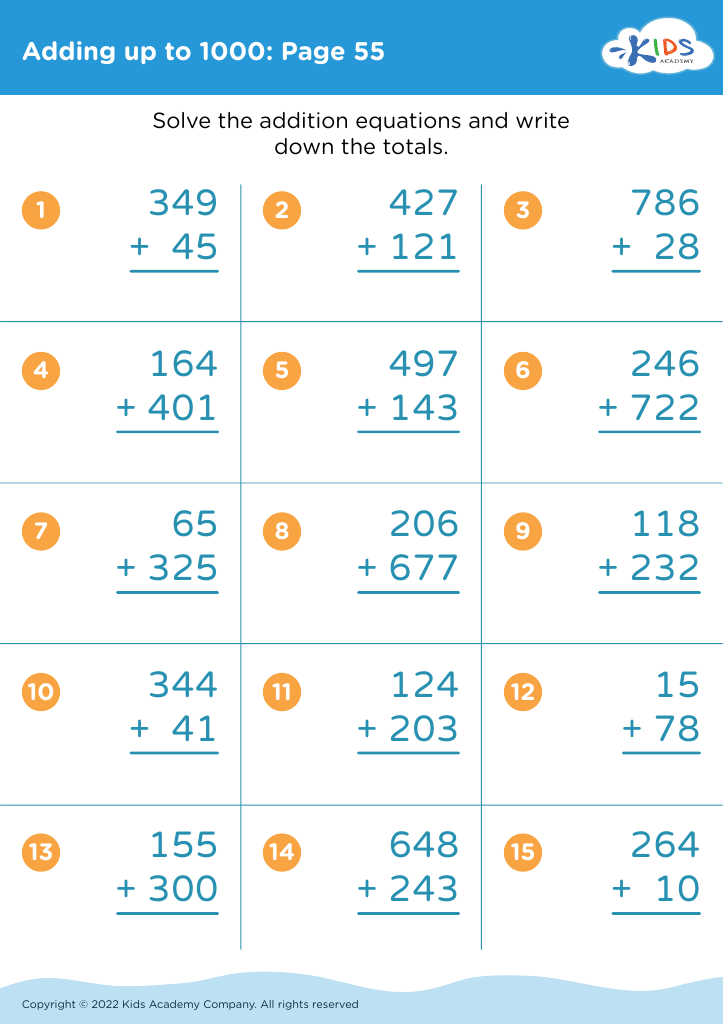
    Adding up to 1000: Page 55
    Adding up to 1000: Page 55

    Adding up to 1000: Page 55

    Adding up to 1000: Page 55
    Worksheet
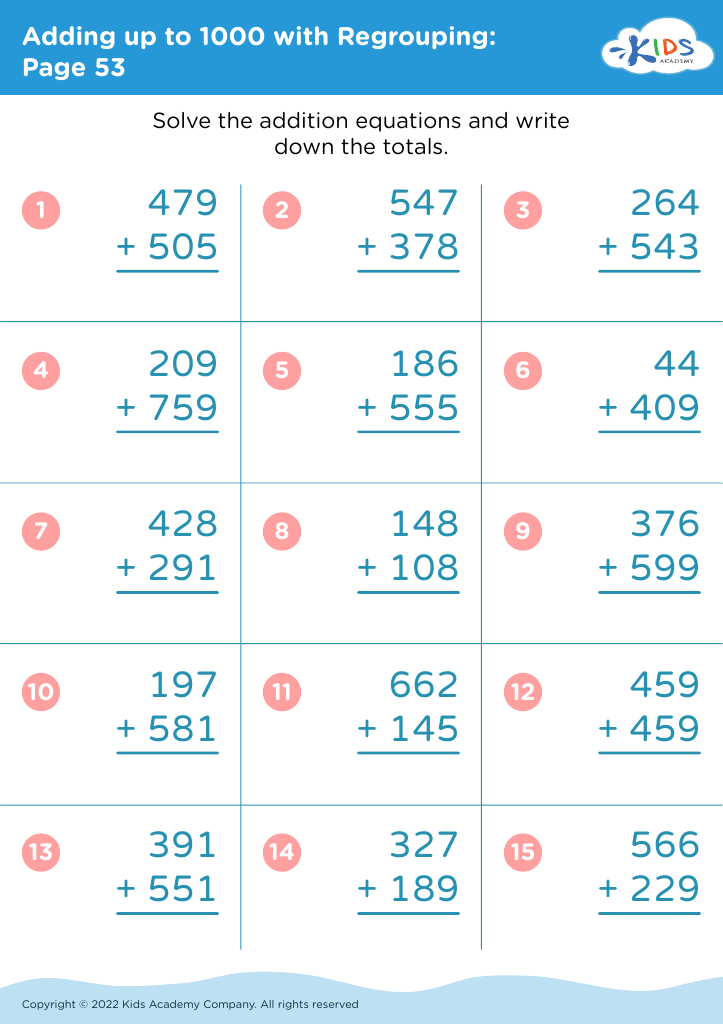
    Adding up to 1000 with Regrouping: Page 53
    Adding up to 1000 with Regrouping: Page 53
    Adding up to 1000 with Regrouping: Page 53
    Worksheet
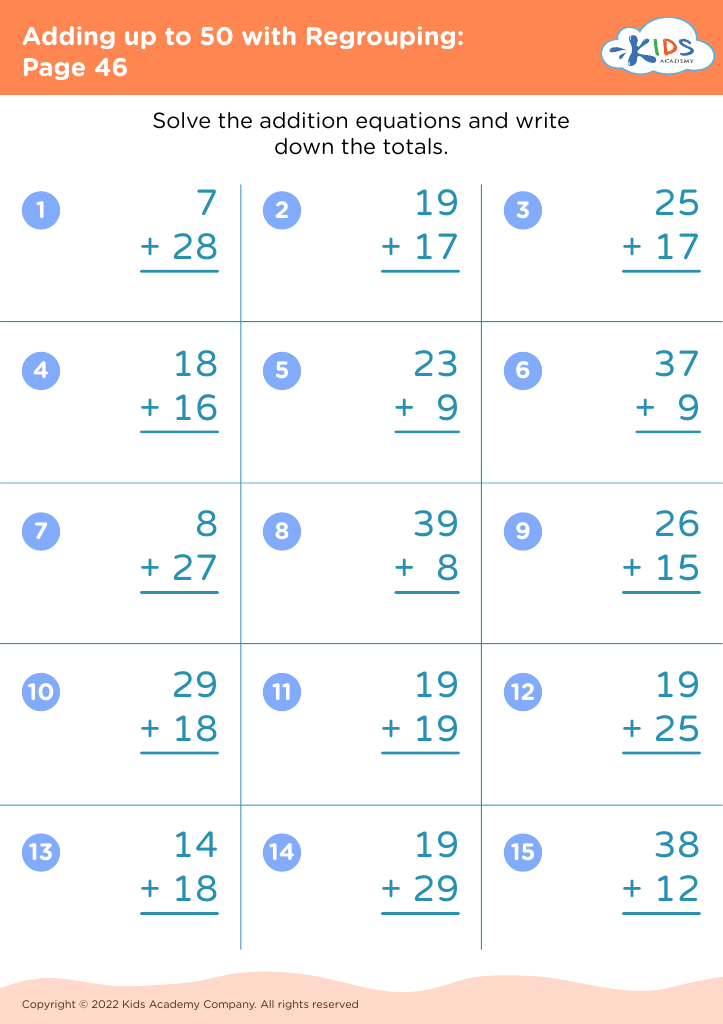
    Adding up to 50 with Regrouping: Page 46
    Adding up to 50 with Regrouping: Page 46
    Adding up to 50 with Regrouping: Page 46
    Worksheet
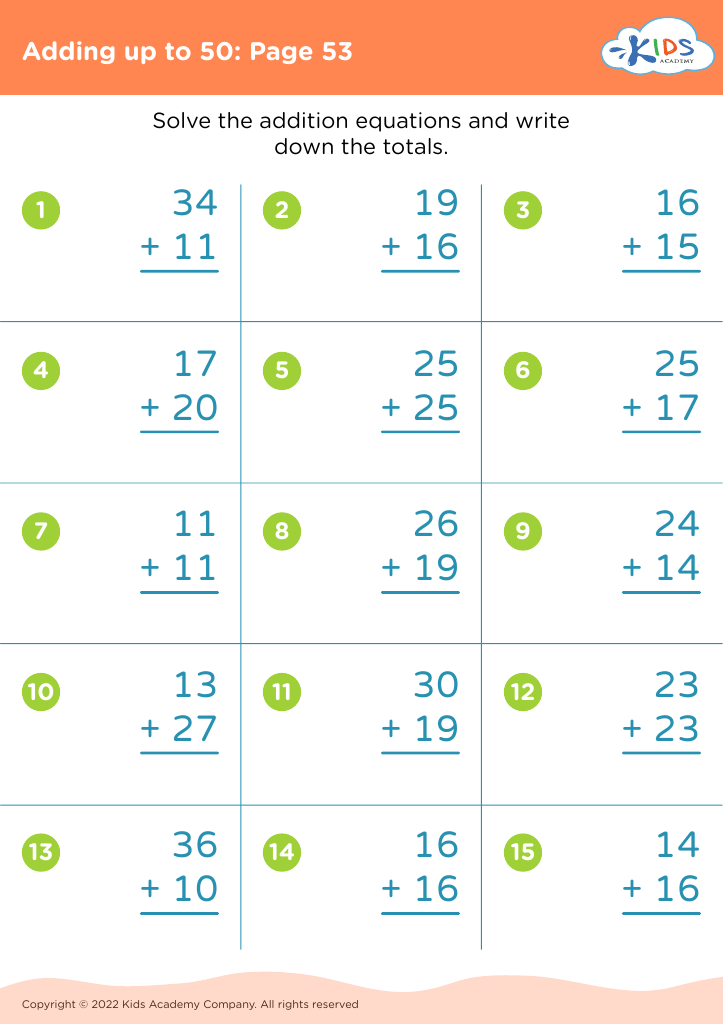
    Adding up to 50: Page 53
    Adding up to 50: Page 53

    Adding up to 50: Page 53

    Adding up to 50: Page 53
    Worksheet
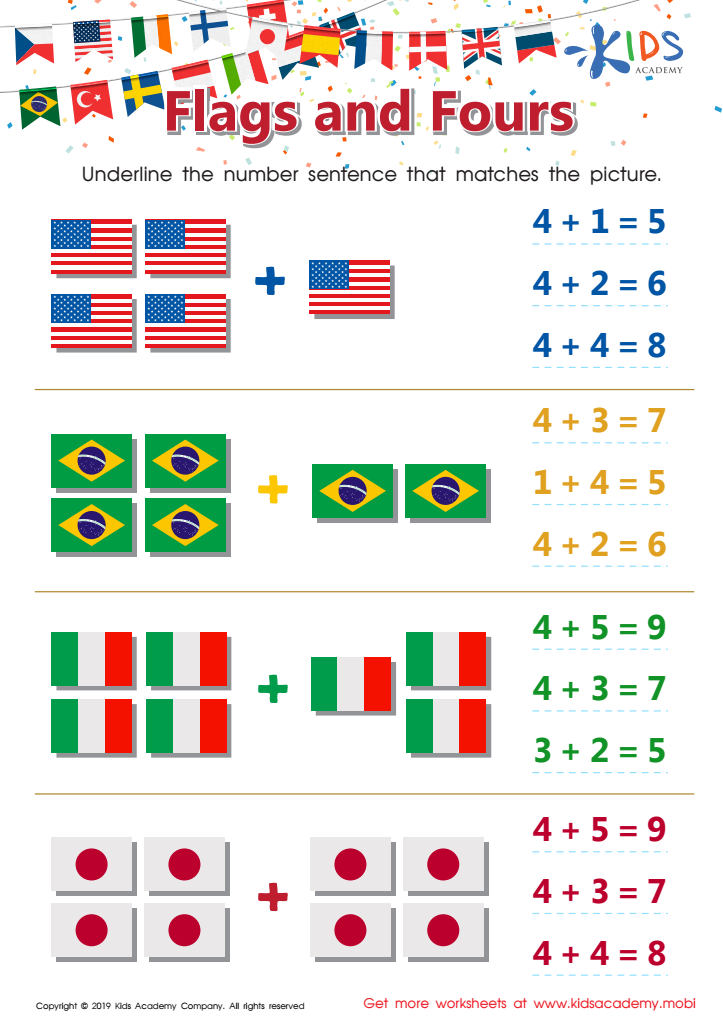
    Flags and Fours Worksheet
    Flags and Fours Worksheet

    Flags and Fours Worksheet

    Have your kids identify country flags from this colorful printout. Then, ask them to underline the number sentence that goes with each flag. Combining math with national flag recognition strengthens kids' knowledge of both, promoting an understanding of identity and numbers.
    Flags and Fours Worksheet
    Worksheet
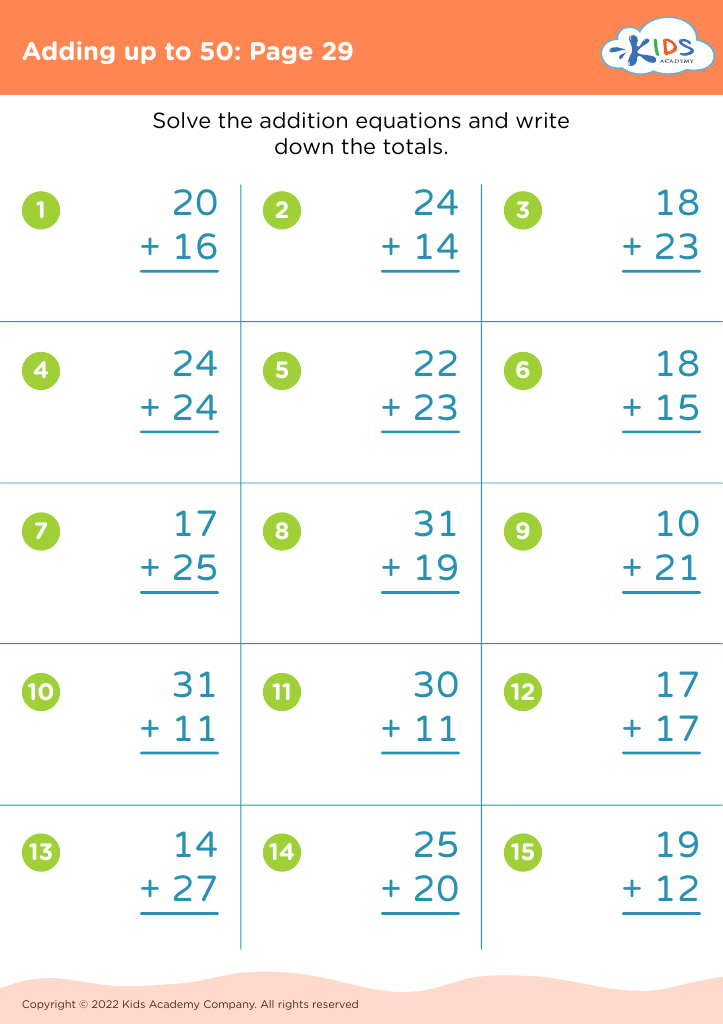
    Adding up to 50: Page 29
    Adding up to 50: Page 29

    Adding up to 50: Page 29

    Adding up to 50: Page 29
    Worksheet
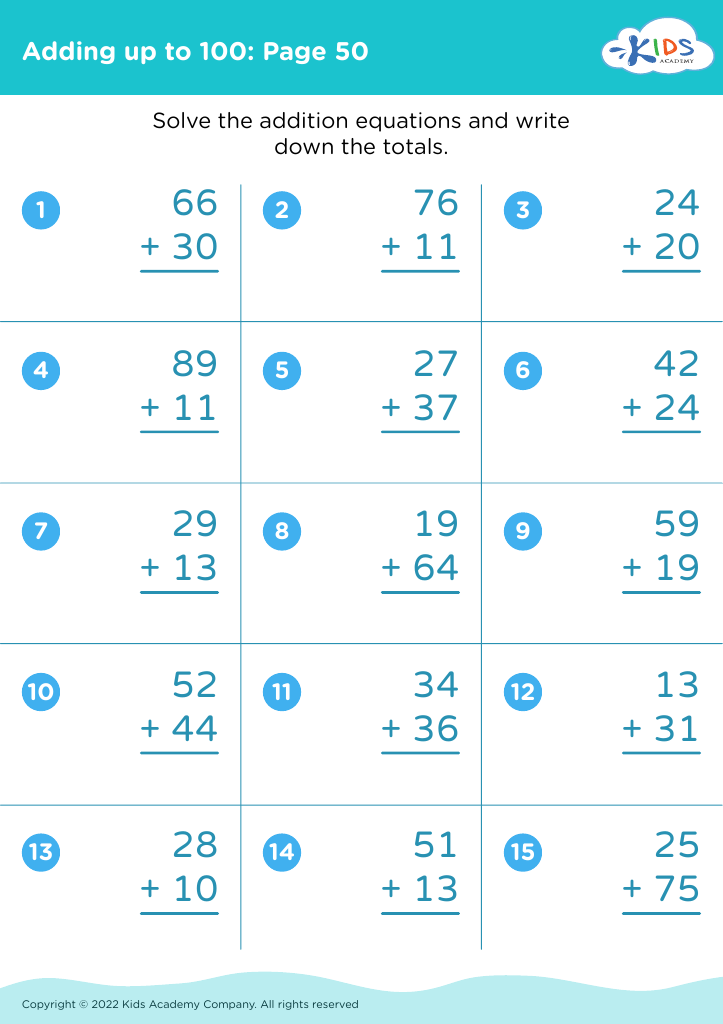
    Adding up to 100: Page 50
    Adding up to 100: Page 50

    Adding up to 100: Page 50

    Adding up to 100: Page 50
    Worksheet
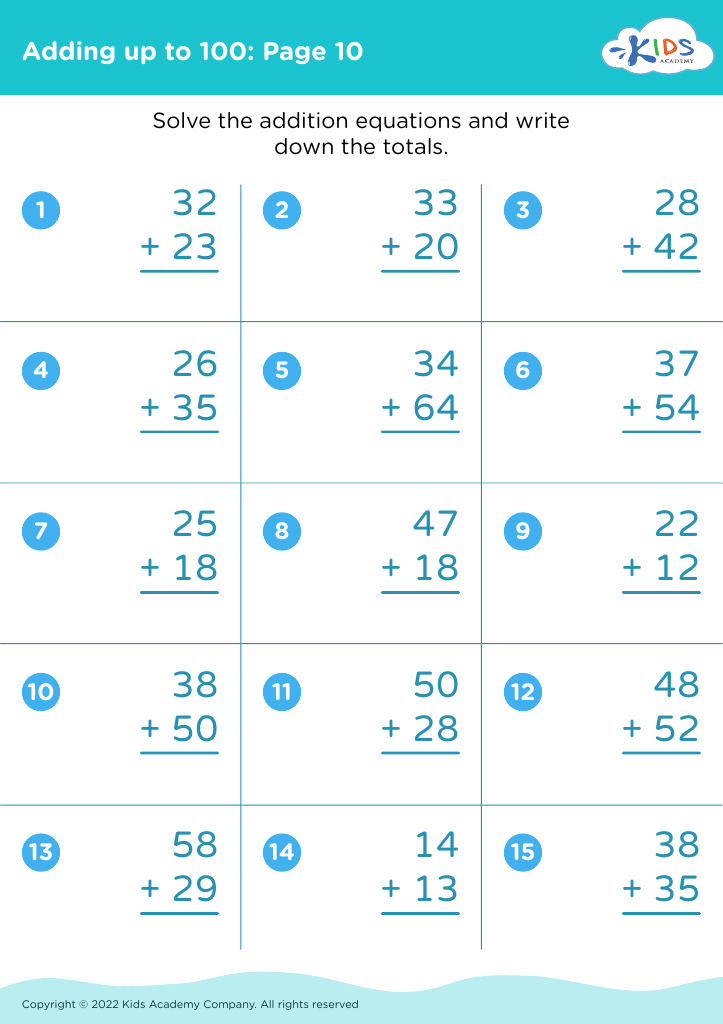
    Adding up to 100: Page 10
    Adding up to 100: Page 10

    Adding up to 100: Page 10

    Adding up to 100: Page 10
    Worksheet
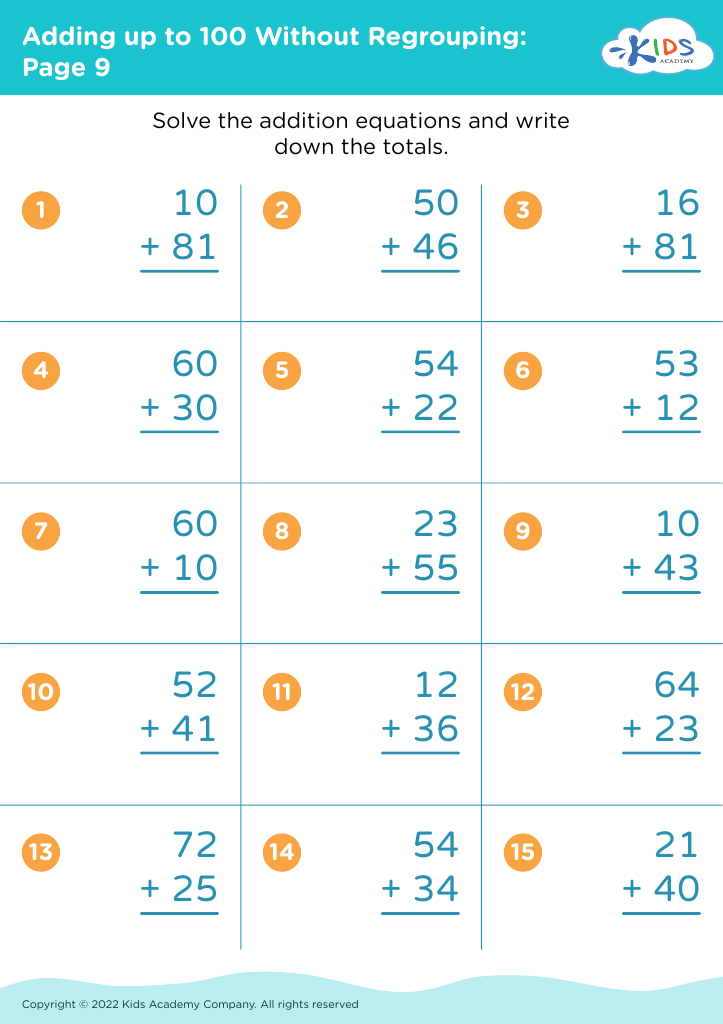
    Adding up to 100 Without Regrouping: Page 9
    Adding up to 100 Without Regrouping: Page 9
    Adding up to 100 Without Regrouping: Page 9
    Worksheet
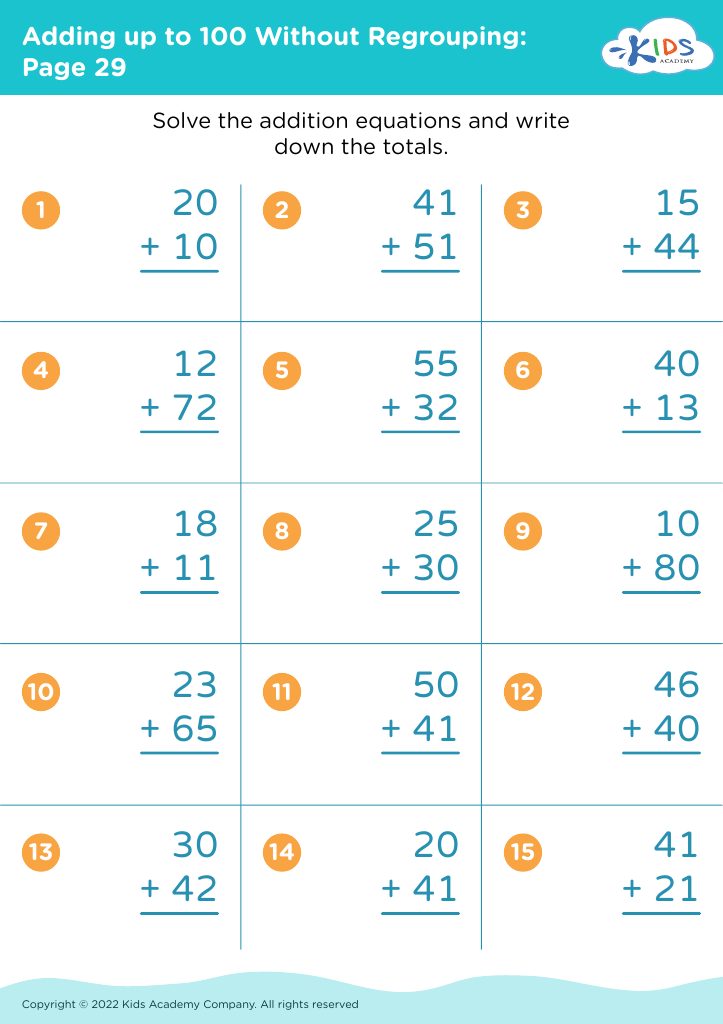
    Adding up to 100 Without Regrouping: Page 29
    Adding up to 100 Without Regrouping: Page 29
    Adding up to 100 Without Regrouping: Page 29
    Worksheet
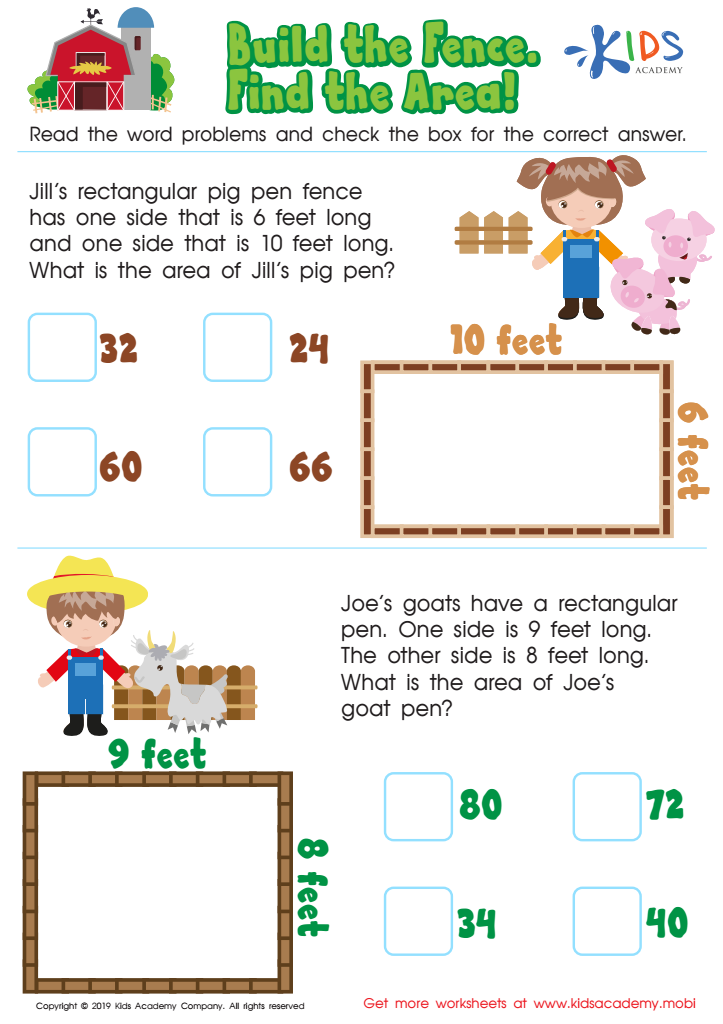
    Build the Fence, Find the Area Worksheet
    Build the Fence, Find the Area Worksheet

    Build the Fence, Find the Area Worksheet

    Help your kids gain skills in mathematics with this simple worksheet. Kids can refresh their addition and subtraction to solve geometry problems. Read the word problems and then help them check the box for the correct answer if they need extra help. This worksheet is great for improving kids' familiarity with basic equations.
    Build the Fence, Find the Area Worksheet

    Worksheet
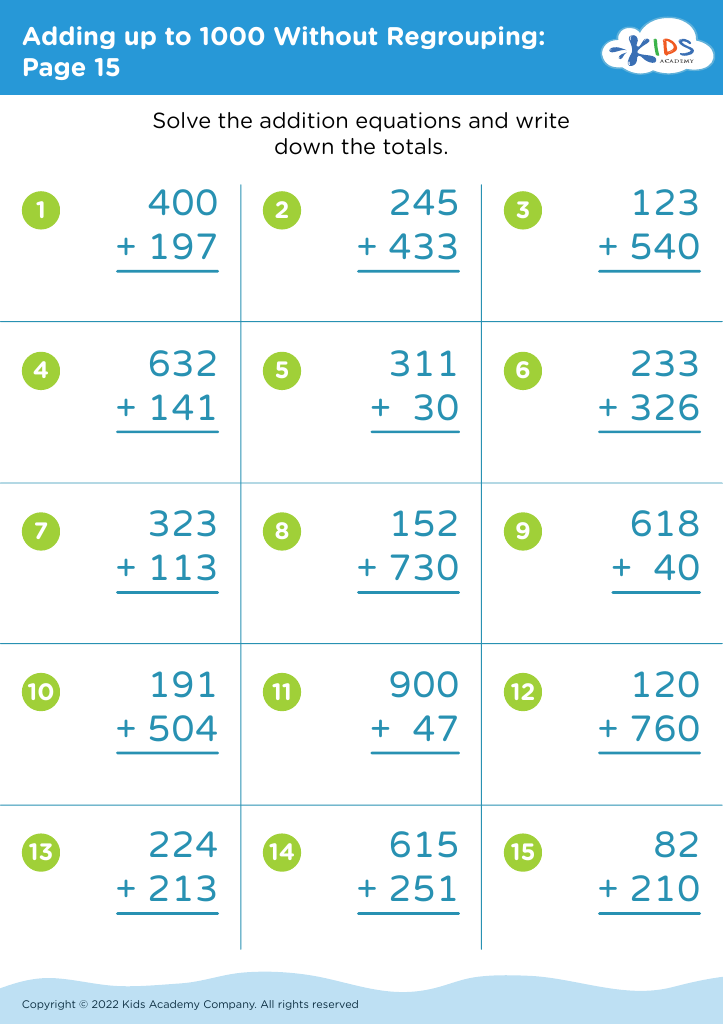
    Adding up to 1000 Without Regrouping: Page 15
    Adding up to 1000 Without Regrouping: Page 15
    Adding up to 1000 Without Regrouping: Page 15
    Worksheet


    ... 4 5

    Problem-solving skills are crucial for children aged 6-9, as they serve as the foundation for critical thinking and adaptability in everyday life. At this age, children are developing their cognitive abilities and learning to approach challenges with creativity and confidence. Strong problem-solving skills in areas like addition can significantly enhance a child's mathematical understanding and performance.

    Parents and teachers should care about fostering these skills because they contribute to a child's overall academic success and personal development. When children learn to tackle addition problems methodically, they cultivate persistence and resilience, essential traits for navigating not just math, but all scenarios they may encounter.

    Moreover, mastering problem-solving in addition helps children to better understand concepts such as number relations, patterns, and the rationale behind mathematical operations, which further solidifies their numerical literacy. In addition to academic benefits, these skills also promote teamwork and communication when students collaborate to solve problems, making learning a more engaging experience.

    In summary, nurturing problem-solving skills related to addition in young learners equips them with valuable tools to approach challenges, boosts their confidence, and builds a strong foundation for future learning and success.