Color Identification Geometry Worksheets for Ages 6-9
4 filtered results
-
From - To
Explore our engaging Color Identification Geometry Worksheets tailored for children aged 6-9! These printable worksheets combine the vibrant world of colors with fundamental geometric concepts, making learning both fun and effective. Designed to enhance color recognition while introducing shapes, angles, and spatial awareness, these resources help young learners build a solid foundation in geometry. Each worksheet encourages critical thinking and creativity, making it an excellent addition to any classroom or home learning environment. Perfect for reinforcing skills through playful activities, our color identification sheets are ideal for curious minds eager to explore the colorful connections within geometry. Start your child’s learning journey today!
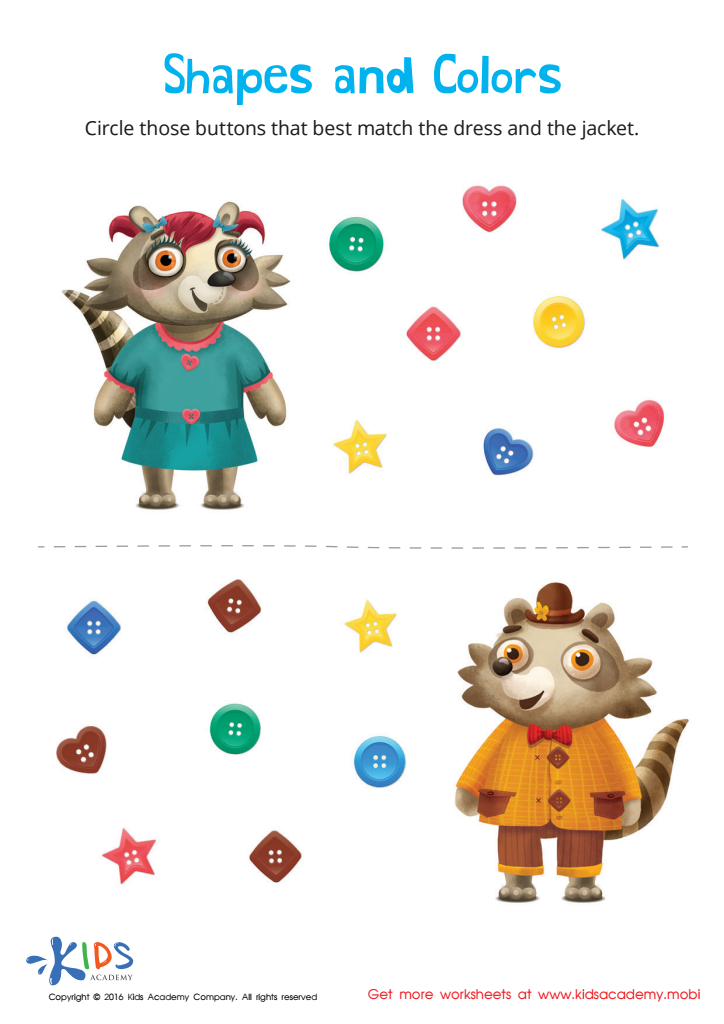
Matching: Shapes and Colors Worksheet











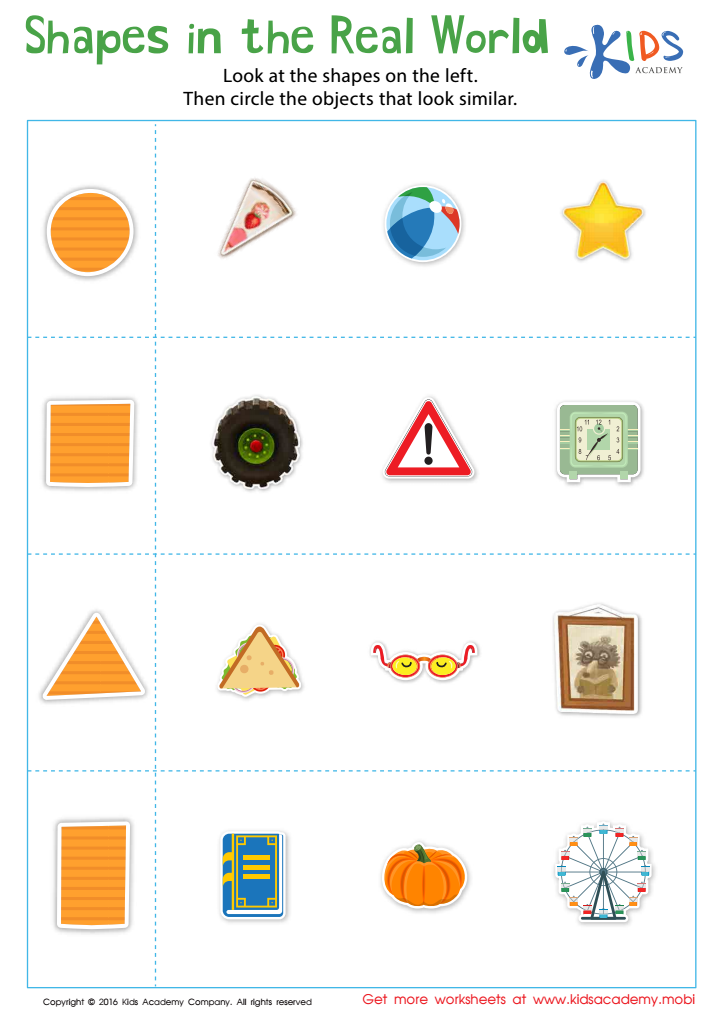
Shapes in the Real World Worksheet
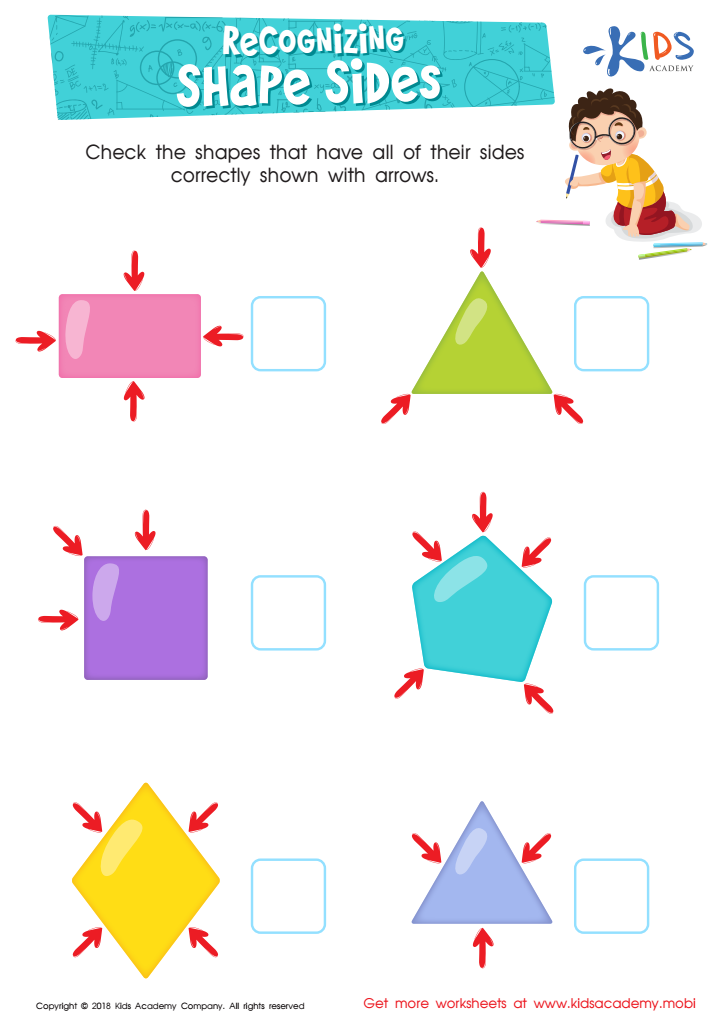
Recognizing Shape Sides Worksheet
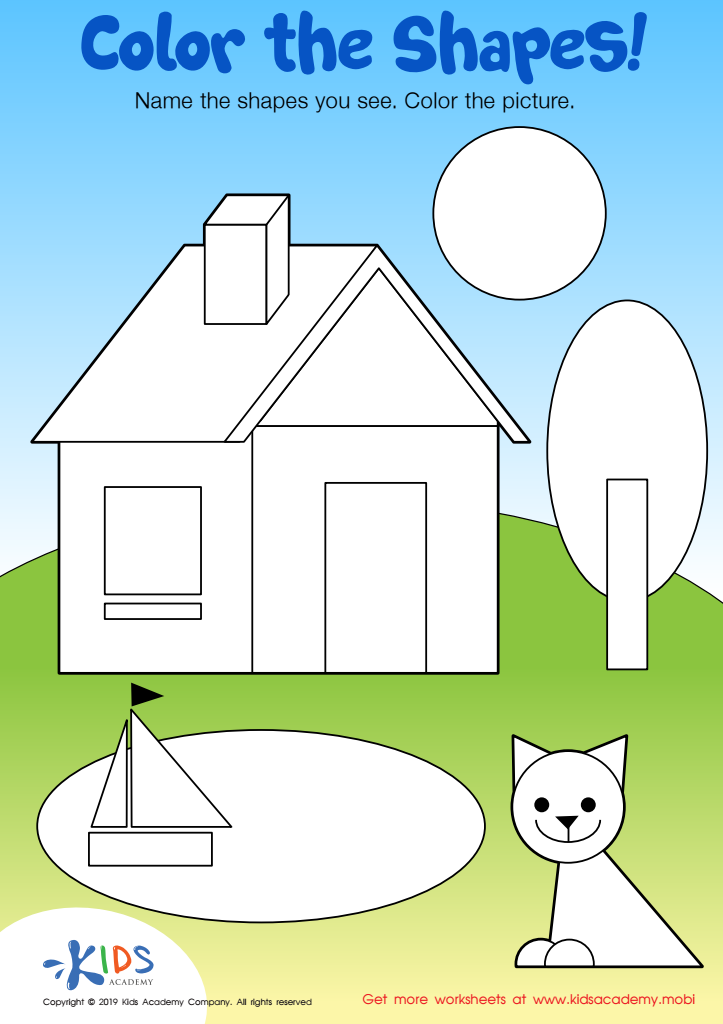
Color the Shapes Worksheet
 Assign to My Students








Color identification in geometry is a foundational skill for children aged 6-9, providing multiple benefits for both parents and teachers. Understanding colors in conjunction with geometric shapes fosters cognitive development and enhances a child's ability to observe and classify their surroundings.
First, it helps build vocabulary and strengthens language skills as children learn to describe shapes using color terms, which serves to enrich communication skills related to mathematics and science. Additionally, color identification reinforces visual perception and discrimination, crucial for problem-solving and critical thinking.
Moreover, engaging children through colorful geometric activities promotes creativity and motivation. Children are more likely to stay focused and enjoy learning when it involves appealing colors and shapes. Activities associated with color identification also support early math skills, enabling them to comprehend concepts like sorting, pattern recognition, and spatial awareness, which are essential for future math learning.
Finally, by emphasizing the significance of color within geometry, parents and teachers can ensure a more rounded education. They encourage collaboration, awareness, and an appreciation of beauty in shapes and colors that enrich a child's reasoning abilities and artistic expression. Collectively, these advantages demonstrate the importance of incorporating color identification into geometric learning for young learners.








