Comparing shapes Geometry Worksheets for Ages 6-9
4 filtered results
-
From - To
Explore our engaging "Comparing Shapes Geometry Worksheets" designed for children ages 6-9! These worksheets help young learners develop vital geometry skills by encouraging them to identify, compare, and differentiate various shapes. With a fun and interactive approach, students will practice sorting shapes based on attributes like size, color, and type, bolstering their understanding of geometric concepts. Perfect for classroom or home use, these resources foster critical thinking and enhance cognitive skills. Get your child excited about learning shapes while building a solid mathematical foundation! Download our worksheets today and make geometry an enjoyable adventure for your little ones!
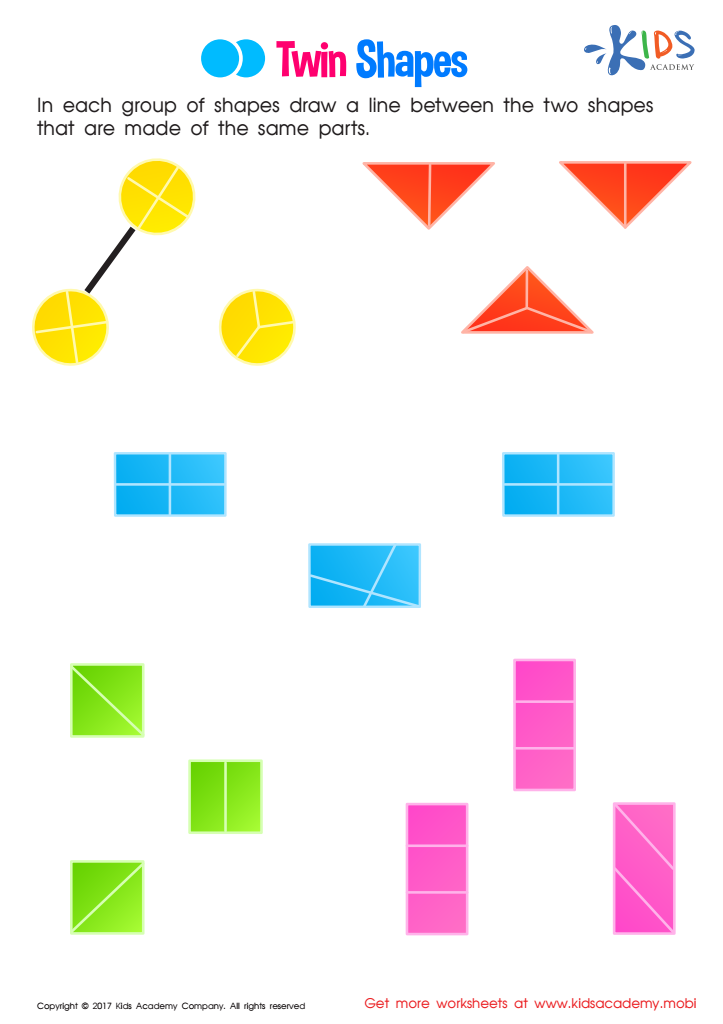
Twin Shapes Worksheet
 Assign to My Students











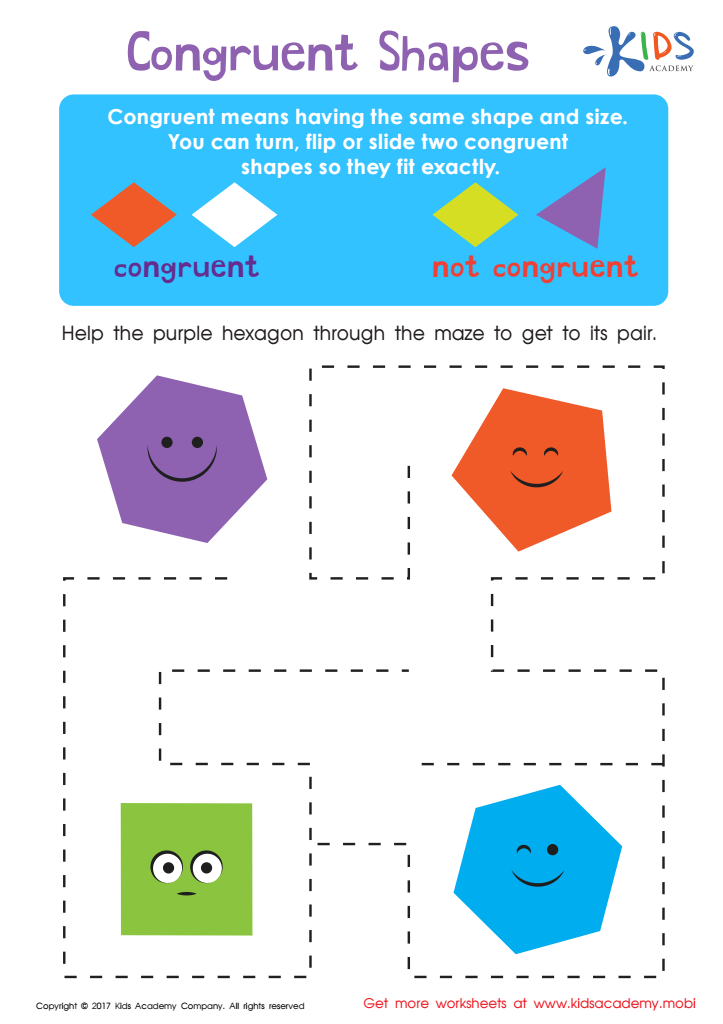
Congruent Shapes Worksheet
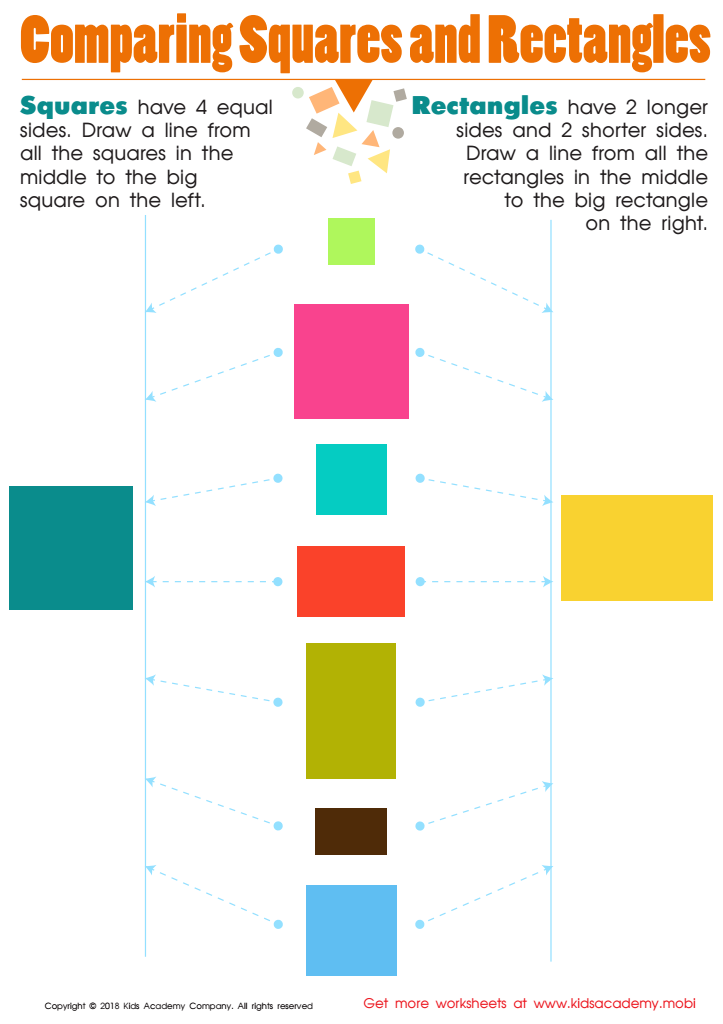
Comparing Squares Rectangles Worksheet
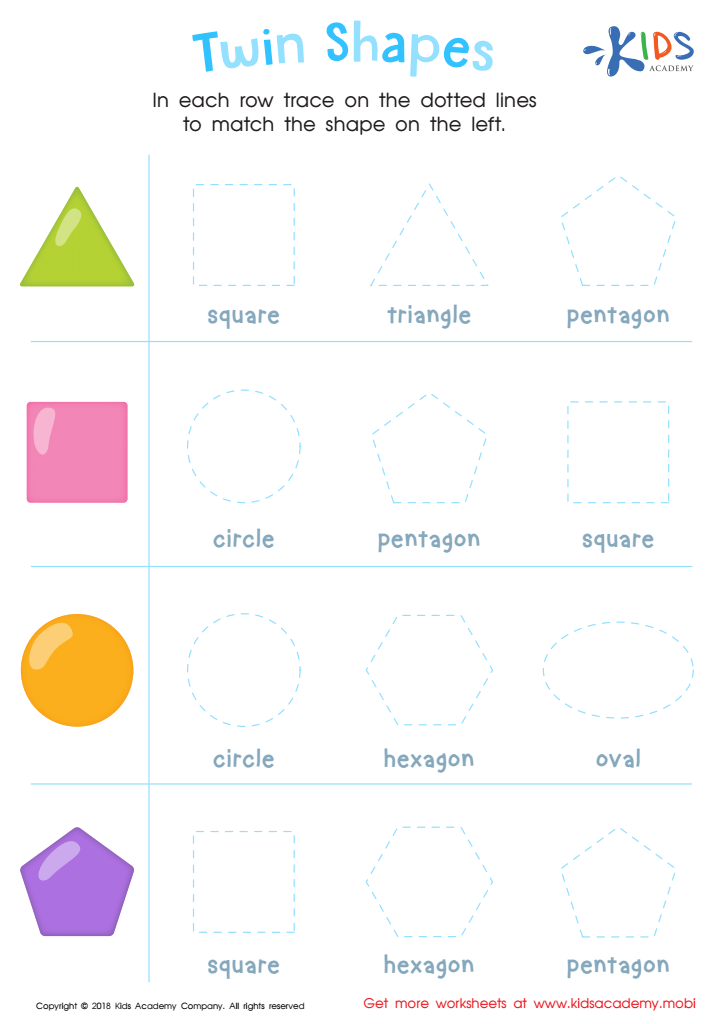
Twin Shapes Dot-to-Dot Worksheet








Comparing shapes is a fundamental aspect of early geometry education crucial for children aged 6-9. Understanding shapes and their properties not only enhances spatial reasoning but also lays the foundation for more complex mathematical concepts in later years. When parents and teachers engage children in comparing shapes, they encourage critical thinking, recognizing distinctions in size, symmetry, angles, and sides.
This comparison helps children develop essential skills such as categorization, pattern recognition, and problem-solving. For example, identifying differences between a square and a rectangle or discerning whether two triangles are congruent invites children to articulate their understanding and justifications. This process also nurtures communication skills as children share their observations and arguments with peers and adults.
Moreover, geometric understanding is interwoven with real-world applications, from architecture to art. Engaging children in shape comparison aids in making connections to their environment, promoting curiosity and a love for learning. Additionally, embracing these fundamental concepts cultivates a strong mathematical foundation, fostering lifelong skills useful in various fields. Therefore, parents and teachers play a vital role in facilitating opportunities and experiences that promote geometric comparisons, ultimately supporting children's cognitive and academic growth.








