Reading comprehension Geometry Worksheets for Ages 6-9
6 filtered results
-
From - To
Enhance your child's learning with our engaging Reading Comprehension Geometry Worksheets, designed specifically for ages 6-9. These worksheets seamlessly blend mathematical concepts with reading skills, allowing kids to explore geometry while enhancing their understanding of shapes, sizes, and spatial reasoning. Each worksheet provides clear instructions and fun, relatable scenarios, encouraging young learners to practice problem-solving and critical thinking. Ideal for classroom use or at-home learning, these resources cater to various learning styles, ensuring a rich educational experience. Help your child build confidence and foundational skills in geometry and reading comprehension, setting the stage for future academic success. Start today!
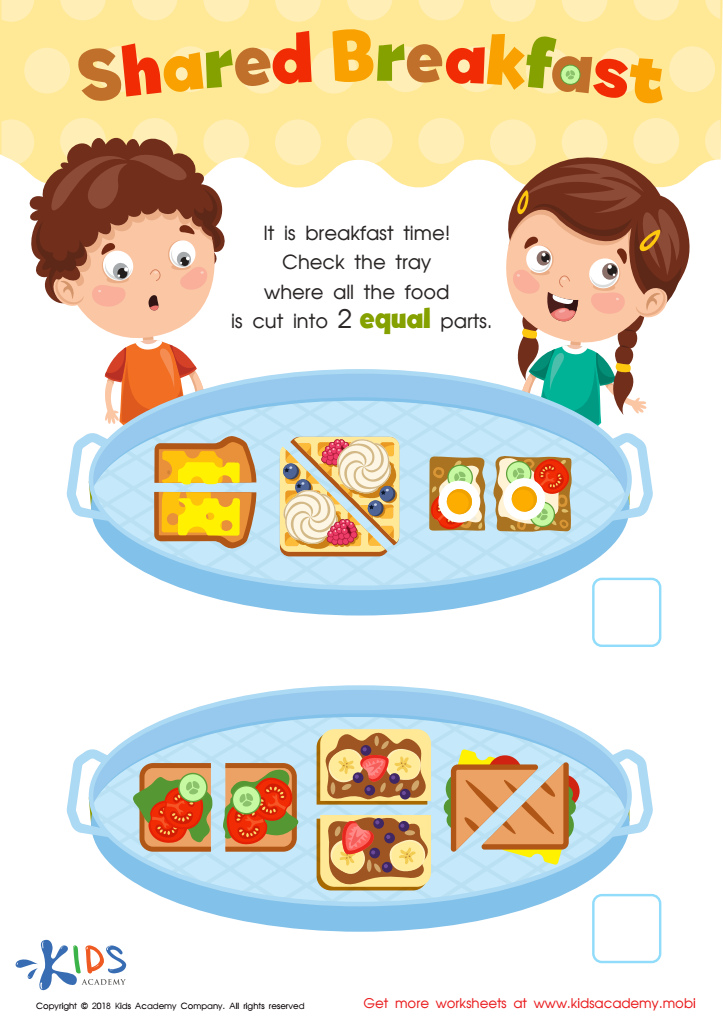
Shared Breakfast Worksheet
 Assign to My Students











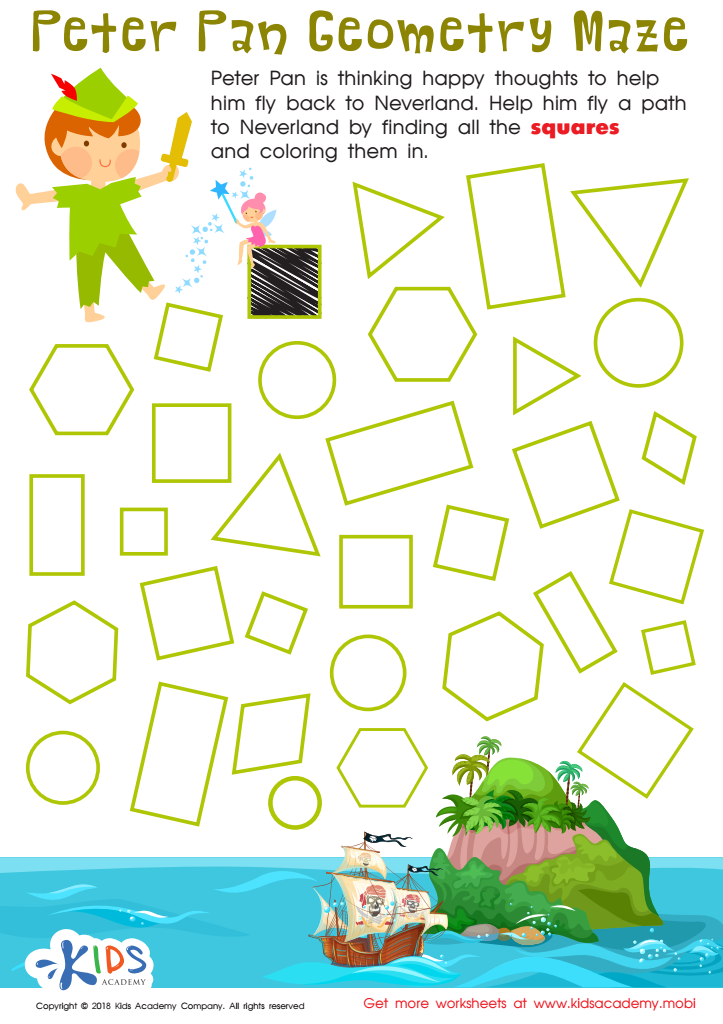
Peter Pan Worksheet
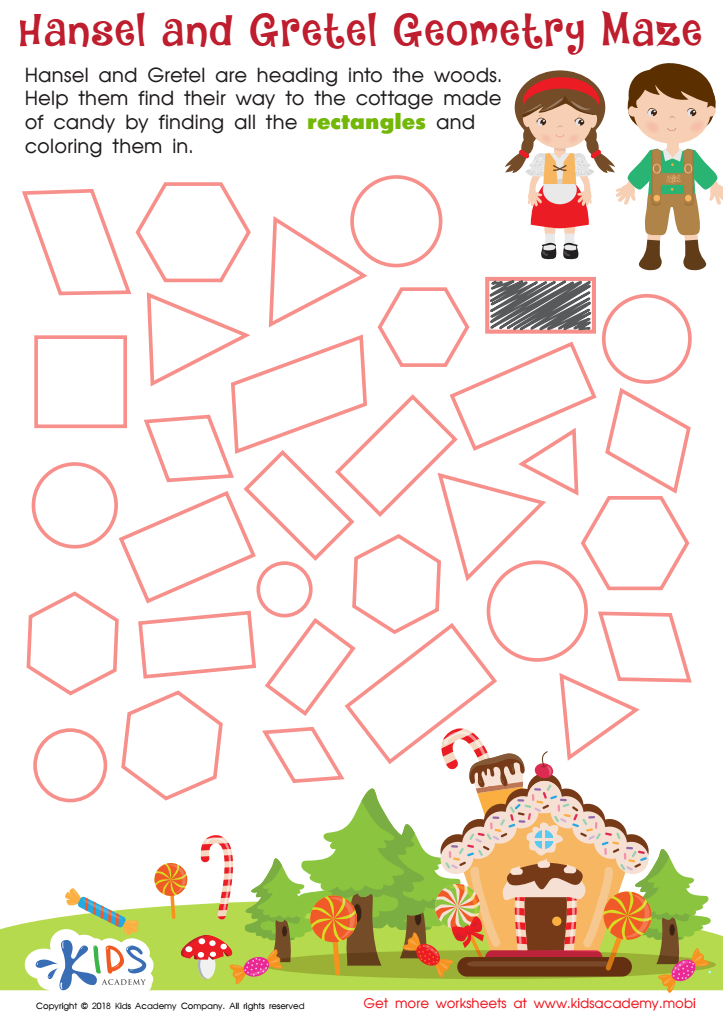
Hansel and Gretel Geometry Maze Worksheet
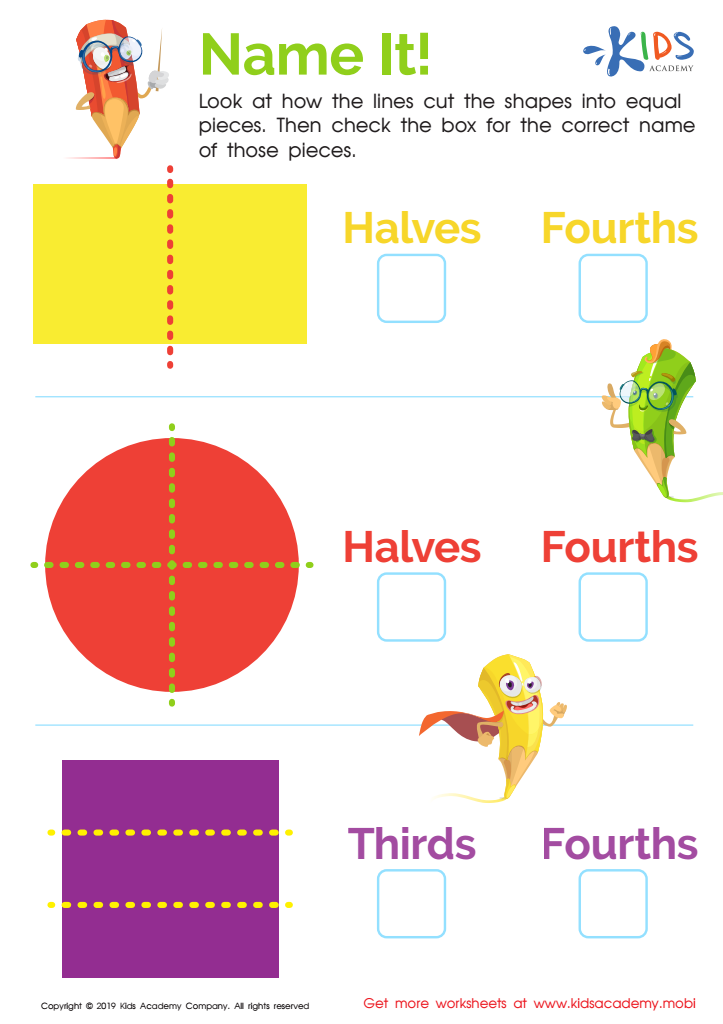
Name It! Worksheet
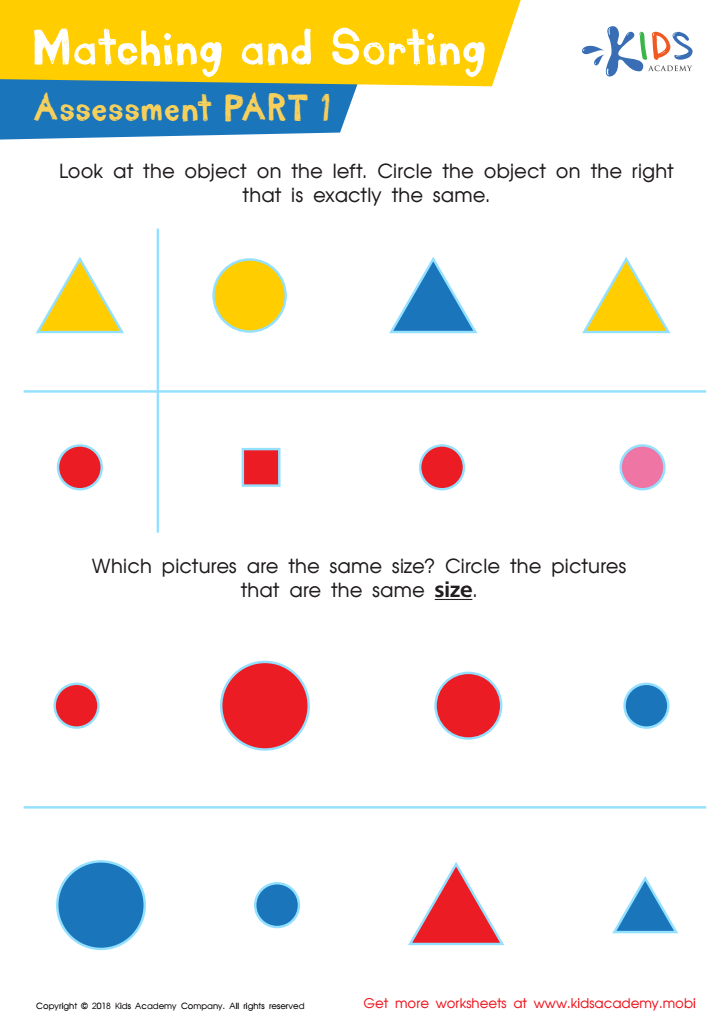
Matching and Sorting for Kindergarten: Assessment 1 Worksheet
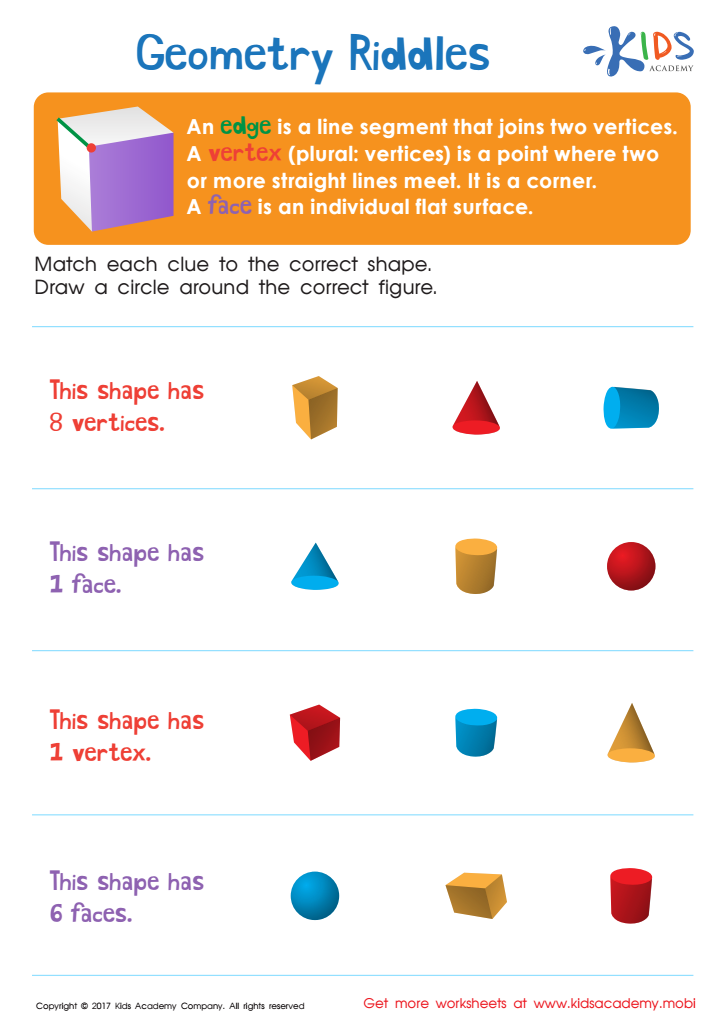
Geometry Riddles Printable








Reading comprehension in geometry is crucial for children aged 6-9, as it lays the foundation for both mathematical understanding and literacy skills. At this age, children are not just learning to read; they are also beginning to interpret information and solve problems. Understanding geometric concepts, such as shapes, spatial relationships, and measurements, requires children to read instructions, word problems, and definitions accurately.
When parents and teachers prioritize reading comprehension in geometry, they empower children to connect language with mathematical concepts. This integration enhances cognitive development as children learn to visualize and verbalize their thoughts, boosting confidence in both areas. Moreover, strong reading skills enhance a child's ability to comprehend complex problems and scenarios that require critical thinking and creativity.
Furthermore, fostering reading comprehension in geometry encourages lifelong learning. As students progress, they will encounter increasingly complex texts and problems in math and science that require both reading proficiency and mathematical reasoning. By emphasizing reading comprehension now, parents and teachers can equip children with the necessary skills to navigate future academic challenges successfully. Ultimately, enhancing reading skills within the context of geometry promotes a well-rounded education, preparing children for more advanced topics and real-world problem-solving.








