Understanding geometry Geometry Worksheets for Ages 6-9
3 filtered results
-
From - To
Introduce your child to the world of shapes and spatial understanding with our "Understanding Geometry: Geometry Worksheets for Ages 6-9." Tailored for young learners, these engaging worksheets cover basic geometric concepts including shapes, patterns, symmetry, and spatial reasoning. Each activity is designed to build foundational math skills, encourage logical thinking, and make learning fun through interactive tasks. Perfect for both classroom and home use, our worksheets offer clear instructions and vivid illustrations to make geometry accessible and enjoyable. Set the stage for math success with our expertly crafted geometry resources!
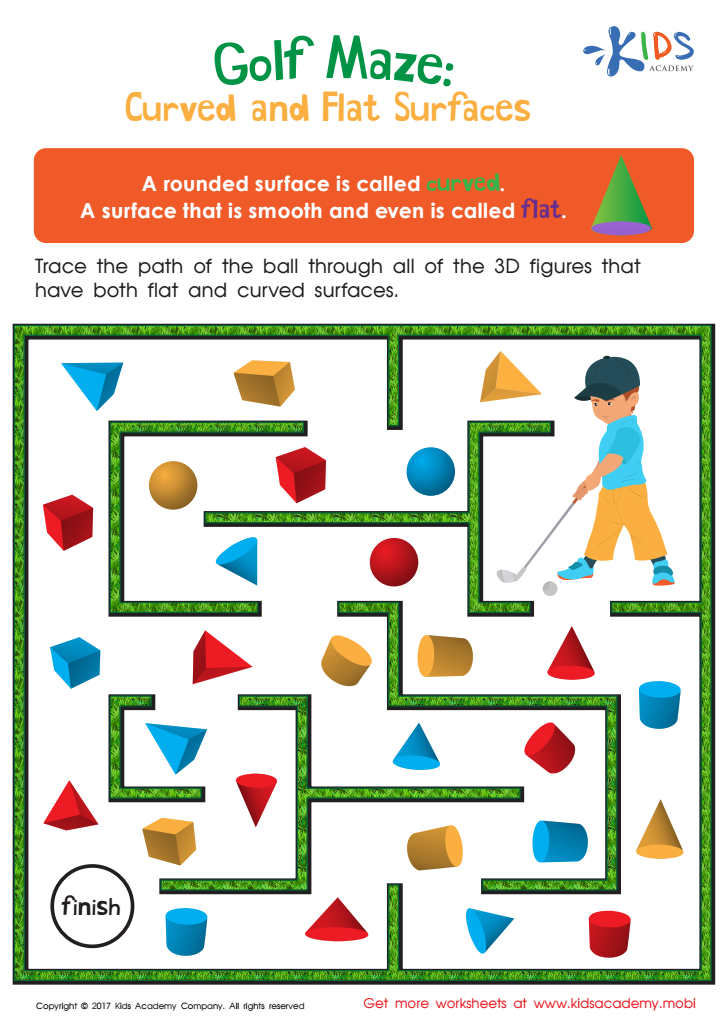
Golf Maze: Curved and Flat Surfaces Worksheet
 Assign to My Students











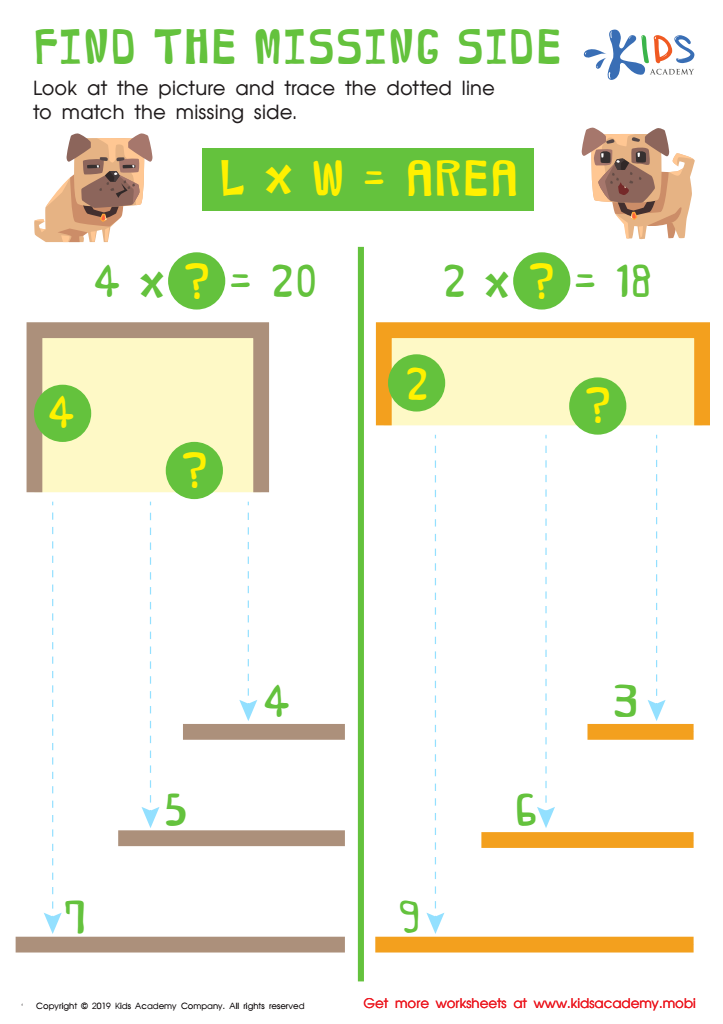
Find the Missing Side Worksheet
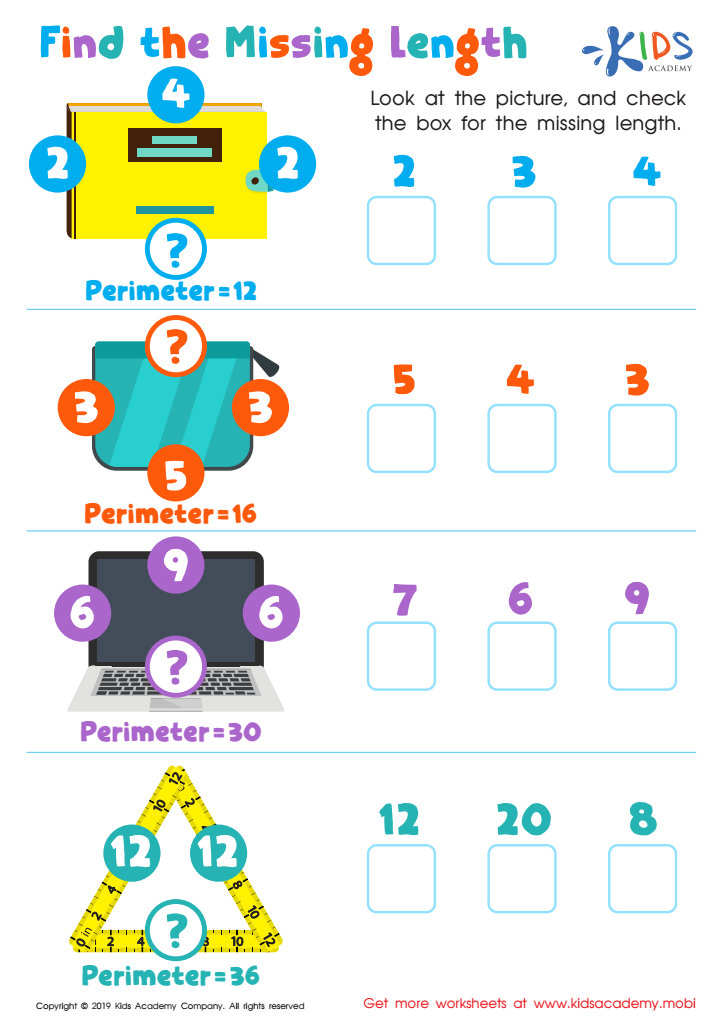
Find the Missing Length Worksheet








Understanding geometry is crucial for children aged 6-9 because it lays the foundation for spatial awareness, logical reasoning, and problem-solving skills. At this developmental stage, children's cognitive abilities are rapidly expanding, and engaging with geometric concepts helps to enhance their cognitive growth.
Geometry introduces children to shapes, sizes, positions, and orientations, which are fundamental aspects of our physical world. This knowledge not only aids in developing a child's ability to navigate their surroundings but also integrates with everyday tasks and other academic subjects. For example, recognizing patterns and understanding symmetry can support literacy and numeracy development by helping children understand the structure and relations between letters and numbers.
Moreover, early exposure to geometry boosts fine motor skills through activities that involve drawing, building, and manipulating objects. Such hands-on experiences make abstract mathematical ideas more concrete and relatable for young learners.
Parents and teachers play a critical role in fostering an interest in geometry by making learning interactive and fun. Utilizing tools like geometric puzzles, blocks, and drawing exercises can ignite curiosity and develop a positive attitude towards mathematics.
In sum, an early understanding of geometry equips children with essential skills that are not only academic but also practical, preparing them for more complex mathematical concepts and life skills as they grow.








