
Associative learning Numbers Worksheets for Ages 6-9
4 filtered results
Difficulty Level
Grade
Age
-
From - To
Subject
Activity
Standards
Boost your child's math skills with our engaging Associative Learning Numbers Worksheets, perfect for ages 6-9! These dynamic resources are specifically designed to enhance number recognition, improve counting abilities, and develop important mathematical concepts through the power of association. Each interactive worksheet features fun and colorful activities that make learning numbers both enjoyable and effective. Ideal for both classroom and home use, our worksheets will foster confidence and curiosity in young learners, ensuring they build a solid foundation in math. Give your child the gift of exceptional number skills with these thoughtfully crafted worksheets.
Favorites
With answer key
Interactive
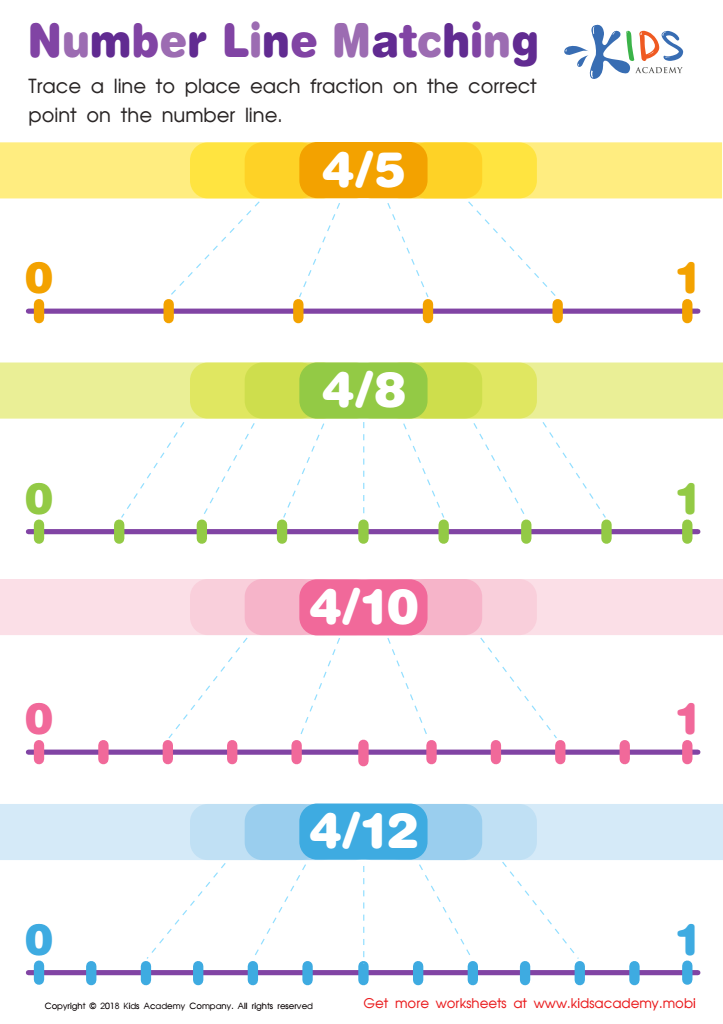
Number Line Matching Worksheet
Math can be fun! Have your child count points on the number line, then identify and trace fractions above it. It's a great way for them to learn and have some fun!
 Assign to My Students
Number Line Matching Worksheet
Worksheet
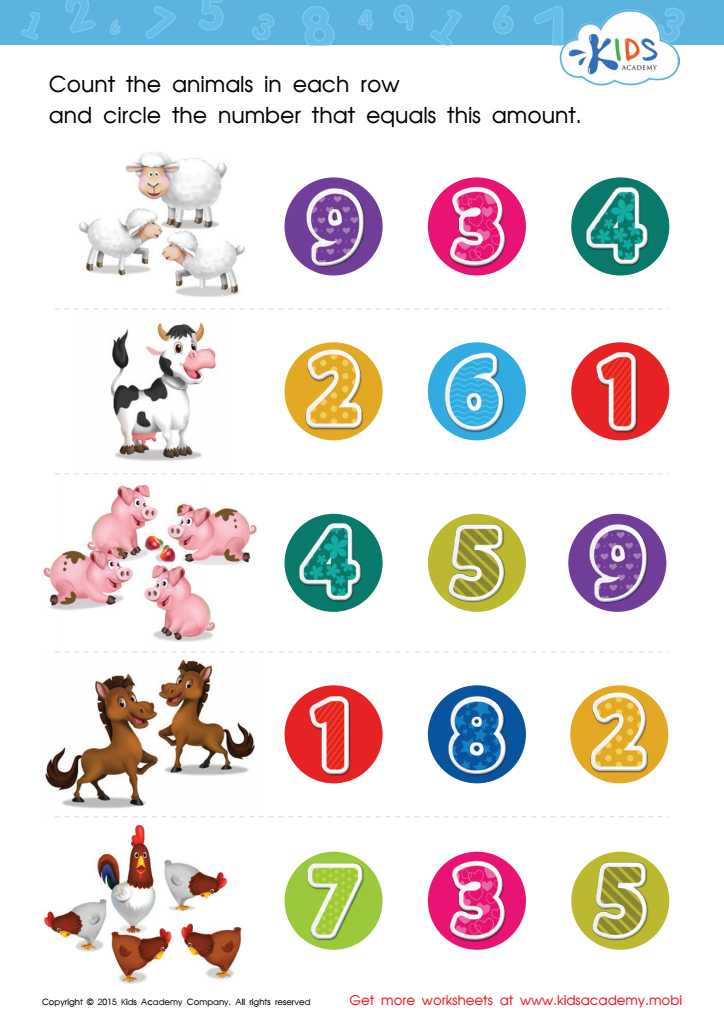
Count and Match 1 – 5 Math Worksheet
Find the colorful worksheet aimed to help your little learner develop their math skills. Count the cute animals and identify the correct numbers based on the Singapore Math method. This worksheet is a fantastic way to start your kid on their mathematical journey.
Count and Match 1 – 5 Math Worksheet
Worksheet
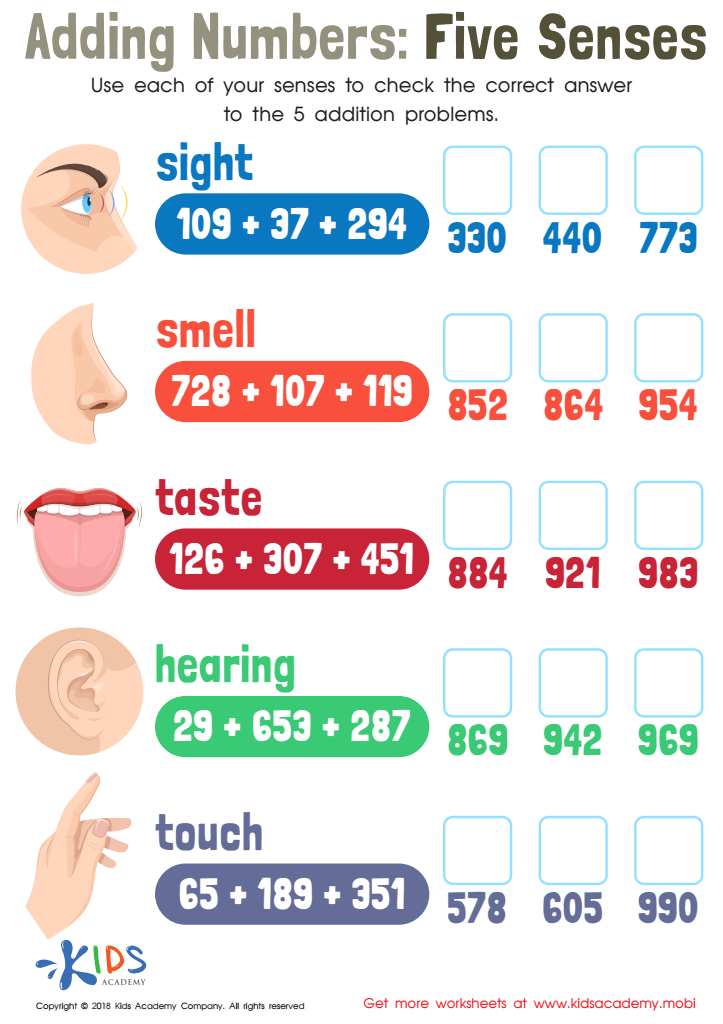
Adding Numbers: Five Senses Worksheet
Help your child identify the five senses on their body: eye, nose, tongue, ear, and skin. Explain that they're used for seeing, smelling, tasting, hearing and touching. Then, have them solve the five addition problems in the worksheet and check the correct answers.
Adding Numbers: Five Senses Worksheet
Worksheet
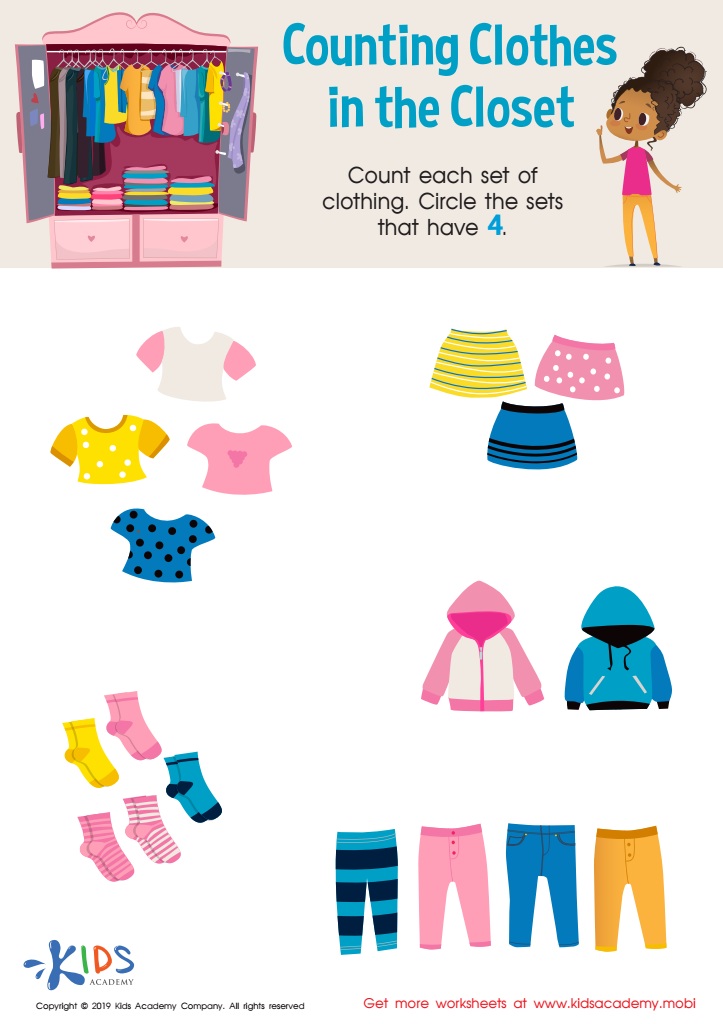
Counting Clothes Worksheet
Help your kids become better counters with fun exercises and objects they can relate to. Print out this worksheet and assist your kid in counting 5 sets of clothing. Have them circle the sets that have 4 so they can master counting small numbers. Strengthen their math skills with your help.
Counting Clothes Worksheet
Worksheet
Join Kids Academy for Free
Who is primarily going to use this learning content?





%20(1).jpg)

Associative learning in numeracy for children ages 6-9 is a crucial aspect of early education, as it lays the groundwork for more advanced mathematical concepts and overall cognitive development. When children link numbers to tangible objects, experiences, or even stories, they move beyond rote memorization and foster a deeper understanding of numbers and their relationships.
Firstly, associative learning enhances cognitive flexibility. Kids develop the capacity to approach problems in diverse ways, increasing their problem-solving skills. For example, associating numbers with physical objects like blocks can help them visualize addition and subtraction, making these concepts more graspable.
Secondly, this method fosters long-term retention. When numbers are linked to enjoyable and meaningful contexts, children are more likely to remember these concepts. Games, visual aids, and practical applications, such as counting apple slices or using numbers in everyday tasks, make learning engaging and relevant.
Additionally, associative learning often incorporates multi-sensory experiences, aiding children with different learning styles. This inclusive approach ensures that visual, auditory, and kinesthetic learners can benefit.
Besides cognitive development, this technique can boost confidence. As children grasp foundational numerical relationships through engaging activities, they build a strong sense of achievement and self-efficacy, positioning them for future academic success.
Thus, encouraging associative learning in numeracy is key for fostering a solid, enjoyable, and inclusive educational experience that can significantly benefit a child’s future learning trajectory.








